Henry Fuseli, 1741 – 1825

Henry Fuseli: 100 najbolj znanih slik

Noč (1781) je najbolj znano sliko avtorja Henry Fuseli, ki se nahaja v muzeju Detroit Institute of Arts v mestu Detroit. Titania in Bottom z glavo osla in The Nightmare (1790) sta naslednji dve dela, ki jih svet najbolje pozna. Od 161 del umetnika Henry Fuseli v našem katalogu so tu tista 100, ki jih zbiratelji in obiskovalci muzejev najpogosteje opazujejo, vključno z letnico, muzejom in zgodbojo vsakega dela.

Uvrščeno glede na naš skoraj priljubljenosti, ki združuje število iskanj, obiskov in naročil za vsako delo. Posodobljeno oktober 2026. Vsako podobno delo na tej strani je mogoče naročiti kot muzejsko kakovostno ročno slikano oljno reprodukcijo ali umetniški natisk v izbrani velikosti.

Portret Henry Fuseli
Henry Fuseli · 1741 – 1825
Rodil se · umrl
1741 – 1825, Zürich
Gibanje
Romantic gothic horror
Delo v našem katalogu
161
Najbolj znana
Noč (1781)
Največ del v
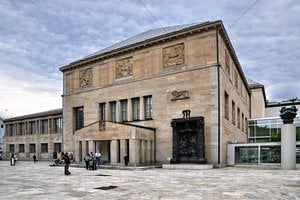
Kunsthaus Zürich

Top 10: najbolj znana slika umetnika Henry Fuseli

Noč (1781) avtorja Henry Fuseli
1

Noč

1781 · Olje na platnu · Detroit Institute of Arts, Detroit

Fuselijeva "Noč" je ikonično delo, ki v celoti zajema bistvo gotičnega užasa in romantizma. To oljno slikarstvo, ustvarjeno leta 1781, predstavlja globoko raziskovanje podzavestnega uma, saj dramatično kompozicijo združuje z bogato simboliko, da bi vzbudilo občutek nemira in fascinacije.

Hand-painted oil reproduction from $181 35 × 28 cm Same size as the original $539 127 × 101 cm Order at original size →
Titania in Bottom z glavo osla avtorja Henry Fuseli
2

Titania in Bottom z glavo osla

Olje na platnu

V senovitih, mesečinom prežganih globinah starodavnega gozd_a Johann Heinrich Füssli nas vabi v svet, kjer se meje med človeškim in nadnaravnim popolnoma raztopijo. Njegovo vrhunsko delo, Titania in Bottom z glavo osla, zajema ključni trenutek transformacije iz Williamove Shakespearejeve drame Srednje poletna noč. Kompozicija je zapira oči v vrtoglav whirlwind gibanja in skrivnostnosti, osredotočen na eterično kraljico Titanijo, ko se leže med morje trepetljajih vilic. Ob njej sedi groteskna, a…

Hand-painted oil reproduction from $231 35 × 28 cm
The Nightmare (1790) avtorja Henry Fuseli
3

The Nightmare

1790 · Oil On Canvas · Goethe-Museum, Frankfurt

In the shadowy realm of Johann Heinrich Füssli, the boundaries between sleep and wakefulness dissolve into a haunting spectacle of terror and desire. His seminal work, The Nightmare, stands as a profound exploration of the human psyche, capturing that breathless moment when the terrors of the unconscious manifest in the physical world. The painting presents a woman lying prostrate in bed, her limbs cast downward in a state of vulnerable,…

Hand-painted oil reproduction from $206 29 × 35 cm Same size as the original $326 64 × 77 cm Order at original size →
Lady Macbeth with the Daggers (1812) avtorja Henry Fuseli
4

Lady Macbeth with the Daggers

1812 · Oil On Canvas · Tate Gallery, London

To stand before this depiction of Lady Macbeth is to confront the very precipice of human ambition curdled by guilt. Johann Heinrich Friesli’s masterful rendering captures not merely a scene from Shakespeare, but the suffocating aftermath of moral transgression. The air in the painting feels thick, heavy with unspoken secrets and the metallic tang of spilled blood. It is an intensely dramatic tableau, steeped in the Romantic fascination with the…

Hand-painted oil reproduction from $206 35 × 28 cm Same size as the original $564 127 × 101 cm Order at original size →
The incubus leaving two young women (1794) avtorja Henry Fuseli
5

The incubus leaving two young women

1794 · Oil On Canvas

The incubus leaving two young women is an oil on canvas painting by Henry Fuseli. Created about 1794, the work captures a moment of supernatural departure. It belongs to the realms of folklore and demons. The canvas holds a heavy, nocturnal stillness.

The Artist Moved by the Grandeur of Antique Fragments (1778) avtorja Henry Fuseli
6

The Artist Moved by the Grandeur of Antique Fragments

1778 · Acrylic On Canvas · Kunsthaus Zürich, Žurih

Johann Heinrich Fuseli’s “The Artist Moved by Antique Fragments,” completed in 1778-79, stands as a haunting testament to Romanticism's preoccupation with mortality and the sublime beauty found within decay. Executed in red chalk on sepia wash—a technique favored by Fuseli—the drawing captures an artist grappling with the overwhelming grandeur of ruined monuments, specifically those of the Colossus of Constantine at Rome’s Capitoline Museums.

Hand-painted oil reproduction from $181 29 × 34 cm
Hamlet and his father's Ghost (1785) avtorja Henry Fuseli
7

Hamlet and his father's Ghost

1785 · Drawing

In this drawing from 1785, we find ourselves drawn into a moment of profound psychological unrest. The scene captures a dramatic encounter, likely inspired by the tension of Shakespearean tragedy, where the boundary between the living and the supernatural dissolves. A central figure, arms outstretched, appears caught in a state of sudden, violent realization. Around this focal point, other figures react with a mixture of struggle and silent observation, their…

Hand-painted oil reproduction from $281 36 × 28 cm
The Night-Hag Visiting Lapland Witches (1796) avtorja Henry Fuseli
8

The Night-Hag Visiting Lapland Witches

1796 · Oil On Canvas · Metropolitanski muzej umetnosti, New York

Henry Fuseli's "The Night-Hag Visiting Lapland Witches," painted in 1796, isn’t merely a depiction of a scene; it’s an immersion into the shadowed heart of human psychology. This arresting oil on canvas, currently residing within the hallowed halls of The Metropolitan Museum of Art in New York City, pulsates with a potent blend of gothic horror and nascent Romanticism – a visual embodiment of fear, superstition, and the unsettling allure…

Hand-painted oil reproduction from $181 35 × 29 cm Same size as the original $540 126 × 102 cm Order at original size →
Portrait of a Young Woman (1781) avtorja Henry Fuseli
9

Portrait of a Young Woman

1781 · Oil On Canvas · Detroit Institute of Arts, Detroit

Portrait of a Young Woman by Henry Fuseli: A Gothic Reverie The Portrait of a Young Woman by Johann Heinrich Füssli, painted in 1781, stands as an arresting emblem of the Romantic movement’s fascination with psychological depth and unsettling beauty. More than just a depiction of a female figure, it's a meticulously crafted tableau that delves into themes of dreams, fear, and the subconscious—a realm where reason yields to imagination…

Hand-painted oil reproduction from $181 26 × 38 cm Same size as the original $539 101 × 127 cm Order at original size →
Scene of Witches, from The Masque of Queens by Ben Jonson (1785) avtorja Henry Fuseli
10

Scene of Witches, from The Masque of Queens by Ben Jonson

1785 · Painting · Yale Center for British Art, New Haven

In the shadowy corridors of art history, few names evoke as much intrigue and nocturnal wonder as Johann Heinrich Füssli. Known to the English-speaking world as Henry Fuseli, this Swiss master was a pioneer of the Romantic movement, a painter who dared to venture into the deepest recesses of the human psyche. His work, particularly his depictions of the supernatural, serves as a bridge between the rational Enlightenment and the…

Hand-painted oil reproduction from $181 35 × 29 cm Same size as the original $354 88 × 76 cm Order at original size →

Preostali del uvrstitve umetnika Henry Fuseli, od 11 do 100

Tekemessa and Eurysake (1805) avtorja Henry Fuseli
#22

Tekemessa and Eurysake

1805 · Yale Center for British Art

Henry Fuseli's Tekemessa and Eurysakes, executed about 1805, draws its narrative from the ancient Greek tragedy Ajax by Sophocles. The composition focuses on the immediate aftermath of the…

Prinesite si domov from $206 →
Portrait of a Lady (1781) avtorja Henry Fuseli
#48

Portrait of a Lady

1781 · Detroit Institute of Arts

The portrait presents a single female figure positioned centrally against a dark, indeterminate background. The subject is depicted from the waist up, wearing a voluminous white gown that…

Prinesite si domov from $181 →
The Shepherd's Dream (1793) avtorja Henry Fuseli
#55

The Shepherd's Dream

1793 · Tate Gallery

The Shepherd's Dream is a remarkable oil painting created by the Swiss-born British artist Henry Fuseli (Johann Heinrich Füssli) in 1793. This masterpiece is currently housed at the…

Prinesite si domov from $181 →
Woman Sitting, Curled up (1778) avtorja Henry Fuseli
#58

Woman Sitting, Curled up

1778 · National Gallery of Denmark

Johann Heinrich Füssli's "Woman Sitting, Curled up," executed in 1778, is a deceptively simple yet profoundly evocative drawing that speaks to the core of human experience – rest,…

Prinesite si domov from $181 →
The Shepherd (1786) avtorja Henry Fuseli
#59

The Shepherd

1786 · Albertina

In the ethereal realm of Johann Heinrich Füssli, the boundaries between the earthly and the divine dissolve into a breathtaking tapestry of light and shadow. His masterpiece, The…

Naročite reprodukcijo from $181 →

Slike umetnika Henry Fuseli po obdobjih

Motivi, ki jih je Henry Fuseli naslikal največ

Četiri teme, ki se najpogosteje pojavljajo med temi mojstrovinami, s najboljšim primerom za vsako izmed njih.

Kje si lahko ogledate slike avtorja Henry Fuseli

8 muzejev, ki vsebujo največ slik na tej strani.

Muzej Mesto Sloga Henry Fuseli Slike iz tega seznama
Kunsthaus Zürich, ŽurihKunsthaus Zürich Žurih 12 The Artist Moved by the Grandeur of Antique Fragments, Deutsch Titania liebkost den eselköpfigen Bottom, Thetis asks Hephaistos to forge armor for her son Achilles
Yale Center for British Art, New HavenYale Center for British Art New Haven 7 Scene of Witches, from The Masque of Queens by Ben Jonson, Tekemessa and Eurysake, Ariadne Watching the Struggle of Theseus with the Minotaur
Detroit Institute of Arts, DetroitDetroit Institute of Arts Detroit 3 Noč, Portrait of a Young Woman, Portrait of a Lady
Art Institute of Chicago, ChicagoArt Institute of Chicago Chicago 3 Head of a Damned Soul from Dante's "Inferno," (verso), Sketch for "Oath on the Rütli," Female Figure (verso), Milton Dictating to His Daughter
Metropolitanski muzej umetnosti, New YorkMetropolitanski muzej umetnosti New York 3 The Night-Hag Visiting Lapland Witches, Hagen and the Nymphs of the Danube
Tate Gallery, LondonTate Gallery London 2 Lady Macbeth with the Daggers, The Shepherd's Dream
Auckland Art Gallery Toi o Tāmaki, AucklandAuckland Art Gallery Toi o Tāmaki Auckland 2 Study for the three witches in Macbeth, The Serpent tempting Eve (Satan's first address to Eve)
Kunstmuseum Basel, BaselKunstmuseum Basel Basel 2 Prince Arthur and the Fairy Queen., Laying Nude and piano player

Henry Fuseli skozi desetletja: eno vrhunsko delo za vsako obdobje

  1. 1770s
    The Artist Moved by the Grandeur of Antique Fragments (1778) avtorja Henry Fuseli
    6. od 100

    The Artist Moved by the Grandeur of Antique Fragments

    Starost 29 – 38 · Kunsthaus Zürich

    Johann Heinrich Fuseli’s “The Artist Moved by Antique Fragments,” completed in 1778-79, stands as a haunting testament to Romanticism's preoccupation with mortality and the sublime beauty found within…

  2. 1780s
    Noč (1781) avtorja Henry Fuseli
    Rang 1 / 100

    Noč

    Starost 39 – 48 · Detroit Institute of Arts

    Fuselijeva "Noč" je ikonično delo, ki v celoti zajema bistvo gotičnega užasa in romantizma. To oljno slikarstvo, ustvarjeno leta 1781, predstavlja globoko raziskovanje podzavestnega uma, saj dramatično kompozicijo…

  3. 1790s
    The Nightmare (1790) avtorja Henry Fuseli
    Rang 3 / 100

    The Nightmare

    Starost 49 – 58 · Goethe-Museum

    In the shadowy realm of Johann Heinrich Füssli, the boundaries between sleep and wakefulness dissolve into a haunting spectacle of terror and desire. His seminal work, The Nightmare,…

  4. 1800s
    The insane Kate (1807) avtorja Henry Fuseli
    Rang 12 / 100

    The insane Kate

    Starost 59 – 68

    Created in 1807, this work reflects a period of intense interest in the irrational and the emotional. The painting moves away from the strict logic of the Enlightenment,…

  5. 1810s
    Lady Macbeth with the Daggers (1812) avtorja Henry Fuseli
    #4 od 100

    Lady Macbeth with the Daggers

    Starost 69 – 78 · Tate Gallery

    To stand before this depiction of Lady Macbeth is to confront the very precipice of human ambition curdled by guilt. Johann Heinrich Friesli’s masterful rendering captures not merely…

  6. 1820s
    Ariadne Watching the Struggle of Theseus with the Minotaur (1820) avtorja Henry Fuseli
    #25 od 100

    Ariadne Watching the Struggle of Theseus with the Minotaur

    Starost 79 – 84 · Yale Center for British Art

    In the hauntingly beautiful masterpiece "Ariadne Watching the Struggle of Theseus with the Minotaur," completed in 1820, Johann Heinrich Füssli invites us into a realm where myth and…

Slike umetnika Henry Fuseli: pogosta vprašanja

Katero je najbolj znano sliko avtorja Henry Fuseli?Prikaži odgovor

Noč (1781), Detroit Institute of Arts, Detroit. Nato sledeta Titania in Bottom z glavo osla in The Nightmare (1790).

Pri kateri dobi je Henry Fuseli naslikal Noč?Prikaži odgovor

40 let: delo Noč iz leta 1781, pri čemer je Henry Fuseli rodil/a v 1741.

Katera je 10 najbolj znanih slik umetnika Henry Fuseli?Prikaži odgovor

Noč, Titania in Bottom z glavo osla, The Nightmare, Lady Macbeth with the Daggers, The incubus leaving two young women, The Artist Moved by the Grandeur of Antique Fragments, Hamlet and his father's Ghost, The Night-Hag Visiting Lapland Witches, Portrait of a Young Woman in Scene of Witches, from The Masque of Queens by Ben Jonson. Zgornja lestica prikazuje leto in muzej za vsako od njih.

Koliko slik avtorja Henry Fuseli je na voljo?Prikaži odgovor

V našem katalogu je navedenih 161 del avtorja Henry Fuseli, datiranih od 1774 do 1821.

Kje lahko vidim najbolj znana dela umetnika Henry Fuseli?Prikaži odgovor

Večina njih se nahaja v Kunsthaus Zürich (Žurih), Yale Center for British Art (New Haven) in Detroit Institute of Arts (Detroit). Zgornja tabela navaja muzeje posamezno.

V katerem obdobju je Henry Fuseli naslikal svoja najbolj znana dela?Prikaži odgovor

V obdobju 1790s: 25 od 100 del na tej strani izvira iz tega obdobja, med katerimi je The Nightmare.

Kaj je najstarejše in najstarejšo znano sliko avtorja Henry Fuseli?Prikaži odgovor

Najstarejšo delo na tej strani je iz Head of a Damned Soul from Dante's "Inferno," (verso) (1774), najnovejše pa iz The Erinyes Drive Alcmaeon from the Corpse of his Mother, Eriphyle, Whom He Has Killed. (1821).

Katere teme je slika Henry Fuseli?Prikaži odgovor

Woman (16), Dark background (13) in Shadows (12), med 100 dela na tej strani.

Na čem in s čim je Henry Fuseli sliko naslikal?Prikaži odgovor

Oil On Canvas: 29 od 100 del na tej strani.

Kateri umetniški slog predstavlja umetnost avtorja Henry Fuseli?Prikaži odgovor

Romantic gothic horror, kot to pokažejo slike na tej strani.

Kakšna dela umetnika Henry Fuseli ima v svoji zbirki Kunsthaus Zürich?Prikaži odgovor

The Artist Moved by the Grandeur of Antique Fragments, Deutsch Titania liebkost den eselköpfigen Bottom in Thetis asks Hephaistos to forge armor for her son Achilles so med 9 dela na tej strani, ki jih hrani Kunsthaus Zürich, Žurih.

Kje lahko kupim reprodukcijo Henry Fuseli?Prikaži odgovor

Da. Vsako sliko na tej strani lahko naročite kot muzejsko kakovostno ročno naslikano oljno reprodukcijo ali umetniški natisk v izbrani velikosti neposredno s strani posamezne slike.

Henry Fuseli: biografija

Zgodnje življenje, družina in izobrazba

Johann Heinrich Füssli se je rodil 7. februarja 1741 v Zürichu, v Švici. V svoji mladosti je odrasel v velikem gospodinjskem okolju kot drugi od osumnajstih otrok. Njegov oče, Johann Caspar Füssli, je bil človek, ki je obvladoval tako čopič kot pero; delal je kot portretni in pejzažni slikar, hkrati pa je pisal tudi Lives of the Helvetic Painters. To okolje je njegovim zgodnjim letom nudilo stabilno, čeprav prenatrpano in dinamično kuliso.

Njegova izobrazba je sledila strukturirani poti na Collegium Carolinum v Zürichu, kjer je študiral klasično literaturo. Ta formalna izobrazba na področju jezika in zgodovine je pozneje vplivala na način, na podjetljiv način, ki ga je sprejema bil do svojih motivov. Vendar se je življenje v njegovem primeru ni odmaknilo neposredno proti platnu. Leta 1761 je sprejel verske poljubnosti in preživel obdobje, ko je služil kot duhovni pastir.

Potez duhovnega vodje ni bila njegova končna ciljna točka. Njegova zgodnja leta je zaznamovalo napetost med religioznim življenjem, za katerega je bil pripravljen, in vizualnim svetom njegovega očeta. To obdobje študija in služenja je postavilo intelektualno temelj, ki je kasneje podprl njegove bolj dramatične umetniške interese.

Razvoj umetnosti v Angliji in Italiji

Leta 1765 je prispel v Anglijo, kjer je poskujal preživeti z raznimi pisarskimi podjetji. Prav v tem obdobju se je srečal s Sir Joshua Reynolds. Ko je Reynolds videl njegove riske, mu je svetoval, naj opusti svoje druge zadevne in se posveti izključno slikarstvu. Ta nasvet je predstavljal ključno prelomnico v njegovi umetniški poti.

Leta 1770 se je odpravil na umetniško priglado v Italijo, kjer je ostal vse do leta 1778. Med življenjem v Rimu je največ časa preživel pri razmišljanju o Michelangelovih delih in marmornih kipih na Monte Cavallo. Prav v teh letih v Italiji se je odločil, da svoje ime spremeni iz Füssli v bolj italijansko zvenetemu Fuseli.

Kariera v Britaniji in Kralna akademija

Ob vrnitvi v Britanijo zgodaj leta 1779 je Henry Fuseli našel svoj prostor v londonskem umetnostnem okolju zahvaljavitvi naročilu aldermana Johna Boydella. Ta naloga je vključevala sodelovanje pri Shakespearevi galeriji, projektu, ki mu je omogočil prevod dramatske literature v vizualno podobo. Njegova prisotnost v mestu se je nenehno širila, ko je napredoval skozi institucionalne stopnje Kralne akademije. Leta 1788 je postal izdelek, v letu 1790 pa je postal polnopravni akademik.

Njegov vpliv znotraj akademije se je širil daleč 넘어 njegove lastne platnine. Imeval je pomembne administrativne in pedagoške odgovornosti, služil kot kustos in kasneje kot profesor slikarstva. Te vloge so ga postavile v sam srgce britanske umetnostne izobrazbe. Njegovo življenje v Londonu so obeleževale te uradne dolžnosti in poroka s Sofio Rawlins, ki je bila ena njegovih modelov. Dolga leta je ostal ključni steber strukture akademije.

Ključna dela in tematska izjava

Velik del njegove umetnosti je usmerjen v globine človeške psihe in globoko vatore v sogovornike naših najskritovših misli. V svojem znamenitem delu iz leta približno 1781, Nočna mora, Henry Fuseli raziskuje težko, nemirno težo sanj in podzavestnega. Pogosto je svojo pozornost usmerjal v dramatično napetost, ki jo najdemo v literaturi. Za Boydellovo Shakespearevo galerijo je ustvaril več del, pri čemer se je močno osredotočil na drame Williama Shakespeareja. Njegov zanimanje za Shakespearove zgodbe ga je vodilo v prikazovanje scen, kot je tista iz opere Macbeth, kjer je uspešno zajel psihološko napetost in notranji nemir likov.

Poleg teatralskih scen je umetnik črpal inspiracijo iz antike in svetega. Njegova platna pogosto interpretirajo mitološke in biblijske pripovedi, pri čemer je uporabljal idealizirane proporcije, da bi poudaril občutek fantastičnosti. Čas je poświęil tudi razvoju serije slik, ki temeljijo na delih Johna Miltona, s čimer je želel episke vizije pesnika preuravničiti v vizualno obliko. Te teme so mu omogočale, da se brez težav premika med območji božetnega in grotesknega.

Dediščina in vpliv

Henry Fuseli ni le sodeloval v romantičnem gibanju; on je pomagal, da se je to gibanje dejansko razvilo. Njegovo del se je odmaknilo od strogih logičnih okvirjev razsvetljenstva in se namesto tega usmerilo v globoko, visceralno in čustveno izražičnost. Ta premik je pomagal paveti pot novemu vrstnemu vizualnemu jeziku v Britaniji. Njegova obsedenost podzavesti in iracionalnega je pustila neizbrisno marko na britanski umetniški pejzaž ter vplivala na smer, ki so jo v naslednjih desetetjih izbrali številni mlajši umetniki.

Njegov stik lahko opazimo v delu umetnika, kot je William Blake, ki je delil podoben interes za vizionarsko in intenzno umetnost. Fuselijeva sposobnost izvlečenja tem iz globin sanj in nadnaravnih doživetij je ponudila vzorec za raziskovanje človeške psihe skozi barvo in platno. Še danes njegova usmerjenost v neznano in fantastično še vedno privablja ljudi. Njegov zanimanje za to, kako se nočna mora dejansko *čuti*, namesto le kako izgleda, ostaja ključni del njegovega prispevka v zgodovini umetnosti.

  • The Nightmare
  • Dante and Virgil on the Ice of Kocythos
  • Lady Macbeth with the Daggers