Marc Chagall, 1887 – 1985

The 100 Most Famous Paintings by Marc Chagall

The painting that made Marc Chagall famous is Ja a dedina (1911); it hangs in the MoMA - Museum of Modern Art, New York. Biele ukrižovanie (1938) and Narodeniny (1915) follow it in the hearts of collectors and museum visitors. Of the 936 works by Marc Chagall in our catalogue, these 100 are the most admired, each presented with its date, its museum and what sets it apart.

Poriadkované podľa nášho skóre popularity, ktoré kombinuje počet vyhľadávaní, návštev a objednávok pre každé dielo. Aktualizované október 2026.

Portrét Marc Chagall
Marc Chagall · 1887 – 1985
Narodený · zomrel
1887 – 1985, Liozna
Diela v našom katalógu
936
Najznámejšie
Ja a dedina (1911)
Najviac diel v
MoMA - Museum of Modern Art

Marc Chagall: the ten masterpieces

Ja a dedina (1911) od Marc Chagall
1

Ja a dedina

1911 · Olej na plátne · MoMA - Museum of Modern Art, New York

Vytvorená v roku 1911, táto fascinujúca olejomaľba na plátne je základným kameňom raného tvorivého obdobia Marca Chagalla a kľúčové dielo vo vývoji moderného umenia. S rozmermi 191 x 150 cm ide o rozsiahly obraz, ktorý upúta pozornosť a vtiahne diváka do sveta plného osobných spomienok a univerzálnej symboliky.

Biele ukrižovanie (1938) od Marc Chagall
2

Biele ukrižovanie

1938 · Olej na plátne · Art Institute of Chicago, Chicago

V strede plátna dominuje bledá postava na bielom kríži. Tento Kristus má cez telo preháňanú modlitobnú šálu, známú ako tallit. Nad jeho hlavou sa objavuje nápis INRI spolu s jeho aramejským prekladom zapísaným hebrejskými znakmi. Paleta je poznačená absenciou výrazných farieb, čo vytvára krajinu utlmených sivých a bielych odtieňov.

Narodeniny (1915) od Marc Chagall
3

Narodeniny

1915 · Olej na plátne

Marc Chagall, umelec, ktorého diela sú plné snov a fantázii, nám prináša jedinečnú interpretáciu narodenia v opere „Narodenie“ (1915). Táto fascinujúca kompozícia nie je len jednoduché znázornenie oslavy, ale hlboký vyjadrenie lásky, očakávania a vzostupu moderného umelníctva. Chagall, prostredníctvom svojho diela, zachytáva moment, keď sa sám umelec objíma s milovanou manželkou Bellou Rosenfeldovou, len pred ich svadbou – obraz, ktorý odráža hlboký vplyv tejto vzťahu na jeho tvorivú cestu. „Narodenie“…

Nad mestom (1918) od Marc Chagall
4

Nad mestom

1918 · Olej na plátne

Marc Chagall’s “Over the Town,” painted in 1918, is more than just a depiction of a landscape; it's an immersion into a world where reality and imagination dance together. This captivating artwork, measuring 45 x 56 cm, immediately draws the viewer into a dreamscape – a realm populated by floating figures, stylized buildings, and a palpable sense of both longing and liberation. The piece embodies Chagall’s signature style: a potent…

Žltý violinist (1924) od Marc Chagall
5

Žltý violinist

1924 · Olej na plátne

Vstúpte do snového rýmu diela Zelený violinista od Marca Chagalla, majstrovského diela, ktoré zachytáva samotnú podstatu židovského folklóru a pulzujúcu energiu modernizmu raného 20. storočia. Táto ikonická maľba, vytvorená v roku 1924, je dôkazom Chagallovej jedinečnej schopnosti prepojiť surrealizmus, kubizmus a symbolizmus do jednotného a emocionálne pôsobivého celku.

Padajúci Anjel (1947) od Marc Chagall
6

Padajúci Anjel

1947 · Olej na plátne · Kunstmuseum Basel, Bazilej

Predmet a kompozícia Toto úchvatné majstrovské dielo predstavuje komplexnú, symbolickú scénu plnú živých obrazov a dynamického pohybu. V jadre kompozície sa nachádza ohnivá, krídlatá postava, ktorá sa zdá byť v stave pádu alebo vzostupu, čím vyvoláva témy duchovného konfliktu, transformácie a božskej intervencie. Okolo tohto ohniska sú umiestnené alegorické postavy – introspektívna jedinca so zelenou tvárou, smútkom zasadená bradatá postava držiac priestor s hudobným zápisom alebo textom a surrealistické tváre…

Čierny vojdak (1912) od Marc Chagall
7

Čierny vojdak

1912 · Akryl na plátne · Solomon R. Guggenheim Museum, New York

Predmet a kompozícia Toto pútavé umelecké dielo zobrazuje scénu preplatenú emocionálnou hĺbkou a vrstveným symbolizmom, v ktorej vystupuje vojak ponorený do momentu introspekcie alebo bratrstva. Fragmentované tvary naznačujú príbeh, ktorý vtmlene rozpráva o témach vojny, pamäte a ľudského spojenia. Kompozícia pozýva divákov, aby zároveň skúmali viacero perspektív, čím odkrýva komplexnú interakciu medzi postavami, predmetmi a priestorom. Prítomnosť malého tanečného páru do celkového obrazu vnáša nádych hravosti a kontrastu, čo obohacuje…

Abraham a tri anjelov (1966) od Marc Chagall
8

Abraham a tri anjelov

1966 · Akryl na plátne

Marc Chagallova obraz „Abraham a tria anjelov“, vytvorený v roku 1966, predstavuje pozoruhodný príklad Naïvej umelejnosti (Primitivismu), ktorý oživuje zásadné okamihy biblického rozprávania. Tento obraz s rozmermi 190 x 292 cm je majiteľské číslo olejovej maľby na plátno, ktoré ukazuje Chagallovu jedinečnú osobnosť a jeho schopnosť kombinovať náboženskú tému s bohatými farbami a rozprávajúcou sa obrazovou jazykom.

Adam and Eve expelled from Paradise (1961) od Marc Chagall
9

Adam and Eve expelled from Paradise

1961 · Oil On Canvas

A Dreamscape of Divine Disobedience In the luminous realm of Marc Chagall’s 1961 masterpiece, Adam and Eve Expelled from Paradise, the boundaries between the earthly and the ethereal dissolve into a vibrant tapestry of color and myth. This monumental work, part of his profound Biblical Message cycle, is far more than a mere illustration of Genesis; it is a poetic meditation on loss, memory, and the enduring human spirit. As…

Oslobadenie (1952) od Marc Chagall
10

Oslobadenie

1952 · Olej na plátne

Toto zachvátivé dielo od Marca Chagalla, vytvorené v roku 1952, predstavuje živé svedectie o trvalej sile lásky, viery a kultúrneho dedičstva. Ide o oveľa viac než len o prosté zachytenie svadobnej obradnosti; je to hlboko symbolická a emocionálne pôsobivá kompozícia, ktorá pozýva diváka do snového sveta plného duchovnej intenzity.

More Marc Chagall masterpieces, 11 to 100

Modrý vták (1968) od Marc Chagall
#11

Modrý vták

1968

Brána do Chagallovej krajiny snov Hľadieť na dielo Marc Chagalla Modrý vták znamená prekročiť prah, kde sa hranice reality a fantázie rozpúšťajú do jedinečného, svetelného zážitku. Tento majstrovský…

Madona z dediny (1942) od Marc Chagall
#12

Madona z dediny

1942

Chagallovo dielo Madona z dediny, vytvorené v období medzi rokom 1938 a 1942, je hlboko dojímavým opusom, ktorý prekračuje hranice bežnej kresťanskej ikonografie. Tento olej na plátne o…

A wheatfield on a summer's afternoon (1942) od Marc Chagall
#13

A wheatfield on a summer's afternoon

1942

Marc Chagall, born Moishe Shagal in 1887 in the Belarusian town of Liozna near Vitebsk, wasn't merely a painter; he was a poet of color, a weaver of…

Koncert (1957) od Marc Chagall
#14

Koncert

1957

V rozľahlých, evokatívnych krajinách modernizmu dvadsiateho storočia existuje len málo diel, ktoré zachytávajú éterické hranice medzi realitou a snom tak hlboko, ako majstrovské dielo Marca Chagalla z roku…

Solitude (1933) od Marc Chagall
#15

Solitude

1933

Marc Chagall’s “Solitude,” painted in 1933, isn't merely a depiction of a man seated on the ground; it’s a profound meditation on Jewish identity, cultural displacement, and the…

Prechod (1918) od Marc Chagall
#16

Prechod

1918

A Celebration of Love and Liberation: Decoding Marc Chagall’s *The Promenade* Marc Chagall's *The Promenade*, namalená v roku 1918, je viac než len zobrazenie páru; je to živý…

Moses Receiving The Tablets Of Law (1966) od Marc Chagall
#17

Moses Receiving The Tablets Of Law

1966

Marc Chagall’s *Moses Receiving the Tablets of Law*: A Symphony of Faith and Naïve Vision Táto ikonická olejárska práca Marc Chagalla z roku 1966, *Moses Receiving the Tablets…

Song of Songs III (8) (1960) od Marc Chagall
#18

Song of Songs III (8)

1960

In the vast landscape of twentieth-century modernism, few artists possessed the ability to weave the fabric of memory and myth as seamlessly as Marc Chagall. His 1960 masterpiece,…

Kytica s letúcimi milencami (1947) od Marc Chagall
#19

Kytica s letúcimi milencami

1947

Toto umelodelaťské dielo vykresľuje radostnú, surrealistickú scénu. Muž a žena, zdaj sa bez váhy, levitujú uprostred bohatej kytice kvetov – prevažujú najmä biele kvety, ktoré dopĺňajú vášnivé červené…

Laid Table with View of Saint-Paul de Vance (1968) od Marc Chagall
#20

Laid Table with View of Saint-Paul de Vance

1968

In the vast, luminous tapestry of modern art, few threads are as vibrant or as emotionally resonant as those woven by Marc Chagall. His 1968 masterpiece, Laid Table…

The Myth of Orpheus (1977) od Marc Chagall
#21

The Myth of Orpheus

1977

In the twilight of his long and luminous career, Marc Chagall gifted the world with The Myth of Orpheus, a 1977 masterpiece that serves as a profound window…

A red horse (1938) od Marc Chagall
#23

A red horse

1938

Marc Chagall, a renowned Russian-French artist, is celebrated for his captivating and dreamlike paintings that blend elements of surrealism with deep emotional resonance. One of his most intriguing…

Svätenie a Eiffelova veža (1913) od Marc Chagall
#24

Svätenie a Eiffelova veža

1913

Marc Chagall a jeho "Betrované a Eiffelova veža": Symfónia snov a moderny Marc Chagall, jeden z najvýznamnejších umelcov 20. storočia, sa v roku 1913 predstavil svojím dielom “Betrované…

Moses with the Burning Bush (1966) od Marc Chagall
#25

Moses with the Burning Bush

1966

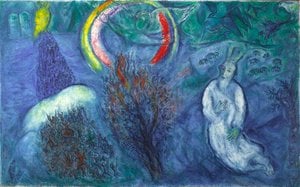
A Symphony of Color and Myth: Exploring Marc Chagall’s “Moses with the Burning Bush” Marc Chagall's "Moses with the Burning Bush," completed in 1966, isn’t simply a painting;…

Blue Lovers (1914) od Marc Chagall
#26

Blue Lovers

1914

Marc Chagall’s “Blue Lovers,” completed in 1914 during his formative years as a Cubist innovator, transcends mere visual representation; it embodies the very essence of romantic connection. Measuring…

Svadba (1944) od Marc Chagall
#27

Svadba

1944

Slávnosť Radosťou a Tradiciou: Preskúmanie Maľby Marca Šagala „Svadba“ Maľba Marca Šagala „Svadba“ je fascinujúca olejomaľbská maľba na plátne, ktorá zosúverňuje esenciu radosti, lásky a komunity. Vytvorená v…

Modliaci sa Žid (Rabín z Vitebsku) (1914) od Marc Chagall
#28

Modliaci sa Žid (Rabín z Vitebsku)

1914

Marc Chagallov obraz Modlitba Žida (Rabína z Vitebsku), namaľovaný v roku 1914, nie je len portrét; je to ponárajúca skúsenosť – živý, snový ponor do srdca židovskej identity…

The Three Candles (1940) od Marc Chagall
#29

The Three Candles

1940

The Three Candles: A Dreamscape of Hope Amidst Darkness Marc Chagall’s *The Three Candles* stands as a poignant emblem of resilience and spiritual yearning—a testament to the artist's…

Sen v letnej noci (1939) od Marc Chagall
#30

Sen v letnej noci

1939

Sen letnej noci: Hlboký ponor do sveta Marca Chagalla Marc Chagall, majster snov a farieb, v roku 1939 stvoril dielo, ktoré presahuje hranice obyčajného obrazu – „Sen letnej…

Svadobné sviečky (1945) od Marc Chagall
#31

Svadobné sviečky

1945

Maľba Marca Chagalla z roku 1945, “Svietidlá Svadoby”, nie je len zobrazenie svadby; je to ponorenie do hlboko osobného a hlboko symbolického sveta umelca. Bola vytvorená po úmrtí…

Nude Lying Down (1914) od Marc Chagall
#32

Nude Lying Down

1914

In his 1914 masterpiece, Nude Lying Down, Marc Chagall invites the viewer into a realm where the boundaries between reality and the subconscious dissolve. This striking black and…

Narodeniny, Moma NY (1915) od Marc Chagall
#33

Narodeniny, Moma NY

1915

Marc Chagallovo dielo Narodenia (Birthday, Moma NY) z roku 1915 nie je len obraz; je to vstup do sveta plného snov, emócií a hlbokých asociácií. Tento kaleidoskopický záber,…

Moses receiving the Tablets of Law (1963) od Marc Chagall
#34

Moses receiving the Tablets of Law

1963

A Divine Revelation: Exploring Marc Chagall’s *Moses Receiving the Tablets of Law* Marc Chagall, a master of color and emotion, consistently revisited biblical narratives throughout his prolific career.…

Sneh, zima v Vitebsku (1911) od Marc Chagall
#35

Sneh, zima v Vitebsku

1911 · Metropolitné múzeum umenia

Pohľad na dielo Sneh, zima v Vitebsku je ako vstup do spomienky, ktorú čas jemne zjemnil a ktorému dal odtieň emócia. Táto scéna zachytáva tichý, zasnežený okamih v…

Cestujúci 'Antilopy' (1969) od Marc Chagall
#36

Cestujúci 'Antilopy'

1969

Faremná krajina v tónoch farieb: Odhalenie Chagallových „Cestujúcich 'Antilopy'“ V éterálnom kráľovstve Marca Chagalla je realita len nápadom a spomienka slúži ako skutočný architekt formy. Jeho litografia z…

Hold Gogoľovi. Návrh zámesi pre Gogoľov festival. (1917) od Marc Chagall
#37

Hold Gogoľovi. Návrh zámesi pre Gogoľov festival.

1917 · MoMA - Museum of Modern Art

Marc Chagallovo dielo „Hold Gogolovi“, koncipované ako návrh opony určený pre Gogolov festival, nie je len obyčajným dekoračným prvkom; je to živá destilácia pamäte, viery a hlboko zakorenenej…

Paris through the Window (1913) od Marc Chagall
#38

Paris through the Window

1913

A Window into Chagall’s Soul: Decoding ‘Paris Through the Window’ Marc Chagall's 1913 masterpiece, *Paris Through the Window*, is more than just a cityscape; it’s a deeply personal…

Exodus (1966) od Marc Chagall
#39

Exodus

1966

Snová krajina viery: Dekódovanie diela „Exodus“ od Marca Chagalla V okamihu, keď sa človek stretne s majstrovským dielom Marca Chagalla z roku 1966, ktorým je Exodus, hranice medzi…

Čítateľský ľúchez (1915) od Marc Chagall
#40

Čítateľský ľúchez

1915

Česť slovenského umenia: Rozhovor o „Poetovi položenom“ Marca Chagalla Marc Chagall, ruský a francúzsky umelecký spisovatel, žil (1887 – 1985) a jeho tvorba zostala nezlomne spätá s osobným…

Vojna (1966) od Marc Chagall
#41

Vojna

1966

Dielo „Vojna“ od Marca Chagalla, dokončené v roku 1966, stojí ako dojmovivý svedok úzkostí, ktoré sa vŕtali pod povrchom povojnovej Európy. Toto maľobleskové plátno je však viac než…

Bella and Ida by the Window (1916) od Marc Chagall
#42

Bella and Ida by the Window

1916

A Window Into Chagall’s Dreamscape Marc Chagall's “Bella and Ida by the Window,” painted in 1916, isn’t merely a depiction of a domestic scene; it’s an immersion into…

Dans mon pays od Marc Chagall
#43

Dans mon pays

Galleria Civica di Arte Moderna e Contemporanea Torino

Dans Mon Pays: A Dreamscape of Memory and Symbol “Dans Mon Pays,” painted in 1943 during Chagall’s exile in Cranberry Lake, New York State, stands as a poignant…

The Jacob's Dream (1966) od Marc Chagall
#44

The Jacob's Dream

1966

A Vision of Faith and Ascent: Exploring Marc Chagall’s *The Jacob's Dream* The Jacob's Dream*, painted in 1966, is a monumental work (195 x 278 cm) by the…

Dom s zeleným očom (1944) od Marc Chagall
#45

Dom s zeleným očom

1944

Marc Chagall, svetoznámy ruský impresionista a surrealista, vytvoril obraz „Dom s zeleným okom“ v roku 1944 – diel, ktorý sa rýchlo stal ikonickým znakom jeho tvorby. Tento obraz…

Novomanželové s Eifflovou vežičkou v pozadí (1983) od Marc Chagall
#46

Novomanželové s Eifflovou vežičkou v pozadí

1983

Parížska rozkoš: Prezkum Marc Chagalla „Novosposúšť s Eiffelovou vežou v pozadí“ Marc Chagall, majster lyrickej abstraktnej a plynnú symboliky, vytvoril „Novosposúšť s Eiffelovou vežou v pozadí“ v roku…

Lovers in pink (1916) od Marc Chagall
#47

Lovers in pink

1916

A Dreamscape of Tenderness In the quiet, evocative depths of Marc Chagall’s 1916 masterpiece, Lovers in Pink, we find a world where the boundaries between reality and memory…

The cowshed (1917) od Marc Chagall
#48

The cowshed

1917

Marc Chagall’s “The Cowshed”: A Journey Into Belarusian Memory Marc Chagallovaho obraz “Rozsieva” nie je len jednoduché znázornenie vidieckeho života; je to silná distillácia spomienok, folklóru a umelcovej…

To Russia, with Asses and Others (1912) od Marc Chagall
#49

To Russia, with Asses and Others

1912

In the vibrant tapestry of early twentieth-century modernism, few works capture the whimsical intersection of reality and fantasy as poignantly as Marc Chagall's 1912 masterpiece, "To Russia, with…

The Lovers (1929) od Marc Chagall
#50

The Lovers

1929 · Tel Aviv Museum of Art

Painted during Chagall's formative years in Vitebsk—a city pulsating with cultural diversity—the artwork reflects the artist’s engagement with both Jewish tradition and Russian Orthodox spirituality. Vitebsk served as…

Moses and the burning bush (1966) od Marc Chagall
#51

Moses and the burning bush

1966

In the ethereal realm of Marc Chagall’s "Moses and the Burning Bush," the boundaries between the earthly and the divine do not merely blur; they dissolve entirely. Created…

The dream (The rabbit) (1927) od Marc Chagall
#52

The dream (The rabbit)

1927

A Surrealist Reverie: Marc Chagall’s “The Dream (The Rabbit)” Marc Chagall's "The Dream (The Rabbit)," painted in 1927, isn’t merely a depiction of an image; it’s an immersion…

Still Life with Lamp (1910) od Marc Chagall
#53

Still Life with Lamp

1910

The Threshold of Dreams In 1910, Marc Chagall crafted a work that transcends the boundaries of mere representation, inviting us into a world where memory and imagination intertwine.…

Veľký Cirkevník (1968) od Marc Chagall
#54

Veľký Cirkevník

1968

Obraz Marc Chagalla s názvom Veľký Cirkevník, vytvorený v roku 1968, je oveľa viac než len prostým zachytením živého vystúpenia; je to vibrujúca destilácia pamäti, fantázie a hlboko…

The Creation of Man (1958) od Marc Chagall
#55

The Creation of Man

1958

Created in 1958, this dynamic work by Marc Chagall – measuring a captivating 45 x 28 cm – is a quintessential example of his mature style. It's not…

The flying clown (1981) od Marc Chagall
#56

The flying clown

1981

In the ethereal realm of Marc Chagall’s “The Flying Clown,” the boundaries between the tangible world and the boundless landscape of dreams dissolve into a vibrant, kinetic dance.…

Nebo vznecuje (1954) od Marc Chagall
#57

Nebo vznecuje

1954

Dielo Marc Chagalla s názvom „Nebo vznecuje“, vytvorené v roku 1954, nie je len prostým zachytením scény; je to hlboká imersia do umelcovho intenzívne osobného a hlboko symbolického…

White crucifixion, The Art Institute of Chicag (1938) od Marc Chagall
#58

White crucifixion, The Art Institute of Chicag

1938

Marc Chagall’s “White Crucifixion,” painted in 1938 amidst the escalating horrors of Europe, is not merely a depiction of Christ's sacrifice; it’s a searing indictment of injustice and…

Slávnosť Sukkotu (1916) od Marc Chagall
#59

Slávnosť Sukkotu

1916

Marc Chagall's The Feast of the Tabernacles is a vibrant and captivating painting that showcases the artist's unique blend of Cubism and Jewish heritage. Created in 1916, this…

Milenci pri moste (1948) od Marc Chagall
#60

Milenci pri moste

1948

Dielo „Milenci pri moste“ pevne zakotvené v rámci náivevnou umeleckého umenia (alebo primitívizmu), hnutia, ktoré sa rozkvitlo na začiatku 20. storočia a ktoré reprezentovali umelci, ktorí sa zámerne…

Cirkov (1964) od Marc Chagall
#61

Cirkov

1964

Foto Popis: Maľba zobrazuje farebnú scénu cirku s rôznymi výkoncami a zvieratami. Na obrázku je niekoľko ľudí, niektorí stoja, iných sa zdržujú trikom alebo interagujú jeden s druhým.…

Song of Songs II (10) (1957) od Marc Chagall
#62

Song of Songs II (10)

1957

To stand before Marc Chagall’s Song of Songs II is not merely to observe a painting; it is to step directly into the vibrant, intoxicating current of a…

Cirkus (1980) od Marc Chagall
#64

Cirkus

1980

„Cirkus“ Marca Chagalla, vytvorený v roku 1980, nie je len obyčajným zobrazením kočujúcej šou; je to ponorenie sa do sveta, kde sa prepletajú realita a fantázia, svedectvo o…

Náprava nad Viciebskom (1933) od Marc Chagall
#65

Náprava nad Viciebskom

1933

Úvod do Umelca: Marc Chagall Marc Chagall, narodil sa v roku 1887 ako Moishe Segal, bol známy ruský-francúzsky umelec, ktorý si získal uznanie pre svoj jedinečný štýl, kombinujúci…

Zelení milenci (1915) od Marc Chagall
#67

Zelení milenci

1915

Chagallov vstup do světa kubizmu nebol prostým prijatím geometrických princípov tohto hnutia; skôr ich majstrovsky adaptoval – spetľením povrchov a vrstvením prekrývajúcich sa plôch – aby dokázal vyjadriť…

The Carnival, scene II of the Ballet ''Aleko'' (1942) od Marc Chagall
#68

The Carnival, scene II of the Ballet ''Aleko''

1942

The artwork titled The Carnival, scene II of the Ballet ''Aleko'' is a surrealist piece created by Marc Chagall in 1942. The composition presents a dynamic and energetic…

The Fiddler, National Gallery of Art at Was (1913) od Marc Chagall
#69

The Fiddler, National Gallery of Art at Was

1913

Marc Chagall’s “The Fiddler,” painted in 1913 during his formative years in Paris, isn't merely a depiction of a musician; it’s a vibrant distillation of memory, folklore, and…

The rooster in love (1947) od Marc Chagall
#70

The rooster in love

1947

The Rooster in Love Marc Chagall's The Rooster in Love is a captivating surrealist painting that embodies the artist’s unique blend of fantasy and symbolism. Created in 1947,…

Kôň s tiennikom (1946) od Marc Chagall
#71

Kôň s tiennikom

1946

Marc Chagall “Cow with Parasol”: A Surrealist Reverie Captured on Canvas Marc Chagall’s “Cow with Parasol,” painted in 1946, transcends mere depiction—it embodies a profound exploration of the…

The Vision of Ezekiel (Ezekiel, I, 4-14) (1956) od Marc Chagall
#72

The Vision of Ezekiel (Ezekiel, I, 4-14)

1956

In the profound depths of Marc Chagall’s 1956 masterpiece, “The Vision of Ezekiel,” viewers are invited to step beyond the boundaries of the physical world and into a…

Tri anjeli navštevujú Abraháma (Genesis, XVIII, 1-8) (1956) od Marc Chagall
#73

Tri anjeli navštevujú Abraháma (Genesis, XVIII, 1-8)

1956

Božské stretnutie: Prezkumaujeme „Tri anjeli navštívia Abraháma“ Chagalla Marc Chagallova gravúra z roku 1956, *Tri anjeli navštívia Abraháma*, je pútavým destilačným výkladom viery, pohostinnosti a trvajúcej sily narratívu.…

Mounting the ebony horse (1948) od Marc Chagall
#74

Mounting the ebony horse

1948

A Surreal Journey: Exploring Marc Chagall’s *Mounting the Ebony Horse* Marc Chagall's *Mounting the Ebony Horse*, created in 1948, is a captivating and enigmatic work that exemplifies his…

Birth (1910) od Marc Chagall
#75

Birth

1910

Marc Chagall's “Birth,” painted in 1910, stands as a cornerstone of Expressionism and an enduring testament to the artist’s unparalleled ability to translate emotion into visual form. Measuring…

In the night (1943) od Marc Chagall
#76

In the night

1943

In the quietude of 1943, amidst a world gripped by the shadows of global conflict, Marc Chagall captured a moment of profound intimacy that transcends time. In the…

Field of Mars (1955) od Marc Chagall
#77

Field of Mars

1955

Marc Chagall’s “Field of Mars,” painted in 1955, isn't merely a depiction of a landscape; it’s an immersion into a deeply personal and profoundly symbolic dreamscape. Born Moishe…

The War (1943) od Marc Chagall
#78

The War

1943

The canvas unfolds as a turbulent dream where gravity has lost its grip on reality. Figures float through a heavy, somber atmosphere, drifting amidst broken buildings and a…

The walk (1973) od Marc Chagall
#80

The walk

1973

To encounter Marc Chagall’s 1973 masterpiece, “The Walk,” is to step through a veil separating the tangible world from the ethereal realm of memory. This evocative work does…

The Father (1911) od Marc Chagall
#81

The Father

1911 · Musée d'Art et d'Histoire du Judaïsme

A vertical close-up focuses on an elderly man, his face and upper torso filling the frame. He possesses a prominent, heavy beard that descends toward his chest. The…

Le Quai de Bercy od Marc Chagall
#82

Le Quai de Bercy

In the ethereal realm of Marc Chagall’s Le Quai de Bercy, the boundaries between the Parisian cityscape and the artist's Belarusian soul dissolve into a luminous, nocturnal dance.…

Lovers od Marc Chagall
#83

Lovers

Marc Chagall's "Lovers," rendered in a captivating monochrome palette, isn’t merely a depiction of an intimate moment; it’s a portal into the artist’s deeply personal world—a realm where…

Grey Lovers (1917) od Marc Chagall
#85

Grey Lovers

1917

The Intimacy of Shadows In Grey Lovers, Marc Chagall invites the viewer into a world where the boundaries between personal connection and global upheaval dissolve into a hauntingly…

Bercy Embankment (1953) od Marc Chagall
#86

Bercy Embankment

1953

A Luminous Voyage Through a Surrealist Dream In 1953, amidst the heavy shadows of the Cold War era, Marc Chagall gifted the world Bercy Embankment, a masterpiece that…

Feast Day (Rabbi with Lemon) (1914) od Marc Chagall
#87

Feast Day (Rabbi with Lemon)

1914

In the luminous realm of Marc Chagall’s "Feast Day (Rabbi with Lemon)," created in 1914, the boundaries between reality and dream dissolve into a breathtaking display of color.…

The Wailing Wall (1932) od Marc Chagall
#88

The Wailing Wall

1932 · Tel Aviv Museum of Art

In the quiet, textured expanse of Marc Chagall’s 1932 masterpiece, The Wailing Wall, the viewer is not merely looking at a depiction of a historical site, but is…

Portrait of Brother David with Mandolin (1914) od Marc Chagall
#89

Portrait of Brother David with Mandolin

1914

A Glimpse into Chagall’s Soul: Brother David with Mandolin Marc Chagall's *Portrait of Brother David with Mandolin*, painted in 1914, is more than just a depiction of a…

Lovers for Berggruen (The offering) (1965) od Marc Chagall
#90

Lovers for Berggruen (The offering)

1965

In the ethereal realm of Marc Chagall’s "Lovers for Berggruen (The offering)," the boundaries between reality and the subconscious dissolve into a breathtaking dance of form and feeling.…

Composition with Circles and Goat (1920) od Marc Chagall
#91

Composition with Circles and Goat

1920

In the ethereal realm of Marc Chagall’s “Composition with Circles and Goat,” painted in 1920, the boundaries between the tangible world and the subconscious dissolve into a luminous…

Veľký Cirkevník (1984) od Marc Chagall
#93

Veľký Cirkevník

1984

Marc Chagall (1887 – 1985) bol ruský a francúzsky umelecký impresionista, ktorý si získal svetové uznanie svojimi fantastickými obrazmi plnými snových motívov, tém židovského folklóru a úžasného sklárskeho…

Marching (1915) od Marc Chagall
#94

Marching

1915

Ultimately, Chagall’s “I Am Alone” transcends its historical origins to resonate with viewers across generations. It's a hauntingly beautiful meditation on solitude, loss, and the enduring quest for…

Noc (1953) od Marc Chagall
#95

Noc

1953

V tichých hĺbkach roku 1953 Marc Chagall vyvolal víziu, ktorá sa vzdoruje hranicom reality a pozýva nás do ríše, kde sa zákony fyziky podria whims podvedomia. Jeho majstrovské…

The Holy Coachman (1912) od Marc Chagall
#96

The Holy Coachman

1912

In the profound depths of Marc Chagall’s 1912 masterpiece, The Holy Coachman, viewers are not merely observing a canvas but are invited into a shimmering tapestry woven from…

Song of Songs I (1960) od Marc Chagall
#97

Song of Songs I

1960

In the vast landscape of twentieth-century modernism, few works possess the ethereal, dreamlike magnetism of Marc Chagall’s "Song of Songs I." Created in 1960, this monumental canvas serves…

The Praying Jew, oil on canvas, The Art Instit (1923) od Marc Chagall
#98

The Praying Jew, oil on canvas, The Art Instit

1923 · Art Institute of Chicago

The Praying Jew: A Meditation on Faith and Form Marc Chagall’s *The Praying Jew*, painted in 1923, transcends mere representation; it embodies the artist's profound engagement with Jewish…

The return of the prodigal son (1975) od Marc Chagall
#99

The return of the prodigal son

1975

The Return of the Prodigal Son: A Symphony of Emotion in Chagall’s Naive Vision Marc Chagall's "The Return of the Prodigal Son," created in 1975, transcends mere representation;…

Marc Chagall's paintings by period

Dospelý Obdobie

1918 – 1964 · 4 diel v tomto zozname

The subjects Marc Chagall painted most

The four subjects that return most often among these masterpieces, with the finest example of each.

Where to see Marc Chagall's paintings

8 múzeá, v ktorých sa nachádza najviac obrazov z tejto stránky.

Múzeá Mesto Diela umelca Marc Chagall Obrazy z tohto zoznamu
MoMA - Museum of Modern Art, New YorkMoMA - Museum of Modern Art New York 4 Ja a dedina, Hold Gogoľovi. Návrh zámesi pre Gogoľov festival.
Art Institute of Chicago, ChicagoArt Institute of Chicago Chicago 4 Biele ukrižovanie, The Praying Jew, oil on canvas, The Art Instit
Tel Aviv Museum of Art, Tel AvivTel Aviv Museum of Art Tel Aviv 2 The Lovers, The Wailing Wall
Metropolitné múzeum umenia, New YorkMetropolitné múzeum umenia New York 2 Sneh, zima v Vitebsku
Kunstmuseum Basel, BazilejKunstmuseum Basel Bazilej 1 Padajúci Anjel
Solomon R. Guggenheim Museum, New YorkSolomon R. Guggenheim Museum New York 1 Čierny vojdak
Galleria Civica di Arte Moderna e Contemporanea Torino, TurínGalleria Civica di Arte Moderna e Contemporanea Torino Turín 1 Dans mon pays
Szépművészeti Múzeum, BudapešťSzépművészeti Múzeum Budapešť 1 Kompozíčná štúdia k dielu ‚Do Ruska, oslov a iným‘

Marc Chagall, decade by decade: the defining painting of each

  1. 1910s
    Ja a dedina (1911) od Marc Chagall
    #1 of 100

    Ja a dedina

    Vek 23 – 32 · MoMA - Museum of Modern Art

    Vytvorená v roku 1911, táto fascinujúca olejomaľba na plátne je základným kameňom raného tvorivého obdobia Marca Chagalla a kľúčové dielo vo vývoji moderného umenia. S rozmermi 191 x…

  2. 1920s
    Žltý violinist (1924) od Marc Chagall
    Rank 5 / 100

    Žltý violinist

    Vek 33 – 42

    Vstúpte do snového rýmu diela Zelený violinista od Marca Chagalla, majstrovského diela, ktoré zachytáva samotnú podstatu židovského folklóru a pulzujúcu energiu modernizmu raného 20. storočia. Táto ikonická maľba,…

  3. 1930s
    Biele ukrižovanie (1938) od Marc Chagall
    No. 2 of 100

    Biele ukrižovanie

    Vek 43 – 52 · Art Institute of Chicago

    V strede plátna dominuje bledá postava na bielom kríži. Tento Kristus má cez telo preháňanú modlitobnú šálu, známú ako tallit. Nad jeho hlavou sa objavuje nápis INRI spolu…

  4. 1940s
    Padajúci Anjel (1947) od Marc Chagall
    No. 6 of 100

    Padajúci Anjel

    Vek 53 – 62 · Kunstmuseum Basel

    Predmet a kompozícia Toto úchvatné majstrovské dielo predstavuje komplexnú, symbolickú scénu plnú živých obrazov a dynamického pohybu. V jadre kompozície sa nachádza ohnivá, krídlatá postava, ktorá sa zdá…

  5. 1950s
    Oslobadenie (1952) od Marc Chagall
    #10 of 100

    Oslobadenie

    Vek 63 – 72

    Toto zachvátivé dielo od Marca Chagalla, vytvorené v roku 1952, predstavuje živé svedectie o trvalej sile lásky, viery a kultúrneho dedičstva. Ide o oveľa viac než len o…

  6. 1960s
    Abraham a tri anjelov (1966) od Marc Chagall
    No. 8 of 100

    Abraham a tri anjelov

    Vek 73 – 82

    Marc Chagallova obraz „Abraham a tria anjelov“, vytvorený v roku 1966, predstavuje pozoruhodný príklad Naïvej umelejnosti (Primitivismu), ktorý oživuje zásadné okamihy biblického rozprávania. Tento obraz s rozmermi 190…

  7. 1970s
    The Myth of Orpheus (1977) od Marc Chagall
    Rank 21 / 100

    The Myth of Orpheus

    Vek 83 – 92

    In the twilight of his long and luminous career, Marc Chagall gifted the world with The Myth of Orpheus, a 1977 masterpiece that serves as a profound window…

  8. 1980s
    Novomanželové s Eifflovou vežičkou v pozadí (1983) od Marc Chagall
    Rank 46 / 100

    Novomanželové s Eifflovou vežičkou v pozadí

    Vek 93 – 98

    Parížska rozkoš: Prezkum Marc Chagalla „Novosposúšť s Eiffelovou vežou v pozadí“ Marc Chagall, majster lyrickej abstraktnej a plynnú symboliky, vytvoril „Novosposúšť s Eiffelovou vežou v pozadí“ v roku…

Marc Chagall's masterpieces: questions and answers

Which painting is Marc Chagall best known for?Show the answer

Ja a dedina (1911), MoMA - Museum of Modern Art, New York. Next come Biele ukrižovanie (1938) and Narodeniny (1915).

How old was Marc Chagall when painting Ja a dedina?Show the answer

24 years old: Ja a dedina dates from 1911 and Marc Chagall was born in 1887.

What are Marc Chagall's ten greatest paintings?Show the answer

Ja a dedina, Biele ukrižovanie, Narodeniny, Nad mestom, Žltý violinist, Padajúci Anjel, Čierny vojdak, Abraham a tri anjelov, Adam and Eve expelled from Paradise a Oslobadenie. The ranking above gives the year and the museum of each.

How many works did Marc Chagall paint?Show the answer

Our catalogue lists 936 works by Marc Chagall, dated from 1910 to 1984.

In which museums can I see Marc Chagall's masterpieces?Show the answer

Most of them are in MoMA - Museum of Modern Art (New York), Art Institute of Chicago (Chicago) a Tel Aviv Museum of Art (Tel Aviv). The table above lists the museums one by one.

When did Marc Chagall paint the masterpieces?Show the answer

In 1910s: 30 of the 100 works on this page date from then, among them Ja a dedina.

What are the first and last famous paintings of Marc Chagall?Show the answer

The earliest on this page is Still Life with Lamp (1910), the latest Veľký Cirkevník (1984).

What were Marc Chagall's favourite subjects?Show the answer

Folklore (22), Dreams (17) a Jewish folklore (14), among the 100 works on this page.

Which technique did Marc Chagall favour?Show the answer

Olej na plátne: 34 of the 100 works on this page.

Which masterpieces by Marc Chagall hang at the MoMA - Museum of Modern Art?Show the answer

Ja a dedina a Hold Gogoľovi. Návrh zámesi pre Gogoľov festival. are among the 2 works on this page held by the MoMA - Museum of Modern Art, New York.

The life of Marc Chagall

A Life Painted in Dreams: The World of Marc Chagall

Marc Chagall, born Moishe Shagal in 1887 in the small Belarussian town of Liozna near Vitebsk, wasn’t merely a painter; he was a poet of color, a weaver of dreams, and a chronicler of memory. His life, spanning nearly a century, mirrored the tumultuous currents of the 20th century, yet his art remained steadfastly rooted in a deeply personal vision—one infused with the folklore of his Hasidic Jewish upbringing and an unwavering belief in the power of imagination. Vitebsk itself was more than just a birthplace; it became the emotional core of his artistic universe, a recurring motif populated by flying figures, whimsical animals, and the vibrant hues of remembered landscapes. The town’s unique blend of cultures—Russian Orthodox churches alongside bustling Jewish marketplaces—forged an aesthetic sensibility that would defy easy categorization throughout his long career. Though he sought formal training first with a local sign painter and later in St. Petersburg under Léon Bakst, and then in Paris at the Académie de la Grande Chaumière, Chagall never fully embraced any single artistic movement. He absorbed elements of Cubism, Symbolism, and Fauvism, but always filtered them through his own intensely personal lens, creating a style that was uniquely, unmistakably Chagall.

Early Years and Artistic Formation

Chagall’s formative years were marked by hardship and displacement. Born into a Jewish family in Vitebsk—a town steeped in Orthodox tradition—he experienced firsthand the challenges faced by Jews living under Tsarist rule. Despite limited formal education, he possessed an innate artistic talent that quickly blossomed. His initial training began with a local sign painter, honing his skills in draftsmanship and color theory. Subsequently, he pursued studies at St. Petersburg’s Zvantseva School of Drawing and Painting, where he encountered the influential teachings of Léon Bakst—a pioneer of theatrical design who championed avant-garde aesthetics. This exposure to Bakst's ideas profoundly shaped Chagall’s artistic sensibilities, introducing him to the principles of Cubism and fostering his fascination with geometric abstraction. Recognizing the importance of broadening his horizons, he traveled to Paris in 1908, immersing himself in the vibrant intellectual and artistic milieu of the École de Paris—a collective of artists who rejected academic conventions and embraced experimentation. During this period, he befriended fellow artists like Pablo Picasso and André Derain, absorbing their stylistic innovations and refining his own visual language.

The Symbolist Vision

Chagall’s early paintings—such as I and the Village (1911)—demonstrate a distinctive preoccupation with symbolism and memory. Unlike traditional landscapes that strive for objective representation, Chagall's depictions of Vitebsk are fragmented recollections imbued with emotional significance. Figures float amidst stylized forms, conveying feelings of longing and nostalgia—a characteristic trait that would define his artistic style throughout his career. The artist’s palette is bold and expressive, employing vibrant hues to communicate emotion rather than literal accuracy. This stylistic approach reflects Chagall's deep connection to Jewish folklore and mythology, as well as his profound engagement with the spiritual traditions of his upbringing. His use of color—particularly yellows, blues, and reds—is deliberately unconventional, creating a dreamlike atmosphere that transcends rational perception.

The Turbulent Years: Revolution and Exile

The Russian Revolution dramatically altered Chagall’s life trajectory. Returning to Vitebsk in 1917 amidst the upheaval of Bolshevik rule, he became involved in cultural initiatives aimed at revitalizing Belarusian art and culture. He established an Art School in Vitebsk—a bold experiment in artistic education that briefly flourished before succumbing to political pressures. During this period, Chagall wrestled with conflicting ideological impulses—embracing socialist ideals while simultaneously cherishing his Jewish heritage. The outbreak of World War I forced him into exile, disrupting his creative pursuits and propelling him back to Paris. Despite the hardships endured during wartime, Chagall continued to produce artwork that reflected the anxieties and uncertainties of the era. His painting White Crucifixion (1938)—a poignant meditation on suffering and persecution—stands as a testament to this period’s emotional intensity.

International Recognition and Artistic Legacy

Chagall achieved international acclaim during World War II, escaping occupied France with his wife in May 1941. He found refuge in New York City, where he resided for seven years, fostering collaborations with fellow artists and engaging in prolific creative activity. His work gained prominence during the Abstract Expressionist movement, cementing his reputation as one of the most influential figures in modern art. Following the war, Chagall returned to France, continuing to paint until his death in 1985 at Saint-Paul-de-Vence—a picturesque Provençal village that served as his artistic sanctuary for decades. His enduring legacy resides not only in his stunning paintings and stained glass windows but also in his unwavering commitment to artistic integrity and imaginative vision—a vision that continues to inspire artists and audiences alike. Chagall’s art transcends cultural boundaries, conveying universal themes of love, loss, faith, and remembrance—a testament to the transformative power of creativity and the enduring beauty of dreams.

Všetky 936 diela od Marc Chagall →