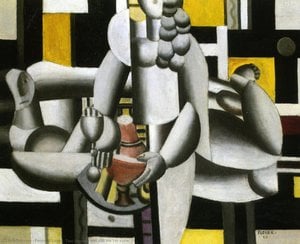
Fernand Léger, 1881 – 1955

The 100 Most Famous Paintings by Fernand Léger

The painting that made Fernand Léger famous is Mesto (1919). The Mechanic (1920) and Tri ženy (1921) follow it in the hearts of collectors and museum visitors. Of the 834 works by Fernand Léger in our catalogue, these 100 are the most admired, each presented with its date, its museum and what sets it apart.

Poriadkované podľa nášho skóre popularity, ktoré kombinuje počet vyhľadávaní, návštev a objednávok pre každé dielo. Aktualizované október 2026. Every masterpiece on this page can be ordered as a museum-quality, hand-painted oil reproduction or a fine art print, at the size you choose.

Portrét Fernand Léger
Fernand Léger · 1881 – 1955
Narodený · zomrel
1881 – 1955, Argentan
Pohyb
Kubizmus
Diela v našom katalógu
834
Najznámejšie
Mesto (1919)
Najviac diel v
MoMA - Museum of Modern Art

Fernand Léger: the ten masterpieces

Mesto (1919) od Fernand Léger
1

Mesto

1919 · Olej na plátne

Fernand Légerovo Mesto, vytvorené v roku 1919, nie je len obrazom rušného mestského prostredia; je to monumentálna manifestácia jeho zrelého štýlu a hlboká reflexia na modernú dobu. Tento dielo, s rozmermi 230 x 297 cm, presahuje hranice jednoduchého zobrazovania ulíc a budov – stáva sa dynamickým vyjadrením formy, farby a samotnej esencie moderného života. Léger v tomto dieli neprechodne replikuje realitu, ale odkrýva jej podkladové štruktúry a rytmus, čím sa…

The Mechanic (1920) od Fernand Léger
2

The Mechanic

1920 · Olej na plátne · Národná galéria Kanady, Ottawa

Fernand Légerova maľba „Mechanik“ z roku 1920 je fascinujúca kombinácia mechanického a ľudského sveta, ktorá odráža duch doby avant-gardy. Táto dynamická kompozícia, v ktorej sa spájajú figúry ľudí s abstraktnými geometrickými formami, vytvára živý tanec, ktorý vyjadruje umelcovo fascináciu priemyslom a mechanickou estetickou. Léger, známy svojím tubistickým štýlom – charakterizovaným dôrazom na cylindrické tvary a výrazné primárne farby – v tomto dielo ukazuje svoju schopnosť zachytiť esenciu moderny prostredníctvom vizuálneho…

Tri ženy (1921) od Fernand Léger
3

Tri ženy

1921 · Olej na plátne · MoMA - Museum of Modern Art, New York

Úvod „Tri ženy“ od Fernanda Légera z roku 1921 predstavujú majstrovské dielo moderného umenia, ktoré bezchybne spája vplyvy kubizmu a štýlu Art Deco. Táto živá a dynamická kompozícia zachytáva samotnú podstatu modernosti začiatku 20. storočia, čím sa stáva pútavým doplnkom každej súčasnej umeleckej zbierky či sofistikovaného interiéru. Predmet a kompozícia Umelecké dielo zobrazuje tri ženské postavy zapojené do voľnočasových aktivít, usporiadané do trojuholníkového tvaru, ktorý vytvára pocit rovnováhy a harmónie.…

Nudy v lese (1910) od Fernand Léger
4

Nudy v lese

1910 · Olej na plátne · Kröller-Müller Museum, Otterlo

Dielo Nudes in the Forest (1909–1910) od Fernanda Légera predstavuje kľúčový moment, ktorý označil zásadnú fázu v rozvoji kubizmu. Nejde len o jednoduchú znázornenie postáv uprostred stromov; je to odvážna dekonstrukcia tvaru a perspektívy, ktorá stále fascinuje divákov aj po viac ako столеtí. Tento obraz nie je o tom, čo je zobrazené, ale o tom, ako – čo je radikálny prístup, ktorý definoval moderné umenie nanovo.

Veľký sprievod (1954) od Fernand Léger
5

Veľký sprievod

1954 · Olej na plátne

Fernand Légerova obraz “The Great Parade” nie je len ilustrácia karnevalu alebo prehliadky; je to dynamická, pulzujúca reprezentácia samotnej duše moderny. Vytvorená v roku 1954, táto rozsiahla kompozícia, teraz vystavená v Solomon R. Guggenheim Museum, zachytáva energiu a zmatenú radosť davu, ktorý sa ocitá v preplnenom prostredí, kde mechanické prvky spájajú s ľudskými formami. Léger, umelec známy svojou schopnosťou elegantne integrovať industriálnu estetiku do svojho umenia, tu vytvára obraz, ktorý…

Svadba od Fernand Léger
6

Svadba

Olej na plátne

Fernand Léger: A Pioneer of Cubism – Capturing the Rhythm of Modernity Fernand Léger, narodil sa Joseph Fernand Henri Léger v roku 1881 v prostredí vidieckych krajín Argentanu, Normandia, a predstavuje významného predstaviteľa francúzskej avantgardy. Jeho cesta od záhradných práce až po vrchol paryžskej umeleckej scény je dôkazom nezlomenej umeleckej vizi a neustáleho úsilia zachytiť ducha strojového veku. Na rozdiel od mnohých svojich kolegov, ktorí abstraktnú tvorbu videli ako únik…

Raňajky (1921) od Fernand Léger
7

Raňajky

1921 · Olej na plátne · MoMA - Museum of Modern Art, New York

V živončavom prostredí raného 20. storočia modernizmu má len málo diel zachytávať rytmický pulz meniacej sa éry takáto pôsobivo ako Fernand Léger vo svojich Raňajkách. Toto majstrovské dielo, vytvorené v roku 1921, slúži ako okno do sveta, v ktorom sa domáce a priemyselné začali zlúčať do jednej, dynamickej vízie. Scéna predstavuje skupinu trie žien zhromaždených okolo stola, no tie nie sú len tradičnými postavami v tichom portréte. Namiesto toho, prostredníctvom…

Žena s kvetinovou kytou (1920) od Fernand Léger
8

Žena s kvetinovou kytou

1920 · Olej na plátne · Staatsgalerie Stuttgart, Stuttgart

Z mriežky ťažkých čiernych línií sa vyniera žena, ktorej postava je vybudovaná z valcov a sfér. Drží kytu kvetov, no tie nie sú jemnými płatkami, lecz fragmentmi červenej, žltej a modrej farby. Každý tvar pôsobí vážne, akoby bol vytesaný zo ocele alebo odliaty z železa. Masívne obrysy definujú telo, ktoré sa pohybuje s rytmickou presnosťou stroja. Tu nie je žiadny tieň, ktorý by splavil hrany; existujú len ploché plány farieb…

Composition in Blue od Fernand Léger
9

Composition in Blue

Olej na plátne · Art Institute of Chicago, Chicago

Fernand Léger’s "Composition in Blue" is a quintessential example of modernist art, showcasing his unique blend of Cubism and Futurism. The painting features a striking composition dominated by shades of blue, with a central figure – seemingly a woman or humanoid form – rendered in various hues of the color. This figure is partially obscured by a large blue headpiece, creating an enigmatic and somewhat mechanical appearance. The artwork incorporates…

Most (1923) od Fernand Léger
10

Most

1923 · Olej na plátne · Thyssen-Bornemisza Museum, Madrid

Približte si a pozorujte, ako je priestor rozdelený. V diele Most, vytvorenom v roku 1923, neexistuje žiadna jediná perspektíva, na ktorej by oko mohlo spočívať. Namiesto toho tu nachádzame kompozíciu rozdelenú do jasných horizontálnych a vertikálnych zón, ktoré naznačujú rozbitú architektonický reality. Dva hrubé, smaragdovo zelené stĺpy zakotvujú hornú strednú časť plátna a pôsovia ako štrukturálne piliere v rámci celkového usporiadania. Za nimi sa rozvíja pozadie tvárené plochými plane červenej,…

More Fernand Léger masterpieces, 11 to 100

smokers - - ) (1912) od Fernand Léger
#11

smokers - - )

1912

Fernand Léger's "Smokers," painted in 1912, isn’t merely a depiction of men enjoying a cigarette; it’s a vibrant manifesto of early Cubism and a bold assertion of modernity.…

Bring it home →
Mural (1951) od Fernand Léger
#12

Mural

1951

Fernand Léger’s "Mural," completed in 1951, stands as an arresting embodiment of Cubist principles interwoven with a palpable fascination for the burgeoning machine age. This masterpiece does not…

Commission a hand-painted copy →
Mesto (Fragment, tretí stav) (1919) od Fernand Léger
#14

Mesto (Fragment, tretí stav)

1919 · Philadelphia Museum of Art

。Pulz ocele a primárnych farieb Plátno vibruje rytmickým, kovovým bzukotom mestskej krajiny v pohybe. Geometrické tvary – valce, obmäre a ostré oblúky – sa prekrývajú v hustej, fragmentovanej…

Commission a hand-painted copy →
Reading (1924) od Fernand Léger
#15

Reading

1924

In the quietude of an ambiguous interior, two figures sit side-by-side, lost in the profound intimacy of shared silence and individual discovery. Fernand Léger’s 1924 masterpiece, Reading, is…

Order a reproduction →
Tanec (1942) od Fernand Léger
#16

Tanec

1942

Rytmická oslava formy a farby Fernand Légerho Tanec je oveľa viac než len prostým zachytením pohybu; je to živá, pulzujúca symfónia farieb a geometrie, ktorá zachytáva samotnú esenciu…

Commission a hand-painted copy →
Disky (1910) od Fernand Léger
#17

Disky

1910 · Los Angeles County Museum of Art

Séria prekrývajúcich sa kruhov sa unáša cez plátno ako ťažké, vykreslené signály. Tieto disky, vypracované v hrubých vrstvách olejnej farby, sa pretláčajú s ostrými obdelníkovmi a diagonálnymi pásmi…

Commission a hand-painted copy →
The Bather (1932) od Fernand Léger
#18

The Bather

1932

In the quiet intersection of Surrealist dreamscapes and the rigid precision of Cubism lies Fernand Léger’s 1932 masterpiece, The Bather. This is not merely a painting of a…

Bring it home →
Three musicians (1930) od Fernand Léger
#19

Three musicians

1930

In the pantheon of twentieth-century modernism, few works capture the pulse of the machine age with as much vibrant vitality as Fernand Léger’s "Three Musicians." Completed in 1930,…

Commission a hand-painted copy →
The Man with the Pipe (1920) od Fernand Léger
#20

The Man with the Pipe

1920 · Musée d’Art Moderne de la Ville de Paris

The man sits within a grid of sharp edges and heavy lines. His body is not composed of soft skin, but of cylinders and metallic volumes that suggest…

Bring it home →
Contrast of Forms (1918) od Fernand Léger
#21

Contrast of Forms

1918

The canvas breathes with an energy that transcends mere pigment; it pulsates with the rhythm of industrial progress, captured in the bold strokes and vibrant hues of Fernand…

Order a reproduction →
Dance (1929) od Fernand Léger
#22

Dance

1929

Two nude female figures move through a landscape of interlocking shapes, their bodies caught in a moment of dynamic instability. The scene unfolds with a flattened perspective, where…

Order a reproduction →
Žena s vázou (1924) od Fernand Léger
#23

Žena s vázou

1924 · Statens Museum For Kunst

V tomto olejopise na plátne z roku 1924 sa stretávame s postavou, ktorá pôsobí neobyčajne udatne, v svojej konštrukcii takmer sochvárenej. Žena je vykreslená frontálne, jej forma je…

Commission a hand-painted copy →
The Builders (1920) od Fernand Léger
#24

The Builders

1920 · Metropolitné múzeum umenia

Fernand Léger’s “The Builders,” completed in 1920, stands as a cornerstone of Cubist aesthetics and embodies the fervent optimism surrounding technological advancement during the tumultuous years of World…

Commission a hand-painted copy →
Chojúca kvetina (La fleur qui marche) (1952) od Fernand Léger
#25

Chojúca kvetina (La fleur qui marche)

1952 · Kimbell Art Museum

„Chojúca kvetina“ od Fernanda Légera: Symfónia farieb a tvarov na pozadí priemyslu Keramická socha „Chojúca kvetina (La fleur qui marche)“ od Fernanda Légera, dokončená v roku 1952, predstavuje…

Plungers II (1942) od Fernand Léger
#26

Plungers II

1942

Symfónia formy a fragmentovanej identity V srdci roku 1942, uprostred hlbokých tieňov vrhnutých druhou svetovou vojnou, Fernand Léger predstavil Plungers II, dielo, ktoré slúži ako oveľa viac než…

Commission a hand-painted copy →
Woman with Mirror (1920) od Fernand Léger
#27

Woman with Mirror

1920 · Musée d’Art Moderne de la Ville de Paris

The painting Woman with Mirror, created in 1920, presents a configuration of geometric shapes that deconstruct the human figure and its surroundings. The composition relies on an arrangement…

Order a reproduction →
The man with the pipe (1918) od Fernand Léger
#29

The man with the pipe

1918

In the transformative landscape of early twentieth-century modernism, few works capture the rhythmic pulse of a changing world as vibrantly as Fernand Léger’s “The Man with the Pipe.”…

Order a reproduction →
Project for a mural (1952) od Fernand Léger
#30

Project for a mural

1952 · Cincinnati Art Museum

In the vast landscape of twentieth-century modernism, few works capture the rhythmic pulse of the machine age as vibrantly as Fernand Léger’s "Project for a mural." Completed in…

Order a reproduction →
Mechanical Elements od Fernand Léger
#31

Mechanical Elements

Metropolitné múzeum umenia

Fernand Léger’s “Mechanical Elements,” painted in 1924, stands as a striking testament to the burgeoning fascination with technology during the interwar period. More than just a depiction of…

Commission a hand-painted copy →
The City (1919) od Fernand Léger
#32

The City

1919 · MoMA - Museum of Modern Art

Step closer and observe how the canvas seems to move even when you remain still. In 1919, Fernand Léger captured something far more visceral than a mere urban…

Bring it home →
Le Petit Djeuner (1919) od Fernand Léger
#33

Le Petit Djeuner

1919 · Minneapolis Institute of Art

In the 1919 painting Le Petit Djeuner, Fernand Léger presents a breakfast scene through a fragmented, Cubist lens. Two stylized human figures occupy a space that merges with…

Bring it home →
The Dance - 1st Stage (1929) od Fernand Léger
#34

The Dance - 1st Stage

1929 · Hiroshima Museum of Art

The oil painting titled The Dance - 1st Stage presents two stylized female figures positioned in an intertwined pose. These figures are rendered with thick, continuous lines that…

Bring it home →
Contrast of Forms (1910) od Fernand Léger
#35

Contrast of Forms

1910 · Philadelphia Museum of Art

Step closer to observe how the canvas begins to pulse with a rhythmic, mechanical energy. In Contrast of Forms, we find ourselves looking at a fragmented landscape where…

Commission a hand-painted copy →
Komposition (1920) od Fernand Léger
#36

Komposition

1920

A heavy red rectangle anchors the center, pressed against thick black lines that slice through white and yellow planes. Circles overlap like the interlocking teeth of a gear,…

Commission a hand-painted copy →
Sunflowers (1953) od Fernand Léger
#37

Sunflowers

1953

This striking black and white drawing of sunflowers by Fernand Léger, created in 1953, offers a compelling glimpse into the artist's unique vision – a synthesis of observed…

Commission a hand-painted copy →
The Big Breakfast (1921) od Fernand Léger
#38

The Big Breakfast

1921

In the painting The Big Breakfast, created in 1921, a woman sits at a table with a bowl positioned in front of her. She appears to be engaged…

Bring it home →
Reclining Woman od Fernand Léger
#39

Reclining Woman

Art Institute of Chicago

The painting is a Cubist artwork by Fernand Léger featuring a woman lying on her side with a yellow snake wrapped around her body. The snake appears to…

Bring it home →
Reading (1948) od Fernand Léger
#41

Reading

1948

Created in 1948, Reading is a portrait that captures a moment within an interior space. The painting features a woman sitting on the floor with her legs crossed,…

Commission a hand-painted copy →
Vodohliadnici (1943) od Fernand Léger
#42

Vodohliadnici

1943 · Harvard Art Museums

Priblížte sa a pozorujte, ako postavy vyvstupujú z bieleho priestoru. V diele Vodohliadnici stretávame skupinu jednotlivcov zachytených v lete, ktorí vykonávajú akrobatické manévry naznačujúce stylizované vodné prostredie. Tradičná…

Commission a hand-painted copy →
Two Profiles (1928) od Fernand Léger
#43

Two Profiles

1928 · Albertina

Two profiles occupy the center of this 1928 composition. These two faces are rendered in stark black and white shapes, positioned so they face one another across the…

Order a reproduction →
Dancer Blue (1930) od Fernand Léger
#45

Dancer Blue

1930

To encounter Fernand Léger's "Dancer Blue" is to step directly into the rhythmic, metallic heartbeat of the twentieth century. Created in 1930, this masterpiece serves as a crystallized…

Commission a hand-painted copy →
Adam and Eve (1937) od Fernand Léger
#46

Adam and Eve

1937 · Kunstsammlung Nordrhein-Westfalen

To stand before this work is to witness a moment of profound, unformed energy. Completed in 1939, Adam and Eve presents a landscape that feels less like a…

Commission a hand-painted copy →
Žena s mačkou (1921) od Fernand Léger
#48

Žena s mačkou

1921 · Hamburger Kunsthalle

Žena sedí, jej forma je vybudovaná zo sfér a tubusov. V náklonoch si drží čiernu mačku, temnú váhu kontrastujúcu s jasnou žltou a hlbokou modrou plochou jej tela.…

Bring it home →
Hoľava (Prvý stav) (1919) od Fernand Léger
#49

Hoľava (Prvý stav)

1919 · Philadelphia Museum of Art

Metalický valec prerezáva plochu farby. V roku 1919 bol Paríž mestom obnovy a námestie Place de Clichy bolo zapletené do skeletálnych štruktúr priemyslu. Tento obraz zachytáva ten presný…

Commission a hand-painted copy →
Umbrella and Bowler (1926) od Fernand Léger
#50

Umbrella and Bowler

1926 · MoMA - Museum of Modern Art

A deconstructed arrangement of everyday objects defines this 1926 composition. An open umbrella and parts of a chair are integrated into a complex grid of shapes, utilizing strong…

Commission a hand-painted copy →
Two Women and still life 1st state (1920) od Fernand Léger
#51

Two Women and still life 1st state

1920 · Building of the Winterthur Museum of Art

Fernand Léger's “Two Women & Still Life” stands as a cornerstone of Cubist aesthetics and a testament to the artist’s unwavering commitment to capturing the dynamism of the…

Order a reproduction →
Composition (Definitive State) (1925) od Fernand Léger
#52

Composition (Definitive State)

1925

A large, dark reddish-brown oval anchors the center of the canvas, acting as a heavy weight amidst a sea of shifting planes. Around this central anchor, thick black…

Bicykel (1930) od Fernand Léger
#53

Bicykel

1930 · Art Gallery of New South Wales

V strede kompozície dominuje biely polygon, ktorý v sebe uzatvára hlbokú modrú, płavnú tvár pripomínajúcu hladinu oleja. V rámci tohto modrého priestoru jemné biele línie vykresľujú skeletové, kolieskovité…

Order a reproduction →
Záložka (1928) od Fernand Léger
#54

Záložka

1928 · Art Institute of Chicago

Priblížte si a pozorujte, ako sa známe prvky zostavy na stole transformujú cez šošovku štrukturálnej presnosti. V tomto diele z roku 1928 sa umelec vzdáva tradičnej reprezentácie a…

Order a reproduction →
Still Life (1927) od Fernand Léger
#59

Still Life

1927 · Národné múzeum umenia, architektúry a dizajnu

Step closer to observe how the familiar objects on this table have been transformed. In this 1927 composition, we find a quiet arrangement that rejects the soft edges…

Order a reproduction →
The Mechanic (1918) od Fernand Léger
#60

The Mechanic

1918 · Munson-Williams-Proctor Arts Institute

A rhythmic energy surges through the canvas as geometric shapes collide and overlap in a dense, industrial dance. Cylinders, cones, and flat planes interlock, creating a landscape where…

Commission a hand-painted copy →
Head constructor (1950) od Fernand Léger
#62

Head constructor

1950

Fernand Léger’s “Head Constructor,” painted in 1950, isn't merely a portrait; it’s a distilled essence of the burgeoning modernity that gripped Europe after World War I. This striking…

Commission a hand-painted copy →
Machine elements (1920) od Fernand Léger
#63

Machine elements

1920

A Symphony of Steel and Geometry The year 1920 marked a profound shift in the visual language of modernity, and few works capture this seismic transition as vibrantly…

Order a reproduction →
Three Characters (1924) od Fernand Léger
#64

Three Characters

1924

A Symphony of Form and Feeling: Exploring Fernand Léger’s “Three Characters” Fernand Léger's 1924 painting, *“Three Characters,”* is a pivotal work exemplifying his distinctive contribution to Cubism –…

Bring it home →
Contrast of Forms (1913) od Fernand Léger
#67

Contrast of Forms

1913

A fragmented landscape emerges through a complex vocabulary of cones, cylinders, cubes, and planes. The composition deconstructs reality into overlapping geometric shapes that intersect across a shallow, flattened…

Bring it home →
Záložka (1922) od Fernand Léger
#68

Záložka

1922

Symfónia tvaru a priemyselná grácia Rok 1922 predstavoval transformatívnu éru v parížskej avantgarde a Fernand Légerho Záložka stojí ako hlboký svedok tohto obdobia radikálnej reinventácie. Odklopením od pomijavých,…

Order a reproduction →
Mural Painting (1920) od Fernand Léger
#69

Mural Painting

1920 · Solomon R. Guggenheim Museum

To stand before this 1924 canvas is to encounter the very pulse of a changing era. There is a certain structural honesty in how the composition unfolds, utilizing…

Bring it home →
Smoke (1912) od Fernand Léger
#70

Smoke

1912

Created in 1912 by Fernand Léger, Smoke is an oil on canvas painting that belongs to the Cubism style. This cityscape features various buildings and structures characterized by…

Order a reproduction →
Smoke on the Roofs (1911) od Fernand Léger
#73

Smoke on the Roofs

1911

The composition deconstructs an urban landscape into a rhythmic arrangement of overlapping planes and intersecting lines. Through a Cubist lens, the city is stripped of its traditional perspective,…

Bring it home →
Contrast of form (1914) od Fernand Léger
#74

Contrast of form

1914

In the heart of the early twentieth century, as the gears of industry began to turn with an unstoppable rhythm, Fernand Léger captured the very pulse of modernity…

Order a reproduction →
Untitled od Fernand Léger
#75

Untitled

A Life Forged in Form: The World of Fernand Léger Fernand Léger, born Joseph Fernand Henri Léger in 1881 amidst the rural landscapes of Argentan, Normandy, stands as…

Commission a hand-painted copy →
Woman with a Book (1923) od Fernand Léger
#77

Woman with a Book

1923 · MoMA - Museum of Modern Art

Fernand Léger: A Pioneer of Mechanistic Cubism Fernand Léger stands as one of the most distinctive figures in twentieth-century art, a painter who relentlessly pursued his own vision…

Bring it home →
Sacred Heart of Audincourt (1951) od Fernand Léger
#78

Sacred Heart of Audincourt

1951

In the quiet, hallowed atmosphere of the Saint-Joseph Chapel in Audincourt, France, lies a masterpiece that defies the traditional boundaries between the sacred and the industrial. Fernand Léger’s…

Transport forces (1937) od Fernand Léger
#79

Transport forces

1937

Fernand Léger's "Transport Forces," completed in 1937, stands as a cornerstone of Purism – an artistic movement that vehemently rejected Impressionism’s fleeting effects and embraced instead the bold…

Order a reproduction →
The King of Cards (1927) od Fernand Léger
#80

The King of Cards

1927

A Glimpse into Modernity’s Rhythm: Deconstructing Léger's “The King of Cards” Fernand Léger’s 1927 painting, “The King of Cards,” is not merely a depiction of an interior scene;…

Order a reproduction →
'The album ''Circus''' (17) (1950) od Fernand Léger
#81

'The album ''Circus''' (17)

1950

In the landscape of twentieth-century modernism, few works capture the rhythmic pulse of life with as much structural integrity and vibrant energy as Fernand Léger's 1950 masterpiece, 'The…

Bring it home →
Still Life with Arm od Fernand Léger
#82

Still Life with Arm

Geometric Fragments and Industrial Logic A vase brimming with apples occupies the center of this 1916 composition, though the fruit has been stripped of its organic softness. In…

Bring it home →
Study for the (1954) od Fernand Léger
#83

Study for the

1954 · Museu do Caramulo

A Symphony of Form and Feeling: Exploring Fernand Léger’s “Study for Breakfast” Fernand Léger's "Study for Breakfast," completed in 1954, transcends mere representation; it embodies the very spirit…

Commission a hand-painted copy →
The three companions (1920) od Fernand Léger
#85

The three companions

1920

A Geometric Echo of Modernity: Delving into Léger’s “The Three Companions” Fernand Léger's 1920 painting, *The Three Companions*, isn’t merely a depiction of figures; it is a bold…

Order a reproduction →
The Sacred Heart of audincourt (1950) od Fernand Léger
#86

The Sacred Heart of audincourt

1950

In the quiet, hallowed spaces of Audincourt, France, there exists a window that does not merely permit light to pass through, but rather transforms it into a rhythmic…

The Sacred Heart of audincourt (1950) od Fernand Léger
#87

The Sacred Heart of audincourt

1950

In the quiet, hallowed atmosphere of Audincourt, France, light does not merely illuminate; it transforms. Fernand Léger’s The Sacred Heart of Audincourt, completed around 1950-1951, stands as a…

Sacred Heart of Audincourt (1951) od Fernand Léger
#88

Sacred Heart of Audincourt

1951

In the quiet, hallowed atmosphere of post-war Europe, Fernand Léger’s "Sacred Heart of Audincourt" emerged not merely as a religious ornament, but as a profound philosophical manifesto. Completed…

Opera od Fernand Léger
#89

Opera

The painting is a colorful depiction of people in various positions. There are three main figures in the scene, with one person standing on top of another figure…

Bring it home →
Factories (1918) od Fernand Léger
#90

Factories

1918

In the wake of the First World War, as Europe grappled with the profound tremors of a changing era, Fernand Léger captured something far more enduring than mere…

Order a reproduction →
Abstract Composition (1952) od Fernand Léger
#91

Abstract Composition

1952

In the vast landscape of twentieth-century modernism, few artists captured the rhythmic heartbeat of the industrial age as vibrantly as Fernand Léger. His 1952 masterpiece, Composition, serves as…

Order a reproduction →
untitled (8601) od Fernand Léger
#92

untitled (8601)

The Geometry of Sustenance A monochrome human face occupies the center of this composition, captured in the act of consuming an apple, a banana, and grapes. These organic…

Bring it home →
The Sacred Heart of audincourt (1950) od Fernand Léger
#95

The Sacred Heart of audincourt

1950

In the quiet aftermath of a world reshaped by conflict, Fernand Léger’s "The Sacred Heart of Audincourt" emerges as a luminous testament to resilience and renewal. Completed around…

Three Musicians (1930) od Fernand Léger
#96

Three Musicians

1930

In the pantheon of modernist masterpieces, few works capture the rhythmic pulse of the machine age as vibrantly as Fernand Léger’s “Three Musicians.” Created in 1930, this iconic…

Bring it home →
The wedding (1910) od Fernand Léger
#97

The wedding

1910

Fernand Léger's "The Wedding," painted in 1911, isn’t merely a depiction of a social event; it’s a vibrant manifesto of the burgeoning modern age. Born amidst the rural…

Order a reproduction →
The staircase (1913) od Fernand Léger
#98

The staircase

1913

In the vibrant landscape of early twentieth-century modernism, few works capture the pulse of a changing world as electrifyingly as Fernand Léger’s “The Staircase.” Painted in 1913, this…

Bring it home →
Red Pot (1926) od Fernand Léger
#99

Red Pot

1926

In the vibrant landscape of early twentieth-century modernism, few works capture the rhythmic pulse of the machine age as elegantly as Fernand Léger’s Red Pot. Created in 1926,…

Bring it home →

Fernand Léger's paintings by period

The subjects Fernand Léger painted most

The four subjects that return most often among these masterpieces, with the finest example of each.

Where to see Fernand Léger's paintings

8 múzeá, v ktorých sa nachádza najviac obrazov z tejto stránky.

Múzeá Mesto Diela umelca Fernand Léger Obrazy z tohto zoznamu
MoMA - Museum of Modern Art, New YorkMoMA - Museum of Modern Art New York 14 Tri ženy, Raňajky, The City
Philadelphia Museum of Art, PhiladelphiaPhiladelphia Museum of Art Philadelphia 8 Mesto (Fragment, tretí stav), Contrast of Forms, Hoľava (Prvý stav)
Art Institute of Chicago, ChicagoArt Institute of Chicago Chicago 6 Composition in Blue, Reclining Woman, Záložka
Metropolitné múzeum umenia, New YorkMetropolitné múzeum umenia New York 6 The Builders, Mechanical Elements
Musée d’Art Moderne de la Ville de Paris, ParížMusée d’Art Moderne de la Ville de Paris Paríž 5 The Man with the Pipe, Woman with Mirror
Kröller-Müller Museum, OtterloKröller-Müller Museum Otterlo 4 Nudy v lese, Mechanical Element
Solomon R. Guggenheim Museum, New YorkSolomon R. Guggenheim Museum New York 4 Characters in the City, Mural Painting
Thyssen-Bornemisza Museum, MadridThyssen-Bornemisza Museum Madrid 3 Most

Fernand Léger, decade by decade: the defining painting of each

  1. 1910s
    Mesto (1919) od Fernand Léger
    No. 1 of 100

    Mesto

    Vek 29 – 38

    Fernand Légerovo Mesto, vytvorené v roku 1919, nie je len obrazom rušného mestského prostredia; je to monumentálna manifestácia jeho zrelého štýlu a hlboká reflexia na modernú dobu. Tento…

  2. 1920s
    The Mechanic (1920) od Fernand Léger
    No. 2 of 100

    The Mechanic

    Vek 39 – 48 · Národná galéria Kanady

    Fernand Légerova maľba „Mechanik“ z roku 1920 je fascinujúca kombinácia mechanického a ľudského sveta, ktorá odráža duch doby avant-gardy. Táto dynamická kompozícia, v ktorej sa spájajú figúry ľudí…

  3. 1930s
    The Bather (1932) od Fernand Léger
    Rank 18 / 100

    The Bather

    Vek 49 – 58

    In the quiet intersection of Surrealist dreamscapes and the rigid precision of Cubism lies Fernand Léger’s 1932 masterpiece, The Bather. This is not merely a painting of a…

  4. 1940s
    Tanec (1942) od Fernand Léger
    No. 16 of 100

    Tanec

    Vek 59 – 68

    Rytmická oslava formy a farby Fernand Légerho Tanec je oveľa viac než len prostým zachytením pohybu; je to živá, pulzujúca symfónia farieb a geometrie, ktorá zachytáva samotnú esenciu…

  5. 1950s
    Veľký sprievod (1954) od Fernand Léger
    No. 5 of 100

    Veľký sprievod

    Vek 69 – 74

    Fernand Légerova obraz “The Great Parade” nie je len ilustrácia karnevalu alebo prehliadky; je to dynamická, pulzujúca reprezentácia samotnej duše moderny. Vytvorená v roku 1954, táto rozsiahla kompozícia,…

Fernand Léger's masterpieces: questions and answers

Which painting is Fernand Léger best known for?Show the answer

Mesto (1919). Next come The Mechanic (1920) and Tri ženy (1921).

How old was Fernand Léger when painting Mesto?Show the answer

38 years old: Mesto dates from 1919 and Fernand Léger was born in 1881.

What are Fernand Léger's ten greatest paintings?Show the answer

Mesto, The Mechanic, Tri ženy, Nudy v lese, Veľký sprievod, Svadba, Raňajky, Žena s kvetinovou kytou, Composition in Blue a Most. The ranking above gives the year and the museum of each.

How many works did Fernand Léger paint?Show the answer

Our catalogue lists 834 works by Fernand Léger, dated from 1910 to 1954.

In which museums can I see Fernand Léger's masterpieces?Show the answer

Most of them are in MoMA - Museum of Modern Art (New York), Philadelphia Museum of Art (Philadelphia) a Art Institute of Chicago (Chicago). The table above lists the museums one by one.

When did Fernand Léger paint the masterpieces?Show the answer

In 1920s: 36 of the 100 works on this page date from then, among them The Mechanic.

What are the first and last famous paintings of Fernand Léger?Show the answer

The earliest on this page is Nudy v lese (1910), the latest Veľký sprievod (1954).

What were Fernand Léger's favourite subjects?Show the answer

Geometric shapes (29), Geometric forms (16) a Modernity (10), among the 100 works on this page.

Which technique did Fernand Léger favour?Show the answer

Oil On Canvas: 45 of the 100 works on this page.

What art movement is Fernand Léger part of?Show the answer

Kubizmus, as the paintings on this page show.

Which masterpieces by Fernand Léger hang at the MoMA - Museum of Modern Art?Show the answer

Tri ženy, Raňajky a The City are among the 5 works on this page held by the MoMA - Museum of Modern Art, New York.

Can I own a reproduction of a Fernand Léger masterpiece?Show the answer

Yes. Every painting on this page can be ordered as a museum-quality, hand-painted oil reproduction or a fine art print, in the size you choose, from the painting's own page.

The life of Fernand Léger

Fernand Léger: Život Vytvarovaný Formou

Fernand Léger, narodený Joseph Fernand Henri Léger v roku 1881 v malej dedinke Argentan v Normandii, je zásadnou figúrou v evolúcii moderného umenia. Jeho cesta od poľnohospodárskych krajín detstva až po popredné miesto v parížskej avantgárdovej scéne je dôkazom neochrabného umeleckého zrakového zážitku a neustáleho úsilia o zachytenie ducha strojárstva. Na rozdiel od mnohých svojich kolegov, ktorí abstraktný um prispôsobili ako únik od reprezentácie, hľadal *integráciu* modernosti – jej dynamiku, mechanické formy, jej samotnú esenciu – do nového vizuálneho jazyka, ktorý bol zároveň silne abstraktný a hlboko zakorennený v pozoriteľnom svete. Jeho rané roky, sprevádzané fyzickou prácou na farmách, poskytli protiklad k priemyselnému budúcemu, ktorému sa tak vášnivým spôsobom venoval. Počiatok jeho života bol určený ako architekt, ale po presune do Paríža okolo roku 1900, kde si zarobil ako stavebný kresliar, sa venoval maľbe. Táto obdoba bola poznačená tradičnými akademickými vzdelávacími programami, no až objavenie revolučných diel Paula Cézanneho začalo prebiehať skutočná transformácia.

Narodenie ‘Tubizmu’ a Sekcia Zlatého

Retrospektíva Cézanneho v roku 1907 pôsobila ako katalyzátor, ktorý oslobodil Légera od konvenčných reprezentácií a poháňal ho k zameraniu sa na viac geometrický a štrukturálny prístup. Začal rozoberať formy, analyzovať ich základné štruktúry a znovu ich stavať na plátne s novým dôrazom na solídnosť a objem. Táto skúmanie rýchlo viedlo k jeho zapojeniu do okruhu Kubizmu, ale Léger nebol spokojný len s replikovaním štýlov Picasso alebo Braquea. Naopak, vyvinul svoj vlastný jedinečný idiom – osobnú formu kubizmu, ktorú kritici hravo preznamenali ako “Tubizmus”. Tento tubistický štýl sa vyznačoval cylindrickými formami, zredukovanými plochami a výraznými farebnými kontrastmi, oslavoval strojársku estetiku ešte predtým, než sa stala všeobecne rozšírenou. Jeho rané diela boli ovplyvnené impresionizmom a Cézanneho vplyvom, ktorý ho presvedčil o dôležitosti analýzy formy a objemu. Léger sa stal aktívnym účastníkom avantgárdového prostredia, pričom sa spojil s umelcami ako Jean Metzinger, Henri Le Fauconnier, Francis Picabia a Marcel Duchamp v skupine Puteaux, známej aj ako Sekcia Zlatého (The Golden Section). Táto skupina skúmala matematické princípy harmonie a proporcií, snažiac sa vniesť do svojho umenia pocit poriadku a racionality. Ich kolektívne výskumy posúvali hranice umeleckej tvorby a položili základy pre ďalšie rozvoj abstrakčného umenia.

Vojna, Mechanizácia a Nová Estetika

Rozruch prvej svetovej vojny zásadne ovplyvnil Légerov život a dielo. Jeho služba na fronte od roku 1914 do 1916 ho vystavila krutej realite moderného konfliktu – artilérijským útokom, leteckej bitke a dehumanizujúcim efektom mechanizovaných bojových prostriedkov. Táto skúsenosť nezaviedla neporiadok alebo odmietanie modernity; naopak, posilnila jeho fascináciu strojmi a ich mocou. Náčrtky, ktoré urobil počas svojej služby, dokumentovali krásu vojenských technológií v svetle, transformujúc zbrane ničenia na objekty umeleckého premýšľania. Po návrate do civilného života sa jeho estetika ďalej vyvíjala. Jeho maľby začali odrážať viac zredukovanú, mechanickú senzibilitu, oslavujúce dynamiku a efektívnosť priemyselného sveta. *Soldier s fajkom* (1916) je príkladom tohto posunu, ktorý zobrazuje zjednodušené formy a výrazné farby, ktoré evokujú pocit mechanickej presnosti. Toto nebolo len estetické rozhodnutie; bolo to filozofický vyhlásenie – potvrdenie potenciálu modernosti pre pokrok a obnovu, aj v období devastujúcich konfliktov.

Dielo a Trvalý Vplyv

V neskorších rokoch svojho života pokračoval Léger v skúmaní prepojenia umenia a priemyslu, vytváral diela oslavujúca moderné životy s jedinečnou kombináciou abstrakcie a figúry. Jeho séria *Animované krajiny* z roku 1921 ukázala postavy a zvieračky integrované do zredukovaných kompozícií, rozmaznáva hranice medzi organickým a neorganickým. Bol tiež experimentálny v sochách a filmovej tvorbe, rozširujúc svoj umelecký obzor za hranice tradičnej maľby. Légerov vplyv na ďalšie generácie umelcov je nepopierateľný. Jeho zredukovaná reprezentácia formy, prijatie strojárskej imagery a oslava populárnej kultury predznamenali nástup Pop Art desaťročia skôr. Umelci ako Roy Lichtenstein a Andy Warhol v ňom videli jasný dlh. Léger premostil medziu abstraktným umením a reprezentáciou, dokázal, že je možné vytvárať diela, ktoré sú zároveň intelektuálne náročné a vizuálne pútavé. Dnes sú maľby Fernanda Légera vystavené v hlavných múzeách po celom svete, vrátane Muzea umenia a dejín v Paríži a Muzea Fernanda Légera, špecificky venovaného jeho dielu. Zostáva zásadnou figúrou 20. storočia – vizionárom, ktorý odvážne hľadal krásu v strojárskom svete a prenášal jeho energiu na plátno s nevídanou odvahou a originalitou.

Všetky 834 diela od Fernand Léger →