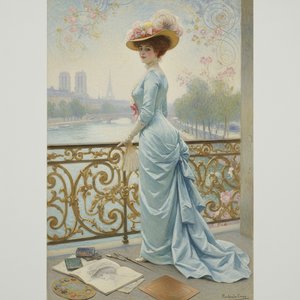
Paul César Helleu: Portrét Belle Époque
- Narodený: Vannes, Francúzsko (1859)
- Zomrel: 1927
Raný život a umelecká príprava
Paul César Helleu sa narodil v roku 1859 vo francúzskom Vannes v oblasti Bretaň. Keď bol ešte mladým dospievajúcim, jeho život poznamenala strata otca, ktorý bol colným inspektorom. Napriek počvodným obavám jeho matky sa však Helleu v mladom veku odvážne presťahoval do Paríža, aby naplnil svoje umelecké ambície. Svoju cestu začal študovaním na Lycée Chaptal a už v neuveriteľne mladistých štrnástich rokoch získal miesto v prestížnej École des Beaux-Arts, kde pod očením majstra Jean-Léna Gérôme získaval základné umelecké vzdelanie.
Prelomovým momentom pre Helleuovo umelecké vnímanie bola jeho prítomnosť na Druhej impresionistickej výstavbe v roku 1876. Tento kontakt s impresionistickým hnutím ho hlboko zasiahol. Fascinoval ho prístup umelcov ako John Singer Sargent, James McNeill Whistler či Claude Monet, ktorých inovatívne techniky a zameranie na scény pod otvoreným nebom predstavovali radikálny kontrast k vtedajším tradičnej ateliérovým postupom.
Umelecký rozvoj: Vplyvy a techniky
Svoju ranú umeleckú kariéru si Helleu musel zabezpečiť vlastnou prácou v keramickej dielni Théodora Decka, kde ručne zdobil dekoratívne taniere. Táto skúsenosť mu pomohla precvičiť technické zručnosti, ktoré neskôr využil vo svojom vrcholnom diele. Zlomovým bodom však bolo stretnutie s Giovanniom Boldinim, portrétistom známym svojím vášnivým a odvážnym štýlom, ktorý sa stal jeho mentorom. Boldiniho vplyv zásadne formoval smerovanie Helleuovej umeleckej tvorby.
V rámci svojej tvorby si Helleu vybudoval aj hlboké priateľstvo s Johnom Singerom Sargentom, ktoré trvalo počas celého ich života. Sargentova podpora a povzbudzovanie boli pre Helleuov raný úspech kľúčové. Jedným z najvýraznejších znakov jeho tvorby sa stala majstrovská technika suchorezu. Po tom, ako ho s touto technikou predstavil James Jacques Tissot, sa Helleu rýchlo stal virtuózom, ktorý dokázal využiť dynamiku a sofistikovanosť suchorezu rovnako majstrovsky ako pri tvorbe svojich pastelov.
Najvýznamnejšie diela a uznanie
Helleu je najmä vďaka svojim portrétom elegantných žien z parížskej spoločnosti éry Belle Époque享有 celosvetové uznanie. Medzi jeho významné modelky patrili napríklad Vévodkyňa z Marlborough, Marchesa Casati, Belle da Costa Greene, Louise Chéruit či Helena Rubinstein. Jeho schopnosť zachytiť ich krásu a gráciu s nesmiernou jemnosťou mu priniesla veľkú slávu.
- Portréty: Helleuove portréty sú oslavované pre ich jemné línie, subtílne farebné palety a spôsob, akým dokážu vyjadriť nielen fyzickú podobnosť, ale aj hĺbku osobnosti modelky.
- Suchorezy: Jeho suchorezy boli mimoriadne populárne, čo mu umožnilo šíriť svoje diela medzi priateľov a rodinu prostredníctvom viacerých vytlačených exemplárov. Počas svojej kariéry vytvoril viac ako 2 0ľ 0 takýchto prác.
- Murál v Grand Central Terminal: Jedným z jeho najväčších úspechov bolo prestížne zadanie vytvoriť pre strop stanice Grand Central Terminal v New Yorku murál zobrazujúci súhvezdia. Tento ambiciózny projekt predstavoval ukážku jeho umeleckej vízie v monumentálnom meradle.
Odkaz a historický význam
Dielo Paula Caesara Helleua je zhmotnením ducha éry Belle Époque – obdobia definovaného optimizmom, eleganciou a umeleckou inováciou. Jeho portréty ponúkajú vzácny pohľad do života a módy parížskej vysoké spoločnosti tejto obdobia.
- Vplyv na umenie: Inovatívne využívanie techniky suchorezu u Helleua ovplyvnilo nasledujúce generácie grafikov.
- Reprezentácia Belle Époque: Uznáva sa ako jeden z najvýznamnejších umelcov, ktorý dokázal zachytiť samotnú podstatu a estetické ideály tejto éry.
- Rodinné dedičstvo: Helleu bol otcom Jeana Helleua a starším Jacquesa Helleua, ktorí obaja pôsobili ako vplyvní umeleckí riaditelia pre Parfums Chanel, čo dokazuje trvalé rodinné spojenie so svetom umenia a dizajnu.
Helleuovo odkaz je zastúpený v najvýznamnejších múzeách po celom svete, vrátane Musée d'Orsay a Louvre v Paríži, ako aj v Tate v Londýne či Metropolitan Museum of Art v New Yorku.
Otázky a odpovede
Existuje chronologický prehľad tvorby umelca Paul César Helleu?
Kariéra umelca Paul César Helleu sa na jeho stránke Kronika odvíja obdobie po období: ako horizontálna časová os diel rozdelená do kapitol podľa období jeho tvorby.
Existuje časová os od tvorby umelca Paul César Helleu?
Diela umelca Paul César Helleu si môžete pozrieť v chronologickom poradí na stránke Časová os diel daného umelca.
Z ktorej krajiny pochádza Paul César Helleu?
Paul César Helleu sa narodil/a v krajine Francúzsko.