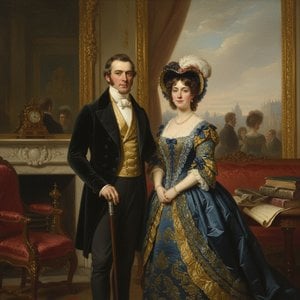
Joseph Gibbs: A Victorian Portraitist Capturing Delicate Beauty
Joseph Gibbs (1698 – 1788) remains a somewhat enigmatic figure in British art history, primarily recognized for his stunning portraits of young women—particularly Muriel Dorothy Windle. While overshadowed by contemporaries like Thomas Gainsborough and Joshua Reynolds, Gibbs’ meticulous observation and masterful technique secured him a place among the leading artists of the Georgian era. His work speaks volumes about the Victorian sensibility's fascination with innocence and idealized femininity.
Early Life & Training: Little is known definitively about Gibbs’ formative years. Records indicate he was born in Dedham, Essex, to a family involved in the textile trade. He apprenticed under John Sargent, a respected portrait painter, gaining invaluable experience in capturing likeness and conveying emotion through oil paint. This foundational training instilled in him a deep understanding of anatomy and perspective—skills that would become central to his artistic style. Sargent’s influence ensured Gibbs mastered the Northern School of Painting's approach, prioritizing realism alongside subtle atmospheric effects.
Notable Commissions & Artistic Style: Gibbs achieved considerable success during his lifetime, securing commissions from prominent families across England. His distinctive style is characterized by its remarkable realism—a hallmark of the Northern School of Painting—combined with a subtle atmospheric perspective that lends depth and luminosity to his canvases. He eschewed flamboyant brushstrokes favored by Reynolds, opting instead for smooth, blended surfaces that meticulously rendered textures like hair, skin, and fabric. This deliberate technique demanded patience and precision, reflecting Gibbs’ unwavering dedication to capturing the essence of his subjects. The resulting portraits possessed an unparalleled sense of immediacy and psychological insight—a testament to Gibbs' artistic vision.
The Windle Portrait: Gibbs’ most celebrated work is undoubtedly the portrait of Muriel Dorothy Windle (1804 – 1875), commissioned by her father, Sir Henry Windle. This painting exemplifies Gibbs' artistic prowess. The delicate rendering of Muriel’s youthful face—her gaze serene and contemplative—is complemented by a beautifully detailed depiction of the surrounding woodland setting. Critics lauded Gibbs for capturing not just physical appearance but also an intangible quality of character – a quiet grace and inner beauty that resonated deeply with viewers. It is considered one of the finest examples of Victorian portraiture, demonstrating Gibbs’ ability to convey emotion through visual symbolism and masterful composition. The choice of woodland backdrop—a symbol of purity and tranquility—further enhances Muriel's ethereal presence within the canvas.
Influences & Legacy: Gibbs’ artistic vision was undoubtedly shaped by the prevailing aesthetic ideals of his time, mirroring Gainsborough's commitment to naturalism. However, unlike Reynolds, he prioritized psychological insight alongside visual accuracy. He absorbed inspiration from Rembrandt Harmenszoon van Rijn and Julien Joseph Ducorron, artists who championed dramatic lighting and emotional expression—techniques Gibbs skillfully adapted into his own oeuvre. His legacy resides in his ability to elevate portraiture beyond mere likeness, transforming it into a vehicle for conveying profound emotional resonance. Though Gibbs’ output wasn't extensive compared to other artists of his era, the enduring beauty and subtlety of his paintings continue to captivate audiences today—a testament to his contribution to British art history and a symbol of Victorian artistic excellence.
Rediscovery & Appreciation: Gibbs' work experienced a resurgence in interest during the late 19th century and early 20th century. Scholars recognized his contribution to British art history and championed his artistic achievements. Today, Gibbs’ portraits are housed in museums across Europe and North America—testaments to their timeless appeal and enduring significance as masterpieces of Victorian realism. His paintings continue to inspire admiration for their meticulous detail and profound psychological depth, securing his place among the most respected artists of his generation.