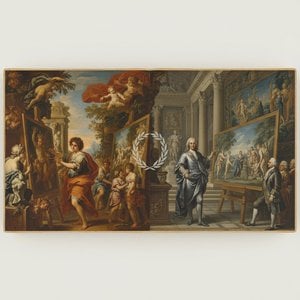
Giuseppe Nuvolone: A Milanese Baroque Visionary
Giuseppe Nuvolone (1619 – 1703) emerged from the artistic crucible of San Gimignano, Italy, inheriting a legacy of painting prowess from his father and brother, Carlo Francesco Nuvolone. This familial tradition firmly rooted him in the vibrant artistic landscape of Milanese Baroque, where he honed his craft alongside prominent contemporaries and established himself as a respected figure within the burgeoning art scene. His life’s journey was marked by dedication to his profession and an unwavering pursuit of excellence, resulting in a body of work that continues to captivate scholars and admirers alike.
- Early Life & Family Influence: Born into a family deeply invested in artistic pursuits, Giuseppe benefited from the mentorship of Carlo Francesco Nuvolone, whose stylistic sensibilities undoubtedly shaped his formative years. This familial connection fostered an environment conducive to artistic development and instilled within him a profound appreciation for classical ideals. Carlo Francesco’s influence is palpable in Giuseppe's meticulous attention to detail and his masterful rendering of surfaces—characteristics that would define his distinctive artistic style.
- Milanese Artistic Circle: Nuvolone’s career flourished in Milan during the reign of Vincenzo I Gonzaga, a period characterized by considerable patronage and intellectual ferment. He actively participated in the vibrant artistic circle that gathered around Gonzaga’s court, collaborating with fellow artists like Bartholomäus Bettera and Felice Boselli. This collaboration exposed him to groundbreaking innovations in technique and composition—influences that would enrich his artistic vision throughout his career.
- Notable Commissions & Patronage: Giuseppe Nuvolone secured prestigious commissions—most notably the monumental altarpiece depicting ‘Christ and the Woman Taken in Adultery’ for the church of San Domenico in Cremona—demonstrating his artistic reputation and securing financial stability. This ambitious undertaking allowed him to explore compositional concepts that pushed the boundaries of Baroque aesthetics, solidifying his position as one of Milan’s leading artists. The patronage of Gonzaga provided invaluable resources for experimentation and refinement.
Style & Technique: Baroque Sensibility Embodied
Nuvolone’s artistic style aligns seamlessly with the tenets of Baroque painting, characterized by dramatic lighting, dynamic movement, and an expressive portrayal of emotion. He skillfully employed chiaroscuro—the interplay between light and shadow—to heighten visual impact and imbue his canvases with palpable energy. This technique—a cornerstone of Venetian art—was adopted by Nuvolone to create immersive environments that transported viewers into the depicted scenes. His meticulous brushwork achieved remarkable textural effects, capturing the subtleties of fabric, skin, and stone with exceptional realism. Influenced by Cremonese and Bergamasca styles, Nuvolone’s works are distinguished by their vibrant colors and masterful rendering of surfaces. He meticulously studied classical anatomy to ensure accuracy in his portraits—a testament to his dedication to artistic perfection.
- Compositional Innovation: Nuvolone demonstrated an inventive approach to composition, favoring dynamic arrangements that captured the grandeur and theatricality emblematic of the Baroque era. He skillfully utilized perspective and spatial illusion to create immersive environments that transported viewers into the depicted scenes—a hallmark of Venetian art and a deliberate departure from Renaissance conventions.
- Color Palette & Texture: His palette embraced rich hues—deep reds, blues, and golds—harmoniously blended to convey mood and atmosphere. Nuvolone’s meticulous brushwork achieved remarkable textural effects, capturing the subtleties of fabric, skin, and stone with exceptional realism—a technique honed through years of observation and experimentation.
Major Achievements & Legacy
Giuseppe Nuvolone's enduring legacy rests primarily on his monumental altarpiece for San Domenico in Cremona—a testament to his artistic ambition and technical prowess. This masterpiece exemplifies the Baroque ideal of conveying religious fervor through visual splendor, securing Nuvolone’s place among Milanese Baroque artists. Furthermore, his portraits—particularly ‘Portrait of Luigi Cusani’—offer invaluable insights into the social customs and aesthetic sensibilities of 17th-century Italy. His influence extended beyond Cremona, shaping the artistic landscape of Lombardy and contributing to the broader dissemination of Baroque ideals. He is remembered as a master craftsman who elevated painting to new heights of expressive power and visual grandeur.
## Further Exploration
To delve deeper into Giuseppe Nuvolone’s oeuvre, consider visiting
Giuseppe Nuvolone — Google Arts & Culture, where you can explore his artistic vision alongside other prominent Venetian artists and admire breathtaking watercolors by John Singer Sargent. Also, examine the frescoes adorning San Sigismondo in Cremona—a masterpiece of Renaissance art—to appreciate Nuvolone’s stylistic connections to earlier artistic traditions.