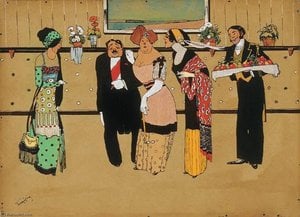
Geza Farago: A Hungarian Symbolist Visionary
Geza Farago (1877 – 1928) stands as one of Hungary’s most prominent figures in early twentieth-century art, particularly celebrated for his distinctive contribution to the Symbolist movement and his masterful execution of poster design. His artistic legacy continues to resonate with collectors and scholars alike, reflecting a profound engagement with both aesthetic beauty and psychological depth.
Early Life and Artistic Training
Born in Budapest, Farago’s formative years were marked by exposure to Hungarian cultural traditions and intellectual currents. He received his initial artistic education under Ferenc Újházy, establishing a foundation for his subsequent explorations into diverse artistic styles. Recognizing the importance of formal training, he enrolled at Colorossi Academy and later studied at Atelier Artistique Delaye in Paris – experiences that broadened his horizons and nurtured his burgeoning talent. These Parisian influences would prove crucial in shaping his artistic sensibilities.
Parisian Influences and Mucha’s Workshop
A pivotal moment arrived when Farago secured a scholarship to return to Paris in 1898, allowing him to immerse himself in the vibrant artistic milieu of the time. He spent two years working alongside Alfonz Mucha's workshop, absorbing the stylistic principles of Art Nouveau – specifically Mucha’s decorative and stylized approach—which would indelibly imprint upon his own oeuvre. This collaboration cemented Farago’s commitment to a distinctive visual language characterized by flowing lines, opulent ornamentation, and an idealized depiction of femininity.
Hungarian Artistic Landscape and Collaborations
Upon returning to Hungary in 1902, Farago established himself as a respected artist within Szolnok's artistic community, honing his skills under Adolf Fényes’s guidance. He continued to develop his craft through summers spent at Kecskemét artists colony, fostering connections with fellow creatives and expanding his repertoire of techniques. Notably, he served as stage designer for the Operetta Theatre for fifteen years, demonstrating versatility beyond painting and graphic art. His collaborations extended across various artistic disciplines, reflecting a holistic engagement with creative expression.
The Symbolist Style and Poster Design Achievements
Farago’s artistic style is firmly rooted in Symbolism—a movement that prioritized emotional resonance and psychological exploration over literal representation. He embraced Mucha's influence, adopting a distinctive aesthetic marked by bold contours, vibrant colors, and intricate decorative patterns. This stylistic choice resulted in unforgettable images – particularly his posters – which captured the spirit of the era with remarkable precision and artistic flair. His iconic works include “The Modern Eve,” “Slim Woman with a Cat,” "Paradise Lost," and numerous commercial posters for nightclubs and theaters. These pieces stand as enduring symbols of Hungarian Symbolist art and continue to captivate audiences today.
Legacy and Recognition
Geza Farago’s contribution to Hungarian art history is undeniable. His paintings are housed in the Hungarian National Gallery, ensuring that his artistic vision persists through time. Furthermore, he garnered acclaim for his caricaturesque style and his role as a prominent figure in Budapest's cultural landscape—a testament to his enduring influence on Hungarian artistic identity. Farago’s legacy continues to inspire artists and scholars alike, cementing his place among Hungary’s most celebrated creative minds.