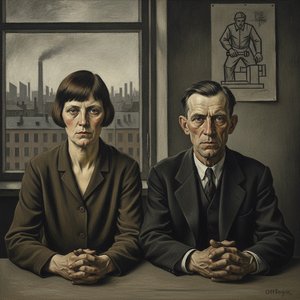
Francesco Clemente, born in Naples in 1952, is an Italian artist whose work has long captivated audiences with its evocative blend of ancient mythology, personal symbolism, and a distinctly spiritual sensibility. His journey through the art world began not within the confines of formal architecture training – as initially documented – but through immersion in the vibrant, experimental scene of Rome during the late 1960s and early 70s. This period was marked by a profound shift away from the rigid formalism of earlier Italian art, embracing instead a more intuitive and expressive approach, heavily influenced by figures like Cy Twombly, Luigi Ontani, and Alighiero Boetti. Clemente’s early years were spent absorbing these currents, experimenting with drawing, collage, and performance, ultimately forging his own unique visual language.
Early Influences and the Transavanguardia
Clemente's artistic development was inextricably linked to the rise of *Transavanguardia* – a movement that rejected conceptualism and embraced figurative painting with a renewed sense of narrative and emotional depth. This Italian counter-movement, emerging in the 1980s, sought to reconnect with tradition while simultaneously rejecting academic constraints. Clemente’s work exemplifies this spirit, drawing upon a rich tapestry of influences including Byzantine iconography, Indian miniatures, and the expressive power of Surrealism. His early collaborations with Alighiero Boetti, particularly their journey to Afghanistan in 1974, profoundly shaped his artistic perspective, introducing him to new cultural landscapes and fueling a deep interest in storytelling through visual imagery. The influence of these encounters is evident in the layered narratives and symbolic richness that characterize much of his oeuvre.
The Ballpoint Pen: A Method of Revelation
A pivotal moment in Clemente’s artistic evolution occurred with the adoption of the ballpoint pen as his primary medium. Beginning in the 1970s, he meticulously developed a technique utilizing this seemingly humble tool to create intricate, reductive drawings on paper and canvas. This choice wasn't arbitrary; it represented a deliberate shift towards minimalism and an exploration of the inherent qualities of the material itself. The repetitive nature of the process – thousands of pens painstakingly applied – allowed Clemente to achieve a meditative state, fostering a deep connection between his hand, the surface, and the emerging image. His ballpoint pen works are characterized by their subtle gradations of tone, achieved through layering and overlapping lines, creating an illusion of depth and texture that belies the simplicity of the medium. The resulting images often evoke a sense of timelessness and spiritual contemplation.
A Global Perspective and Continued Evolution
Over the decades, Clemente’s artistic practice has expanded beyond the confines of Italy, taking him to India and eventually settling in New York City. This global movement has enriched his visual vocabulary, incorporating elements of Eastern philosophy, mythology, and spirituality into his work. While he continues to utilize the ballpoint pen as a central element, he has also embraced oil painting, frescoes, mosaics, and sculpture, demonstrating a remarkable versatility and an ongoing commitment to experimentation. His recent works on canvas represent a departure from his earlier reductive style, offering a more expansive and emotionally charged approach while retaining the core principles of his artistic vision.
Legacy and Recognition
Francesco Clemente’s work has been exhibited extensively throughout the world, including major museums such as The Metropolitan Museum of Art, The Aldrich Contemporary Art Museum, and numerous institutions in Korea. His art is held in prominent collections globally, reflecting its enduring appeal and critical acclaim. His retrospective at the San Jose Museum of Art in 2007 garnered significant attention, solidifying his position as a leading figure in contemporary art. Clemente’s legacy lies not only in his distinctive visual style but also in his willingness to embrace diverse influences and continuously evolve his artistic practice—a testament to the enduring power of imagination and the transformative potential of art.
Redakcia WahooArt.com
Kvíz o umení
Pri každej otázke je iba jedna správna odpoveď.
Otázka 1:
Francesco Clemente was born in which city?
Otázka 2:
Which movement is Clemente most closely associated with?
Otázka 3:
In what year did Clemente begin his career as a professional artist?
Otázka 4:
What medium was Clemente primarily known for early in his career?
Otázka 5:
Francesco Clemente lived and worked in which country besides Italy?