A Life Immersed in Conflict: The World of Abraham van der Hoef
Abraham van der Hoef, a name resonating softly through the annals of the Dutch Golden Age, was an artist deeply attuned to the turbulent spirit of his time. Born in Haarlem around 1611, into a Netherlands still defining itself amidst decades of struggle for independence, Van der Hoef dedicated his career to capturing the drama and intensity of battle scenes within expansive landscapes. While biographical details remain somewhat elusive—a common fate for artists of this period whose lives weren’t meticulously documented—the very essence of his work speaks volumes about the world he inhabited and the stories he felt compelled to tell. He wasn't a painter of grand historical narratives, but rather one who focused on the immediacy of conflict, the chaotic energy of skirmishes, and the raw human experience within them. His early life in Haarlem, a thriving artistic center, undoubtedly provided foundational training, though specific mentors remain unknown. Records suggest his presence in Delft between 1649 and 1651, where he joined the prestigious Sint-Lucasgilde (Saint Luke’s Guild), marking a formal recognition of his professional status. He ultimately returned to Haarlem, where he passed away in 1666, leaving behind a legacy of dynamic compositions that offer a compelling glimpse into the military life and landscape painting of the 17th century.
The Painterly Language of War
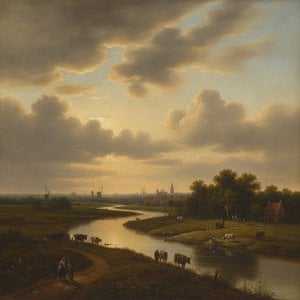
Van der Hoef’s artistic specialization lay in landscapes punctuated by scenes of armed conflict—cavalry battles, infantry clashes, and moments of tense standoff. These weren't idealized depictions of heroism; instead, they possessed a gritty realism that reflected the brutal realities of warfare. His paintings are characterized by a masterful use of light and shadow to create dramatic effect, drawing the viewer into the heart of the action. The compositions often feature a high horizon line, emphasizing the vastness of the landscape and placing the battles within a broader context. He skillfully rendered the details of weaponry, armor, and military attire, demonstrating a keen observational eye. The figures themselves are not typically individualized portraits but rather types—soldiers engaged in the universal struggles of combat. This focus on the collective experience over individual glory is a defining characteristic of his style. The dynamic arrangements of horses and men, often caught mid-stride or locked in fierce struggle, convey a sense of movement and chaos that is both captivating and unsettling. His palette typically favored earthy tones—browns, greens, and grays—reflecting the natural environment within which these battles unfolded, punctuated by flashes of color from uniforms and weaponry.
Influences and Artistic Lineage
Pinpointing direct influences on Van der Hoef’s style is a complex undertaking, as his work represents a synthesis of various artistic currents prevalent during the Dutch Golden Age. The influence of Rembrandt van Rijn can be detected in his masterful use of chiaroscuro—the dramatic contrast between light and shadow—which adds depth and emotional intensity to his compositions. The landscapes themselves bear similarities to those produced by Haarlem school painters, known for their detailed renditions of natural settings. Some scholars suggest a possible connection to Frans Floris through Karel van Mander’s writings, though the extent of this influence remains speculative. It's important to note that Van der Hoef wasn’t working in isolation; he was part of a vibrant artistic community where ideas and techniques were freely exchanged. His work shares affinities with contemporaries like Dirk van der Stoffe, another prominent battle painter of the mid-17th century, suggesting a shared interest in depicting military themes and dynamic compositions.
A Modest Legacy, A Lasting Impact
Despite not achieving widespread fame during his lifetime, Abraham van der Hoef occupies an important niche within the history of Dutch Golden Age painting. His works are relatively rare, adding to their allure and historical significance. While he may not have been a prolific artist, the quality and distinctive character of his paintings—characterized by dynamic compositions, realistic depictions of warfare, and masterful use of light and shadow—have earned him recognition among art historians and collectors. His focus on battle scenes provides valuable insights into the military life and landscape painting of the 17th century Netherlands. Today, his paintings are held in various museum collections and private hands, offering a compelling glimpse into a turbulent era and the artistic responses it inspired. His work serves as a reminder that even seemingly minor figures can contribute significantly to our understanding of art history and the cultural context in which it was created.
Rediscovering Van der Hoef: A Modern Perspective
In recent years, there has been renewed interest in Abraham van der Hoef’s work, fueled by a growing appreciation for lesser-known artists of the Dutch Golden Age. Scholarly research and online databases have helped to shed light on his life and artistic production, making his paintings more accessible to a wider audience. The dynamic nature of his compositions—the swirling chaos of battle scenes—continues to captivate viewers today. His ability to convey the raw energy and emotional intensity of conflict resonates with modern sensibilities, offering a powerful reminder of the human cost of war. Van der Hoef’s paintings are not simply historical documents; they are compelling works of art that speak to universal themes of struggle, survival, and the enduring power of the human spirit. As we continue to explore the rich tapestry of Dutch Golden Age painting, artists like Abraham van der Hoef deserve recognition for their unique contributions and lasting legacy.