


The Genesis of Modernism: Challenging Academic Tradition
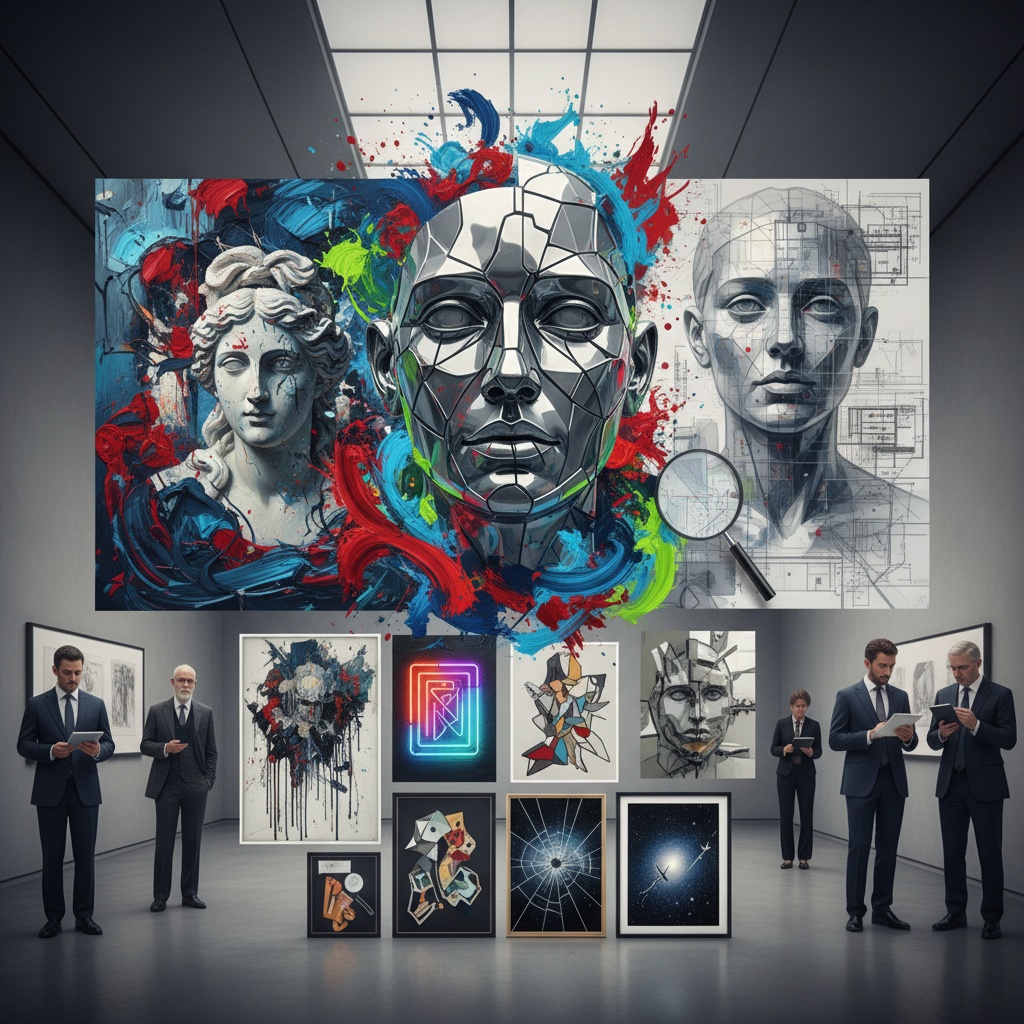
The story of Modern Art isn’t simply a chronicle of stylistic shifts; it's the narrative of a profound rupture—a deliberate dismantling of centuries-old conventions that had governed artistic creation since the Renaissance. To understand its emergence, one must first appreciate the rigid framework it sought to overthrow. For generations, art academies dictated subject matter – historical scenes, religious narratives, portraiture – and prioritized technical skill above all else. Perspective, realism, idealized forms; these were not merely techniques but tenets of a worldview that placed humanity at the center of a rationally ordered universe. The 1863 Salon des Refusés in Paris, born from the rejection of countless works deemed unworthy by the official Salon jury, stands as a symbolic turning point. Édouard Manet’s Déjeuner sur l'herbe, with its unapologetic depiction of contemporary life and disregard for traditional composition, wasn’t just a painting; it was an act of defiance. It signaled a shift in focus – from grand narratives to the immediacy of lived experience, from polished perfection to raw authenticity. This initial rebellion wasn’t about destroying beauty, but about redefining it, questioning what constituted worthy subject matter and challenging the very notion of artistic authority.
Avant-Garde Movements: A Landscape of Radical Experimentation
 Wikipedia: Avant-garde
In the arts and literature, the term avant-garde (from French meaning 'advance guard' or 'vanguard') identifies an experimental genre or work of art, and the artist who created it, which usually is aesthetically innovative, whilst initially being ide...
The rejection of academic norms unleashed a torrent of experimentation, giving rise to a constellation of avant-garde movements each pushing the boundaries of artistic expression in new directions. From the fleeting impressions captured by Claude Monet and his Impressionist peers – an attempt to render the subjective experience of light and atmosphere – to the fragmented forms of Paul Cézanne’s explorations of spatial representation, artists began to prioritize perception over precise replication. This pursuit led inexorably towards abstraction. Cubism, pioneered by Pablo Picasso and Georges Braque, shattered traditional perspective altogether, presenting objects from multiple viewpoints simultaneously, forcing viewers to actively reconstruct reality on the canvas. Futurism, born in Italy, celebrated speed, technology, and dynamism, embracing the energy of the machine age. Surrealism, influenced by the psychoanalytic theories of Sigmund Freud, delved into the realm of dreams and the subconscious, seeking to unlock a deeper, more primal form of expression. These movements weren’t isolated phenomena; they were interconnected dialogues, each building upon and reacting against its predecessors. The term “avant-garde,” meaning ‘advance guard,’ aptly describes these artists – pioneers venturing into uncharted territory, challenging not only artistic conventions but also societal norms.
Abstraction's Evolution: From Representation to Pure Form
Abstraction is the process of generalizing rules and concepts from specific examples, literal (real or concrete) signifiers, first principles, or other methods. The result of the process, an abstraction, is a concept that acts as a common noun for al...
While Cubism laid the groundwork, it was Wassily Kandinsky who truly liberated art from representational constraints. His pioneering abstract compositions, driven by a belief in the spiritual power of color and form, marked a radical departure from depicting recognizable objects. Kandinsky’s theories, articulated in his seminal work Concerning the Spiritual in Art, posited that colors evoked specific emotions and sensations, and that art could be a purely non-objective expression of inner experience. Piet Mondrian, with his rigorously geometric compositions of primary colors and black lines, sought to achieve a universal harmony through abstraction. The Russian avant-garde, exemplified by artists like Kazimir Malevich and Pavel Filonov, explored even more radical forms of non-objectivity. Malevich’s Suprematism aimed for pure feeling through basic geometric shapes – the square, the circle, the rectangle – stripped of any representational meaning. Filonov's Analytical Realism, a uniquely complex system, sought to dissect and reconstruct reality at its most elemental level, creating intensely textured and emotionally charged abstract works. Abstraction wasn’t simply about eliminating recognizable forms; it was about exploring the fundamental building blocks of visual language – color, line, shape, texture – and their capacity to evoke emotion, convey ideas, and create a new kind of aesthetic experience.
Philosophical Undercurrents: The Rejection of Rationality and the Search for Subjectivity
The rise of Modern Art wasn’t solely an artistic phenomenon; it was deeply intertwined with broader philosophical shifts that were challenging the foundations of Western thought. The Enlightenment's emphasis on reason and objectivity came under increasing scrutiny in the late 19th and early 20th centuries. Philosophers like Friedrich Nietzsche questioned traditional morality and proclaimed the “death of God,” signaling a loss of faith in established systems of belief. The growing influence of psychoanalysis, with its exploration of the unconscious mind, further undermined the notion of a rational self. Artists responded to this intellectual climate by embracing subjectivity – prioritizing individual experience over objective reality. The search for meaning shifted inward, focusing on emotions, intuition, and the subconscious. This is evident in the Expressionist movement, which sought to convey inner turmoil and psychological states through distorted forms and jarring colors. The rejection of traditional perspective wasn’t merely a stylistic choice; it was a reflection of a fragmented worldview, a recognition that reality itself was subjective and multifaceted. Modern artists weren't simply depicting what they saw; they were expressing how they *felt* about what they saw – or, increasingly, exploring realms beyond the visible world altogether.
The Enduring Legacy: Modern Art’s Influence on Contemporary Practice
The impact of Modern Art reverberates through contemporary art practice. While postmodernism questioned many of its core tenets—rejecting grand narratives and embracing pluralism—the experimental spirit, the emphasis on conceptual innovation, and the willingness to challenge conventions remain central to artistic creation today. Artists continue to explore abstraction in diverse forms, pushing the boundaries of materials and techniques. Conceptual Art, Performance Art, Digital Art – all owe a debt to the avant-garde movements that paved the way for non-traditional art forms. The legacy of artists like Kandinsky, Mondrian, and Malevich can be seen in the work of countless contemporary painters who continue to explore the expressive power of color, line, and form. The questioning of representation initiated by Cubism continues to inform artistic approaches to space and perspective. Even seemingly representational art often bears the imprint of Modernist principles – a heightened awareness of brushstroke, texture, and composition that prioritizes the artist’s subjective interpretation. The spirit of radical experimentation—the willingness to break with tradition and explore new possibilities—remains the defining characteristic of artistic innovation.
Acquiring & Appreciating Modern Masterpieces: A Collector's Guide
For the discerning collector, navigating the world of Modern Art requires both knowledge and passion. Building a meaningful collection isn’t simply about acquiring prestigious names; it’s about understanding the historical context, appreciating the artistic techniques, and connecting with works that resonate on a personal level. Research is paramount – delving into the lives and philosophies of artists, exploring the key movements, and familiarizing yourself with different styles and mediums. Consider your own aesthetic preferences and collecting goals. Are you drawn to the bold colors of Expressionism, the geometric precision of Mondrian, or the abstract compositions of Kandinsky? Authenticity is crucial – working with reputable galleries and art advisors can help ensure that you are acquiring genuine works. WahooArt.com offers a curated selection of museum-quality reproductions, allowing collectors to experience the beauty and power of Modern masterpieces in their own homes. Beyond acquisition, appreciating Modern Art requires an open mind and a willingness to engage with challenging ideas. Don’t be afraid to ask questions, explore different interpretations, and allow yourself to be moved by the emotional impact of the work. Ultimately, collecting art is a deeply personal journey – a pursuit of beauty, knowledge, and connection.


