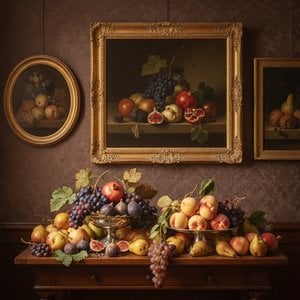
André Derain: Still Life with Fruit – A Fauvist Vision of Rural Tranquility
André Derain’s “Still Life with Fruit,” painted in 1940, stands as a quintessential example of Fauvist art—a movement that irrevocably altered the course of European painting. Born in Chatou, France, in 1880, Derain initially pursued engineering before discovering his true vocation amidst the vibrant landscapes and companionship of fellow artists like Henri Matisse.
The painting immediately captivates with its bold palette—a riot of oranges, reds, yellows, and blues that defy traditional artistic conventions. Unlike Impressionists who sought to capture fleeting moments of light and atmosphere, Derain prioritized expressive color above all else, believing it capable of conveying emotion directly to the viewer.
Technically, Derain employed thick impasto—a technique characterized by applying paint in heavy layers—creating a tactile surface that pulsates with energy. This deliberate roughness contrasts sharply with the smooth brushstrokes favored by many contemporary artists, emphasizing Derain’s commitment to conveying raw feeling rather than meticulous observation.
Historical Context: The Dawn of Fauvism
Fauvism emerged in Paris during the early years of World War I, representing a radical departure from academic art. Artists like Matisse and Picasso rejected the constraints of realism, advocating for an uncompromising embrace of subjective experience. Derain’s work aligns perfectly with this ethos, reflecting the anxieties and aspirations of a generation grappling with profound social upheaval.
The painting's subject matter—a simple arrangement of fruit within a bowl—serves as a vehicle for exploring deeper themes. The vibrant colors aren’t merely decorative; they symbolize vitality, abundance, and perhaps even a yearning for beauty amidst the grim realities of wartime Europe.
Symbolism: Color as Emotion
Derain's masterful use of color operates on multiple levels of symbolism. The dominant orange hue evokes warmth, optimism, and the radiant glow of sunlight—a deliberate contrast to the darkness encroaching upon the horizon. Similarly, the reds convey passion, energy, and a defiant spirit against prevailing pessimism.
The artist’s meticulous attention to detail—particularly in capturing the textures of the fruit skins and the sheen of the bowl glaze—further enhances the painting's expressive power. These subtle nuances contribute to an overall impression of serene beauty tempered by underlying tension, inviting contemplation on themes of life, death, and artistic liberation.
Emotional Impact: A Moment Frozen in Time
"Still Life with Fruit" transcends mere representation; it communicates a profound emotional resonance. The painting’s luminous colors and textured surface evoke a sense of immediacy—as if capturing a fleeting moment of rural tranquility before the storm of war descends.
It serves as a testament to Derain's artistic vision—a bold assertion of color and emotion that continues to inspire artists and collectors alike. A reproduction of this remarkable artwork offers not only visual delight but also an opportunity to engage with the spirit of Fauvist art and its enduring legacy.



 Náhľad
 Prepnúť na tlač
 Odoslať
 Zdieľať
 Podrobnosti o dielo

 Stiahnuť
 Podobné diela
 RTG skúška
 Prezentácia
 Štatistiky


 Zobraziť viac






































 Možnosť skla je dostupná len pri rozmeroch pod 110 cm