BEZPLATNÉ UMENÍCKE PORADENSTVO

x
Objednať reprodukciu Objednať reprodukciuKúpiť digitálnu verziu Kúpiť digitálnu verziu OdoslaťOdoslať
DetailsDetails Pridať do obľúbených Pridať do obľúbených StiahnuťStiahnuť Podobné dielaPodobné diela X-RayX-Ray PrezentáciaPrezentácia

The Rooster

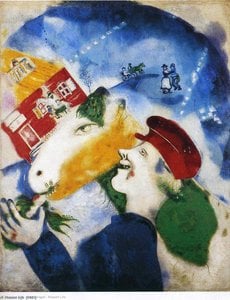
Explore Marc Chagall’s ‘The Rooster,’ a surrealist masterpiece! Vibrant colors & dreamlike imagery depict a man & woman on a rooster. Discover this 1929 oil painting at the Thyssen-Bornemisza.

Pozrite si Marc Chagalla – slovenského židovského impresionistu a surrealistu! Jeho tvorba je oslavovaná svojimi fantastickými obrazmi, výraznými farbami a nezabuditeľným životopisom.

Giclée / Umenotlač

Giclée tlač alebo plátno múzeálnej kvality s rýchlou výrobou a flexibilnými možnosťami povrchovej úpravy.

P118B $10
P118H $10
P118W $10
P438Z $10
P508JH $12
P508YH $12
P805H $10
P805Z $10
P919BZ $10
P919G $10
P919XJ $10
P959ZH $10
P968JZ $12
W106C $8
W218G $10
W218JH $8
W218Y $10
W307PJ $10
W316G $10
W316PJ $8
W316Y $10
W398PJ $8
W4111J $10
W500HY $15
W500JH $15
W692G $12
W849H $8
W940BG $15
W953PJ $8

Standard
custom
CM
INCH

Vyberte si z našich preddefinovaných rozmerov, ktoré zodpovedajú pôvodným pomeroḿ diela.

šírka
výška

Môžete zadať vlastné rozmery, aby sa reprodukcia prispôsobila konkrétnemu rámu alebo priestoru. Ak zvolená veľkosť nebude zodpovedať proporciám originálu, dielo buď orežeme, alebo obraz rozšírime pomocou zrkadlenia či farebného doplnenia okrajov. Pred začatím výroby vám pošleme digitálnu ukážku na schválenie.
Máte na vedomí, že náhľad na obrazovke neodzrkadľuje skutočné orezanie alebo rozšírenie. Len digitálna ukážka presne zobrazí finálnu kompozíciu.
Hoci sú k dispozícii vlastné rozmery, pre zachovanie pôvodných proporcií odporúčame vybrať si rozmer z vopred definovaného zoznamu.

Celosvetová doprava () do 2 týždňov namiesto štandardných 4/5 týždňov. (2 júl)

why_choose_icon
Bezplatná expresná doprava po celom svete
why_choose_icon
Prémiové lnianske plátno
why_choose_icon
Kompletné poistenie prepravy
why_choose_icon
Záruka vrátenia colného poplatku
why_choose_icon
Záruka presného farebného zhodnutia
why_choose_icon
60-dňá politika vrátenia (iba pri defektoch)
why_choose_icon
100% záruka vrátenia peňazí
why_choose_icon
Výhodná množstevná zľava

Celková cena

-

reproduction

The Rooster

Giclée / Umenotlač

Veľkosť reprodukcie

-

Celková cena za vybrané možnosti

-

Základné informácie

  • style: Vibrant colors, distorted forms, dream-like scenarios
  • medium: Oil on canvas
  • title: The Rooster
  • year: 1929
  • influences: Cubism, Fauvism
  • location: Thyssen-Bornemisza Museum, Madrid, Spain
  • notable elements: Man and woman embracing, rooster, boats

Kvíz o umení

Pri každej otázke je iba jedna správna odpoveď.

Otázka 1:
In Marc Chagall's 'The Rooster', what is a prominent symbolic representation within the painting?
Otázka 2:
To which artistic movement is Marc Chagall's 'The Rooster' most closely associated?
Otázka 3:
Where is 'The Rooster' currently housed?
Otázka 4:
What stylistic elements characterize Chagall's approach in 'The Rooster'?
Otázka 5:
Besides Surrealism, what other artistic movements influenced Chagall's work?

Popis predmetu

A Dreamscape of Love and Vitality: Exploring Marc Chagall’s *The Rooster*

Marc Chagall's 1929 painting, *The Rooster*, is more than just a depiction of farm life; it’s a vibrant distillation of memory, love, and the enduring power of rural existence. Housed at the Thyssen-Bornemisza Museum in Madrid, this oil on canvas (81 x 65 cm) invites viewers into a world where reality gently bends to the will of imagination.

Subject & Composition: A Surreal Embrace

The painting immediately captivates with its unusual central image: a man and woman locked in an intimate embrace, *the woman seated atop a magnificent rooster*. This isn’t a literal portrayal but rather a poetic fusion of figures representing joy, courtship, and perhaps even the blossoming of new life. The composition is deliberately unbalanced, defying traditional perspective. Figures float within the space, anchored by the solid form of the rooster, which dominates the canvas. In the background, glimpses of boats and foliage suggest a broader landscape, adding depth without grounding the scene in strict realism.

Style & Technique: A Synthesis of Influences

*The Rooster* exemplifies Chagall’s unique style – a captivating blend of Cubism, Fauvism, and Symbolism, ultimately transcended into something wholly his own. While he briefly experimented with the angular forms of Cubism and the bold colors of Fauvism, Chagall rejected strict adherence to either movement. Instead, he developed a deeply personal visual language characterized by flattened planes of color, distorted figures, and dreamlike scenarios. His brushwork is loose and expressive, employing *impasto* – thick layers of paint – that create texture and vibrancy. The colors are intensely saturated, evoking emotion rather than mimicking natural hues.

Symbolism: Unraveling the Layers

Chagall’s work is rich in symbolism, deeply rooted in his Belarusian-Jewish upbringing and personal experiences. The rooster itself is a potent symbol, traditionally representing strength, courage, virility, and new beginnings. Its prominent placement underscores these themes. The embracing couple embodies love, partnership, and the promise of fertility. The boats in the background often symbolize journeys – both physical and spiritual – hinting at transitions and the passage of time. Chagall doesn’t offer definitive interpretations; instead, he invites viewers to engage with the painting on a personal level, drawing their own meaning from its evocative imagery.

Historical Context: A Moment in Time

Created in 1929, *The Rooster* reflects a period of artistic experimentation and societal change. The aftermath of World War I had shaken traditional values, paving the way for new forms of expression like Surrealism. Chagall, however, remained somewhat apart from organized movements, forging his own path by drawing inspiration from folklore, religious traditions, and personal memories. His work offered an escape into a world of fantasy and emotion – a welcome respite from the anxieties of the modern age.

Emotional Impact & Legacy

*The Rooster* is ultimately a celebration of life, love, and the enduring power of the human spirit. Its whimsical imagery and vibrant colors evoke feelings of joy, nostalgia, and wonder. The painting’s dreamlike quality transports viewers to another realm – a place where anything is possible. Chagall's influence on subsequent generations of artists is undeniable, inspiring countless creators with his unique vision and unwavering commitment to artistic freedom.

Explore More of Marc Chagall’s World

  • The Rooster in Love: A companion piece exploring similar themes of courtship and vitality.
  • The Dance: A dynamic composition capturing the energy and rhythm of movement.
  • Paradise: An idyllic vision of harmony and abundance, showcasing Chagall’s masterful use of color and symbolism.
  • The Woman and the Roses: A captivating exploration of love and beauty through floral imagery.

Bring Chagall's Vision Home

Experience the magic of *The Rooster* with a high-quality reproduction. Our handmade oil paintings are meticulously crafted by skilled artists, capturing the original’s essence and detail, allowing you to enjoy this masterpiece in your own space.

Biografia umelca

A Life Painted in Dreams: The World of Marc Chagall

Marc Chagall, born Moishe Shagal in 1887 in the small Belarussian town of Liozna near Vitebsk, wasn’t merely a painter; he was a poet of color, a weaver of dreams, and a chronicler of memory. His life, spanning nearly a century, mirrored the tumultuous currents of the 20th century, yet his art remained steadfastly rooted in a deeply personal vision—one infused with the folklore of his Hasidic Jewish upbringing and an unwavering belief in the power of imagination. Vitebsk itself was more than just a birthplace; it became the emotional core of his artistic universe, a recurring motif populated by flying figures, whimsical animals, and the vibrant hues of remembered landscapes. The town’s unique blend of cultures—Russian Orthodox churches alongside bustling Jewish marketplaces—forged an aesthetic sensibility that would defy easy categorization throughout his long career. Though he sought formal training first with a local sign painter and later in St. Petersburg under Léon Bakst, and then in Paris at the Académie de la Grande Chaumière, Chagall never fully embraced any single artistic movement. He absorbed elements of Cubism, Symbolism, and Fauvism, but always filtered them through his own intensely personal lens, creating a style that was uniquely, unmistakably Chagall.

Early Years and Artistic Formation

Chagall’s formative years were marked by hardship and displacement. Born into a Jewish family in Vitebsk—a town steeped in Orthodox tradition—he experienced firsthand the challenges faced by Jews living under Tsarist rule. Despite limited formal education, he possessed an innate artistic talent that quickly blossomed. His initial training began with a local sign painter, honing his skills in draftsmanship and color theory. Subsequently, he pursued studies at St. Petersburg’s Zvantseva School of Drawing and Painting, where he encountered the influential teachings of Léon Bakst—a pioneer of theatrical design who championed avant-garde aesthetics. This exposure to Bakst's ideas profoundly shaped Chagall’s artistic sensibilities, introducing him to the principles of Cubism and fostering his fascination with geometric abstraction. Recognizing the importance of broadening his horizons, he traveled to Paris in 1908, immersing himself in the vibrant intellectual and artistic milieu of the École de Paris—a collective of artists who rejected academic conventions and embraced experimentation. During this period, he befriended fellow artists like Pablo Picasso and André Derain, absorbing their stylistic innovations and refining his own visual language.

The Symbolist Vision

Chagall’s early paintings—such as I and the Village (1911)—demonstrate a distinctive preoccupation with symbolism and memory. Unlike traditional landscapes that strive for objective representation, Chagall's depictions of Vitebsk are fragmented recollections imbued with emotional significance. Figures float amidst stylized forms, conveying feelings of longing and nostalgia—a characteristic trait that would define his artistic style throughout his career. The artist’s palette is bold and expressive, employing vibrant hues to communicate emotion rather than literal accuracy. This stylistic approach reflects Chagall's deep connection to Jewish folklore and mythology, as well as his profound engagement with the spiritual traditions of his upbringing. His use of color—particularly yellows, blues, and reds—is deliberately unconventional, creating a dreamlike atmosphere that transcends rational perception.

The Turbulent Years: Revolution and Exile

The Russian Revolution dramatically altered Chagall’s life trajectory. Returning to Vitebsk in 1917 amidst the upheaval of Bolshevik rule, he became involved in cultural initiatives aimed at revitalizing Belarusian art and culture. He established an Art School in Vitebsk—a bold experiment in artistic education that briefly flourished before succumbing to political pressures. During this period, Chagall wrestled with conflicting ideological impulses—embracing socialist ideals while simultaneously cherishing his Jewish heritage. The outbreak of World War I forced him into exile, disrupting his creative pursuits and propelling him back to Paris. Despite the hardships endured during wartime, Chagall continued to produce artwork that reflected the anxieties and uncertainties of the era. His painting White Crucifixion (1938)—a poignant meditation on suffering and persecution—stands as a testament to this period’s emotional intensity.

International Recognition and Artistic Legacy

Chagall achieved international acclaim during World War II, escaping occupied France with his wife in May 1941. He found refuge in New York City, where he resided for seven years, fostering collaborations with fellow artists and engaging in prolific creative activity. His work gained prominence during the Abstract Expressionist movement, cementing his reputation as one of the most influential figures in modern art. Following the war, Chagall returned to France, continuing to paint until his death in 1985 at Saint-Paul-de-Vence—a picturesque Provençal village that served as his artistic sanctuary for decades. His enduring legacy resides not only in his stunning paintings and stained glass windows but also in his unwavering commitment to artistic integrity and imaginative vision—a vision that continues to inspire artists and audiences alike. Chagall’s art transcends cultural boundaries, conveying universal themes of love, loss, faith, and remembrance—a testament to the transformative power of creativity and the enduring beauty of dreams.
Marc Chagall

Marc Chagall

1887 - 1985 , Bielorusko

Základné informácie

  • Artistic Movement Or Style: Modernizmus, Kubizmus
  • Artists Or Movements Influenced By This Artist:
    • Surrealizmus
    • Cubizmus
  • Artists Who Influenced This Artist:
    • Leon Bakst
    • Pablo Picasso
    • Jean Metzinger
  • Date Of Birth: 7. júl 1887
  • Date Of Death: 28. marec 1985
  • Full Name: Marc Chagall
  • Nationality: Rusínsky-Francúzsky
  • Notable Artworks:
    • I a dedina
    • Žltý osol
    • Kôň s tiennikom
  • Place Of Birth: Ľozna, Bielorusko
Preskúmajte umelecká diela usporiadané podľa tém, štýlov a charakteristík.