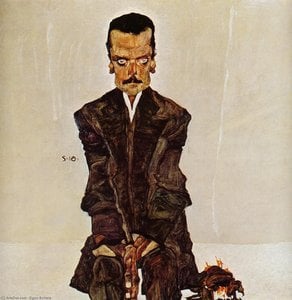
Girl in Black (1911) by Egon Schiele, hand-painted oil painting reproduction by a master artist
Náhľad v interiéri Zobraziť v AR Prepnúť na tlač Prepnúť na digitálny obraz Odoslať ako digitálnu kartu
Podrobnosti o dielo Príručka Pridať do obľúbených Stiahnuť obraz Podobné položky RTG skúška Prehliadanie diapozoje Q&A Štatistiky

Girl in Black Hand-painted oil painting reproduction

Intriguing and haunting, Egon Schiele’s "Girl in Black" (1911) captures raw emotion & sexuality with striking lines & a sense of mystery. Explore this iconic Expressionist portrait at WahooArt.

Egon Schiele: expresionista s temnými témami, silnými portrétmi a unikátnymi čiarami. Objavte jeho podriadenú dušu v reprodukciách! #EgonSchiele #výtvarnýumelník #expresionizmus

Ručne maľovaná olejová reprodukcia

Ručne maľovaný olej na plátne vo vašej zvolenej veľkosti a v ráme, vyrobený na mieru našimi umelcami. ( Prepnúť na tlač Prepnúť na digitálny obraz)

Corner sample of the P118B picture frame: lisovaný polystyrén, 5 cm wide and 3 cm thick
P118B €10
Corner sample of the P118H picture frame: lisovaný polystyrén, 5 cm wide and 3 cm thick
P118H €10
Corner sample of the P118W picture frame: lisovaný polystyrén, 5 cm wide and 3 cm thick
P118W €10
Corner sample of the P438Z picture frame: lisovaný polystyrén, 5.5 cm wide and 3.5 cm thick
P438Z €10
Corner sample of the P508JH picture frame: lisovaný polystyrén, 7 cm wide and 3.5 cm thick
P508JH €12
Corner sample of the P508YH picture frame: lisovaný polystyrén, 7 cm wide and 3.5 cm thick
P508YH €12
Corner sample of the P805H picture frame: lisovaný polystyrén, 5 cm wide and 3.5 cm thick
P805H €10
Corner sample of the P805Z picture frame: lisovaný polystyrén, 5 cm wide and 3.5 cm thick
P805Z €10
Corner sample of the P919BZ picture frame: lisovaný polystyrén, 7 cm wide and 3.5 cm thick
P919BZ €10
Corner sample of the P919G picture frame: lisovaný polystyrén, 7 cm wide and 3.5 cm thick
P919G €10
Corner sample of the P919XJ picture frame: lisovaný polystyrén, 7 cm wide and 3.5 cm thick
P919XJ €10
Corner sample of the P959ZH picture frame: lisovaný polystyrén, 5 cm wide and 3 cm thick
P959ZH €10
Corner sample of the P968JZ picture frame: lisovaný polystyrén, 6 cm wide and 4 cm thick
P968JZ €12
Corner sample of the W106C picture frame: masívne drevo, 5 cm wide and 3 cm thick
W106C €8
Corner sample of the W218G picture frame: masívne drevo, 5 cm wide and 3 cm thick
W218G €10
Corner sample of the W218JH picture frame: masívne drevo, 5 cm wide and 3 cm thick
W218JH €8
Corner sample of the W218Y picture frame: masívne drevo, 5 cm wide and 3 cm thick
W218Y €10
Corner sample of the W307PJ picture frame: masívne drevo, 6 cm wide and 3 cm thick
W307PJ €10
Corner sample of the W316G picture frame: masívne drevo, 6 cm wide and 3 cm thick
W316G €10
Corner sample of the W316PJ picture frame: masívne drevo, 6 cm wide and 3 cm thick
W316PJ €8
Corner sample of the W316Y picture frame: masívne drevo, 6 cm wide and 3 cm thick
W316Y €10
Corner sample of the W398PJ picture frame: masívne drevo, 5 cm wide and 3 cm thick
W398PJ €8
Corner sample of the W4111J picture frame: masívne drevo, 6.5 cm wide and 3.5 cm thick
W4111J €10
Corner sample of the W500HY picture frame: masívne drevo, 7 cm wide and 5 cm thick
W500HY €15
Corner sample of the W500JH picture frame: masívne drevo, 7 cm wide and 5 cm thick
W500JH €15
Corner sample of the W692G picture frame: masívne drevo, 8 cm wide and 4 cm thick
W692G €12
Corner sample of the W849H picture frame: masívne drevo, 5 cm wide and 3 cm thick
W849H €8
Corner sample of the W940BG picture frame: masívne drevo, 7.5 cm wide and 4.5 cm thick
W940BG €15
Corner sample of the W953PJ picture frame: masívne drevo, 6 cm wide and 3.5 cm thick
W953PJ €8

Štandardné
na mieru
CM
INCH

Vyberte si z našich preddefinovaných rozmerov, ktoré zodpovedajú pôvodným pomeroḿ diela.

šírka
výška

Zadajte šírku a výšku, ktoré potrebujete, aby sa dielo hodilo k vášmu rámu alebo stene. Keďže ide o ručnú maľbu, pri rozmeroch s odlišným pomerom strán môže umelec namalovať o niečo viac okolo obrázka alebo ho mierne orezatú — výber patrí vám. Pred začatím maľovania vám pošleme digitálnu ukážku na schválenie. Obrázok zobrazený na tejto stránke nenahrádza reálny výsledok — ten zobrazuje iba digitálna ukážka.

Príklady možných zmien: nahradiť tvár fotografiou zákazníka; pridať domáce zviera (napr. nahradiť mačku psom); vložiť skryté posolstvo do pozadia; zmeniť krajinu alebo prvky pozadia.
Po odoslaní objednávky vám tím WahooArt.com pošle e-mail s pokynmi a poskytne náhľad na návrh

Celosvetová doprava () za 3 až 4 týždne namiesto štandardných 5 týždňov. (31 október). Bez kompromisov v kvalite.

Bezplatná expresná doprava po celom svete
Vysokokvalitné lnianske plátno
Kompletné poistenie prepravy
Záruka vrátenia colného poplatku
Záruka presného farebného zhodnutia
100-dená politika vrátenia tovaru (iba pri vadách)
100% záruka vrátenia peňazí
Zľava pri väčšom množstve

Celková cena

€ 242

Girl in Black

Technika reprodukcie

Veľkosť reprodukcie

-

Celková cena

€ 242

Základné informácie

  • Subject or theme: Contemplation, mystery
  • Artist: Egon Schiele
  • Year: 1911
  • Influences:
    • Klimt
    • Renaissance
  • Dimensions: 22.38 x 15.75 in
  • Movement: Expressionism

Kvíz o umení

Pri každej otázke je iba jedna správna odpoveď.

Otázka 1:
What is the primary emotion conveyed by the woman in Egon Schiele’s ‘Girl in Black’?
Otázka 2:
The cat in the painting is most likely intended to represent:
Otázka 3:
Considering Egon Schiele’s artistic style, which movement does ‘Girl in Black’ most closely align with?
Otázka 4:
What is a notable characteristic of Schiele's technique as demonstrated in ‘Girl in Black’?
Otázka 5:
The presence of the two smaller figures in the painting suggests:

A Fragmented Existence – The Genesis of “Girl in Black”

Egon Schiele's "Girl in Black," painted in 1911, isn’t merely a portrait; it’s a distilled essence of the artist’s turbulent inner world. Born in Vienna amidst a landscape of burgeoning modernity and profound personal sorrow – his father succumbing to syphilis at fourteen, followed by the loss of his sister – Schiele's life was inextricably linked with themes of mortality, vulnerability, and the unsettling beauty of the human form. This painting emerges from that crucible, reflecting a young man grappling with grief, isolation, and an increasingly acute awareness of his own precarious existence. The year 1911 marked a pivotal point in Schiele’s career, as he navigated the complexities of his burgeoning artistic ambitions alongside the emotional weight of his family history – a backdrop that profoundly shaped the intensity and psychological depth of his work.

  • Early Life & Loss: The shadow of illness and premature death permeated Schiele's childhood, fostering an early preoccupation with fragility and the inevitability of loss.
  • Vienna’s Artistic Crucible: Vienna in 1911 was a city undergoing rapid transformation, a hotbed for artistic innovation and social upheaval – a context that fueled Schiele’s experimental approach to painting.

The Language of Line and Shadow – Technique and Style

“Girl in Black” is a masterclass in Schiele's distinctive style, characterized by intensely expressive lines, fragmented forms, and a masterful manipulation of watercolor and pencil. The painting’s foundation lies in the delicate washes of watercolor, applied with a loose, almost frantic energy that conveys both vulnerability and suppressed emotion. These fluid strokes create an ethereal quality, softening the sharp edges of the figure while simultaneously emphasizing her isolation. The addition of pencil provides a grounding element, delineating key features with precise lines that contrast sharply with the fluidity of the watercolor. Notice how Schiele uses overlapping lines to suggest volume and form, creating a sense of depth and movement within the relatively confined space. The use of shadow is particularly striking – not as a simple rendering of light and dark, but as an active element, enveloping the figure in a veil of mystery and hinting at hidden depths.

Schiele’s technique was deliberately raw and immediate, eschewing traditional academic conventions in favor of a more visceral and emotionally charged approach to representation.

Decoding the Symbolism – A Portrait of Inner Turmoil

The subject herself—a young woman with strikingly dark hair and an enigmatic expression—appears lost in contemplation. Her posture is subtly defiant, yet her gaze seems distant and unfocused, suggesting a profound inner turmoil. The placement of her arms around the cat nestled beside her adds another layer of complexity to the image. Cats were frequently depicted by Schiele as symbols of independence, solitude, and even death – creatures often associated with the darker aspects of human experience. The dark clothing further contributes to the painting’s mood, creating a sense of concealment and hinting at a hidden vulnerability. The overall composition—the figure isolated against an undefined background—reinforces this feeling of loneliness and introspection. It's important to note that Schiele often used his subjects as vehicles for exploring his own psychological anxieties, imbuing them with symbolic weight.

A Legacy of Intensity – “Girl in Black” Today

“Girl in Black” remains a powerfully evocative work, capturing the essence of Schiele’s unique artistic vision. It's a testament to his ability to translate profound emotional experiences onto canvas, creating images that resonate with viewers on a deeply personal level. Reproductions of this painting offer a remarkable opportunity to experience the intensity and psychological depth of Schiele’s art in your own space. WahooArt offers meticulously crafted hand-painted reproductions that faithfully capture the nuances of color, texture, and line—allowing you to bring this haunting portrait into your home or office. Consider how the painting's somber palette and fragmented composition can contribute a touch of intellectual intensity to any interior design scheme. Beyond its aesthetic qualities, “Girl in Black” serves as a poignant reminder of Schiele’s own struggles with mortality and the enduring power of art to confront difficult truths.

Otázky a odpovede

Aký pocit vyvoláva „Girl in Black“ od Egon Schiele?

„Girl in Black“ od Egon Schiele vyvoláva Melancholic pocit v rámci celkového Dramatic nálady.

Koľko rokov mal/a Egon Schiele, keď vzniklo dielo „Girl in Black“?

Keď bolo dielo „Girl in Black“ vytvorené v roku 1911, umelec Egon Schiele – narodený v roku 1890 – mal 21 rokov.

Kto je autorom a aké je vznikové obdobie diela „Girl in Black"?

Dielo „Girl in Black“ vytvoril/a Egon Schiele v roku 1911.


Biografia umelca

A Life Forged in Expression

Egon Schiele, narodený v roku 1890 v malej obci Tulln an der Donau, bol umelecký život plný dramatických zvratov a hlbokých osobnostných skúseností. Jeho rané roky boli ovládané chorobami a smútkom; jeho otec zomrel na spinu už len vo veku štrnásť rokov, čo zanechalo v jeho tvorbe trvalý odkaz úzkosti a reflexie nad plynulým časom. Vyrastal najprv pod starostlivosťou svojej matky a neskôr pod dočasnou ochranou svojho stríka Leopolda Czihacka, čo neprinieslo stabilný život, ale posilnilo jeho nezávislý duch. Už ako dieťa prejavoval intenzívny záujem o vlaky – motív, ktorý sa neskôr jemne objavil v jeho maľbách – a darovaniu kreslenia, hoci to bolo na začiatku potrestané jeho otcom, ktorý ho považoval za rozptylujúcu činnosť. Ranná smrť jeho sestry Elviry tiež ovplyvnila jeho psychiku. Tieto rané skúsenosti vložili doňho citlivosť a emocionálnu uprosedenosť, ktoré sa stali charakteristickými znakmi jeho umeleckého vyjadrenia – neustále boj s témami života, smrti a ľudského stavu.

The Crucible of Vienna: Artistic Development

Schiele začal svoju formálnu umelckú cestu na Kunstgewerbeschule viedeňskej, ale rýchlo sa cítil stlačený konzervatívnym prístupom. Prešiel na Akademie der bildenden Künste, kde však čakal ďalší rozčarovanie z prísnych akademických tradícií. Táto nespokojnosť ho priviedla k tomu, aby úplne zahodil formálne vzdelanie a zvolil si vlastnú cestu – dôkaz jeho neochrabného umeleckého presvedčenia. Vplyv Gustava Klimta bol v týchto raných rokoch zásadný; Schiele obdivoval Klimtov dekoratívny štýl a skúmanie symboliky, čo ho priviedlo k mentorstvu známeho umelca. Postupne sa však odlišil od Klimtovho estetického prístupu, vyvinul si vlastný jedinečný hlas, charakterizovaný uprosedenosťou, úprimnosťou a psychologickou intenzitou. Spoločne s ďalšími umelcami založil v roku 1909 skupinu Neues Wiener Kunstgruppe (Novú umeleckú skupinu), ktorá sa snažila o výzvu platných umeleckých konvencií. Jeho prvé diela, často znepokojivé portréty a sebaobrazky, predstavovali silné vyjadrenie emocionálnej ťažkosti – nepríjemné postavy a pociťovanie zraniteľnosti. Tieto maľby neboli len reprezentáciou fyzického vzhladu, ale skúmaním vnútornej krajiny – obavy, túžby a strachy, ktoré trápili ľudské duše. Hľadal nie to, čo *videl*, ale to, čo *pocítil*.

Raw Emotion and Unflinching Truth

Umelecké diela Egon Schiele sú okamžite rozpoznateľné svojou uprosedenosťou a psychologickou hĺbkou. Bez váhania sa vyrovnával s témami, ktoré boli vtedy považované za tabu – sexualita, smrť, úzkosť, izolácia – s neochabujúcou pohľadom. Jeho charakteristický štýl sa vyznačuje predlžitými postavami, zakrivelenými postojmi a expresívnymi čiarami, ktoré vyjadrujú pocit znepokojenia a emocionálnej intenzity. Človek, najmä nahá, stal sa jeho hlavným témou – nie ako ideálnym objektom krásy, ale ako prenosnou nádobou pre skúmanie ľudského zážitku. Sebaobrazky predstavovali významnú časť jeho diela, ponúkali intímne pohľady dovnútra jeho sveta – svet často poznačený osamotenosťou a sebepochybom. Nevyhýbal sa zobrazovať sám seba v nepríjemných alebo zraniteľných pózach, čo odhaľuje hlbokú úroveň sebavedomia a sebapoznania. Okrem sebaobraziek Schiele vytváral portréty iných ľudí, ktoré zachytávajú ich podobnosti s znepokojujúcou presnosťou, ktorá preniká pod povrch. Jeho krajiny zobrazovali rovnakú emocionálnu intenzitu ako jeho portréty – nie sú to len vizuálne reprezentácie, ale vyjadrenie pocitov a stavov mysle. Použitie čiary je v dielach Schiele zvlášť výrazné; nie je to len nástroj na definovanie tvaru, ale expresívna sila, ktorá prenasa emócie a psychologické napätie. Opakujúce sa motívy, ako napríklad *Physalis* – symbol smrti a plynulosti s jeho jemným, papierištným šupkom – ďalej zdôrazňujú toto zameranie na smrť.

A Legacy Cut Short: Achievements & Significance

Hoci čelil cenzúre a právnym problémom – vrátane krátkeho väzenia za údajné podnecovanie detí proti jeho umeniu – Schiele získal uznanie v okruhu avantgardných umelcov vídeňskej. Jeho diela vyzvali platné konvencie, čo vyvolalo obdiv aj pobúrenie. Predčasná smrť počas španielskej chrípkovej pandémie v roku 1918 vo veku dvadsiatich ôsmich rokov však zanechala po ňom bohatý súbor grafických diel. Jeho diela sa dnes nachádzajú v hlavných múzeách sveta, vrátane Leopoldova muzea viedeňskej a Egon Schiele Art Centrum v Českom Krumlove, čo zabezpečuje, že jeho umelecké dedičstvo bude trvať ďalej. Bol to muž, ktorý odvážne bojoval za svoje umenie a svoj názor, a jeho diela sú dôkazom sílácie umenia pri konfrontácii s komplexnosťou existencie s úprimnosťou, odvahou a neochabujúcim videním.
  • Kľúčové témy: Smrt, sexualita, izolácia, emocionálna ťažkosť
  • Vplyvy: Gustav Klimt, Vídeňská secesia, osobné traumy
  • Štýlové charakteristiky: Predlžujúce sa postavy, zakrivelené postoje, expresívne čiary, uprosedená emócia
Egon Schiele

Egon Schiele

1890 - 1918 , Rakúsko

Základné informácie

  • Artistic Movement Or Style: Expresionizmus
  • Artists Or Movements Influenced By This Artist: ['Klimtova secesia']
  • Artists Who Influenced This Artist: ['Gustav Klimt']
  • Date Of Birth: 1890
  • Date Of Death: 1918
  • Full Name: Egon Schiele
  • Nationality: Rakúsan
  • Notable Artworks:
    • Sebeportrét s physalis
    • Väzba
    • Poľanský kraj
  • Place Of Birth: Tulln an der Donau, Rakúsko
Preskúmajte umelecká diela usporiadané podľa tém, štýlov a charakteristík.