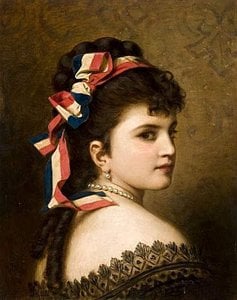
Anton Windmaier, 1840 – 1896

18 najznámejších obrazov umelca Anton Windmaier

Obraz, ktorý priniesol slávu Anton Windmaier, je Girl in Folk Costume (1879). Autumn Near Munich (1874) a The Little Truant (1885) ich nasledujú v srdciach zberateľov a návštevníkov múzeí. Z 18 diel umelca Anton Windmaier v našom katalógu je týchto 18 najobdivovanejších, pričom každá je prezentovaná s dátumom jej vytvorenia, názvom múzeja a unikátnými vlastnostvami.

Poriadkované podľa nášho skóre popularity, ktoré kombinuje počet vyhľadávaní, návštev a objednávok pre každé dielo. Aktualizované október 2026. Každé majstrovské dielo na tejto stránke si môžete objednať ako ručne maľovanú olejobraskovú reprodukciu múzeálnej kvality alebo ako umeleckú tlač, v rozmeroch podľa vašej voľby.

Portrét Anton Windmaier
Anton Windmaier · 1840 – 1896
Narodený · zomrel
1840 – 1896, Pfarrkirchen
Diela v našom katalógu
18
Najznámejšie
Girl in Folk Costume (1879)
Najviac diel v
Reading Public Museum

Anton Windmaier: desať majstrovských diel

Girl in Folk Costume (1879) od Anton Windmaier
1

Girl in Folk Costume

1879

A Glimpse into 19th-Century Russian Heritage: "Girl in Folk Costume" This captivating oil on canvas portrait, dating back to 1879, offers a poignant glimpse into the cultural landscape of 19th-century Russia. Painted by Anton Ebert, the artwork depicts a young woman adorned in traditional folk attire, presented within an elegant oval frame that enhances its classical feel. The subject's serene expression and dignified posture evoke a sense of quiet strength…

Ručne maľovaná olejná reprodukcia od $181 29 × 35 cm

Viac majstrovských diel od Anton Windmaier, od 11 do 18

Témy, ktoré Anton Windmaier mal najčastejšie na obrazoch

Štyri témy, ktoré sa v týchto majstrovskách najčastejšie vyskytujú, spolu s ich najkrajšími príkladmi.

Kde uvidieť obrazy umelca Anton Windmaier

2 múzeá, v ktorých sa nachádza najviac obrazov z tejto stránky.

Múzeá Mesto Diela umelca Anton Windmaier Obrazy z tohto zoznamu
Reading Public Museum, ReadingReading Public Museum Reading 2 Autumn Near Munich, Sunset Near Munich
Bavarské štátne múzeá výtvarného umenia, MníchBavarské štátne múzeá výtvarného umenia Mních 1 Winter landscape

Anton Windmaier, dekáda po dekáde: kľúčové dielo každého obdobia

  1. 1870s
    Girl in Folk Costume (1879) od Anton Windmaier
    Rank 1 / 18

    Girl in Folk Costume

    Vek 30 – 39

    A Glimpse into 19th-Century Russian Heritage: "Girl in Folk Costume" This captivating oil on canvas portrait, dating back to 1879, offers a poignant glimpse into the cultural landscape…

  2. 1880s
  3. 1890s
    Winter landscape (1896) od Anton Windmaier
    5. z 18

    Winter landscape

    Vek 50 – 56 · Bavarské štátne múzeá výtvarného umenia

Majstrovské diela umelca Anton Windmaier: otázky a odpovede

Ktorým obrazom je Anton Windmaier najznámejší/najznámejšia?Zobraziť odpoveď

Girl in Folk Costume (1879). Nasledujú Autumn Near Munich (1874) a The Little Truant (1885).

Koľko rokov mal(a) Anton Windmaier, keď maľoval(a) Girl in Folk Costume?Zobraziť odpoveď

39 rokov: Girl in Folk Costume vzniklo v roku 1879 a Anton Windmaier sa narodil/a v roku 1840.

Akých desať najväčších diel má Anton Windmaier?Zobraziť odpoveď

Girl in Folk Costume, Autumn Near Munich, The Little Truant, The Little Polka Dancer, Winter landscape, An Elegant Lady, The Mellon Seller, Sunset Near Munich, Grandmother's Recovery a The Gypsy Girl. Vyššie uvedené hodnotenie uvádza rok a múzeu každého z nich.

Koľko diel nakreslil/a Anton Windmaier?Zobraziť odpoveď

Náš katalóg obsahuje 18 diel umelca Anton Windmaier z perioda od 1874 do 1896.

V ktorých múzeách môžem vidieť majstrovské diela umelca Anton Windmaier?Zobraziť odpoveď

Väčšina z nich sa nachádza v Reading Public Museum (Reading) a Bavarské štátne múzeá výtvarného umenia (Mních). Tabuľka vyššie uvádza jednotlivé múzeá.

Kedy vytvoril/a Anton Windmaier svoje majstrovské diela?Zobraziť odpoveď

V období 1870s: 3 z 18 diel na tejto stránke pochádza z tohto obdobia, pričom medzi nimi je Girl in Folk Costume.

Aké sú prvé a posledné slavné obrazy umelca Anton Windmaier?Zobraziť odpoveď

Najstaršie dielo na tejto stránke pochádza z Autumn Near Munich (1874), najnovšie z Winter landscape (1896).

Aké boli obľúbené témy Anton Windmaier?Zobraziť odpoveď

Portrait (2), Russian art (2) a Female figure (2), z celkového počtu 18 diel na tejto stránke.

Aké majstrovské diela Anton Windmaier visia v Reading Public Museum?Zobraziť odpoveď

Autumn Near Munich a Sunset Near Munich sa nachádzajú medzi 2 dielami na tejto stránke, ktoré vlastní Reading Public Museum, Reading.

Môžem vlastniť reprodukciu majstrovského diela od Anton Windmaier?Zobraziť odpoveď

Áno. Každý obraz na tejto stránke si môžete objednať ako ručne maľovanú olejobraskovú reprodukciu múzeálnej kvality alebo ako umeleckú tlač, v požadovanom rozмере, priamo na stránke daného obrazu.

Život umelca Anton Windmaier

The Soul of a Nation: The Life and Art of Anton Ebert

Anton Ebert stands as a pivotal figure in the development of Russian realist painting, a master whose meticulous observation and profound empathy captured the very essence of everyday life in 19th-century Russia. Born in Berlin to Polish heritage, Ebert’s artistic journey was one of remarkable migration, leading him from the bustling, structured streets of Europe to the heartland of Russia. It was here that he found his true calling, spending much of his career documenting the lives of peasants, merchants, and members of the aristocracy with a sensitivity that transcended mere portraiture. His work offers a poignant window into a rapidly changing nation, reflecting both its enduring, ancient traditions and the encroaching, transformative forces of modernity.

Ebert’s early artistic training was deeply rooted in the rigorous academic tradition, receiving foundational instruction at the prestigious Berlin Academy of Fine Arts. However, his creative spirit was profoundly reshaped by his exposure to the burgeoning realist movement sweeping through Europe, spearheaded by visionaries such as Gustave Courbet and Jean-François Millet. Rejecting the polished, idealized representations of beauty prevalent in academic circles, Ebert sought to portray his subjects with an unflinching honesty. He turned his gaze toward the lives of ordinary people, a commitment that would become the defining hallmark of his artistic legacy. While his early years were spent exploring landscapes and formal portraits, it was his move to Russia in 1870 that truly ignited his creative fire.

A Master of Realism and Light

Initially employed as a portraitist for the Imperial family, Ebert quickly found himself drawn away from the gilded halls of the elite and toward the vibrant, rugged reality of the rural population. He recognized within the peasantry a wealth of character and narrative potential that demanded to be recorded. His artistic style is characterized by an extraordinary level of detail and a meticulous approach to realism. He possessed a rare ability to capture the subtle nuances of human expression, the intricate textures of heavy fabrics, and the shifting atmospheric conditions of the Russian landscape. In works such as "Girl in Folk Costume," one can witness his mastery; he brings the richness of traditional attire—the vibrant red headscarf and delicate necklaces—to life with such precision that the subject seems to breathe within her frame.

A key element of Ebert’s evocative power is his sophisticated use of light. He often employed a diffused, sometimes melancholic light that imbued his scenes with a sense of quiet introspection and depth. This technique allowed him to create immersive experiences, transporting the viewer into the very world he observed. His paintings are not merely static depictions; they are atmospheric studies that utilize smooth brushstrokes to render soft skin, contrasting beautifully with more textured applications used for the coarse fabrics of peasant clothing. Through this interplay of light and texture, Ebert achieved a sense of sentimental realism, where the physical world is rendered with scientific accuracy yet remains deeply infused with emotion.

Legacy and Historical Significance

The historical significance of Anton Ebert lies in his role as a visual chronicler of a vanishing era. During the late 19th century, Russia underwent a period of intense cultural revival and national identity formation. Artists like Ebert played a crucial role in documenting traditional costumes, customs, and social structures that were being altered by industrialization. His oeuvre serves as a vital archive of Russian heritage, preserving the dignity of the common person through art.

Ebert’s contributions can be summarized through several key artistic achievements:

  • Documentary Precision: His ability to record the specificities of folk costumes and social hierarchies provides an invaluable historical record.
  • Emotional Depth: By blending Neoclassical balance with Romantic undertones, he moved beyond simple realism to touch upon the psychological state of his subjects.
  • Cultural Bridge: As a painter of Polish heritage trained in Germany but working in Russia, his work represents a unique intersection of European technical training and Russian thematic soul.

Ultimately, the works of Anton Ebert—from the tender "Grandmother's Recovery" to the vibrant "The Mellon Seller"—continue to resonate with modern audiences. They offer a timeless connection to a period of profound human experience, inviting us to look closely at the beauty found in the ordinary and the strength found in the simple rhythms of life.