БЕСПЛАТНАЯ КОНСУЛЬТАЦИЯ ПО ВОПРОСАМ ИСКУССТВА

x

Краткая справка

  • Born: 1825, United Kingdom
  • Art period: 19th Century
  • Top 3 works:
    • Venice
    • The Grand Canal
    • Farmyard Scene
  • Also known as: William George Meadows
  • Lifespan: 76 years
  • Top-ranked work: Venice
  • Ещё…
  • Copyright status: Public domain
  • Movements: impressionism
  • Died: 1901
  • Creative periods: mature period
  • Nationality: United Kingdom
  • Works on APS: 41

Тест по искусству

В каждом вопросе только один правильный ответ.

Вопрос 1:
What is William Meadows known for?
Вопрос 2:
Where was William Meadows born?
Вопрос 3:
What artistic movement did William Blake Richmond bridge?
Вопрос 4:
Which museum showcases Baroque art, Venetian paintings & Italian sculpture?
Вопрос 5:
What type of artist was William Meadows?

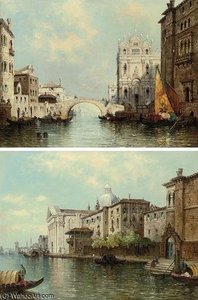
William Meadows (1833 – 1901): Bridging Romantic Landscape and Venetian Impression

William Meadows was born in Bolton, Lancashire, England, in July 1833, into a family steeped in artistic tradition. His father, James Meadows, was a celebrated marine painter whose voyages across the Atlantic inspired countless canvases depicting dramatic seascapes—a legacy that profoundly shaped William’s own artistic sensibilities. Little biographical detail survives beyond this foundational connection to maritime art and familial influence; however, his output speaks volumes about his dedication to capturing the beauty of both British countryside and the vibrant atmosphere of Venice during its Belle Époque heyday. Meadows emigrated with his parents to the United States in 1842, establishing a foothold in Burlington Flats, New York—a location that would later become synonymous with his artistic vision. He honed his craft amidst the burgeoning Aesthetic Movement, absorbing the tenets of Ruskinian idealism and embracing the stylistic innovations championed by artists like Dante Gabriel Rossetti and John Everett Millais. This exposure to Symbolism fueled his exploration of mood and emotion within his landscapes, transforming them into meditations on nature’s sublime grandeur rather than mere representations of topographical accuracy. Meadows' artistic journey culminated in a remarkable series of Venetian paintings—a testament to his fascination with the city’s architectural splendor and its captivating light. Unlike many Impressionists who sought to capture fleeting moments of visual sensation, Meadows approached Venice with a deliberate compositional strategy rooted in classical tradition. He meticulously studied frescoes by Raphael and Michelangelo, striving to emulate their mastery of perspective and color harmony. His canvases depict Piazza San Marco bathed in golden afternoon sunlight, capturing the bustling energy of Venetian life while simultaneously conveying an underlying sense of spiritual contemplation—a characteristic that aligns perfectly with the broader Aesthetic Movement’s preoccupation with elevating art beyond mere decorative function. His involvement with the Burlington Agricultural Society demonstrated his commitment to community engagement and reflected a humanist impulse evident throughout his oeuvre. Serving as president of the society fostered connections between artistic creativity and practical observation, mirroring the ethos of the era's pursuit of harmonious integration between intellect and experience. Furthermore, his role in the Lyons Town Board underscored his civic responsibility—a facet of his life that complemented his artistic pursuits. Meadows died peacefully at home in Burlington, Wisconsin, in April 1901, succumbing to pneumonia after contracting a cold. Though he left behind relatively few paintings—approximately 65 works are currently cataloged—they stand as enduring emblems of the Aesthetic Movement’s aesthetic ideals and its profound engagement with both landscape and Venetian art history. His canvases continue to inspire admiration for their masterful technique and evocative portrayal of beauty, cementing his place as a significant figure in British Art History.