Wang Meng, 1308 – 1385

Wang Meng: 10 самых известных картин

元 王蒙 素庵圖 軸 The Simple Retreat (1370) — самая известная картина Wang Meng, которая находится в Метрополитен-музей в городе Нью-Йорк. Writing Books under the Pine Trees (1323) и Ge Zhichuan Moving to the Mountains (1350) — следующие две самые известные работы в мире. Из 13 работ Wang Meng в нашем каталоге мы выбрали 10 самых популярных среди коллекционеров и посетителей музеев — с указанием года, музея и истории каждого произведения.

Рейтинг основан на нашем показателе популярности, который учитывает количество поисковых запросов, посещений и заказов для каждой работы. Обновлено Октябрь 2026. Каждое произведение на этой странице можно заказать как высококачественную масляную репродукцию ручной работы или художественную печать в любом выбранном вами размере.

Портрет Wang Meng
Wang Meng · 1308 – 1385
Дата рождения · дата смерти
1308 – 1385, Huzhou
Работы в нашем каталоге
13
Самые известные
元 王蒙 素庵圖 軸 The Simple Retreat (1370)
Больше всего работ в
Метрополитен-музей

Топ-10: самые известные картины Wang Meng

元 王蒙 素庵圖 軸 The Simple Retreat (1370) работы Wang Meng
1

元 王蒙 素庵圖 軸 The Simple Retreat

1370 · Ink On Paper · Метрополитен-музей, Нью-Йорк

We are looking at 元 王蒙 素庵圖 軸 The Simple Retreat, a significant ink and paper drawing from the Yuan Dynasty. This work was created by the artist Wang Meng about 1370. It is a hanging scroll that captures a specific vision of the natural world, presented through the delicate medium of ink and color on paper.

Writing Books under the Pine Trees (1323) работы Wang Meng
2

Writing Books under the Pine Trees

1323 · Ink On Paper · Кливлендский музей искусств, Кливленд

The ink on paper captures a quiet moment in 1323, titled Writing Books under the Pine Trees. This landscape emerges from the brush of Wang Meng, a man whose roots trace back to Huzhou, People's Republic of China. Within this scene, the stillness of the mountains meets the steady presence of the scholar, creating a space where the act of reading becomes part of the natural rhythm of the earth.

Сюжеты, которые чаще всего писал Wang Meng

Четыре темы, которые чаще всего встречаются в этих шедеврах, с лучшими примерами каждой из них.

Где можно увидеть картины Wang Meng

5 музеев, в которых находится большинство картин со страницы.

Музей Город Работы Wang Meng Картины из этого списка
Метрополитен-музей, Нью-ЙоркМетрополитен-музей Нью-Йорк 3 元 王蒙 素庵圖 軸 The Simple Retreat, 元 王蒙 丹崖翠壑圖 軸 Red Cliffs and Green Valleys, 元 王蒙 蕭林寂亭圖 團扇 Sparse Trees and Pavilion
Кливлендский музей искусств, КливлендКливлендский музей искусств Кливленд 1 Writing Books under the Pine Trees
The Palace Museum, BeijingThe Palace Museum Beijing 1 Ge Zhichuan Moving to the Mountains
Институт искусств Чикаго, ЧикагоИнститут искусств Чикаго Чикаго 1 Quiet Life in a Wooded Glen
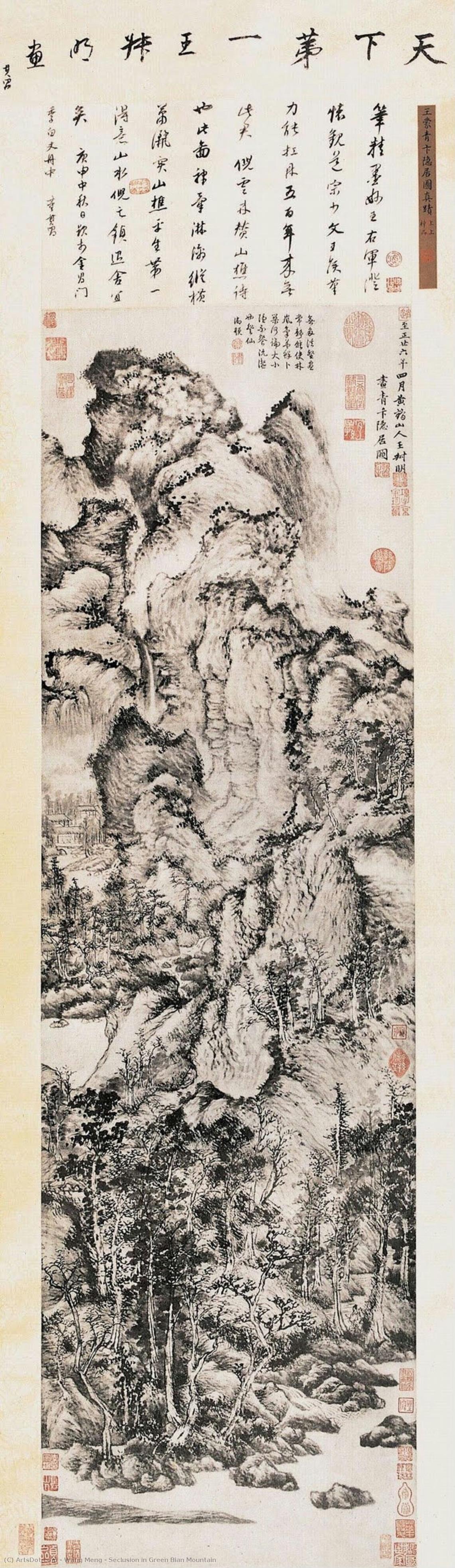
China Modern and Contemporary Art Document Research Center, ПекинChina Modern and Contemporary Art Document Research Center Пекин 1 Seclusion in Green Bian Mountain

Wang Meng сквозь десятилетия: по одному шедевру на каждое десятилетие

  1. 1320s
    Writing Books under the Pine Trees (1323) работы Wang Meng
    Место 2 из 10

    Writing Books under the Pine Trees

    Возраст 12 – 21 · Кливлендский музей искусств

    The ink on paper captures a quiet moment in 1323, titled Writing Books under the Pine Trees. This landscape emerges from the brush of Wang Meng, a man…

  2. 1350s
  3. 1360s
  4. 1370s
    元 王蒙 素庵圖 軸 The Simple Retreat (1370) работы Wang Meng
    Место 1 из 10

    元 王蒙 素庵圖 軸 The Simple Retreat

    Возраст 62 – 71 · Метрополитен-музей

    We are looking at 元 王蒙 素庵圖 軸 The Simple Retreat, a significant ink and paper drawing from the Yuan Dynasty. This work was created by the artist…

Картины художника Wang Meng: часто задаваемые вопросы

Какая картина Wang Meng является самой известной?Показать ответ

元 王蒙 素庵圖 軸 The Simple Retreat (1370), Метрополитен-музей, Нью-Йорк. Далее следуют Writing Books under the Pine Trees (1323) и Ge Zhichuan Moving to the Mountains (1350).

В каком возрасте Wang Meng написал 元 王蒙 素庵圖 軸 The Simple Retreat?Показать ответ

62 лет: 元 王蒙 素庵圖 軸 The Simple Retreat датируется 1370 годом, а Wang Meng родился в 1308.

Какие 10 самых известных картин написал Wang Meng?Показать ответ

元 王蒙 素庵圖 軸 The Simple Retreat, Writing Books under the Pine Trees, Ge Zhichuan Moving to the Mountains, Quiet Life in a Wooded Glen, 元 王蒙 丹崖翠壑圖 軸 Red Cliffs and Green Valleys, 元 王蒙 蕭林寂亭圖 團扇 Sparse Trees and Pavilion, STUDIO SURROUNDED BY TEN THOUSAND PINE TREES, SECLUSION AMID PINES AND SPRINGS, LANDSCAPE и Seclusion in Green Bian Mountain. В рейтинге выше указаны год создания и музей для каждой работы.

Сколько картин написал Wang Meng?Показать ответ

В нашем каталоге представлено 13 работ Wang Meng, созданных в период с 1323 по 1370.

Где я могу увидеть самые известные картины Wang Meng?Показать ответ

Большинство из них находятся в Метрополитен-музей (Нью-Йорк), Кливлендский музей искусств (Кливленд) и The Palace Museum (Beijing). В таблице выше музеи перечислены по порядку.

В какой период Wang Meng создал свои самые известные работы?Показать ответ

За 1360s: 3 из 10 работ на этой странице относятся к этому периоду, в том числе Quiet Life in a Wooded Glen.

Какая самая ранняя и самая поздняя известные картины Wang Meng?Показать ответ

Самая ранняя работа на этой странице датирована Writing Books under the Pine Trees (1323), самая поздняя — 元 王蒙 素庵圖 軸 The Simple Retreat (1370).

Какие сюжеты писал Wang Meng?Показать ответ

Mountains (2), Landscape (2) и Rocks (2) из 10 работ на этой странице.

На чем и какими материалами писал Wang Meng?Показать ответ

Ink On Paper: 2 из 10 работ на этой странице.

Какие картины Wang Meng хранятся в Метрополитен-музей?Показать ответ

元 王蒙 素庵圖 軸 The Simple Retreat, 元 王蒙 丹崖翠壑圖 軸 Red Cliffs and Green Valleys и 元 王蒙 蕭林寂亭圖 團扇 Sparse Trees and Pavilion — одни из 3 работ на этой странице, хранящихся в Метрополитен-музей, Нью-Йорк.

Где я могу купить репродукцию Wang Meng?Показать ответ

Да. Каждую картину на этой странице можно заказать как высококачественную масляную репродукцию ручной работы или художественную печать в выбранном вами размере на странице самой картины.

Wang Meng: биография

Wang Meng: The Ropy Brush and the Silent Landscape

Born in Wuxing, Zhejiang province – now Huzhou – around 1308, Wang Meng stands as a pivotal figure within the artistic landscape of the Yuan Dynasty (1271-1368). His life was marked by both privilege and profound misfortune; he descended from Zhao Mengfu, a prominent Song Dynasty official and artist, inheriting a lineage steeped in cultural significance. However, his later years were tragically consumed by false accusations of treason against the Ming Emperor Taizu, resulting in five years spent imprisoned – an experience that profoundly shaped his artistic vision and ultimately contributed to his unique style.

Wang Meng’s place within art history is firmly secured as one of the “Four Masters” of the Yuan Dynasty alongside Huang Gongwang, Wu Zhen, and Ni Zan. This esteemed group distinguished themselves by rejecting the patronage of the Mongol rulers who had conquered China, choosing instead to remain independent artists working primarily on paper rather than the traditional silk canvases favored by previous generations. This decision reflected a deep conviction that landscapes held the key to unlocking deeper truths – a philosophy central to their artistic practice.

A Style Defined by Texture and Movement

Unlike the more restrained approaches of his contemporaries, Wang Meng’s paintings are characterized by an extraordinary density and dynamism. His brushstrokes—often described as “ropy” or “layered”—were meticulously applied in thick, overlapping patterns, creating a palpable sense of texture and movement. This technique wasn't simply decorative; it was a deliberate attempt to capture the essence of nature – its complexity, its energy, and its inherent instability. He eschewed the smooth, polished surfaces favored by earlier landscape painters, embracing instead a more tactile and expressive approach.

Wang Meng’s compositions are often densely populated with elements—trees, rocks, mountains, streams—creating an immersive experience for the viewer. He avoided clear focal points or dramatic perspectives, preferring to present a holistic view of the natural world, inviting contemplation rather than immediate recognition. This deliberate ambiguity is a hallmark of his style and reflects his belief in the interconnectedness of all things.

Key Works and Artistic Influences

Among Wang Meng’s most celebrated works are “Ge Zhichuan Relocating” (a depiction of a scholar moving to a new location), “Forest Grotto at Juqu,” “Writing Books Under the Pine Trees,” “The Simple Retreat,” and “Dwelling in the Qingbian Mountains.” These paintings, now housed in prestigious museums worldwide – including the Palace Museum, National Palace Museum, Shanghai Museum, Cleveland Museum of Art, and the Metropolitan Museum of Art – demonstrate his mastery of technique and his profound understanding of landscape painting. Notably, "Ge Zhichuan Relocating" sold for an astonishing $62.1 million at auction in 2011, a testament to its artistic merit and historical significance.

Wang Meng’s style was profoundly influenced by the landscape painters who preceded him – Wang Wei, Dong Yuan, and Juran – but he developed his own distinctive voice through his innovative use of brushwork and composition. He also drew inspiration from the literati tradition, a movement that emphasized personal expression and intellectual engagement with nature. His work stands as a bridge between these traditions, forging a new path for Chinese landscape painting.

Legacy and Historical Significance

Despite his relatively obscure status during his lifetime, Wang Meng’s influence on subsequent generations of Chinese painters is undeniable. Dong Qichang, a prominent scholar-artist of the Southern Song Dynasty, greatly admired Wang Meng's style and incorporated elements of it into his own work. Wang Meng’s ropy brushstrokes and dense compositions became a defining characteristic of landscape painting for centuries to come.

His decision to reject court patronage and remain an independent artist also holds significant historical importance. It reflects a growing sense of artistic autonomy and a desire to preserve traditional values in the face of foreign rule. Wang Meng’s life and work serve as a powerful reminder of the enduring power of art to transcend political boundaries and express profound human truths. He remains a vital figure in understanding the evolution of Chinese landscape painting and its continuing relevance today.

Все 13 работ Wang Meng →