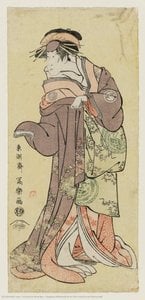
Sharaku: 100 самых известных картин

Kabuki Actor Ōtani Oniji III as Yakko Edobei (1794) — самая известная картина Sharaku, которая находится в Метрополитен-музей в городе Нью-Йорк. Bandō Hikosaburō III as Kudōzaemon Suketsune (1795) и Iwai Hanshirō IV as O-Han of the Shinanoya (1795) — следующие две самые известные работы в мире. Из 147 работ Sharaku в нашем каталоге мы выбрали 100 самых популярных среди коллекционеров и посетителей музеев — с указанием года, музея и истории каждого произведения.

Рейтинг основан на нашем показателе популярности, который учитывает количество поисковых запросов, посещений и заказов для каждой работы. Обновлено Октябрь 2026. Каждое произведение на этой странице можно заказать как высококачественную масляную репродукцию ручной работы или художественную печать в любом выбранном вами размере.

Портрет Sharaku
Sharaku
Направление
Ukiyo-e
Работы в нашем каталоге
147
Самые известные
Kabuki Actor Ōtani Oniji III as Yakko Edobei (1794)
Больше всего работ в
Метрополитен-музей

Топ-10: самые известные картины Sharaku

Kabuki Actor Ōtani Oniji III as Yakko Edobei (1794) работы Sharaku
1

Kabuki Actor Ōtani Oniji III as Yakko Edobei

1794 · Woodblock Print · Метрополитен-музей, Нью-Йорк

In the fleeting moments of the Edo period, few artists captured the raw, unbridled energy of human emotion as piercingly as Tōshūsai Sharaku. His masterpiece, Kabuki Actor Ōtani Oniji III as Yakko Edobei, serves as a breathtaking window into the heart of Kabuki theater, frozen in time since 1794. This woodblock print does not merely depict a performer; it captures a psychological crescendo. The actor, portrayed with startling realism, is…

Hand-painted oil reproduction from $181 26 × 39 cm
Bandō Hikosaburō III as Kudōzaemon Suketsune (1795) работы Sharaku
2

Bandō Hikosaburō III as Kudōzaemon Suketsune

1795 · Woodblock Print

In the fleeting, vibrant world of the Edo period, few images capture the raw, theatrical intensity of the stage quite like Tōshūsai Sharaku’s 1795 masterpiece, Bandō Hikosaburō III as Kudōzaemon Suketsune. This monochrome woodblock print is not merely a portrait; it is a psychological study of a moment frozen in time. The subject, the celebrated Kabuki actor Bandō Hikosaburō III, is captured mid-performance, embodying the formidable character of Kudōzaemon Suketsune.…

Hand-painted oil reproduction from $181 22 × 45 cm
Iwai Hanshirō IV as O-Han of the Shinanoya (1795) работы Sharaku
3

Iwai Hanshirō IV as O-Han of the Shinanoya

1795 · Woodblock Print

In the fleeting, vibrant world of Edo-period Japan, few artists captured the raw, theatrical essence of human emotion as piercingly as Tōshūsai Sharaku. His masterpiece, Iwai Hanshirō IV as O-Hano of the Shinanoya, serves as a breathtaking window into the Kabuki stage of 1795. This woodblock print does not merely depict an actor in costume; it captures a moment of profound character study. The subject, portrayed with a striking three-quarter…

Hand-painted oil reproduction from $181 22 × 46 cm
Nakajima Wadaemon I as Tanbaya Hachiemon (1794) работы Sharaku
4

Nakajima Wadaemon I as Tanbaya Hachiemon

1794 · Woodblock Print

In the fleeting moments of the Edo period, few artists captured the raw, unvarnished essence of human emotion as strikingly as Tōshūsai Sharaku. His masterpiece, Nakajima Wadaemon I as Tanbaya Hachiemon, serves as a profound window into the theatrical soul of 1794 Japan. This woodblock print does not merely depict an actor; it captures a psychological state. The subject, portrayed with Sharaku’s signature intensity, sits in a moment of palpable…

Hand-painted oil reproduction from $181 22 × 46 cm
Iwai Hanshirō IV as Kōtō no Naishi (1795) работы Sharaku
5

Iwai Hanshirō IV as Kōtō no Naishi

1795 · Woodblock Print

In the fleeting history of Japanese ukiyo-e, few names command as much intrigue and reverence as Tōshūsai Sharaku. His brief, explosive appearance on the art scene—lasting a mere ten months between 1794 and 1795—left behind a legacy that continues to haunt and fascinate the modern collector. This particular masterpiece, Iwai Hanshirō IV as Kōtō no Naishi, serves as a profound testament to Sharaku’s unparalleled ability to capture the raw, psychological…

Hand-painted oil reproduction from $181 22 × 46 cm
Matsumoto Koshiro IV as the Fish Peddler Gorobei работы Sharaku
8

Matsumoto Koshiro IV as the Fish Peddler Gorobei

Woodblock Print · Метрополитен-музей, Нью-Йорк

To stand before a portrait in the style of Tōshūsai Sharaku is to confront not merely an image, but a moment suspended between life and memory. This depiction of Matsumoto Koshiro IV as the fish peddler Gorobei captures the very essence of the Edo period's vibrant, yet often melancholic, undercurrents. The print possesses an almost startling immediacy; it feels less like an artistic rendering and more like a captured breath…

Hand-painted oil reproduction from $181 26 × 38 cm
Nakamura Nakazō II, also called Sakaiya Shūkaku (1794) работы Sharaku
9

Nakamura Nakazō II, also called Sakaiya Shūkaku

1794 · Woodblock Print

This woodblock print presents a portrait of Nakamura Nakazō II, also called Sakaiya Shūkaku. The subject was a prominent Japanese kabuki actor, captured during a period of significant theatrical activity in Edo. The work is attributed to the artist Toshusai Sharaku, a figure whose brief and intense presence in the ukiyo-e genre remains a subject of much interest. This specific piece dates to 1794.

Hand-painted oil reproduction from $181 27 × 38 cm
Bandō Mitsugorō II as Ishii Genzō in the Play "Hana Ayame Bunroku Soga" (1795) работы Sharaku
10

Bandō Mitsugorō II as Ishii Genzō in the Play "Hana Ayame Bunroku Soga"

1795 · Woodblock Print · Метрополитен-музей, Нью-Йорк

In the fleeting, electric atmosphere of the late eighteenth-century Edo period, few artists captured the raw, visceral energy of the Kabuki stage quite like Tōshūsai Sharaku. His masterpiece, Bandō Mitsugorō II as Ishii Genzō in the Play "Hana Ayame Bunroku Soga," serves as a profound window into a vanished era of Japanese theatrical splendor. This striking woodblock print does not merely depict an actor; it freezes a moment of high-stakes…

Hand-painted oil reproduction from $181 26 × 39 cm

Остальные места в рейтинге Sharaku, с 11 по 100

Ebisu (1795) работы Sharaku
#20

Ebisu

1795

In the fleeting, brilliant ten-month career of Tōshūsai Sharaku, few works capture the vibrant pulse of Japanese folklore as effectively as his 1795 masterpiece, Ebisu. This woodblock print…

Заберите её домой from $231 →

Картины Sharaku по периодам

Сюжеты, которые чаще всего писал Sharaku

Четыре темы, которые чаще всего встречаются в этих шедеврах, с лучшими примерами каждой из них.

Где можно увидеть картины Sharaku

5 музеев, в которых находится большинство картин со страницы.

Музей Город Работы Sharaku Картины из этого списка
Метрополитен-музей, Нью-ЙоркМетрополитен-музей Нью-Йорк 35 Kabuki Actor Ōtani Oniji III as Yakko Edobei, Matsumoto Koshiro IV as the Fish Peddler Gorobei, Bandō Mitsugorō II as Ishii Genzō in the Play "Hana Ayame Bunroku Soga"
Бруклинский музей, БруклинБруклинский музей Бруклин 3 Segawa Kikujuro Iii as Oshizu, Wife of Tanabe Bunzo, Kubuki Actor Ichikawa Ebizō as Takemura Sadanoshin, Daizo the Substitute
Институт искусств Чикаго, ЧикагоИнститут искусств Чикаго Чикаго 1 Otafuku Throwing Black Beans to Chase Away the Demons on New Year's Eve
Токийский национальный музей, ТокиоТокийский национальный музей Токио 1 Kabuki Actor Ōtani Tokuji as Monogusa Tarō
Музей искусств Толедо, ТоледоМузей искусств Толедо Толедо 1 Onoe Matsusuke as Ashikaga TukaujiPublished by Tsutaya Juzaburo

Sharaku сквозь года: шедевры каждого года

В период с 1794 по 1795 год, на протяжении 2 лет, Sharaku создавал каждую датированную работу на этой странице: вот они, по годам.

  1. 1794
    Kabuki Actor Ōtani Oniji III as Yakko Edobei (1794) работы Sharaku
    #1 из 100

    Kabuki Actor Ōtani Oniji III as Yakko Edobei

    Метрополитен-музей

    In the fleeting moments of the Edo period, few artists captured the raw, unbridled energy of human emotion as piercingly as Tōshūsai Sharaku. His masterpiece, Kabuki Actor Ōtani…

  2. 1794
    Nakajima Wadaemon I as Tanbaya Hachiemon (1794) работы Sharaku
    № 4 из 100

    Nakajima Wadaemon I as Tanbaya Hachiemon

    In the fleeting moments of the Edo period, few artists captured the raw, unvarnished essence of human emotion as strikingly as Tōshūsai Sharaku. His masterpiece, Nakajima Wadaemon I…

  3. 1794
  4. 1794
    Nakamura Nakazō II, also called Sakaiya Shūkaku (1794) работы Sharaku
    № 9 из 100

    Nakamura Nakazō II, also called Sakaiya Shūkaku

    This woodblock print presents a portrait of Nakamura Nakazō II, also called Sakaiya Shūkaku. The subject was a prominent Japanese kabuki actor, captured during a period of significant…

  5. 1794
  6. 1794
  7. 1794
    Nakajima Wadaemon I as Migawari no Jizō (1794) работы Sharaku
    № 19 из 100

    Nakajima Wadaemon I as Migawari no Jizō

    This striking woodblock print, created by the enigmatic artist Tōshūsai Sharaku in 1794, offers a captivating portrait of Nakajima Wadaemon I embodying the role of Migawari no Jizō.…

  8. 1794
  9. 1794
  10. 1794
  11. 1794
  12. 1794
  13. 1795
    Bandō Hikosaburō III as Kudōzaemon Suketsune (1795) работы Sharaku
    #2 из 100

    Bandō Hikosaburō III as Kudōzaemon Suketsune

    In the fleeting, vibrant world of the Edo period, few images capture the raw, theatrical intensity of the stage quite like Tōshūsai Sharaku’s 1795 masterpiece, Bandō Hikosaburō III…

  14. 1795
    Iwai Hanshirō IV as O-Han of the Shinanoya (1795) работы Sharaku
    № 3 из 100

    Iwai Hanshirō IV as O-Han of the Shinanoya

    In the fleeting, vibrant world of Edo-period Japan, few artists captured the raw, theatrical essence of human emotion as piercingly as Tōshūsai Sharaku. His masterpiece, Iwai Hanshirō IV…

  15. 1795
    Iwai Hanshirō IV as Kōtō no Naishi (1795) работы Sharaku
    #5 из 100

    Iwai Hanshirō IV as Kōtō no Naishi

    In the fleeting history of Japanese ukiyo-e, few names command as much intrigue and reverence as Tōshūsai Sharaku. His brief, explosive appearance on the art scene—lasting a mere…

  16. 1795
  17. 1795
  18. 1795
    Morita Kanya VIII as Kawachi Kanja, Disguised as Genkaibo (1795) работы Sharaku
    № 13 из 100

    Morita Kanya VIII as Kawachi Kanja, Disguised as Genkaibo

    Метрополитен-музей

    In the fleeting, shadowy world of the Edo period, few artists captured the raw, psychological intensity of the stage as masterfully as Tōshūsai Sharaku. His 1795 woodblock print,…

  19. 1795
    The Actor Sawamura Sojuro III (1795) работы Sharaku
    Место 15 из 100

    The Actor Sawamura Sojuro III

    Метрополитен-музей

    In the fleeting history of Japanese Ukiyo-e, few names evoke as much mystery and intense fascination as Tōshūsai Sharaku. His brief, explosive appearance on the art scene—lasting a…

  20. 1795
  21. 1795
    Segawa Kikunojo III in an Unidentified Role (1795) работы Sharaku
    № 17 из 100

    Segawa Kikunojo III in an Unidentified Role

    Метрополитен-музей

    In the fleeting moments of the Edo period, few names ignite as much curiosity as Tōshūsai Sharaku. His brief, explosive career—lasting a mere ten months between 1794 and…

  22. 1795
    Ebisu (1795) работы Sharaku
    Место 20 из 100

    Ebisu

    In the fleeting, brilliant ten-month career of Tōshūsai Sharaku, few works capture the vibrant pulse of Japanese folklore as effectively as his 1795 masterpiece, Ebisu. This woodblock print…

  23. 1795
  24. 1795
  25. 1795

Картины художника Sharaku: часто задаваемые вопросы

Какая картина Sharaku является самой известной?Показать ответ

Kabuki Actor Ōtani Oniji III as Yakko Edobei (1794), Метрополитен-музей, Нью-Йорк. Далее следуют Bandō Hikosaburō III as Kudōzaemon Suketsune (1795) и Iwai Hanshirō IV as O-Han of the Shinanoya (1795).

Какие 10 самых известных картин написал Sharaku?Показать ответ

Kabuki Actor Ōtani Oniji III as Yakko Edobei, Bandō Hikosaburō III as Kudōzaemon Suketsune, Iwai Hanshirō IV as O-Han of the Shinanoya, Nakajima Wadaemon I as Tanbaya Hachiemon, Iwai Hanshirō IV as Kōtō no Naishi, Bandō Hikosaburō III as Godai Saburō Chikatada, Osagawa Tsuneyo II as Okinu, wife of Chōemon, Matsumoto Koshiro IV as the Fish Peddler Gorobei, Nakamura Nakazō II, also called Sakaiya Shūkaku и Bandō Mitsugorō II as Ishii Genzō in the Play "Hana Ayame Bunroku Soga". В рейтинге выше указаны год создания и музей для каждой работы.

Сколько картин написал Sharaku?Показать ответ

В нашем каталоге представлено 147 работ Sharaku, созданных в период с 1794 по 1795.

Где я могу увидеть самые известные картины Sharaku?Показать ответ

Большинство из них находятся в Метрополитен-музей (Нью-Йорк), Бруклинский музей (Бруклин) и Институт искусств Чикаго (Чикаго). В таблице выше музеи перечислены по порядку.

В какой период Sharaku создал свои самые известные работы?Показать ответ

За 1795: 50 из 100 работ на этой странице относятся к этому периоду, в том числе Bandō Hikosaburō III as Kudōzaemon Suketsune.

Какая самая ранняя и самая поздняя известные картины Sharaku?Показать ответ

Самая ранняя работа на этой странице датирована Kabuki Actor Ōtani Oniji III as Yakko Edobei (1794), самая поздняя — Bandō Hikosaburō III as Kudōzaemon Suketsune (1795).

Какие сюжеты писал Sharaku?Показать ответ

Kabuki actor (18), Woodblock print (17) и Japanese art (13) из 100 работ на этой странице.

На чем и какими материалами писал Sharaku?Показать ответ

Woodblock Print: 30 из 100 работ на этой странице.

К какому направлению относится искусство Sharaku?Показать ответ

Ukiyo-e, как показывают картины на этой странице.

Какие картины Sharaku хранятся в Метрополитен-музей?Показать ответ

Kabuki Actor Ōtani Oniji III as Yakko Edobei, Matsumoto Koshiro IV as the Fish Peddler Gorobei и Bandō Mitsugorō II as Ishii Genzō in the Play "Hana Ayame Bunroku Soga" — одни из 21 работ на этой странице, хранящихся в Метрополитен-музей, Нью-Йорк.

Где я могу купить репродукцию Sharaku?Показать ответ

Да. Каждую картину на этой странице можно заказать как высококачественную масляную репродукцию ручной работы или художественную печать в выбранном вами размере на странице самой картины.

Sharaku: биография

The Enigmatic Presence of Sharaku

Sharaku was a Japanese ukiyo-e print designer active between 1794 and 1795. His prolific output focused primarily on yakusha-e, which are portraits of kabuki actors. These works often emphasized the dynamism and energy of the subjects, frequently utilizing a realism that highlighted unflattering details such as wrinkles or large noses. His compositions often featured a focus on facial expressions, sometimes presenting a single figure or contrasting different types of faces.

The artist's career was brief, spanning approximately ten months. His work is categorized into four distinct periods:

Artistic Style and Legacy

Sharaku's technique involved the use of woodblock prints, sometimes employing extravagant methods such as the dusting of mica in the backgrounds to create a glittering effect. His portraits are noted for their ability to capture the psychology of a character through heightened theatrical gestures and expressive, almost caricature-like exaggerations.

Despite the mystery surrounding his true identity, his work has been recognized for its mastery of the medium. His reputation rests largely on his earlier prints, while his later output is often considered to have a declining artistry. His subjects included kabuki actors, sumo wrestlers, and warriors.