Эмиль Бернар, 1868 – 1941

Эмиль Бернар Paintings: The 100 Most Famous Works, Ranked

Эмиль Бернар's most famous painting is Iron Bridges at Asnières (1887), in the Музей современного искусства (MoMA), Нью-Йорк. With Portrait of Marie Lemasson (1892) and Self-Portrait 1918 (1919), it completes the three works everyone recognises. Our catalogue lists 201 works by Эмиль Бернар; the 100 below are the ones the world looks at most, each with its year, the museum that holds it and why it matters.

Рейтинг основан на нашем показателе популярности, который учитывает количество поисковых запросов, посещений и заказов для каждой работы. Обновлено Октябрь 2026. Every masterpiece on this page can be ordered as a museum-quality, hand-painted oil reproduction or a fine art print, at the size you choose.

Портрет Эмиль Бернар
Эмиль Бернар · 1868 – 1941
Дата рождения · дата смерти
1868 – 1941, Лилль
Направление
Post-impressionist synthetism
Работы в нашем каталоге
201
Самые известные
Iron Bridges at Asnières (1887)
Больше всего работ в
Музей Ван Гога

The 10 most famous Эмиль Бернар paintings

Iron Bridges at Asnières (1887) работы Эмиль Бернар
1

Iron Bridges at Asnières

1887 · Oil On Canvas · Музей современного искусства (MoMA), Нью-Йорк

The scene unfolds within the frame of Iron Bridges at Asnières, a work that captures a specific moment in the evolution of modern painting. Created in 1887, this piece emerges from the creative energy of the late nineteenth century. The artist, Émile Bernard, moves away from the fleeting light of earlier movements to find a new way of seeing the world. This Post-Impressionist work marks a departure from simple observation,…

Portrait of Marie Lemasson (1892) работы Эмиль Бернар
2

Portrait of Marie Lemasson

1892 · Oil On Canvas · Израильский музей, Иерусалим

Marie Lemasson sits before the viewer, a quiet presence anchored in a sea of teal and seafoam green. Her gaze is direct, meeting the eye with a stoic, unblinking calm. She wears a pale lavender-white blouse that catches the diffused light, a soft contrast to the deep burgundy of her skirt. The background is a rhythmic arrangement of vertical stripes, creating a shallow space that pushes her figure forward. There…

Self-Portrait 1918 (1919) работы Эмиль Бернар
3

Self-Portrait 1918

1919 · Oil On Paper · Музей Ван Гога, Амстердам

An intimate study of an aging artist, this oil on paper portrait captures a moment of profound introspection. The subject is positioned in a close-up view, his head and upper torso emerging from a deep, shadowed background. He holds a palette and brush, tools of his trade that anchor the composition in the act of creation. The lighting is highly directional, striking the face from the upper left and casting…

Portrait of a Black Woman (1895) работы Эмиль Бернар
6

Portrait of a Black Woman

1895 · Oil On Canvas · Филадельфийский музей искусства, Филадельфия

The gaze of the subject meets the viewer in Portrait of a Black Woman, a work that captures a quiet, heavy stillness. Painted by Émile Bernard, this piece emerges from a period of intense creative exploration. It exists under the title Portrait of a Black Woman, though some records identify the work as Study Of A Mulatto Woman, 1895. This distinction offers a glimpse into how the subject is perceived…

Night Festival (1888) работы Эмиль Бернар
7

Night Festival

1888 · Oil · Yale University Art Gallery, Нью-Хейвен

The evening air feels heavy and alive in Night Festival, an oil painting by Émile Bernard. Created about 1888, this work captures a moment of communal celebration suspended in the dark. The scene pulls the viewer into a nocturnal gathering where the glow of light meets the deep shadows of the night. It is a piece that belongs firmly to the Post-Impressionist movement, marking a departure from the fleeting light…

Эмиль Бернар, paintings 11 to 100

Self-Portrait (1888) работы Эмиль Бернар
#39

Self-Portrait

1888 · Фонд Барнс

This 1888 oil on canvas, titled Self-Portrait, offers an intimate glimpse into the creative environment of Émile Bernard. Painted during his time in the French seaside village of…

Order a reproduction →
The Adoration of the Shepherds (1889) работы Эмиль Бернар
#43

The Adoration of the Shepherds

1889 · Musée de Pont-Aven

In the quiet, evocative depths of Émile Bernard’s 1889 woodcut, The Adoration of the Shepherds, one finds more than a mere retelling of a biblical milestone; one encounters…

Bring it home →

Эмиль Бернар's paintings by period

The subjects Эмиль Бернар painted most

The four subjects that return most often among these masterpieces, with the finest example of each.

Where to see Эмиль Бернар's paintings

8 музеев, в которых находится большинство картин со страницы.

Музей Город Работы Эмиль Бернар Картины из этого списка
Музей Ван Гога, АмстердамМузей Ван Гога Амстердам 11 Self-Portrait 1918, Woman Sitting in a Field: Brittany, Portrait of Andries Bonger (1861-1936), his wife Annie van der Linden and Emile Bernard (1868-1941)
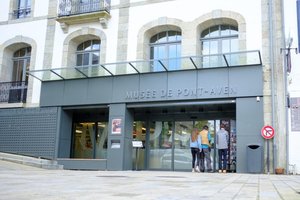
Musée de Pont-Aven, АстенпаркMusée de Pont-Aven Астенпарк 7 Landscape at Pont-Aven with Poplars, The Adoration of the Shepherds, Study for The Buckwheat Harvesters
Музей Тиссен-Борнмиса, МадридМузей Тиссен-Борнмиса Мадрид 4 The Annunciation, Inside a Shop in Pont-Aven, The Cliffs at Le Pouldu
Musée des Beaux-Arts de Quimper, QuimperMusée des Beaux-Arts de Quimper Quimper 4 Funeral palls 1, Funeral palls 2, Orchard at Pont Aven
Музей Вальраф-Рихарта, KölnМузей Вальраф-Рихарта Köln 3 Loving Couple, Houses in Pont-Aven
Далласский музей искусств, ДалласДалласский музей искусств Даллас 3 The Salon, Bridge at Pont-Aven
Musée des Beaux-Arts, РеймсMusée des Beaux-Arts Реймс 3 Fellah Women at the Bath, Toilet of Venus
Ackland Art Museum, Чапел-ХиллAckland Art Museum Чапел-Хилл 2 Victorine Lelopin, The Wave

Эмиль Бернар's most famous painting of each decade

  1. 1880s
    Iron Bridges at Asnières (1887) работы Эмиль Бернар
    No. 1 of 100

    Iron Bridges at Asnières

    Возраст 12 – 21 · Музей современного искусства (MoMA)

    The scene unfolds within the frame of Iron Bridges at Asnières, a work that captures a specific moment in the evolution of modern painting. Created in 1887, this…

  2. 1890s
    Portrait of Marie Lemasson (1892) работы Эмиль Бернар
    Rank 2 / 100

    Portrait of Marie Lemasson

    Возраст 22 – 31 · Израильский музей

    Marie Lemasson sits before the viewer, a quiet presence anchored in a sea of teal and seafoam green. Her gaze is direct, meeting the eye with a stoic,…

  3. 1900s
  4. 1910s
    Self-Portrait 1918 (1919) работы Эмиль Бернар
    Rank 3 / 100

    Self-Portrait 1918

    Возраст 42 – 51 · Музей Ван Гога

    An intimate study of an aging artist, this oil on paper portrait captures a moment of profound introspection. The subject is positioned in a close-up view, his head…

  5. 1920s
    Woman's Head (1920) работы Эмиль Бернар
    No. 35 of 100

    Woman's Head

    Возраст 52 – 61 · Музеи изобразительных искусств Гарварда
  6. 1930s
    Melancholy (1935) работы Эмиль Бернар
    #36 of 100

    Melancholy

    Возраст 62 – 71 · Музей современного искусства города Парижа
  7. 1940s
    Breton Women (1940) работы Эмиль Бернар
    No. 38 of 100

    Breton Women

    Возраст 72 – 73 · Музей современного искусства города Парижа

Questions about Эмиль Бернар's paintings

What is Эмиль Бернар's most famous painting?Show the answer

Iron Bridges at Asnières (1887), Музей современного искусства (MoMA), Нью-Йорк. Next come Portrait of Marie Lemasson (1892) and Self-Portrait 1918 (1919).

How old was Эмиль Бернар when Iron Bridges at Asnières was painted?Show the answer

19 years old: Iron Bridges at Asnières dates from 1887 and Эмиль Бернар was born in 1868.

What are the top 10 paintings by Эмиль Бернар?Show the answer

Iron Bridges at Asnières, Portrait of Marie Lemasson, Self-Portrait 1918, Buckwheat Harvesters at Pont Aven, Après le bain (les nymphes), Portrait of a Black Woman, Night Festival, The Harvest, Loving Couple и The Harvest at Saint-Briac. The ranking above gives the year and the museum of each.

How many paintings did Эмиль Бернар make?Show the answer

Our catalogue lists 201 works by Эмиль Бернар, dated from 1885 to 1940.

Where are Эмиль Бернар's most famous paintings?Show the answer

Most of them are in Музей Ван Гога (Амстердам), Musée de Pont-Aven (Астенпарк) и Музей Тиссен-Борнмиса (Мадрид). The table above lists the museums one by one.

When did Эмиль Бернар paint the most famous works?Show the answer

In 1880s: 29 of the 100 works on this page date from then, among them Iron Bridges at Asnières.

What are Эмиль Бернар's earliest and latest famous paintings?Show the answer

The earliest on this page is Funeral palls 1 (1885), the latest Breton Women (1940).

What did Эмиль Бернар paint most often?Show the answer

Women (10), People (6) и Woman (4), among the 100 works on this page.

What medium did Эмиль Бернар use most?Show the answer

Oil On Canvas: 6 of the 100 works on this page.

Which art movement does Эмиль Бернар belong to?Show the answer

Post-impressionist synthetism, as the paintings on this page show.

Which Эмиль Бернар paintings can I see at the Музей Ван Гога?Show the answer

Self-Portrait 1918, Woman Sitting in a Field: Brittany и Portrait of Andries Bonger (1861-1936), his wife Annie van der Linden and Emile Bernard (1868-1941) are among the 10 works on this page held by the Музей Ван Гога, Амстердам.

Can I buy a reproduction of a Эмиль Бернар painting?Show the answer

Yes. Every painting on this page can be ordered as a museum-quality, hand-painted oil reproduction or a fine art print, in the size you choose, from the painting's own page.

About Эмиль Бернар

Ранние годы и образование Эмиля Бернара

Эмиль Анри Бернар родился 28 апреля 1868 года в Лилле, Франция. Его детство было омрачено болезнью сестры, что привело к тому, что его воспитывала преимущественно бабушка, содержавшая прачечную в Лилле. Эта поддерживающая среда способствовала развитию его художественных наклонностей. В 1878 году семья переехала в Париж, где Бернар посещал Коллеж Сент-Барб. Он начал формальное обучение искусству в Школе декоративного искусства (École des Arts Décoratifs), а позже в 1884 году присоединился к Ателье Кормона (Atelier Cormon). Здесь он экспериментировал с импрессионизмом и пуантилизмом. Его экспрессивные тенденции привели к отстранению из Школы изящных искусств, что побудило его к судьбоносному путешествию по Бретани пешком. Это путешествие стало поворотным моментом в его становлении как художника.

Художественное развитие и влияние

Художественное развитие Бернара было значительно обогащено его поездками в Бретань, где он столкнулся с местными традициями и пейзажами, которые глубоко отозвались в нем. Ключевым моментом стало знакомство в августе 1886 года с Полем Гогеном в Пон-Авене. Эта встреча положила начало тесной художественной дружбе и оказала глубокое влияние на стиль обоих художников. Бернар, обладая уникальным видением цвета и формы, сыграл важную роль в формировании зрелого стиля Гогена, особенно его исследовании символизма и упрощенных форм. Он также общался с Винсентом ван Гогом, став частью “Школы Пти-Бульвара” вместе с Анкетеном и Тулуз-Лотреком. Этот круг художников, объединенных стремлением к новым формам выражения, оказал значительное влияние на развитие современного искусства.

Ключевые художественные движения: Клоазоннизм и Синтетизм

Бернар считается одним из пионеров клоазоннизма, стиля, характеризующегося смелыми, плоскими формами, разделенными темными контурами – напоминающими витражи. Этот стиль стал реакцией на натурализм импрессионизма и стремился к большей декоративности и символизму. Он также сыграл ключевую роль в развитии синтетизма, который подчеркивал создание искусства, основанного на субъективном опыте и символическом значении, а не на прямом наблюдении природы. Эти движения представляли собой отход от импрессионизма, сосредотачиваясь вместо этого на структуре, символизме и эмоциональном выражении. Бернар стремился к созданию искусства, которое было бы одновременно декоративным и содержательным, передающим не только видимую реальность, но и внутренний мир художника.

Знаковые работы и наследие Эмиля Бернара

La Grandmère (1887): Трогательный портрет его бабушки, демонстрирующий раннее мастерство художника в выражении формы и цвета. Эта работа считается одним из его самых знаковых произведений, отражающих влияние бретонской культуры и личных переживаний. Помимо “La Grandmère”, Бернар создал множество пейзажей Бретани, запечатлевших сущность сельской жизни в этом регионе Франции. Его религиозные работы, такие как «Поклонение пастухов», демонстрируют его исследование символических тем и стремление к духовному выражению. Наследие: Вклад Эмиля Бернара в постимпрессионизм, особенно его роль в формировании клоазоннизма и синтетизма, оказал длительное влияние на ход современного искусства. Его работы проложили путь для последующих движений, таких как фовизм и экспрессионизм, вдохновляя поколения художников исследовать субъективное выражение и символическое представление. Он умер в 1941 году, оставив после себя корпус работ, который продолжает отмечаться за его оригинальность и художественную инновационность. Его литературные труды, включающие пьесы, поэзию и искусствоведческую критику, предоставляют ценную информацию из первых рук о развитии современного искусства в его время.

Все 201 работ Эмиль Бернар →