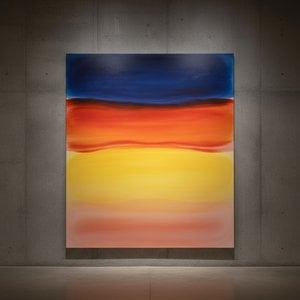
Peter Upward: A Visionary of Australian Abstraction
Peter Upward (1932 – 1984) remains a figure shrouded in artistic mystique, celebrated primarily within Australia’s lyrical abstraction movement. Despite his considerable output and recognition by prominent institutions like the Art Gallery of New South Wales, Upward's oeuvre has stubbornly resisted widespread acclaim—a fact that underscores its profound beauty and intellectual depth. Born in Melbourne, Australia, he embarked on a journey to forge an artistic identity distinct from the prevailing stylistic trends of his time, prioritizing a deeply philosophical exploration of form and color over representational concerns.
- Early Influences & Education: Upward’s formative years were marked by exposure to European avant-garde movements, particularly Abstract Expressionism. This pivotal influence propelled him toward a style characterized by gestural minimalism—a technique that sought to distill emotion into pure visual language. Studying at RMIT instilled in him a foundational understanding of artistic principles while simultaneously fostering an independent spirit.
- Sydney & The Pursuit of Minimalism: Moving to Sydney in 1951, Upward deliberately distanced himself from Melbourne’s figurative landscape, aiming for a space conducive to experimentation and innovation. He envisioned escaping the constraints of social realism, embracing instead the liberating potential of pure abstraction.
The Style of Gestural Minimalism
Upward's artistic signature is undeniably defined by ‘gestural minimalism.’ This distinctive approach eschewed detailed depiction, prioritizing dynamic brushstrokes and tonal variations to convey profound emotional resonance. Critics have likened it to American Abstract Expressionism—a movement that revolutionized postwar art with its emphasis on spontaneity and psychological depth—though Upward’s work possesses a uniquely Australian sensibility. He sought to capture the essence of experience through simplified forms and colors, resulting in canvases imbued with an arresting energy and contemplative stillness simultaneously. The artist's meticulous attention to texture and surface quality further enhanced this expressive power.
- Notable Works & Collections: Upward’s paintings reside in collections across the globe, testament to their enduring appeal. Among his most celebrated pieces is “Shared Time,” a monumental canvas that exemplifies the core tenets of his style—bold color palettes juxtaposed with sweeping gestural marks.
- Influence Beyond Expressionism: While undeniably indebted to Abstract Expressionism, Upward’s artistic vision extended beyond stylistic imitation. He drew inspiration from Zen Buddhism and Western philosophers like Heidegger, incorporating these intellectual currents into his visual vocabulary.
Legacy & Recognition
Peter Upward's contribution to Australian art history is undeniable. His unwavering commitment to abstraction—coupled with his profound engagement with philosophical ideas—established him as a pivotal figure in lyrical abstraction. The Art Gallery of New South Wales proudly houses numerous examples of his work, ensuring that his artistic legacy continues to inspire future generations. Despite the relative obscurity surrounding his life and career outside Australia, Upward’s paintings remain powerfully evocative, demonstrating the enduring capacity of art to communicate complex emotions and ideas—a testament to his singular vision.