John Cranch, 1807 – 1891

13 самых известных картин художника John Cranch

Картина, принесшая John Cranch мировую славу, — это The Carrier's Cart (1796); она находится в Royal Albert Memorial Museum, Эксетер. William Greenleaf Eliot, Jr. (1846) и View on the Shannon (1792) следуют за ними в сердцах коллекционеров и посетителей музеев. Из 13 работ John Cranch в нашем каталоге эти 13 являются самыми признанными; для каждой указаны дата создания, музей и уникальные особенности.

Рейтинг основан на нашем показателе популярности, который учитывает количество поисковых запросов, посещений и заказов для каждой работы. Обновлено Ноябрь 2026. Каждое произведение на этой странице можно заказать как высококачественную масляную репродукцию ручной работы или художественную печать в любом выбранном вами размере.

Портрет John Cranch
John Cranch · 1807 – 1891
Дата рождения · дата смерти
1807 – 1891, Washington, D.C.
Работы в нашем каталоге
13
Самые известные
The Carrier's Cart (1796)
Больше всего работ в
Royal Albert Memorial Museum

John Cranch: десять шедевров

The Carrier's Cart (1796) работы John Cranch
1

The Carrier's Cart

1796 · Oil · Royal Albert Memorial Museum, Эксетер

In this oil painting from 1796, we find ourselves drawn into a dimly lit interior, a space where the weight of history and faith seems to settle heavily in the air. The scene depicts the Nativity, yet it avoids the grandiosity often associated with such religious subjects. Instead, it offers a crowded, dynamic moment of reverence. We see Mary and Joseph gathered around the infant Jesus in his manger, surrounded…

Репродукция маслом ручной работы от $324 37 × 27 cm Размер как у оригинала $336 44 × 31 cm Заказать в оригинальном размере →
William Greenleaf Eliot, Jr. (1846) работы John Cranch
2

William Greenleaf Eliot, Jr.

1846 · Oil On Canvas · Художественный музей Сент-Луиса, Сент-Луис

John Cranch executed this oil on canvas portrait of William Greenleaf Eliot, Jr. about 1846. The sitter is presented in a formal, three-quarter view, seated with a composed expression that meets the viewer's gaze directly. He is depicted holding a piece of white paper or a letter, a detail suggesting a life of literacy or official engagement.
Репродукция маслом ручной работы от $199 28 × 35 cm
View on the Shannon (1792) работы John Cranch
3

View on the Shannon

1792 · Oil

In this 1792 composition, we find ourselves transported to a tranquil, grassy expanse where the quietude of rural life takes center stage. The scene captures a casual, recreational moment: a group of figures engaged in a game of baseball. A man, poised with a bat, prepares for the strike, while another figure waits nearby with a glove. It is a study of leisure, set against a backdrop of lush trees…

Репродукция маслом ручной работы от $199 38 × 26 cm Размер как у оригинала $215 46 × 32 cm Заказать в оригинальном размере →
Cottage at Night (1795) работы John Cranch
4

Cottage at Night

1795 · Oil

Cottage at Night by John Cranch presents a nocturnal gathering outside a rustic dwelling. Executed in a black and white palette, the work captures a scene of communal activity under the cover of darkness. A man stands before a kneeling woman, his lantern providing the primary source of light for the immediate figures. This illumination defines the central interaction within the composition.

Репродукция маслом ручной работы от $199 38 × 26 cm Размер как у оригинала $242 57 × 40 cm Заказать в оригинальном размере →
The Village Cooper (1791) работы John Cranch
5

The Village Cooper

1791 · Oil · Royal Albert Memorial Museum, Эксетер

A single man occupies the center of this quiet world, his hands engaged in the rhythmic labor of the cooper. He leans over a large cask, a vessel of wood and iron, holding a lid steady while a tool meets the grain. The air in the workshop feels heavy with the scent of sawdust and aged oak. Light spills from a window in the background, casting a soft glow across…

Репродукция маслом ручной работы от $199 33 × 30 cm
Monks Merrymaking (1804) работы John Cranch
6

Monks Merrymaking

1804 · Oil

In this 1804 composition, we find ourselves drawn into a quiet, intimate gathering. A group of figures is seated around a wooden dining table, caught in a moment of unhurried companionship. The scene is set within an old-fashioned interior, perhaps a tavern, where the air feels heavy with the scent of shared meals and spilled wine. A man holds a glass of red wine, his posture relaxed, while others nearby…

Репродукция маслом ручной работы от $199 36 × 28 cm
James Cochran Dobbin (1845) работы John Cranch
7

James Cochran Dobbin

1845 · Oil On Canvas · Национальная портретная галерея, Вашингтон, округ Колумбия

This portrait of James Cochran Dobbin is a work by the artist John Cranch. Created about 1845, the painting captures the likeness of a man who navigated the legal and political currents of nineteenth-century America. The subject, a lawyer by profession, would later hold the high office of United States Secretary of the Navy from 1853 to 1857.

Репродукция маслом ручной работы от $199 32 × 32 cm
Joshua Reed Giddings (1855) работы John Cranch
8

Joshua Reed Giddings

1855 · Национальная портретная галерея, Вашингтон, округ Колумбия

In this portrait, John Cranch captures the likeness of Joshua Reed Giddings, a man whose presence in American political life was defined by his work as an attorney and a dedicated abolitionist. Painted about 1855, the work presents a study of a figure deeply involved in the legislative and moral debates of the mid-nineteenth century. Giddings, who represented Northeast Ohio in the U.S. House of Representatives, is rendered here with…

Репродукция маслом ручной работы от $199 32 × 32 cm
Kitchen Interior (1793) работы John Cranch
9

Kitchen Interior

The scene unfolds within a rustic kitchen, capturing a moment of quiet industry from 1793. Three figures occupy the space: a woman focused on cooking, another observing from the periphery, and a young girl standing near the right edge. The composition is anchored by a dining table in the lower foreground, surrounded by simple chairs. Scattered throughout the room, various objects provide a sense of lived-in reality, including bottles and…

Репродукция маслом ручной работы от $199 39 × 26 cm
Playing with Baby (1795) работы John Cranch
10

Playing with Baby

1795 · Oil On Panel

The oil on panel painting titled Playing with Baby was created by the British artist John Cranch. Painted about 1795, the work captures a quiet, domestic moment within a rustic interior. A woman occupies the center of the scene, her attention fixed upon an infant. This small, tender interaction forms the heart of the composition.

Репродукция маслом ручной работы от $199 37 × 27 cm Размер как у оригинала $200 38 × 27 cm Заказать в оригинальном размере →

Больше шедевров художника John Cranch, от 11 до 13

Сюжеты, которые чаще всего писал John Cranch

Четыре темы, которые чаще всего встречаются в этих шедеврах, с лучшими примерами каждой из них.

Где можно увидеть картины John Cranch

4 музеев, в которых находится большинство картин со страницы.

Музей Город Работы John Cranch Картины из этого списка
Royal Albert Memorial Museum, ЭксетерRoyal Albert Memorial Museum Эксетер 5 The Carrier's Cart, The Village Cooper, The Village Butcher
Национальная портретная галерея, Вашингтон, округ КолумбияНациональная портретная галерея Вашингтон, округ Колумбия 2 James Cochran Dobbin, Joshua Reed Giddings
Художественный музей Сент-Луиса, Сент-ЛуисХудожественный музей Сент-Луиса Сент-Луис 1 William Greenleaf Eliot, Jr.
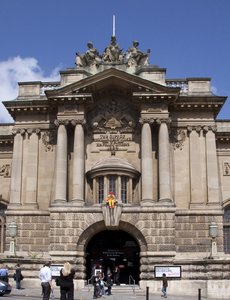
Бристольский музей и художественная галерея, БристольБристольский музей и художественная галерея Бристоль 1 Kitchen Interior

John Cranch, по годам: знаковые полотна

Десятилетие живописи, от 1845 до 1855, — это всё, что было нужно John Cranch: перед вами шедевры, год за годом.

  1. 1845
    James Cochran Dobbin (1845) работы John Cranch
    № 7 из 13

    James Cochran Dobbin

    Возраст 38 · Национальная портретная галерея

    This portrait of James Cochran Dobbin is a work by the artist John Cranch. Created about 1845, the painting captures the likeness of a man who navigated the…

  2. 1846
    William Greenleaf Eliot, Jr. (1846) работы John Cranch
    Место 2 из 13

    William Greenleaf Eliot, Jr.

    Возраст 39 · Художественный музей Сент-Луиса

    John Cranch executed this oil on canvas portrait of William Greenleaf Eliot, Jr. about 1846. The sitter is presented in a formal, three-quarter view, seated with a composed…

  3. 1855
    Joshua Reed Giddings (1855) работы John Cranch
    #8 из 13

    Joshua Reed Giddings

    Возраст 48 · Национальная портретная галерея

    In this portrait, John Cranch captures the likeness of Joshua Reed Giddings, a man whose presence in American political life was defined by his work as an attorney…

Шедевры John Cranch: вопросы и ответы

Какая картина наиболее известна авторства John Cranch?Показать ответ

The Carrier's Cart (1796), Royal Albert Memorial Museum, Эксетер. Далее следуют William Greenleaf Eliot, Jr. (1846) и View on the Shannon (1792).

Какие десять величайших картин принадлежат John Cranch?Показать ответ

The Carrier's Cart, William Greenleaf Eliot, Jr., View on the Shannon, Cottage at Night, The Village Cooper, Monks Merrymaking, James Cochran Dobbin, Joshua Reed Giddings, Kitchen Interior и Playing with Baby. В рейтинге выше указаны год создания и музей для каждой работы.

Сколько работ написал John Cranch?Показать ответ

В нашем каталоге представлено 13 работ John Cranch, созданных в период с 1845 по 1855.

В каких музеях можно увидеть шедевры John Cranch?Показать ответ

Большинство из них находятся в Royal Albert Memorial Museum (Эксетер), Национальная портретная галерея (Вашингтон, округ Колумбия) и Художественный музей Сент-Луиса (Сент-Луис). В таблице выше музеи перечислены по порядку.

Каковы первые и последние известные картины John Cranch?Показать ответ

Самая ранняя работа на этой странице датирована James Cochran Dobbin (1845), самая поздняя — Joshua Reed Giddings (1855).

Каковы были любимые сюжеты John Cranch?Показать ответ

Man (7), Woman (5) и People (3) из 13 работ на этой странице.

Какую технику предпочитал John Cranch?Показать ответ

Oil: 5 из 13 работ на этой странице.

Какие шедевры John Cranch находятся в Royal Albert Memorial Museum?Показать ответ

The Carrier's Cart, The Village Cooper и The Village Butcher — одни из 5 работ на этой странице, хранящихся в Royal Albert Memorial Museum, Эксетер.

Могу ли я приобрести репродукцию шедевра John Cranch?Показать ответ

Да. Каждую картину на этой странице можно заказать как высококачественную масляную репродукцию ручной работы или художественную печать в выбранном вами размере на странице самой картины.

Жизнь John Cranch

John Cranch (1807–1891): A Painter of Victorian Dignity

John Cranch, born in 1807 in Kingsbridge, Devonshire, England, emerged as a prominent figure in the artistic landscape of his era—the Victorian period. Though initially self-taught through drawing, writing and music, he benefited from early instruction from a Roman Catholic priest, shaping his foundational skills before venturing into London’s art scene. His ambition to join the Royal Academy was thwarted, yet he found considerable success with the Society of Artists and the British Institution, establishing himself as a respected painter known for his refined style and meticulous attention to detail.
  • Early Life & Education: Cranch's formative years were marked by a passion for artistic pursuits fostered by familial connections to influential figures like Sir Joshua Reynolds. His upbringing instilled in him a deep appreciation for classical ideals and humanist values, which would permeate his artistic vision.
  • Notable Works: Cranch’s oeuvre encompasses both portraits and historical scenes, demonstrating versatility and technical prowess. Among his most celebrated paintings are “Playing with Baby,” housed in the Victoria and Albert Museum, and “The Miser,” a poignant depiction of human vulnerability and moral contemplation. His masterpiece, "The Death of Chatterton," now owned by Sir James Winter Lake, showcases his ability to convey emotion through subtle shading and expressive composition.
  • Technique & Style: Cranch’s artistic style is characterized by its dignified composure and meticulous realism—a hallmark of Victorian art. He skillfully employed glazing techniques to achieve luminous surfaces and create depth, capturing the nuances of human expression with remarkable accuracy. His penchant for “poker-pictures”—images that convey complex psychological states—established him as a pioneer in exploring the inner lives of his subjects.
  • Recognition & Legacy: Cranch’s membership in prestigious organizations like the American Academy of Arts and Sciences and the American Antiquarian Society cemented his reputation as an intellectual artist. His contributions to art scholarship, particularly “On the Economy of Testaments” and “Inducements to Promote the Fine Arts,” further solidified his legacy as a champion of artistic excellence and national pride.

Influences & Artistic Context

Cranch’s artistic sensibilities were profoundly shaped by the prevailing intellectual currents of Victorian England—a period marked by scientific inquiry, moral reform, and a renewed interest in classical art history. Reynolds' influence was particularly significant, guiding Cranch toward a style rooted in observation and psychological insight. Furthermore, Cranch absorbed inspiration from Romantic painters like Turner and Constable, incorporating elements of atmospheric perspective and dramatic lighting into his compositions.

Major Achievements & Artistic Contributions

Cranch’s artistic achievements spanned across multiple mediums and genres, reflecting the breadth of his creative vision. He excelled in portraiture, capturing the likenesses of prominent figures with unwavering precision—a skill that earned him considerable acclaim during his lifetime. Simultaneously, he tackled ambitious historical narratives, meticulously reconstructing past events with meticulous detail and conveying their significance through evocative imagery. His enduring legacy resides not only in his celebrated paintings but also in his scholarly writings, which championed artistic innovation and fostered a deeper understanding of the human condition.

Concluding Remarks

John Cranch’s life and work stand as testament to the transformative power of artistic dedication and intellectual curiosity—qualities that defined him as both an artist and a humanist. His paintings continue to resonate with audiences today, offering glimpses into Victorian society and capturing the essence of human emotion with enduring grace. As a painter who skillfully blended observation, technique, and psychological insight, Cranch secured his place among the most distinguished artists of his time—a figure whose legacy persists as an exemplar of artistic excellence and intellectual engagement.
