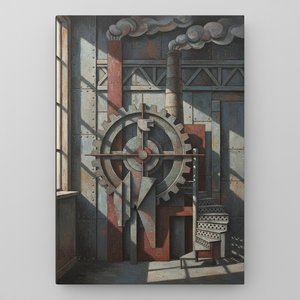
Jessica Dismorr: A Rebel Voice in British Modernism
Jessica Dismorr (1885-1939) stands as a singular figure within the landscape of early 20th-century British art – a woman artist who defied convention and championed abstract expressionism during a period dominated by male artists. Born into a wealthy family in Gravesend, Kent, her upbringing fostered intellectual curiosity and provided access to unparalleled educational opportunities, including studies at Kingsley College and later at Slade School of Art. These formative experiences instilled within her a passion for observation and experimentation that would define her artistic trajectory.
- Early Life & Education: Dismorr’s family moved to Hampstead in the 1890s, affording her parents considerable financial freedom. Her education at Kingsley College solidified her grounding in humanist ideals, while Slade School of Art honed her technical skills and exposed her to influential teachers like Max Bohm and John Duncan Fergusson.
- Parisian Influences: Recognizing the importance of artistic development beyond England, Dismorr traveled extensively in Europe, culminating in intensive training at Académie de la Palette in Paris between 1910 and 1913. There she collaborated closely with Marguerite Thompson and absorbed the stylistic innovations of Jean Metzinger, particularly Fergusson’s Scottish Colourist approach – a pivotal influence on her visual language.
The Vorticist Avant-Garde & Collaborative Spirit
Dismorr's artistic journey intersected powerfully with the burgeoning Vorticist movement in London. Embracing its radical rejection of traditional representation, she joined forces with artists like Fergusson and Thompson to explore dynamic geometric forms and fractured perspectives – a daring departure from prevailing aesthetic sensibilities. Her participation in Blast magazine and the Seven & Five Society underscored her commitment to pushing artistic boundaries and engaging in dialogue with fellow innovators. Notably, Dismorr was one of only two women members of Vorticism, demonstrating remarkable tenacity within a male-dominated field.
- Vorticist Engagement: Dismorr’s canvases reflected the movement's fascination with speed, dynamism, and fragmented imagery. Her collaborative spirit shone through her involvement in group X and her contributions to the 1937 Artists’ International Association exhibition.
Abstract Expressionism & Artistic Legacy
Despite the prevailing artistic climate of the time, Dismorr steadfastly pursued abstraction – a path rarely undertaken by women artists—establishing herself as one of the foremost practitioners of this style in England during the 1930s. Her bold use of color and simplified shapes conveyed emotion and psychological depth, mirroring the broader trends of Expressionism. Dismorr’s work gained recognition at the Artists' International Association exhibition, cementing her place within art history.
- Notable Achievements: Dismorr’s unwavering dedication to abstraction distinguished her from many contemporaries and ensured her enduring legacy as a trailblazing artist who challenged artistic conventions.
Illustrations & Literary Connections
Beyond painting, Dismorr excelled as an illustrator, lending her distinctive style to avant-garde publications like Blast magazine and Axis. Her evocative watercolors captured the spirit of theatrical performances and conveyed nuanced emotional resonance—demonstrating her versatility as a visual storyteller. These artistic endeavors further solidified her position within the intellectual milieu of London’s avant-garde scene.
- Publications: Dismorr's illustrations appeared in publications that championed experimental aesthetics, reflecting her belief in art's capacity to communicate complex ideas and emotions.
Concluding Reflections
Jessica Dismorr’s artistic life was marked by intellectual curiosity, unwavering determination, and a profound commitment to exploring the expressive potential of abstraction. Her pioneering role within Vorticism and her enduring influence on British art solidify her status as an artist whose work continues to inspire admiration and provoke contemplation—a testament to her courage in confronting artistic norms and forging her own path toward creative excellence.