**early life and career**
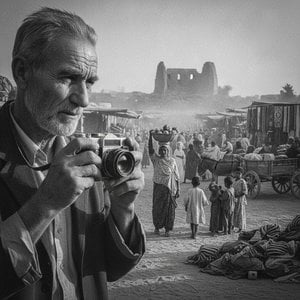
gaspard-félix tournachon, known by the pseudonym nadar, was a french photographer, caricaturist, journalist, novelist, balloonist, and proponent of heavier-than-air flight. born in paris in 1820, nadar's life was marked by innovation and creativity.**photographic contributions**
nadar's photographic career began in 1853, with the opening of his studio at 113 rue st. lazare. he photographed a wide range of personalities, including politicians, stage actors, writers, painters, and musicians. notable subjects include:- guizot, proudhon (politicians)
- sarah bernhardt, paulus (stage actors)
- hugo, baudelaire, sand, nerval, gautier, dumas (writers)
- corot, delacroix, millet (painters)
- liszt, rossini, offenbach, verdi, berlioz (musicians)
**notable works and legacy**
* le géant (the giant), a massive balloon constructed in 1863, inspired jules verne's five weeks in a balloon. nadar was the inspiration for the character of michael ardan in verne's from the earth to the moon. * his photographic portraits are held by many national collections, including the cleveland museum of art (https://WahooArt.com/@@/d3yurb-gaspard-felix-tournachon-alexandre-dumas-pere-(1802-1870)).**further reading and exploration**
* for more on nadar's life and work, visit https://WahooArt.com/@/gaspard-félix tournachon * explore the musée des beaux-arts de carcassonne, which features works by renowned artists, at /en/art/show/art-d3apq7-en/ * learn about the life and art of gustave courbet at the musee courbet (https://WahooArt.com/@@/a@d3cew9-il-museo-musee-national-jean-jacques-henner-di-parigi-francia)Вопросы и ответы
Где и в каком году родился Надар?
Надар родился в Париж, 1820 год.
Можно ли изучить использование цвета в творчестве Надар во всех его работах?
Использование цвета в работах Надар, представленных на этот сайт, можно изучить на странице Геном палитры художника.
Где я могу посмотреть работы Надар, распределенные по настроению?
Работы Надар можно просматривать по настроению на странице Комната настроения, где произведения распределены в соответствии с их эмоциональной окраской.