Charles David Cobb
Charles David Cobb, a painter whose works have been largely overlooked, yet whose contributions to the art world are undeniable. Born in Bromley, England, in 1921, cobb’s early life was imbued with an innate fascination for artistic expression—a passion that would profoundly shape his subsequent career. He pursued formal training at the Nautical College Pangbourne, honing his observational skills and establishing a foundation for his future endeavors as a marine artist.Artistic Journey & Influences
Cobb's artistic style evolved primarily through oil on canvas, allowing him to capture the grandeur of maritime landscapes and the subtle nuances of human emotion. His oeuvre reflects a distinctive blend of realism and expressive tendencies—a stylistic hallmark reminiscent of luminaries such as Vincent van Gogh and Pablo Picasso. These artists served as crucial sources of inspiration, informing cobb’s bold yet restrained palette choices and compositional arrangements. Notably, American Gothic by Grant Wood exerted an early influence on his artistic vision, fostering a preoccupation with narrative storytelling within visual form.Service During Wartime & Early Career
During World War II, Cobb distinguished himself as 1st Lieutenant in the Atlantic convoys, demonstrating courage and resilience amidst perilous conditions. Subsequently, he commanded MTB’s (MotorTorpedo Boats), undertaking vital reconnaissance missions in the North Sea—a period marked by considerable danger and strategic importance. His formative years were spent developing his artistic talent alongside a commitment to service, shaping him into an artist deeply connected to both aesthetic ideals and civic responsibility.Notable Works & Exhibitions
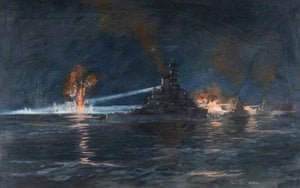
Though many of Cobb’s paintings remain privately held, several pieces have emerged onto the WahooArt platform, offering glimpses into his artistic world. “The Barge Race,” depicting a vibrant scene of rural life, exemplifies his meticulous attention to detail and masterful rendering of light and shadow. Similarly, “Japanese Surrender, Tokyo Bay” captures the solemn atmosphere of a pivotal historical moment with remarkable accuracy. His work was showcased at STISA 1951 Festival of Britain, highlighting his engagement with contemporary artistic discourse.Legacy & Recognition
Charles David Cobb’s dedication to marine art cemented his place in British artistic history. He served as president of the Royal Society of Marine Artists from 1978-1983, championing the preservation and celebration of maritime heritage. His enduring legacy resides not only in his captivating artworks but also in his unwavering commitment to fostering creativity and promoting excellence within the realm of visual arts—a testament to a life devoted to both artistic pursuit and civic engagement.Вопросы и ответы
Из какой страны Charles David Cobb?
Charles David Cobb родился в Великобритания.
Как я могу увидеть все произведения, созданные Charles David Cobb?
Все работы Charles David Cobb на этот сайт можно просмотреть на странице Все произведения искусства художника.
Можно ли просматривать работы Charles David Cobb по цветовой палитре?
Чтобы найти работы Charles David Cobb в определенной цветовой гамме, воспользуйтесь страницей По цветовым палитрам художника.
Как я могу проследить творческий путь Charles David Cobb по годам?
На странице Хронология произведений представлены работы Charles David Cobb, упорядоченные по датам, год за годом.
Сколько произведений искусства Charles David Cobb доступно для просмотра?
Вы можете просмотреть 57 произведений искусства работ художника Charles David Cobb на странице Все произведения искусства.
В какой исторический период работал(а) Charles David Cobb?
Charles David Cobb работал в период — Модернизм. Эта эпоха позволяет определить место творчества художника в истории.
Существует ли хронологическая биография Charles David Cobb?
Творческий путь Charles David Cobb раскрывается период за периодом на странице Хроника: это горизонтальная временная шкала произведений, разделенная на главы по этапам карьеры.