Bessie Rodway: Wiltshire’s Watercolor Empress
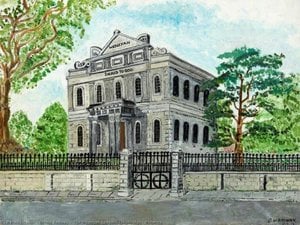
Bessie Rodway (1901–1996) remains a beloved figure in Trowbridge and Wiltshire art history, celebrated for her exquisitely detailed watercolor paintings that capture the essence of rural life and architectural beauty at the dawn of the 20th century. Born in London, Rodway’s artistic journey began modestly but blossomed into a prolific career dedicated to documenting the landscapes and buildings of her adopted home. Her work is instantly recognizable for its luminous palette, meticulous observation, and subtle tonal harmonies—characteristics that cemented her reputation as “The Empress of the Blues,” a moniker bestowed upon her by fellow artists who admired her mastery of color.
Early Life and Artistic Training
Little is known about Rodway’s formative years beyond confirmation of her birth in London. However, she pursued formal artistic training at Slade School of Fine Art in London, where she honed her skills in watercolor painting alongside prominent contemporaries. This grounding in academic tradition undoubtedly influenced her stylistic choices—a preference for realism combined with a sensitivity to atmospheric effects—traits that would characterize her entire oeuvre. Her teacher, Frank Bramley, encouraged Rodway to explore the expressive potential of color and composition, fostering an artistic vision rooted in careful observation and technical precision.
Wiltshire Landscapes: A Celebration of Rural Charm
Rodway’s artistic focus swiftly turned towards Wiltshire, specifically Trowbridge and its surrounding countryside. She embarked on a systematic project to depict iconic landmarks—the New Peal of Twelve Bells before being installed in St James's Church, Ginny Pumphandle at the Conigre Pump—with breathtaking accuracy and evocative beauty. Unlike many artists of her time who favored idealized representations, Rodway meticulously rendered scenes with painstaking detail, capturing the textures of stone walls, the dappled sunlight filtering through trees, and the subtle nuances of color that conveyed the mood of each location. Her watercolors are not merely reproductions; they are imbued with a palpable sense of place—a testament to her deep appreciation for Wiltshire’s pastoral landscapes.
- “The New Peal of Twelve Bells before Being Installed in St James's Church, Trowbridge, Wiltshire” (1934): This piece exemplifies Rodway’s ability to convey serenity and grandeur simultaneously. The muted blues and greens dominate the canvas, reflecting the tranquil atmosphere surrounding the church bells.
- Ginny Pumphandle at the Conigre Pump in Upper Broadstreet, Trowbridge, Wiltshire (c.1900): Rodway’s depiction of this historic pump showcases her meticulous attention to detail—capturing every brick and stone surface with remarkable precision.
Influence and Legacy
Rodway's artistic approach – characterized by a commitment to realism combined with an expressive use of color – resonated deeply within the Wiltshire art community. She served as an inspiration for younger artists eager to emulate her technical prowess and stylistic vision. Her paintings continue to be exhibited in Trowbridge Museum, ensuring that Rodway’s legacy endures as a symbol of Wiltshire's artistic heritage. Bessie Rodway’s contribution to watercolor painting is recognized not only for its aesthetic qualities but also for its profound connection to the history and identity of her beloved region—a testament to the enduring power of art to capture and convey the spirit of time.