БЕСПЛАТНАЯ КОНСУЛЬТАЦИЯ ПО ВОПРОСАМ ИСКУССТВА

x

Краткая справка

  • Top-ranked work: Ernest William Hornung
  • Copyright status: Public domain
  • Nationality: United Kingdom
  • Works on APS: 18
  • Lifespan: 63 years
  • More…
  • Art period: 19th Century
  • Top 3 works:
    • Ernest William Hornung
    • John Howard, Esq., JP, DL of Sibton and Chartham, MP for Northeast Kent
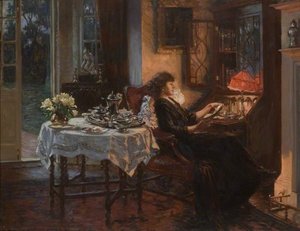
    • The Quiet Hour
  • Born: 1862, Leytonstone, United Kingdom
  • Movements: contemporary realism
  • Died: 1925

Тест по искусству

В каждом вопросе только один правильный ответ.

Вопрос 1:
Albert Chevallier Tayler is most notably associated with which art movement?
Вопрос 2:
During his career, Tayler spent a significant amount of time in which location?
Вопрос 3:
What was a prominent subject matter explored by Tayler during the Newlyn School period?
Вопрос 4:
Tayler's work as a cricketer led to what unique project?

Albert Chevallier Tayler: Bridging Impressionism and Historical Grandeur

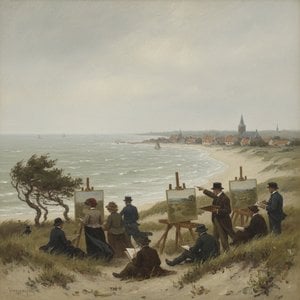
Albert Chevallier Tayler (1862-1925) emerges from the late 19th and early 20th centuries as a fascinating figure in British art – an artist who skillfully navigated the evolving currents of the Newlyn School, embraced Parisian influences, and ultimately found his voice in grand historical paintings and evocative cricket watercolors. Born in Leytonstone, Essex, Tayler’s artistic journey began with formal training at Heatherley's School of Art, Royal Academy Schools, and under the tutelage of avant-garde painters in Paris – a confluence of experiences that profoundly shaped his style and perspective. His early education at Bloxham School provided a grounding in traditional techniques, which he later skillfully blended with the more liberated approaches he encountered abroad. Tayler’s career is inextricably linked to the Newlyn School, a vibrant collective of artists who sought to capture the essence of Cornish life *en plein air*. This movement, born from the influence of French Impressionism, encouraged artists to paint outdoors directly from nature, prioritizing light and atmosphere over meticulous detail. Tayler's involvement with the Newlyn School during the late 1880s marked a pivotal period in his artistic development. Works like “A Dress Rehearsal” (1888), now housed at the National Museums Liverpool, exemplify this early phase – a genre scene rendered with loose brushstrokes and an emphasis on capturing fleeting moments of light and shadow. The painting’s depiction of everyday life in Cornwall reflects the Newlyn School's commitment to portraying subjects from the local environment, moving away from traditional historical or mythological themes. He lived in lodgings in Henry & Elizabeth Maddern's Belle Vue House with Forbes and Blandford Fletcher during this time, a testament to his immersion within the school’s community.

Transition and Urban Refinement

As the 1890s progressed, Tayler shifted his focus from the rural landscapes of Newlyn to the bustling streets of London. This transition reflected a broader trend among artists seeking new subjects and inspiration in the rapidly changing urban landscape. He maintained connections with the art centre of London and exhibited regularly at the Royal Academy, showcasing a growing versatility in his subject matter and technique. However, around the turn of the century, Tayler embraced a more genteel, urban lifestyle, moving to Kensington and dedicating himself to painting grand scenes of European cities. This shift is evident in his 1901 masterpiece, “The Ceremony of the Garter,” a monumental work depicting the legendary medieval event at Eltham Palace. The painting’s scale, meticulous detail, and dramatic lighting demonstrate Tayler's mastery of composition and his ability to evoke a sense of historical grandeur.

Cricket Watercolors and National Recognition

Beyond his historical paintings, Tayler developed a distinctive talent for capturing the spirit of cricket in a series of watercolor studies produced in 1905. Commissioned by Lord Leverhulme to illustrate a promotional campaign for his soap products, these watercolors – featuring prominent cricketers like Kent’s Stan Gilmshaw and Lancashire’s Jack Whiteside – became immensely popular and were widely reproduced. The paintings are notable not only for their technical skill but also for their lively depiction of the game's atmosphere and camaraderie. This period cemented Tayler’s reputation as a versatile artist, capable of seamlessly blending historical accuracy with contemporary subject matter.

Legacy and Enduring Influence

By 1903, Albert Chevallier Tayler was recognized as a leading figure in the British art world, earning commissions for large-scale works such as a panel at the Royal Exchange in London. His work continued to be exhibited throughout his career, solidifying his place within both the Newlyn School and the broader landscape of British Impressionism. His later paintings, including “Field Marshal the Earl Haig” (1920) – a striking portrait capturing the dignity and gravitas of a wartime leader – further demonstrated his artistic prowess and enduring appeal. Albert Chevallier Tayler’s legacy extends beyond individual works; he represents a bridge between the vibrant energy of the Newlyn School and the more formal traditions of the Royal Academy, embodying a synthesis of influences that contributed significantly to the development of British art in the early 20th century. His paintings continue to be admired for their technical skill, evocative atmosphere, and insightful portrayal of both everyday life and historical events.