The Norwich School Legacy: Stark’s Artistic Roots
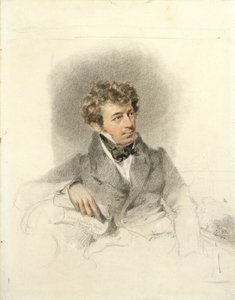 James Stark
Discover James Stark (1794-1859), a leading Norwich School painter known for evocative landscapes & Dutch Master influences. Explore his oil paintings & etchings!
James Stark, a name perhaps less immediately recognizable than his contemporaries John Crome or J.M.W. Turner, nevertheless occupies a significant position within the history of British landscape painting. Born in 1794, Stark emerged from the vibrant artistic milieu of Norwich, a city that fostered a unique school of painters dedicated to capturing the essence of the Norfolk countryside. This wasn’t merely topographical depiction; it was an attempt to forge a distinctly English pastoral tradition, one rooted in observation and imbued with a quiet emotional resonance. The Norwich School, unlike its London counterparts focused on grand historical narratives or portraiture, prioritized the everyday beauty of rural life – hedgerows, winding rivers, and the subtle shifts of light across open fields. Stark’s early training within this environment proved formative, instilling in him a deep appreciation for natural detail and a commitment to representing the local landscape with both accuracy and sensitivity.
His father, Michael Stark, a successful dye manufacturer credited with inventing ‘Norwich red’, provided a stable background that allowed James to pursue his artistic inclinations. This connection to craft and color would later subtly influence Stark’s palette and approach to layering oil paints. While Crome served as his initial mentor – a relationship of profound importance – Stark quickly developed his own distinctive voice, one characterized by a meticulous technique and an almost reverential attention to the atmospheric qualities of the Norfolk light. The School's emphasis on direct observation, working *en plein air* whenever possible, shaped Stark’s ability to translate the nuances of nature onto canvas.
Dutch Masters & English Landscapes: Influences on Stark's Style
 World Goes Pop Artists
Discover Arthur James Stark: English painter of the Norwich School, renowned for animal & homely scenes from the Thames Valley. Explore his legacy!
To understand Stark’s artistic development fully, one must acknowledge the profound influence of 17th-century Dutch landscape painting. While the Norwich School painters sought originality, they did so through a careful study of established masters. Artists like Aelbert Cuyp and Jan van Goyen provided models for composition, tonal balance, and the rendering of light. Stark, in particular, demonstrated a keen affinity for the Dutch tradition of *pastoral* scenes – quiet, contemplative views that emphasized the harmony between humanity and nature. He wasn’t simply copying these works; rather, he was absorbing their principles and adapting them to the English context.
This influence is evident in Stark's use of muted color palettes, his careful attention to detail in depicting foliage and water, and his ability to create a sense of depth and atmosphere. Unlike some of his contemporaries who favored dramatic skies and bold brushwork, Stark’s paintings are often characterized by a subtle realism, a quiet intimacy that draws the viewer into the scene. He masterfully employed glazing techniques – layering thin washes of oil paint – to achieve luminous effects and a remarkable sense of spatial recession. This dedication to technique, combined with his sensitivity to light, allowed him to create landscapes that were both visually compelling and emotionally evocative.
A Study in Light and Atmosphere: Key Characteristics of Stark’s Paintings
The defining characteristic of James Stark's work is undoubtedly his masterful handling of light and atmosphere. He wasn’t interested in simply reproducing the appearance of a landscape; he sought to capture its *feeling*, its mood, its ephemeral qualities. This required a deep understanding of how light interacts with different surfaces – water, foliage, earth – and an ability to translate those observations onto canvas with precision and nuance.
His paintings often feature soft, diffused light that bathes the landscape in a warm glow. He skillfully employed chiaroscuro techniques, using subtle contrasts between light and shadow to create depth and volume. The skies in his works are rarely dramatic; instead, they tend to be overcast or hazy, contributing to the overall sense of tranquility and contemplation. Stark’s ability to capture these atmospheric effects was particularly admired by his contemporaries, who praised his “delicate touch” and his “faithful rendering of nature.” He often focused on woodland scenes, riverscapes, and quiet rural settings, creating paintings that evoke a sense of peace and solitude.
Stark’s Critical Reception: Patronage, Press, and Public Opinion
James Stark enjoyed a relatively successful career for a landscape painter of his time. He was elected vice-president of the Norwich Society of Artists in 1828 and became its president the following year – a testament to his standing within the artistic community. Crucially, he cultivated wealthy patrons who supported his work, allowing him to focus on his painting without financial hardship. The Norfolk press consistently praised his London exhibitions, noting his “successful career” and his ability to capture the beauty of the English countryside.
However, Stark’s reception wasn't universally positive. Some critics found his paintings too understated, lacking the dramatic flair of Turner or Constable. Others questioned his reliance on Dutch models, suggesting a lack of originality. Despite these criticisms, Stark maintained a loyal following and continued to exhibit regularly throughout his career. His consistent output and dedication to quality ensured that he remained a respected figure within the Norwich School and beyond. The fact that his works were consistently sought after by collectors suggests a broader public appreciation for his subtle realism and atmospheric sensitivity.
Beyond Representation: Exploring the Emotional Depth in Stark’s Work
While often categorized as a landscape painter, to view James Stark solely through this lens is to overlook the deeper emotional resonance of his work. His paintings are not simply depictions of nature; they are explorations of human feeling – solitude, contemplation, and a sense of connection to the natural world. The quiet intimacy of his scenes invites viewers to pause and reflect, to find solace in the beauty of the countryside.
Ecce Homo (Christ and the Critics) by James Ensor, though stylistically distinct, offers a compelling parallel – both artists grapple with themes of judgment and perception. Stark’s landscapes, while seemingly devoid of explicit narrative, evoke a similar sense of introspection. The winding rivers, secluded woodlands, and hazy skies become metaphors for the complexities of human experience. His paintings are not about grand gestures or dramatic events; they are about the quiet moments that shape our lives, the subtle shifts in light and atmosphere that reveal deeper truths. This ability to imbue his landscapes with emotional depth is what sets Stark apart from many of his contemporaries and ensures his enduring appeal.
James Stark and the Evolution of Contemporary Realism
The contemporary realism movement is a worldwide style of painting which came into existence c. 1960s and early 1970s. Featuring a straightforward approach to representation practiced by artists such as Philip Pearlstein, Alex Katz, Jack Beal and Ne...
Although working well before the formal emergence of the contemporary realism movement in the 1960s, James Stark’s dedication to representational painting – a straightforward approach to depicting reality with objectivity and sensitivity – foreshadows many of its key tenets. His focus on capturing the “real” rather than an idealized version of nature aligns with the core principles of this later style. While not embracing the Pop Art influences that characterized some contemporary realists, Stark’s commitment to meticulous technique and his ability to evoke emotional depth through realistic depiction demonstrate a shared sensibility.
Furthermore, his work serves as a reminder that realism is not simply about photographic accuracy; it's about conveying a particular vision of the world, one informed by personal experience and artistic skill. Stark’s landscapes, with their subtle nuances and atmospheric qualities, offer a compelling example of how representational painting can be both visually stunning and emotionally resonant. Today, collectors are increasingly recognizing the importance of artists like James Stark – figures who bridged the gap between traditional landscape painting and the evolving aesthetic sensibilities of the modern era. Explore the collection of James Stark paintings available at WahooArt.com, where you can discover museum-quality reproductions that capture the beauty and emotional depth of his work.