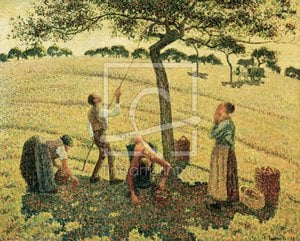
A Life Rooted in Observation: The World of Camille Pissarro
Camille Pissarro, имя, которое стало синонимом как рождения, так и эволюции импрессионизма, был художник, чья жизнь отражала меняющиеся пейзажи, которые он столь преданно запечатлевал на холсте. Родился Якоб Абрам Камиль Писсарро 10 июля 1830 года в Шарлотте Амали, Франции (ныне США Виргинские острова), его происхождение было таким же разнообразным и ярким, как и сцены, которые впоследствии определили его художественное видение. Его отец, португальский еврейский торговец с французским гражданством, а также его мать из французской-еврейской семьи на острове, воспитывали в нем уникальное культурное наследие. Это воспитание, хоть и нетрадиционное из-за семейных сложностей, способствовало ранней чувствительности к окружающему миру, качество, которое впоследствии стало краеугольным камнем его художественной практики. Его первоначальное формальное обучение в Академии Савари недалеко от Парижа предоставило ему основу в традиционных техниках, но его возвращение на остров Тромлейн и последующая работа грузчиком открыли ему страсть к наблюдению. Шумный порт, оживленная местная жизнь и необузданная красота карибского пейзажа стали для него первыми темами, сформировавшими взгляд, остро чуткий к тонкостям повседневного существования.
From Realism to Revolution: Artistic Development
Художественный путь Писсарро был одним из постоянных исследований и совершенствования. После периода работы помощником датского художника Антона Мельбе в Париже он погрузился в творчество мастеров, таких как Гюстав Курбё, Жан-Баптист-Камиль Корё и Оноре Домие – художников, которые отстаивали реализм и социальный комментарий. Изначально он стремился к признанию в устоявшемся художественном мире, выставляясь на Парижском салоне, но вскоре понял, что его ограничения сдерживают. Переломным моментом стало его принятие *plein air* живописи – работы непосредственно на открытом воздухе, практика, поощряемая Корё, которая стала центральной для импрессионизма. Этот переход был не только техническим; он представлял собой философское изменение, стремление запечатлеть мимолетные эффекты света и атмосферы, саму суть сцены, а не ее точное изображение. Он начал экспериментировать с более свободными мазками и яркими палитрами, отходя от академических условностей в сторону более субъективного и выразительного стиля. Ранние пейзажи, хотя и основаны на реализме, намекали на революционный путь, который он собирался пройти. Этот период ознаменовался его стремлением найти свой голос среди бурного художественного движения Парижа – города, переживающего быстрые перемены, которые предоставляли бесконечное вдохновение.
The Father Figure of Impressionism
Камиль Писсарро не был просто *импрессионистом*; он был, скорее всего, его самым непоколебимым и объединяющим лицом. Уникально, он принимал участие во всех восьми парижских импрессионистских выставках с 1874 по 1886 год, выступая в качестве стабилизирующей фигуры в группе, часто характеризующейся внутренними разногласиями и индивидуальными амбициями. Он не просто присутствовал – он активно поддерживал своих коллег, предлагал им поддержку, руководство и чувство товарищества. Это заслужило ему ласковое прозвище «отец» движения. Его приверженность художественной свободе и инновациям была непоколебима, даже перед лицом критического неодобрения и общественного безразличия. Он верил в силу коллективных действий и отстаивал идею художников, выставляющих свои работы независимо от ограничительных правил Салона. Помимо своей собственной работы, влияние Писсарро распространялось на молодое поколение художников, включая Поля Сезанна, Винсента Ван Гога и Пола Гогена – тех, кого он курировал и оказал глубокое влияние. Он предоставил им не только технические советы, но и философский каркас для их художественных исследований. Его готовность экспериментировать привела его к кратковременному периоду неоимпрессионизма, вдохновленному методами Жоржа Сера и Поля Синьяка, прежде чем окончательно вернуться к более личному стилю, который сочетал в себе его ранние влияния с новыми открытиями.
Landscapes of Life: Themes and Legacy
Художественный корпус Писсарро был удивительно разнообразен, но постоянно сосредоточен на окружающем мире. Он прославился своими изображениями как сельских, так и городских пейзажей, часто изображая сцены повседневной жизни – крестьян, работающих в полях, оживленные парижские улицы, тихие деревенские площади. Его картины не были просто живописными видами; это были социальные комментарии, отражающие его глубокую эмпатию к рабочему классу и его приверженность изображению их жизни с достоинством и уважением.
- Пейзажи: Славятся тем, что запечатлевают красоту как сельской местности, так и городского ландшафта.
- Сцены парижской жизни: Яркие изображения быстро меняющегося мегаполиса.
- Жизнь крестьян: Отражали его социальную сознательность и сочувствие к рабочему классу.
Его поздние работы, особенно те, что создавались в периоды политических волнений или личных трудностей, часто несут в себе чувство меланхолии и социального критики. Наследие Писсарро выходит далеко за рамки его прекрасных картин. Он был защитником художественной свободы, наставником для поколений художников и пионером в развитии современного искусства. Его приверженность *plein air* живописи совершила революцию в пейзажном искусстве, а его готовность экспериментировать с различными стилями продемонстрировала его интеллектуальную любознательность и непоколебимую преданность своему делу. Сегодня его работы хранятся в крупных музеях по всему миру, продолжая вдохновлять и очаровывать аудиторию своей искренностью, красотой и глубоким человеческим содержанием. Он остается знаменитым человеком, чьи заслуги продолжают изучаться и цениться за свою непреходящую актуальность.



 Предпросмотр
 Купить картину ручной работы
 Поделиться
 Поделиться
 Детали произведения

 Скачать
 Похожие работы
 Рентгенография
 Слайд-шоу
 Статистика


 Читать далее






































 Вариант со стеклом доступен только для размеров менее 110 см