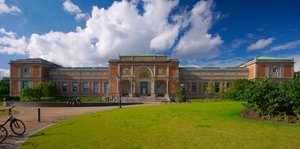
Willem Schellinks, 1627 – 1678

Willem Schellinks: Cele 31 cele mai faimoase picturi

Landscape with a Removal Cart (1660) este cea mai celebră pictură a lui Willem Schellinks, păstrată la Statens Museum For Kunst în Copenhaga. Port of Livorno (1652) și The Manor House of Mayor Nicolaas Pancras (1650) sunt următoarele două opere pe care lumea le cunoaște cel mai bine. Dintr-un total de 32 opere ale lui Willem Schellinks din catalogul nostru, iată cele 31 cele mai căutate de colecționari și vizitatori de muzee, incluzând anul, muzeul și povestea fiecăreia.

Clasate în funcție de scorul nostru de popularitate, care combină numărul de căutări, vizitele și comenzile pentru fiecare operă. Actualizat Noiembrie 2026. Fiecare capodoperă de pe această pagină poate fi comandată ca o reproducere pictată manual în ulei, de calitate muzeală, sau ca o printare de artă fină, la dimensiunea aleasă de dumneavoastră.

Portretul lui Willem Schellinks
Willem Schellinks · 1627 – 1678
Născut · Decedat
1627 – 1678, Amsterdam
Lucrări din catalogul nostru
32
Cele mai celebre
Landscape with a Removal Cart (1660)
Cele mai multe lucrări în
Statens Museum For Kunst

Top 10: cele mai cunoscute picturi ale lui Willem Schellinks

Landscape with a Removal Cart (1660) de Willem Schellinks
1

Landscape with a Removal Cart

1660 · Oil On Canvas · Statens Museum For Kunst, Copenhaga

A heavy, dark mass of trees and a rocky embankment anchors the left side of the composition, creating a stark asymmetry against an expansive, light sky. This structural tension directs the eye along a winding path toward distant, hazy mountains. The scene captures a quiet moment of rural labor, centered on a horse-drawn cart and a group of figures navigating the terrain. A small cottage is nestled among the foliage,…

Reproducere pictată manual în ulei de la $224 36 × 28 cm
Port of Livorno (1652) de Willem Schellinks
2

Port of Livorno

In the monochrome, grayscale oil painting Port of Livorno by Willem Schellinks, the composition is organized around a low horizon line that emphasizes the scale of the environment. This placement allows a vast, cloud-filled sky to occupy the upper two-thirds of the canvas, establishing a sense of atmospheric depth. The scene depicts a maritime setting in the Port of Livorno, dating to about 1652, where the arrangement of elements directs…

Reproducere pictată manual în ulei de la $199 37 × 27 cm Aceeași dimensiune ca originalul $339 85 × 61 cm Comandă în dimensiunea originală →
The Manor House of Mayor Nicolaas Pancras (1650) de Willem Schellinks
3

The Manor House of Mayor Nicolaas Pancras

1650 · Oil On Canvas · Amsterdam Museum, Amsterdam

The sun hangs high in a bright blue sky, casting a soft, natural light across a tranquil 17th-century landscape. In this scene, the air feels still, filled only with the quiet movement of life in the countryside. To the left, a dense grove of tall, leafy trees rises toward the heavens, their deep forest green foliage providing a sturdy vertical anchor to the composition. Through the twisting branches and undulating…

Reproducere pictată manual în ulei de la $199 35 × 29 cm Aceeași dimensiune ca originalul $240 52 × 43 cm Comandă în dimensiunea originală →
Horse Dressage in Winter Rome (1659) de Willem Schellinks
4

Horse Dressage in Winter Rome

1659 · Oil · Bonnefanten Museum, Maastricht

We are looking at Horse Dressage in Winter Rome, a work by the Dutch painter Willem Schellinks. This particular piece is dated to about 1659, a period during which the artist was establishing his presence within the artistic traditions of his homeland. Schellinks was born in Amsterdam, Netherlands, in 1627, and his life and creative development were deeply connected to the shifting landscapes of the seventeenth century. He remained active…

Reproducere pictată manual în ulei de la $199 30 × 33 cm Aceeași dimensiune ca originalul $286 58 × 62 cm Comandă în dimensiunea originală →
Landscape with the Stromboli vulcan (1660) de Willem Schellinks
5

Landscape with the Stromboli vulcan

1660 · Oil

A dark, heavy foreground anchors the eye, where rugged rocks and the remnants of stone structures sit in deep shadow. From this gloom, a winding path pulls the gaze toward the right, leading away from the viewer and into a hazy, luminous distance. The air feels thick with the breath of the earth. In the background, a massive, smoking volcano rises against a pale sky, its silhouette softened by the…

Reproducere pictată manual în ulei de la $199 38 × 26 cm Aceeași dimensiune ca originalul $241 56 × 40 cm Comandă în dimensiunea originală →
Shah Jahan in a landscape (1657) de Willem Schellinks
6

Shah Jahan in a landscape

1657 · Oil On Canvas · Colecția Regală, Londra

The oil painting titled Shah Jahan in a landscape was executed by the Dutch artist Willem Schellinks. Created about 1657, the work depicts a group of figures situated within an expansive, lush environment. The subject matter suggests a scene of courtly or noble life set in a tropical landscape, characterized by dense foliage and tall palm trees under a cloudy sky.

Reproducere pictată manual în ulei de la $199 35 × 28 cm Aceeași dimensiune ca originalul $275 64 × 51 cm Comandă în dimensiunea originală →
Italian Landscape with Classical Ruins (1660) de Willem Schellinks
7

Italian Landscape with Classical Ruins

1660 · Oil · Statens Museum For Kunst, Copenhaga

We are looking at Italian Landscape with Classical Ruins, a work by the Dutch artist Willem Schellinks. Born in Amsterdam, Netherlands, in 1627, Schellinks developed a specific sensibility toward the Mediterranean light and the quietude of ancient structures. This particular piece was painted about 1660, a period when his observations of the landscape were deeply informed by his own travels through Europe.

Reproducere pictată manual în ulei de la $199 36 × 28 cm Aceeași dimensiune ca originalul $356 85 × 67 cm Comandă în dimensiunea originală →
Soldiers Looting and Burning a Convent (1660) de Willem Schellinks
8

Soldiers Looting and Burning a Convent

1660 · Oil On Canvas · Statens Museum For Kunst, Copenhaga

The subject matter focuses on the looting and destruction of a religious institution, evoking a sense of profound tragedy. The work functions as a visceral experience of warfare, where the stillness of the setting is shattered by the sudden intrusion of violence. Through the interplay of light and shadow, the painting conveys the fear and devastation inherent in such raids, leaving the viewer with a sense of the unfolding chaos.

Reproducere pictată manual în ulei de la $199 35 × 29 cm Aceeași dimensiune ca originalul $436 97 × 84 cm Comandă în dimensiunea originală →
Landscape with Gentlemen Playing Pall-Mall (1660) de Willem Schellinks
9

Landscape with Gentlemen Playing Pall-Mall

1660 · Oil On Canvas · Statens Museum For Kunst, Copenhaga

The sun hangs high in a vast, dramatic sky, casting a luminous glow over a wide, tranquil plain. Under this expansive canopy of voluminous white and grey clouds, a group of gentlemen engages in the game of pall-mall, their movements part of a larger, serene landscape. To the far left, a dark, leafy tree reaches into the frame, its heavy foliage providing a deep, shadowed anchor that pushes the eye…

Reproducere pictată manual în ulei de la $199 35 × 28 cm Aceeași dimensiune ca originalul $273 62 × 52 cm Comandă în dimensiunea originală →
The bursting of the Sint-Anthonis- or Diemerdijk near Houtewael on the 5th of March, 1651 (1651) de Willem Schellinks
10

The bursting of the Sint-Anthonis- or Diemerdijk near Houtewael on the 5th of March, 1651

1651 · Oil On Canvas · Amsterdam Museum, Amsterdam

A violent diagonal cuts through the canvas. It is the white, frothing mouth of a dike breach, tearing through the earth near Houtewael. The water does not flow; it erupts. It carries the weight of the Sint-Anthonis or Diemerdijk, a sudden surge of liquid chaos that swallows the landscape. Dark, earthy tones of ochre and deep brown define the mud and the broken banks. Above this upheaval, the sky is…

Reproducere pictată manual în ulei de la $199 38 × 26 cm Aceeași dimensiune ca originalul $273 68 × 47 cm Comandă în dimensiunea originală →

Restul clasamentului pentru Willem Schellinks, de la 11 la 31

Untitled de Willem Schellinks
#19

Untitled

Untitled by Willem Schellinks presents a panoramic view of a coastal cityscape. A central fountain anchors the foreground, surrounded by steps that lead the eye toward a dense…

Comandă o reproducere de la $224 →

Picturile lui Willem Schellinks pe perioade

Subiectele pe care Willem Schellinks le-a pictat cel mai des

Cele patru teme care se regăsesc cel mai des printre aceste capodopere, cu cel mai fin exemplu pentru fiecare.

Unde puteți vedea picturile lui Willem Schellinks

Cele 8 muzee care dețin cele mai multe dintre picturile de pe această pagină.

Muzee Oraș Lucrări lui Willem Schellinks Picturi din această listă
Statens Museum For Kunst, CopenhagaStatens Museum For Kunst Copenhaga 6 Landscape with a Removal Cart, Italian Landscape with Classical Ruins, Soldiers Looting and Burning a Convent
Rijksmuseum, AmsterdamRijksmuseum Amsterdam 4 City Walls in Winter, The Battle of Medway, Battle of Medway, Willem Schellinks, c. 1668
Amsterdam Museum, AmsterdamAmsterdam Museum Amsterdam 3 The Manor House of Mayor Nicolaas Pancras, The bursting of the Sint-Anthonis- or Diemerdijk near Houtewael on the 5th of March, 1651, The Burning of the English Fleet on the Medway (June 1667)
Colecțiile Statale de Pictură din Bavaria, MunchenColecțiile Statale de Pictură din Bavaria Munchen 1 Port of Livorno
Bonnefanten Museum, MaastrichtBonnefanten Museum Maastricht 1 Horse Dressage in Winter Rome
Colecția Regală, LondraColecția Regală Londra 1 Shah Jahan in a landscape
Het Scheepvaartmuseum, AmsterdamHet Scheepvaartmuseum Amsterdam 1 Journey to Chatham, 1667, seen from a hill near Rochester
Guimet Museum, ParisGuimet Museum Paris 1 Painting Inspired By Moghul Miniatures

Willem Schellinks de-a lungul deceniilor: o capodoperă pentru fiecare

  1. 1650s
    Port of Livorno (1652) de Willem Schellinks
    Nr. 2 din 31

    Port of Livorno

    Vârsta 23 – 32 · Colecțiile Statale de Pictură din Bavaria

    In the monochrome, grayscale oil painting Port of Livorno by Willem Schellinks, the composition is organized around a low horizon line that emphasizes the scale of the environment.…

  2. 1660s
    Landscape with a Removal Cart (1660) de Willem Schellinks
    Locul 1 din 31

    Landscape with a Removal Cart

    Vârsta 33 – 42 · Statens Museum For Kunst

    A heavy, dark mass of trees and a rocky embankment anchors the left side of the composition, creating a stark asymmetry against an expansive, light sky. This structural…

  3. 1670s

Picturile lui Willem Schellinks: întrebări frecvente

Care este cea mai celebră pictură a lui Willem Schellinks?Afișează răspunsul

Landscape with a Removal Cart (1660), Statens Museum For Kunst, Copenhaga. Urmează Port of Livorno (1652) și The Manor House of Mayor Nicolaas Pancras (1650).

La ce vârstă a pictat Willem Schellinks opera Landscape with a Removal Cart?Afișează răspunsul

33 ani: Landscape with a Removal Cart datează din 1660, iar Willem Schellinks s-a născut în 1627.

Care sunt cele mai 10 celebre picturi ale lui Willem Schellinks?Afișează răspunsul

Landscape with a Removal Cart, Port of Livorno, The Manor House of Mayor Nicolaas Pancras, Horse Dressage in Winter Rome, Landscape with the Stromboli vulcan, Shah Jahan in a landscape, Italian Landscape with Classical Ruins, Soldiers Looting and Burning a Convent, Landscape with Gentlemen Playing Pall-Mall și The bursting of the Sint-Anthonis- or Diemerdijk near Houtewael on the 5th of March, 1651. Clasamentul de mai sus indică anul și muzeul pentru fiecare.

Câte picturi sunt realizate de Willem Schellinks?Afișează răspunsul

Catalogul nostru include 32 lucrări ale lui Willem Schellinks, datate între 1650 și 1678.

Unde pot vedea cele mai faimoase picturi ale lui Willem Schellinks?Afișează răspunsul

Majoritatea acestora se află în Statens Museum For Kunst (Copenhaga), Rijksmuseum (Amsterdam) și Amsterdam Museum (Amsterdam). Tabelul de mai sus enumeră muzeele pe rând.

În ce perioadă a pictat Willem Schellinks cele mai cunoscute opere?Afișează răspunsul

În 1660s: 10 dintre cele 31 lucrări de pe această pagină datează de atunci, printre acestea Landscape with a Removal Cart.

Care este cea mai veche și cea mai recentă pictură celebră a lui Willem Schellinks?Afișează răspunsul

Cea mai veche lucrare de pe această pagină este din The Manor House of Mayor Nicolaas Pancras (1650), iar cea mai recentă este din Burning of the English Fleet near Chatham (19-24 June 1667), Willem Schellinks, 1667 - 1678 (1678).

Ce subiecte a pictat Willem Schellinks?Afișează răspunsul

Sky (14), People (9) și River (8), printre cele 31 opere de pe această pagină.

Pe ce a pictat Willem Schellinks și cu ce?Afișează răspunsul

Oil On Canvas: 15 din cele 31 lucrări de pe această pagină.

Ce picturi cu Willem Schellinks deține Statens Museum For Kunst?Afișează răspunsul

Landscape with a Removal Cart, Italian Landscape with Classical Ruins și Soldiers Looting and Burning a Convent sunt printre cele 6 opere de pe această pagină păstrate de Statens Museum For Kunst, Copenhaga.

Unde pot cumpăra o reproducere Willem Schellinks?Afișează răspunsul

Da. Orice pictură de pe această pagină poate fi comandată ca o reproducere pictată manual în ulei, de calitate muzeală, sau ca o print de artă fină, în dimensiunea aleasă de dumneavoastră, direct de pe pagina propriei picturi.

Willem Schellinks: biografie

A Life Painted in Travel: The World of Willem Schellinks

Willem Schellinks, born in Amsterdam in 1623, was a Dutch artist whose life unfolded as a remarkable journey—both geographically and creatively. Unlike many of his contemporaries rooted firmly in the artistic centers of the Netherlands, Schellinks distinguished himself by an insatiable wanderlust that profoundly shaped his vision. Coming from a family with artistic leanings – his brother Daniël also pursued painting as an amateur – Willem initially trained under Karel Dujardin, absorbing the foundations of Italianate landscape and genre scenes. However, it was not within the confines of the studio that Schellinks truly blossomed, but rather on the open road, sketchbook in hand. His early travels with Lambert Doomer through France hinted at his future path, yet it was the extensive Grand Tour undertaken between 1661 and 1665, accompanying young Jakob Thierry de Jong, that irrevocably altered his artistic trajectory. This odyssey took him across England, France, Italy, Sicily, Malta, Germany, and Switzerland, a meticulous documentation of observations transforming into drawings, notes, and sketches – the very lifeblood of his art.

The Italianate Embrace and Atmospheric Innovations

Schellinks’ artistic style is best understood as a synthesis of keen observation, imaginative interpretation, and technical prowess. His exposure to the landscapes of Italy proved pivotal, leading him to embrace the *Italianate* aesthetic – characterized by classical ruins bathed in dramatic light, expansive vistas that stretched the imagination, and a sense of romantic melancholy. He wasn’t merely copying what he saw; rather, he was absorbing an atmosphere, a sensibility. This influence is palpable in his depictions of Dutch and Italian views, river scenes, harbor settings, and particularly, his evocative winter landscapes. He found particular inspiration in the work of Jan Asselyn, a master of atmospheric effects and compositional restraint. Asselyn’s ability to distill a scene down to its essential elements, emphasizing mood over meticulous detail, resonated deeply with Schellinks. This is evident in Schellinks' own winter scenes, where stillness and serenity are captured not through bustling activity but through subtle gradations of light and shadow, the quiet hush of falling snow. He wasn’t simply painting a landscape; he was conveying a feeling, an emotional resonance with the natural world.

Naval History and Collaborative Visions

While celebrated for his landscapes, Schellinks also demonstrated a remarkable ability to portray dramatic historical events. His depictions of naval battles, most notably *Burning of the English Fleet near Chatham* (1667-1678) and *Battle of Medway* (c. 1668), are powerful testaments to his skill in capturing both accuracy and intensity. These works aren’t simply records of conflict; they are visceral experiences, conveying the chaos, destruction, and human drama inherent in warfare. The raid on Chatham during the Second Anglo-Dutch War provided Schellinks with a subject that allowed him to combine his landscape skills with a narrative drive, resulting in paintings that were both visually compelling and historically significant. Beyond his individual endeavors, Schellinks frequently engaged in collaborative work, often painting landscapes into which other artists would add figures or intricate details. He partnered with Herman Nauwincx and Adriaen van de Velde on various projects, demonstrating a willingness to share his vision and enhance the overall impact of the artwork through combined expertise.

A Legacy Rediscovered: Historical Significance

Though not widely recognized during his lifetime, Willem Schellinks’ work has gained increasing appreciation for its historical importance and artistic merit. His detailed observations offer invaluable insights into 17th-century Dutch society, travel practices, and naval history. His journals, meticulously preserved in the Royal Library of Copenhagen, stand as a remarkable source of information about European landscapes and culture during this period – a testament to his dedication to documenting the world around him. The fact that he may have been commissioned by the Dutch government to create sketches for intelligence purposes adds another layer of intrigue to his story. His paintings, while sometimes overshadowed by more famous contemporaries, reveal a unique artistic vision—one informed by extensive travel, a deep appreciation for atmosphere, and a willingness to experiment with both subject matter and technique. Schellinks’ unusual interest in Mughal miniatures, as evidenced in some of his works, further underscores his open-mindedness and willingness to draw inspiration from diverse cultural traditions. Today, Willem Schellinks is remembered not just as a painter, but as a chronicler of his time—an artist whose work continues to resonate with scholars and art enthusiasts alike, offering a captivating glimpse into a world long past.