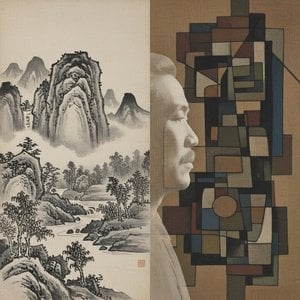
Kim Ho-sun: A Pioneer of Korean Cinema’s Dramatic Landscape
Kim Ho-sun, born in Seoul in 1941, stands as a pivotal figure in the evolution of South Korean film. His career, spanning decades and encompassing both critical acclaim and significant box office success, reflects a deep understanding of human emotion and a willingness to tackle challenging social themes within the constraints – and occasional circumvention – of a politically sensitive cinematic environment. Initially emerging in the 1970s, Kim quickly established himself as a director capable of blending melodrama with sharp social commentary, a combination that would define much of his work and contribute significantly to the burgeoning Korean film industry. His early films often explored the complexities of women’s lives within rapidly changing societal structures, offering poignant portraits of resilience and vulnerability.
Early Career & The Rise of Dramatic Cinema
Kim Ho-sun's trajectory began during a period of considerable upheaval in South Korea – the authoritarian rule of Park Chung-hee. This context profoundly shaped his artistic choices, leading him to prioritize narratives that resonated with audiences while subtly challenging established norms. His early films, particularly “Winter Woman” (1977) and “Yeong-Ja’s Heydays” (1975), became immediate successes, largely due to their relatable characters and emotionally resonant storylines. "Winter Woman," in particular, catapulted the then-unknown Chang Mi-hee to stardom, showcasing Kim's ability to identify and nurture talent while simultaneously delivering commercially viable entertainment. These films weren’t simply escapist fare; they offered a glimpse into the struggles faced by women navigating societal expectations and personal desires during a time of rapid modernization. The success of these early works demonstrated a keen understanding of audience sensibilities and established Kim as a director who could effectively translate complex social issues into compelling cinematic experiences.
Key Works & Thematic Exploration
Kim Ho-sun’s filmography is marked by a consistent exploration of themes related to societal pressures, personal identity, and the human condition. “Praise of Death” (1991) stands as perhaps his most critically acclaimed work, a stark and unflinching portrayal of a prison guard grappling with his conscience. The film's deliberate pacing and ambiguous narrative forced audiences to confront uncomfortable truths about morality and justice. Similarly, "The Sleep Deeper Than Death" (1979), a psychological thriller, delves into the dark recesses of human memory and the devastating consequences of repressed trauma. His later works, such as “Seoul Rainbow” (1989), continued this trend, offering satirical critiques of political corruption and societal hypocrisy through compelling character studies. Throughout his career, Kim consistently demonstrated an ability to balance dramatic intensity with moments of quiet reflection, creating films that linger in the viewer’s mind long after the credits roll.
Influence & Legacy
Kim Ho-sun's impact on Korean cinema extends far beyond his individual film successes. He played a crucial role in establishing a more sophisticated and emotionally nuanced cinematic landscape within South Korea, moving away from simplistic genre conventions and embracing a greater degree of artistic freedom. His willingness to tackle difficult subjects – often with a subtle yet powerful critique – paved the way for future generations of Korean filmmakers. He is considered one of the “Visual Age” directors, a group that emerged in the late 1970s and early 1980s and helped to modernize Korean cinema while retaining its distinctly humanistic core. His influence can be seen in the works of many subsequent directors who followed, demonstrating his lasting contribution to the nation’s cinematic heritage.
Continuing Contributions & Recognition
Even into his later years, Kim Ho-sun remains an active figure within the Korean film industry, serving as a senior advisor to the Korea Film Directors' Society (KFDS). His continued involvement reflects not only his deep passion for filmmaking but also his commitment to supporting and mentoring emerging talent. His work continues to be studied and celebrated for its artistic merit and its profound insights into the complexities of human experience. Kim Ho-sun’s legacy is secure as a true pioneer – a director who helped shape the identity of Korean cinema and left an indelible mark on the hearts and minds of audiences both within South Korea and beyond.
Echipa editorială WahooArt.com
Testează-ți privirea
Fiecare întrebare are un singur răspuns corect.
Întrebare 1:
Kim Ho-sun is primarily known for his work as a:
Întrebare 2:
Which of the following films is Kim Ho-sun most recognized for directing?
Întrebare 3:
In what year was Kim Ho-sun born?
Întrebare 4:
Kim Ho-sun's early career involved directing films in which genre?
Întrebare 5:
What significant role did Kim Ho-sun play in the Korean film industry during the era of military dictatorship?
Explore the captivating world of Yi Eungro (Lee Ungno), a pivotal figure in Korean modernism. Discover his unique fusion of Eastern and Western artistic traditions, abstract masterpieces, and lasting legacy. A must-read for discerning art collectors.
Toate lucrările lui Kim Ho-sun de pe acest site web pot fi explorate în pagina Toate operele de artă a artistului.
Unde pot fi explorate operele lui Kim Ho-sun organizate pe culori?
Pagina Indice Spectral organizează operele lui Kim Ho-sun în funcție de culoare.
De unde este Kim Ho-sun?
Kim Ho-sun s-a născut în South Korea.
Pot explora operele lui Kim Ho-sun pe baza unor cuvinte cheie?
Operele lui Kim Ho-sun pot fi explorate pe baza cuvintelor cheie, în pagina de După cuvinte cheie a artistului. Fiecare cuvânt cheie grupează operele aferente.
Cum pot urmări evoluția creațiilor lui Kim Ho-sun, an de an?
Pagina Cronologia operelor de artă a artistului prezintă lucrările lui Kim Ho-sun ordonate cronologic, an de an.
Pot explora operele lui Kim Ho-sun în funcție de tematică?
Atlas pe teme lui Kim Ho-sun este o pagină care clasifică operele de artă ale artistului în funcție de subiectele acestora.
Unde pot vedea profilul cromatic al lucrărilor lui Kim Ho-sun?
Profilul cromatic al lucrărilor lui Kim Ho-sun este prezentat în pagina Genoma Paletei a artistului.
Pot vizita un muzeu virtual al lucrărilor lui Kim Ho-sun?
Pagina Galerie 3D a lui Kim Ho-sun prezintă operele de artă ale artistului într-o galerie virtuală tridimensională.
Unde pot vedea operele lui Kim Ho-sun organizate după atmosferă?
Pagina Galerie pe stări de spirit lui Kim Ho-sun organizează operele de artă ale artistului în funcție de starea de spirit.