
1
A River Scene with Thatched Huts by a Bridge over a Weir
Reproducere pictată manual în ulei de la $199 37 × 27 cm
Aceeași dimensiune ca originalul $261 61 × 46 cm Comandă în dimensiunea originală →

A River Scene with Thatched Huts by a Bridge over a Weir (1767) este cea mai celebră pictură a lui James Lambert, păstrată la Yale Center for British Art în New Haven. Dintr-un total de 2 opere ale lui James Lambert din catalogul nostru, iată cele 2 cele mai căutate de colecționari și vizitatori de muzee, incluzând anul, muzeul și povestea fiecăreia.
Clasate în funcție de scorul nostru de popularitate, care combină numărul de căutări, vizitele și comenzile pentru fiecare operă. Actualizat Noiembrie 2026. Fiecare capodoperă de pe această pagină poate fi comandată ca o reproducere pictată manual în ulei, de calitate muzeală, sau ca o printare de artă fină, la dimensiunea aleasă de dumneavoastră.


Muzeul care deține cele mai multe dintre picturile prezentate pe această pagină.
| Muzee | Oraș | Lucrări lui James Lambert | Picturi din această listă |
|---|---|---|---|
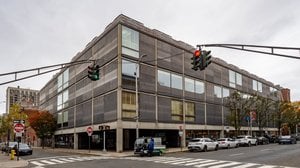 Yale Center for British Art |
New Haven | 2 | A River Scene with Thatched Huts by a Bridge over a Weir, Figures with a Donkey and Dog Crossing a Weir |
1767 este anul în care a fost creată fiecare capodoperă datată a lui James Lambert de pe această pagină: iată-le, în ordinea celebrității.

A River Scene with Thatched Huts by a Bridge over a Weir (1767)
42 ani: A River Scene with Thatched Huts by a Bridge over a Weir datează din 1767, iar James Lambert s-a născut în 1725.
Catalogul nostru include 2 lucrări ale lui James Lambert.
Majoritatea acestora se află în Yale Center for British Art (New Haven). Tabelul de mai sus enumeră muzeele pe rând.
În 1767: 2 dintre cele 2 lucrări de pe această pagină datează de atunci, printre acestea A River Scene with Thatched Huts by a Bridge over a Weir.
A River Scene with Thatched Huts by a Bridge over a Weir și Figures with a Donkey and Dog Crossing a Weir sunt printre cele 2 opere de pe această pagină păstrate de Yale Center for British Art, New Haven.
Da. Orice pictură de pe această pagină poate fi comandată ca o reproducere pictată manual în ulei, de calitate muzeală, sau ca o print de artă fină, în dimensiunea aleasă de dumneavoastră, direct de pe pagina propriei picturi.
James Lambert was a man of dual disciplines, operating as both a painter of scenery and a musician. Born in Jevington, Sussex, he spent his life anchored to the landscape of the region, specifically around Lewes. His work was not the product of formal academic training but of practical necessity and local demand. He functioned as a herald painter, decorating inn signs, and later transitioned into a more precise recording of the English landscape. His ability to capture the specificities of Sussex architecture and topography makes his body of work a vital visual record of the eighteenth-century English countryside.
His technical development likely began with the influence of George Smith, a distant relative who provided the necessary instruction in landscape painting. This foundation allowed him to move beyond mere signage into the realm of commissioned views. By the 1770s, Lambert was producing watercolours that documented historic buildings, a task that required a keen eye for structural detail and a disciplined hand. He was not merely an observer; he was a documentarian of the antiquities of his home county.
Lambert’s significance lies in his meticulous documentation of a disappearing world. His output was substantial, including several hundred watercolour drawings created for Sir William Burrell. These works focused on the antiquities of Sussex, providing a level of detail that transcends simple landscape art. He was also commissioned by John Elliot to produce views of antiquities, ensuring that the physical history of the region was preserved through his brush. His work appeared in significant historical publications, including the works of Thomas Walker Horsfield and John Watson's History of the Earls of Warren.
His professional reach extended to the formal art institutions of the era. Between 1768 and 1778, he exhibited at the Free Society of Artists and the Royal Academy of Art. This participation in major exhibitions demonstrates that his skill was recognized by the contemporary establishment, even if his roots remained firmly in the local soil of Sussex. He was assisted in his later years by his nephew, James Lambert, who helped manage the heavy workload of his prolific output.
To understand Lambert, one must acknowledge his life as a musician alongside his life as a painter. He served as the organist for the church of St Thomas-at-Cliffe from 1745 until his death. His musical contributions were not incidental; he published volumes of psalms and hymns, showing a command of composition that matched his visual precision. While some contemporary accounts suggested he was a better painter than a musician, the reality is that he was competent in both, maintaining a professional presence in the cultural life of Lewes through two distinct mediums.
His death in Lewes marked the end of a career defined by local utility and historical preservation. He left behind a legacy of specific, localized imagery that remains essential for anyone studying the topography and architecture of eighteenth-century Sussex. His paintings are not mere decorations; they are evidence.