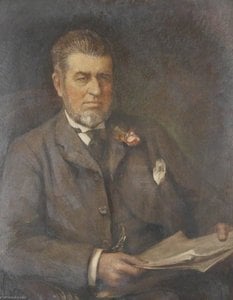
Frederic Yates, 1854 – 1919

Frederic Yates: Cele 16 cele mai faimoase picturi

Charlotte Mason (1842–1923) (1902) este cea mai celebră pictură a lui Frederic Yates. Path on Nab Scar (1900) și At Dent, August 1904 (1904) sunt următoarele două opere pe care lumea le cunoaște cel mai bine. Dintr-un total de 16 opere ale lui Frederic Yates din catalogul nostru, iată cele 16 cele mai căutate de colecționari și vizitatori de muzee, incluzând anul, muzeul și povestea fiecăreia.

Clasate în funcție de scorul nostru de popularitate, care combină numărul de căutări, vizitele și comenzile pentru fiecare operă. Actualizat Noiembrie 2026. Fiecare capodoperă de pe această pagină poate fi comandată ca o reproducere pictată manual în ulei, de calitate muzeală, sau ca o printare de artă fină, la dimensiunea aleasă de dumneavoastră.

Portretul lui Frederic Yates
Frederic Yates · 1854 – 1919
Născut · Decedat
1854 – 1919, Southampton
Lucrări din catalogul nostru
16
Cele mai celebre
Charlotte Mason (1842–1923) (1902)
Cele mai multe lucrări în
Abbot Hall Art Gallery

Top 10: cele mai cunoscute picturi ale lui Frederic Yates

Charlotte Mason (1842–1923) (1902) de Frederic Yates
1

Charlotte Mason (1842–1923)

1902 · Oil On Canvas

The room holds a stillness that feels heavy with thought. A woman sits, her gray hair catching the light, her hands pressed gently against her chin in a gesture of deep reflection. She wears a dark, somber dress and a scarf that wraps around her neck, grounding her presence against the warmth of the red table before her. Nearby, a book rests, its presence suggesting the source of her meditation…

Reproducere pictată manual în ulei de la $199 27 × 37 cm Aceeași dimensiune ca originalul $236 40 × 52 cm Comandă în dimensiunea originală →
Path on Nab Scar (1900) de Frederic Yates
2

Path on Nab Scar

1900 · Oil · Abbot Hall Art Gallery, Kendal

A lone figure moves through a dense woodland, carrying a large stick. The man’s presence is quiet, absorbed by the surrounding trees that form a textured backdrop of green and shadow. The scene captures a moment of quiet exploration within the natural landscape, emphasizing a sense of stillness and the simple act of walking through the wild.

Reproducere pictată manual în ulei de la $199 37 × 27 cm Aceeași dimensiune ca originalul $327 79 × 61 cm Comandă în dimensiunea originală →
At Dent, August 1904 (1904) de Frederic Yates
3

At Dent, August 1904

1904 · Oil · Cumbria Archive And Local Studies Centre, Barrow-in-Furness

The sun hangs high over the street in Dent, casting a gentle light that settles upon the stone and earth. A large, singular rock sits anchored in the center of the thoroughfare, a silent protagonist amidst the architecture. Buildings line the sides of the path, their windows watching the scene like many eyes. To the left, a bench waits in the stillness, offering a place for rest that remains unoccupied…

Reproducere pictată manual în ulei de la $199 35 × 29 cm
John Henry Bridges (1832–1906) (1904) de Frederic Yates
4

John Henry Bridges (1832–1906)

1904 · Oil On Canvas

In this 1904 oil painting, a man sits in a formal, seated position. He is positioned centrally, facing the viewer with a steady, stern expression. His hands are folded in his lap, resting upon his legs. He wears a dark, well-fitted suit and a neatly tied necktie, suggesting a sense of professional or social standing. The subject is framed by the presence of two chairs; one is situated behind him,…

Reproducere pictată manual în ulei de la $199 28 × 36 cm Aceeași dimensiune ca originalul $382 71 × 91 cm Comandă în dimensiunea originală →
Ernest de Sélincourt (1870–1943), Professor of English (1907) de Frederic Yates
5

Ernest de Sélincourt (1870–1943), Professor of English

1907 · Oil On Canvas · University of Birmingham, Birmingham

In this 1907 portrait, we encounter Ernest de Sélincourt, a man whose presence is defined by a calm, intellectual gravity. He sits before us, a Professor of English, captured in a moment of stillness that feels both immediate and distant. His gaze is direct, meeting the viewer with a neutral, steady expression that suggests a mind accustomed to deep thought and the nuances of language. The dark, indistinct background recedes…

Reproducere pictată manual în ulei de la $199 27 × 37 cm Aceeași dimensiune ca originalul $270 50 × 62 cm Comandă în dimensiunea originală →
Rydal Water (1914) de Frederic Yates
6

Rydal Water

1914 · Oil On Canvas

This work, titled Rydal Water, is a landscape painting by the English artist Frederic Yates. Created about 1914, the piece captures a quiet moment within the English Lake District, a region where the artist eventually settled. The scene focuses on the tranquil waters and the surrounding topography of the area, reflecting a deep connection to the landscape that defined much of his later life.

Reproducere pictată manual în ulei de la $199 36 × 28 cm Aceeași dimensiune ca originalul $425 102 × 76 cm Comandă în dimensiunea originală →
Rydal Valley de Frederic Yates
7

Rydal Valley

Oil · Abbot Hall Art Gallery, Kendal

The scene unfolds in Rydal Valley, a landscape painting by the English artist Frederic Yates. Created about 1914, the work captures a quiet moment within the English Lake District. The landscape presents a view of hills and valleys, with mountains rising in the background under a cloudy sky. Trees are scattered throughout the valley, adding a sense of natural beauty to the terrain.

Reproducere pictată manual în ulei de la $199 39 × 25 cm
View near Rydal de Frederic Yates
8

View near Rydal

Oil On Canvas · Abbot Hall Art Gallery, Kendal

View near Rydal is a landscape painting by the English artist Frederic Yates. Created about 1914, the work captures a quiet moment within the English Lake District. The scene focuses on the topography of the area, where the land rises in soft, grassy slopes. It is a study of a specific place, rooted in the terrain the artist knew well.

Reproducere pictată manual în ulei de la $199 38 × 26 cm Aceeași dimensiune ca originalul $291 72 × 52 cm Comandă în dimensiunea originală →

Restul clasamentului pentru Frederic Yates, de la 11 la 16

Mary Yates de Frederic Yates
#12

Mary Yates

Abbot Hall Art Gallery

A woman sits in a moment of stillness, her gaze meeting the viewer with a directness that suggests a quiet, internal life. She is dressed in a black…

Adu-l acasă de la $199 →
Japanese Shrine de Frederic Yates
#15

Japanese Shrine

Laing Art Gallery

This work reflects a period of travel and observation. The artist, having visited Japan, translated these foreign geometries into a language of light and shadow. There is a…

Adu-l acasă de la $199 →

Picturile lui Frederic Yates pe perioade

Subiectele pe care Frederic Yates le-a pictat cel mai des

Cele patru teme care se regăsesc cel mai des printre aceste capodopere, cu cel mai fin exemplu pentru fiecare.

Unde puteți vedea picturile lui Frederic Yates

Cele 5 muzee care dețin cele mai multe dintre picturile de pe această pagină.

Muzee Oraș Lucrări lui Frederic Yates Picturi din această listă
Abbot Hall Art Gallery, KendalAbbot Hall Art Gallery Kendal 5 Path on Nab Scar, Rydal Valley, View near Rydal
Kendal Town Hall, KendalKendal Town Hall Kendal 3 Frederick Punchard, John Holme (1830–1905), Chairman of the Board of Guardians (1851–1905), William Dilworth Crewdson (c.1838–1908), High Sheriff of Westmorland (1888) and Chairman of Westmorland County Council (1906–1907)
Cumbria Archive And Local Studies Centre, Barrow-in-FurnessCumbria Archive And Local Studies Centre Barrow-in-Furness 1 At Dent, August 1904
University of Birmingham, BirminghamUniversity of Birmingham Birmingham 1 Ernest de Sélincourt (1870–1943), Professor of English
Laing Art Gallery, Newcastle upon TyneLaing Art Gallery Newcastle upon Tyne 1 Japanese Shrine

Frederic Yates de-a lungul anilor: capodoperele fiecărui an

15 ani de pictură ale lui Frederic Yates, de la 1900 la 1914, renumăriți an de an prin cele mai cunoscute opere ale sale.

  1. 1900
    Path on Nab Scar (1900) de Frederic Yates
    Locul 2 din 16

    Path on Nab Scar

    Vârsta: 46 · Abbot Hall Art Gallery

    A lone figure moves through a dense woodland, carrying a large stick. The man’s presence is quiet, absorbed by the surrounding trees that form a textured backdrop of…

  2. 1901
    Girl with a Pigeon (1901) de Frederic Yates
    Locul 16 din 16

    Girl with a Pigeon

    Vârsta: 47 · Abbot Hall Art Gallery

    The painting "Girl with a Pigeon" by Frederic Yates is a stunning example of early 20th-century art. Created in 1901, this oil on canvas piece measures 32 x…

  3. 1902
    Charlotte Mason (1842–1923) (1902) de Frederic Yates
    Locul 1 din 16

    Charlotte Mason (1842–1923)

    Vârsta: 48

    The room holds a stillness that feels heavy with thought. A woman sits, her gray hair catching the light, her hands pressed gently against her chin in a…

  4. 1904
    At Dent, August 1904 (1904) de Frederic Yates
    Locul 3 din 16

    At Dent, August 1904

    Vârsta: 50 · Cumbria Archive And Local Studies Centre

    The sun hangs high over the street in Dent, casting a gentle light that settles upon the stone and earth. A large, singular rock sits anchored in the…

  5. 1904
    John Henry Bridges (1832–1906) (1904) de Frederic Yates
    Locul 4 din 16

    John Henry Bridges (1832–1906)

    Vârsta: 50

    In this 1904 oil painting, a man sits in a formal, seated position. He is positioned centrally, facing the viewer with a steady, stern expression. His hands are…

  6. 1907
  7. 1914
    Rydal Water (1914) de Frederic Yates
    Locul 6 din 16

    Rydal Water

    Vârsta: 60

    This work, titled Rydal Water, is a landscape painting by the English artist Frederic Yates. Created about 1914, the piece captures a quiet moment within the English Lake…

Picturile lui Frederic Yates: întrebări frecvente

Care este cea mai celebră pictură a lui Frederic Yates?Afișează răspunsul

Charlotte Mason (1842–1923) (1902). Urmează Path on Nab Scar (1900) și At Dent, August 1904 (1904).

La ce vârstă a pictat Frederic Yates opera Charlotte Mason (1842–1923)?Afișează răspunsul

48 ani: Charlotte Mason (1842–1923) datează din 1902, iar Frederic Yates s-a născut în 1854.

Care sunt cele mai 10 celebre picturi ale lui Frederic Yates?Afișează răspunsul

Charlotte Mason (1842–1923), Path on Nab Scar, At Dent, August 1904, John Henry Bridges (1832–1906), Ernest de Sélincourt (1870–1943), Professor of English, Rydal Water, Rydal Valley, View near Rydal, Frederick Punchard și John Holme (1830–1905), Chairman of the Board of Guardians (1851–1905). Clasamentul de mai sus indică anul și muzeul pentru fiecare.

Câte picturi sunt realizate de Frederic Yates?Afișează răspunsul

Catalogul nostru include 16 lucrări ale lui Frederic Yates, datate între 1900 și 1914.

Unde pot vedea cele mai faimoase picturi ale lui Frederic Yates?Afișează răspunsul

Majoritatea acestora se află în Abbot Hall Art Gallery (Kendal), Kendal Town Hall (Kendal) și Cumbria Archive And Local Studies Centre (Barrow-in-Furness). Tabelul de mai sus enumeră muzeele pe rând.

În ce perioadă a pictat Frederic Yates cele mai cunoscute opere?Afișează răspunsul

În 1904: 2 dintre cele 16 lucrări de pe această pagină datează de atunci, printre acestea At Dent, August 1904.

Care este cea mai veche și cea mai recentă pictură celebră a lui Frederic Yates?Afișează răspunsul

Cea mai veche lucrare de pe această pagină este din Path on Nab Scar (1900), iar cea mai recentă este din Rydal Water (1914).

Ce subiecte a pictat Frederic Yates?Afișează răspunsul

Man (7), Chair (5) și Woman (4), printre cele 16 opere de pe această pagină.

Pe ce a pictat Frederic Yates și cu ce?Afișează răspunsul

Oil On Canvas: 10 din cele 16 lucrări de pe această pagină.

Ce picturi cu Frederic Yates deține Abbot Hall Art Gallery?Afișează răspunsul

Path on Nab Scar, Rydal Valley și View near Rydal sunt printre cele 5 opere de pe această pagină păstrate de Abbot Hall Art Gallery, Kendal.

Unde pot cumpăra o reproducere Frederic Yates?Afișează răspunsul

Da. Orice pictură de pe această pagină poate fi comandată ca o reproducere pictată manual în ulei, de calitate muzeală, sau ca o print de artă fină, în dimensiunea aleasă de dumneavoastră, direct de pe pagina propriei picturi.

Frederic Yates: biografie

A Life Painted in Light: The Story of Frederic Yates

Frederic Yates, born Frederick Keeping in 1854 and passing in 1919, remains a compelling figure within the landscape tradition of Victorian Britain. Though perhaps not a household name today, his evocative paintings – often signed simply as “F. Yates” – capture a particular mood of romantic contemplation that resonates deeply with viewers even now. His life story is one woven into the fabric of artistic shifts and societal changes, a journey from early promise to a dedicated practice focused on capturing the beauty of the English countryside and the dignity of portraiture. While biographical details are somewhat scarce, piecing together his exhibition history and stylistic development reveals an artist deeply attuned to both the technical demands of his craft and the emotional power of light and atmosphere.

Early Years and Artistic Training

The early life of Frederick Keeping is shrouded in some mystery. Records suggest a formal artistic education, though the specifics remain elusive. It’s believed he studied at the prestigious South Kensington Art Schools – later to become the Royal College of Art – during a period when academic realism was dominant. This foundation undoubtedly instilled in him a mastery of technique and an understanding of composition. However, Yates quickly moved beyond strict imitation, developing a style that embraced a more subjective interpretation of nature. The adoption of “Frederic Yates” as his professional name suggests a deliberate forging of a new artistic identity, perhaps distancing himself from the constraints of earlier training or seeking to establish a unique presence in the crowded art market. His early works demonstrate a clear influence of the Barbizon school and artists like John Constable, evident in their naturalistic depictions of rural scenes and subtle handling of light.

The Alluring Landscapes: A Romantic Vision

Yates’s most celebrated work centers around his landscapes. These are not merely topographical representations; they are imbued with a sense of quiet drama and emotional depth. He favored idyllic settings – rolling hills, tranquil woodlands, shimmering rivers – often bathed in the soft glow of dawn or dusk. His paintings evoke a feeling of nostalgia for a vanishing rural England, a sentiment that resonated strongly with Victorian audiences undergoing rapid industrialization. Yates’s technique is characterized by delicate brushwork and a masterful use of color to create atmospheric effects. He wasn't interested in grand, sweeping vistas but rather in intimate scenes that invited contemplation. The influence of the Pre-Raphaelites can be seen in his attention to detail and his desire to capture the beauty of the natural world with almost photographic accuracy, yet he infused these details with a romantic sensibility. He skillfully balanced realism with an emotional response to the landscape, creating works that are both visually stunning and deeply moving.

Portraiture: Capturing Character and Dignity

Alongside his landscapes, Yates also produced a significant body of portrait work. These portraits, often depicting members of the middle class, reveal a sensitivity to character and an ability to capture the inner life of his sitters. Unlike the flamboyant poses and elaborate costumes favored by some Victorian portraitists, Yates’s portraits are characterized by their simplicity and directness. He focused on conveying the personality and dignity of his subjects through subtle nuances of expression and gesture.
  • His use of light is particularly effective in portraiture,
  • softening features and creating a sense of intimacy.
  • He often employed a muted color palette,
  • allowing the sitter’s character to take center stage.

Legacy and Historical Significance

While Frederic Yates may not be as widely recognized as some of his contemporaries, his work offers a valuable insight into the artistic sensibilities of Victorian Britain. His landscapes represent a continuation of the romantic tradition, while his portraits reflect a growing interest in psychological realism. He successfully navigated the demands of the art market, producing works that were both commercially viable and artistically satisfying. Today, his paintings are increasingly sought after by collectors who appreciate their quiet beauty and emotional depth. Yates’s legacy lies not in groundbreaking innovation but in his ability to capture a particular moment in time – a fleeting glimpse of rural England and the enduring dignity of the human spirit. His work serves as a reminder of the power of art to evoke emotion, preserve memory, and connect us to the past.