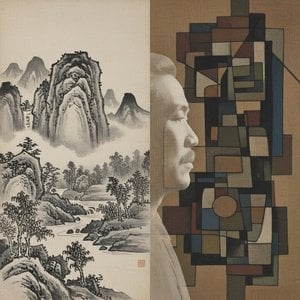
A Brush with Serenity: The Life and Art of Zhao Zuo
Zhao Zuo, a name whispered among connoisseurs of Ming Dynasty painting, remains an enigmatic figure despite the enduring beauty of his landscapes. Born around 1570 – though precise dates elude us – he flourished during a period of artistic transition in China, bridging the established traditions with emerging styles. Little is known about his personal life; historical records offer scant details beyond his *hao* (style name), Wendu, and his dedication to capturing the essence of the natural world on silk and paper. This very lack of biographical information contributes to the ethereal quality surrounding his work, allowing viewers to connect directly with the scenes themselves rather than being distracted by a detailed narrative of the artist’s existence. He passed away in 1633, leaving behind a legacy that continues to inspire awe and contemplation.
The Su Song Legacy: Influences and Artistic Development
Zhao Zuo did not emerge from a vacuum; he was deeply rooted in the artistic currents of his time, most notably the “Su Song style” (*Su Song pai*). This school, named after the regions of Suzhou and Songjiang near Shanghai, represented a continuation – and subtle evolution – of earlier Northern Song landscape traditions. Artists within this movement favored detailed brushwork, vibrant colors (though Zhao Zuo’s palette tends towards more restrained tones), and a focus on conveying atmospheric perspective. His primary influence was Song Xu, a pivotal figure in the Su Song school whose techniques formed the foundation of Zhao Zuo's approach. However, Zhao wasn’t merely an imitator. He absorbed the lessons of his predecessors but infused them with a unique sensibility, developing a style characterized by its clarity, precision, and quiet emotional resonance. He skillfully blended meticulous detail with a sense of expansive space, creating landscapes that feel both intimately observed and profoundly vast.
Landscapes of Contemplation: Key Characteristics of Zhao Zuo’s Work
Zhao Zuo specialized in painting mountain scenes – *shan shui* (literally “mountain water”) paintings – which held a central place in Chinese art, representing not just physical landscapes but also philosophical ideals. His compositions typically feature layered mountains shrouded in mist, winding rivers that guide the eye through the scene, and carefully rendered trees and rocks. What distinguishes his work is the exceptional quality of his brushstroke. Each line is deliberate, conveying both form and texture with remarkable accuracy. He employed a technique known as “drenched ink” (*mo xie*), using varying concentrations of ink to create subtle gradations of tone and depth. His colors, while not overly saturated, are harmoniously balanced, evoking the changing moods of nature – from the cool blues of distant mountains to the warm greens of lush vegetation. He wasn’t interested in dramatic displays of power or grandeur; instead, he sought to capture the quiet beauty and inherent harmony of the natural world.
A Lasting Resonance: Zhao Zuo's Historical Significance
While not as widely celebrated during his lifetime as some of his contemporaries, Zhao Zuo’s reputation has steadily grown in recent centuries. He is now recognized as a key representative of the Su Song style and an important link between the Ming and Qing Dynasties. His paintings are prized for their technical mastery, aesthetic refinement, and ability to evoke a sense of tranquility and contemplation.
His work provides valuable insight into the artistic practices and philosophical concerns of the late Ming period.
He exemplifies the enduring power of *shan shui* painting as a medium for expressing both personal vision and cultural values.
Zhao Zuo’s landscapes continue to inspire artists and art lovers alike, offering a timeless glimpse into the beauty and serenity of the Chinese natural world.
His contribution lies not in radical innovation but in his exceptional skill at refining existing traditions and imbuing them with a deeply personal sensibility. He reminds us that true artistry often resides in the subtle nuances of technique and the ability to capture the essence of a subject with quiet grace and profound understanding.
Explore the captivating world of Yi Eungro (Lee Ungno), a pivotal figure in Korean modernism. Discover his unique fusion of Eastern and Western artistic traditions, abstract masterpieces, and lasting legacy. A must-read for discerning art collectors.