

Early Life and Artistic Foundations
Walter Crane, born in Liverpool on August 15th, 1845, emerged from a family deeply interwoven with the artistic fabric of Victorian England. His father, Thomas Crane, was a respected portrait painter and miniaturist, instilling within young Walter an early appreciation for form and detail. This familial atmosphere, further enriched by his brother Thomas’s own pursuit of illustration, fostered a creative environment where artistry wasn't merely a profession but a way of life. From the outset, Crane’s path seemed destined to follow a similar trajectory, yet he would ultimately forge a unique identity within the burgeoning world of British art. His initial training began not with oils or watercolors, but with the meticulous discipline of wood-engraving – an apprenticeship under William James Linton that proved foundational. This rigorous process honed his observational skills and instilled a deep understanding of line, texture, and composition, qualities that would become hallmarks of his distinctive style. The influence of the Pre-Raphaelite Brotherhood was also profoundly felt during these formative years; their commitment to narrative storytelling, vibrant color palettes, and meticulous detail resonated deeply with Crane’s developing aesthetic sensibilities. He became a dedicated student of John Ruskin, whose writings championed craftsmanship and the integration of art into everyday life – ideals that would shape Crane's artistic philosophy for decades to come.A Blossoming Career: Illustration and the Arts & Crafts Movement
Crane’s artistic journey was remarkably versatile, encompassing painting, illustration, and decorative arts. However, it was in the realm of children’s book illustration that he truly distinguished himself, becoming a pivotal figure in shaping the genre as we know it today. His collaboration with Edmund Evans, beginning in 1865, proved particularly fruitful, leading to a series of beautifully illustrated books that captivated young audiences and redefined expectations for children's literature. These weren’t merely whimsical depictions; they were carefully crafted works of art, imbued with intricate detail, vibrant colors, and a palpable sense of imagination. A recurring motif in Crane’s illustrations was the “child-in-the-garden” theme – a romanticized vision of innocence and connection with nature that became emblematic of English children's literature during the Victorian era. Beyond his work for Evans, Crane extended his artistic reach into various decorative fields, creating ceramic tiles, wallpapers, and other designs that reflected the principles of the Arts and Crafts movement. This commitment to integrating art into everyday life aligned perfectly with Ruskin’s teachings and solidified Crane’s position as a leading figure in this influential aesthetic movement.Key Works and Artistic Style
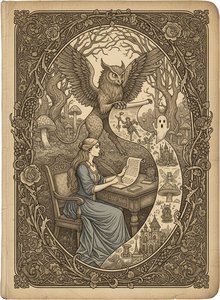
Among Crane's most celebrated works are “Walter Crane: W to Z,” a delightful collection showcasing his artistic range through alphabet illustrations, "The Sweep," a poignant depiction of a young boy’s life that subtly incorporates social commentary, and “Summer,” which perfectly embodies the idyllic “child-in-the-garden” motif with its vibrant depictions of nature and childhood joy. These pieces, along with countless others, reveal Crane's distinctive style – characterized by meticulous detail, flat planes of color, a strong sense of design, and an elegant simplicity. He frequently employed wood engraving and lithography techniques to achieve his unique visual effects, often incorporating elements of Japanese art into his compositions. This Japonisme influence, prevalent in Victorian England, is evident in his use of bold outlines, simplified forms, and decorative patterns.- His work wasn’t merely about aesthetic beauty; it was also imbued with a sense of social consciousness.
- Crane believed that art should be accessible to all, not just the elite.
- He actively used his artistic talents to promote socialist ideals and advocate for social reform.
Legacy and Enduring Influence
Walter Crane’s legacy extends far beyond his own prolific output. He is rightfully considered a pioneer of children's book illustration, significantly shaping the genre’s development and establishing it as a distinct field within the broader art world. His emphasis on design and detail helped elevate the status of illustrated books, transforming them from simple educational tools into cherished works of art. Crane influenced generations of artists and illustrators, including Randolph Caldecott and Kate Greenaway, who further popularized illustrated children’s books and carried forward his commitment to quality and innovation. His contributions to the Arts and Crafts movement were equally significant, championing the integration of art into everyday life and advocating for a more holistic approach to design. Even today, Crane's work continues to inspire artists, designers, and educators alike, demonstrating the enduring power of illustration to engage, educate, and uplift. His illustrations have been exhibited in museums worldwide, including Christ’s Hospital Museum in Horsham, United Kingdom, the British Museum, and the Victoria and Albert Museum – a testament to his lasting artistic impact. Walter Crane died on March 14th, 1915, leaving behind a rich and diverse body of work that continues to resonate with audiences around the globe.Perguntas e Respostas
Que sentimentos as obras de Walter Crane expressam?
A página de Sala de Humor do artista mostra as obras de Walter Crane organizadas por sua atmosfera.
Como posso ver todas as obras criadas por Walter Crane?
Todas as obras de Walter Crane no este site podem ser visualizadas na página de Todas as Obras de Arte do artista.
De onde é Walter Crane?
Walter Crane nasceu em Reino Unido.
Qual é o local e o ano de nascimento de Walter Crane?
Walter Crane nasceu em Liverpool, em 1845.
Posso estudar o uso de cores de Walter Crane em todas as suas obras?
O perfil de cores da obra de Walter Crane pode ser visualizado na página Genoma da Paleta do artista.
Qual é a cidade e o país de nascimento de Walter Crane?
Walter Crane nasceu em Liverpool, em Reino Unido.
Como posso encontrar obras de Walter Crane em uma paleta específica?
A página Por Paletas agrupa as obras de Walter Crane por suas paletas de cores.


![Title Page [plate 1] — Walter Crane](/media/artworks/images-thumb/70/a8/70a851d7c4bdf723720771564f322ccb.jpg)


