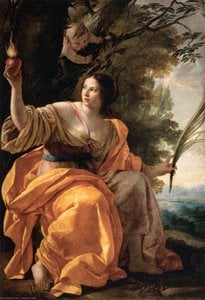
Simão Vouet, 1590 – 1649

Simão Vouet: As 100 Pinturas Mais Famosas

Venus e Adonis (1642) é a pintura mais famosa de Simão Vouet, guardada pelo J. Paul Getty Museum em Los Angeles. The Muses of Urania and Calliope (1634) e Annunciation (1640) são as próximas duas obras que o mundo melhor conhece. Dos 166 trabalhos de Simão Vouet em nosso catálogo, aqui estão os 100 que colecionadores e visitantes de museus mais observam, com o ano, o museu e a história de cada um.

Classificado de acordo com o nosso índice de popularidade, que combina buscas, visitas e pedidos de cada obra. Atualizado em Outubro 2026. Cada obra-prima nesta página pode ser encomendada como uma reprodução em óleo pintada à mão, com qualidade de museu, ou como uma impressão de fine art, no tamanho de sua escolha.

Retrato de Simão Vouet
Simão Vouet · 1590 – 1649
Nascimento · falecimento
1590 – 1649, Paris
Movimento
French baroque
Obras em nosso catálogo
166
Mais famosas
Venus e Adonis (1642)
Mais obras em
Museu do Louvre

Top 10: as pinturas mais conhecidas de Simão Vouet

Venus e Adonis (1642) de Simão Vouet
1

Venus e Adonis

1642 · Acrílico sobre tela · J. Paul Getty Museum, Los Angeles

Venus and Adonis: A Baroque Symphony of Desire and Mortality Simon Vouet’s “Venus and Adonis,” completed in 1642, transcends mere depiction; it embodies the very essence of French Baroque art—a masterful fusion of Italian influences and profound emotional resonance. This iconic scene from Ovid's *Metamorphoses* captures the pivotal moment where Venus attempts to persuade Adonis to abandon his pursuit of hunting, foreshadowing his tragic fate. Vouet doesn’t simply portray mythology;…

The Muses of Urania and Calliope (1634) de Simão Vouet
2

The Muses of Urania and Calliope

1634 · Acrylic On Canvas · National Gallery of Art, Washington

Simon Vouet’s “The Muses Urania and Calliope”: A Symphony of Baroque Grace Simon Vouet (1590-1649) stands as a pivotal figure in the artistic landscape of 17th-century France, marking the decisive transition from Mannerism to the opulent grandeur of the Baroque style. His legacy resides not merely in his prolific output but also in his unwavering dedication to mastering Italian influences—a pursuit that fundamentally reshaped French painting and cemented Vouet’s place…

Annunciation (1640) de Simão Vouet
3

Annunciation

1640 · Oil On Canvas · Galleria degli Uffizi, Florença

Simon Vouet's "Annunciation," painted in 1640, is more than just a religious depiction; it’s a masterful orchestration of light, shadow, and human emotion. This captivating work transports the viewer to an intimate interior space, where the momentous announcement of Mary’s divine conception unfolds with breathtaking drama. The painting immediately draws the eye to the kneeling figure of the Virgin Mary, bathed in a warm, golden glow emanating from the right…

The Fortuneteller (detail) (1617) de Simão Vouet
4

The Fortuneteller (detail)

1617 · Oil On Canvas · Galleria Nazionale d'Arte Antica, Roma

In the heart of 1617, amidst the vibrant and transformative atmosphere of Roman artistic circles, Simon Vouet captured a moment of profound human connection in his masterpiece, The Fortuneteller. This work, particularly when viewed in its intimate details, serves as much more than a mere portrait; it is an emblem of the burgeoning Baroque style that was beginning to reshape the visual landscape of Europe. The scene unfolds with a…

Sleeping Venus (1630) de Simão Vouet
5

Sleeping Venus

1630 · Acrylic On Canvas · Szépművészeti Múzeum, Budapeste

Simon Vouet's "Sleeping Venus," painted around 1630, is not merely a depiction of a reclining nude; it’s an exquisite distillation of Renaissance ideals and the burgeoning Baroque aesthetic. This captivating work transcends simple portraiture, offering instead a profound meditation on beauty, repose, and the delicate balance between earthly pleasure and spiritual contemplation. The painting immediately draws the viewer into a world of hushed tranquility, inviting us to share in the…

Allegory of Virtue (1634) de Simão Vouet
6

Allegory of Virtue

1634 · Acrylic On Canvas · Museu do Louvre, Paris

Simon Vouet’s “Allegory of Virtue,” completed around 1634, stands as a testament to the burgeoning Baroque aesthetic infiltrating French artistic circles during Louis XIII's reign. More than just a portrait—though it undeniably depicts a woman radiating grace and authority—the painting delves into profound philosophical concepts rooted in humanist ideals prevalent at the time.

The Entombment (1638) de Simão Vouet
7

The Entombment

1638 · Oil On Canvas · Museu Fitzwilliam, Cambridge

Simon Vouet's "The Entombment," painted in 1635–1638, is not merely a depiction of a biblical scene; it’s an exquisitely rendered meditation on grief, faith, and the profound dignity of sacrifice. This monumental work, currently residing within the collection of the Fitzwilliam Museum in Cambridge, transcends its subject matter to become a powerful testament to the Baroque era's ability to evoke intense emotion through masterful technique and carefully considered symbolism. Vouet,…

Angels with Attributes of the Passion: Angel Holding the Vessel and Towel for washing the hands of Pontius Pilate (1624) de Simão Vouet
8

Angels with Attributes of the Passion: Angel Holding the Vessel and Towel for washing the hands of Pontius Pilate

1624 · Oil · Minneapolis Institute of Art, Minneapolis

A single celestial figure emerges from a deep, near-black void, commanding the space with an intimate and monumental presence. This angel, caught in a moment of profound spiritual devotion, gazes upward with eyes full of soulful contemplation or sorrow. The light descends from the upper left, carving the figure out of the darkness and casting soft, tender shadows across a face etched with emotion. Every detail feels immediate, from the…

Saint John (1623) de Simão Vouet
9

Saint John

1623 · Oil On Canvas · Philadelphia Museum of Art, Filadélfia

A young man turns his face toward a light that remains unseen. His eyes, wide and searching, catch a glimmer that pulls his gaze upward, away from the dark, murky depths of the background. Thick, dark curls frame a pale face, creating a sharp contrast against the heavy shadows that swallow the space around him. He is caught in a moment of sudden, quiet realization. The light does not merely…

Virgin and Child, with an Angel (1642) de Simão Vouet
10

Virgin and Child, with an Angel

1642 · Oil On Panel · Philadelphia Museum of Art, Filadélfia

The light falls softly upon the skin of the Virgin Mary, catching the curve of her cheek and the small, smooth hands of the Christ Child. They sit within a triangular arrangement that anchors the composition, surrounded by the deep shadows of a dense woodland. An angel leans into this intimate circle, its robes glowing with warm yellows and golds that contrast against the heavy, dark trees behind them. At…

O restante do ranking de Simão Vouet, de 11 a 100

Madonna with Child (1625) de Simão Vouet
#11

Madonna with Child

1625 · Museu Hermitage

The room falls away into a deep, near-black shadow, leaving only two figures bathed in a soft, directional light. From the upper left, a gentle glow spills across…

Encomendar uma reprodução →
Heavenly Charity (1640) de Simão Vouet
#14

Heavenly Charity

1640 · Museu do Louvre

A Beacon of Baroque Virtue: Simon Vouet’s Heavenly Charity Simon Vouet's "Heavenly Charity," completed around 1640, stands as a cornerstone of French Baroque painting—a testament to Louis XIII’s…

Leve para casa →
Allegory (1640) de Simão Vouet
#15

Allegory

1640 · Museus Capitolinos

Simon Vouet executed Allegory during his residency in Rome, a period spanning from 1614 to 1627. The work was commissioned by Marcello Sacchetti, a 17th-century Italian merchant and…

Encomendar uma reprodução →
Parnassus or Apollo and the Muses (1640) de Simão Vouet
#16

Parnassus or Apollo and the Muses

1640 · Szépművészeti Múzeum

A Celestial Gathering: Simon Vouet’s “Parnassus or Apollo and the Muses” Simon Vouet's "Parnassus or Apollo and the Muses," painted around 1640, isn’t merely a depiction of Greek…

Leve para casa →
Sacrifice of Isaac (1642) de Simão Vouet
#17

Sacrifice of Isaac

1642 · Milwaukee Art Museum

The painting titled Sacrifice of Isaac is a work of religious art. It is attributed to the French artist Simon Vouet (1590-1649) and Pierre Patel, the Elder (1605-1676).…

Leve para casa →
The Muse Clio (1640) de Simão Vouet
#22

The Muse Clio

1640 · Staatliche Kunsthalle Karlsruhe

The Muse Clio is an oil on canvas painting by the artist Simon Vouet. Created about 1640, this work depicts the mythological figure Clio, who is recognized as…

Encomendar uma reprodução →
Vanitas (1621) de Simão Vouet
#24

Vanitas

1621 · Museu Nacional de Varsóvia

In Vanitas, Simon Vouet centers the composition on a tight, intimate encounter between two figures. A young woman and an older man emerge from a deep, near-black background…

Leve para casa →
POLYMNIE, MUSE DE L'ELOQUENCE de Simão Vouet
#58

POLYMNIE, MUSE DE L'ELOQUENCE

Museu do Louvre

Within the hallowed halls of the Louvre resides a captivating portrait – *Polymnie, Muse of Eloquence* by Simon Vouet, a pivotal work that embodies the burgeoning spirit of…

Leve para casa →
Angel with dice and tunic (1620) de Simão Vouet
#59

Angel with dice and tunic

1620 · Museo di Capodimonte

The celestial figure in Angel with dice and tunic gazes downward, caught in a moment of quiet contemplation. This oil on canvas work by the artist Simon Vouet…

Leve para casa →
Saint Catherine of Alexandria (1620) de Simão Vouet
#60

Saint Catherine of Alexandria

1620 · Museu Nacional de Arte Ocidental

Saint Catherine of Alexandria by Simon Vouet, executed in 1620, presents a formal study of the early Christian martyr. Rendered in oil on canvas, the work captures the…

Leve para casa →
Self-Portrait (1615) de Simão Vouet
#65

Self-Portrait

1615 · Musée Réattu

To stand before this self-portrait is to encounter not merely paint on canvas, but a direct conduit to the vibrant, ambitious spirit of early 17th-century Paris. Painted around…

Leve para casa →
St Catherine (1614) de Simão Vouet
#69

St Catherine

1614 · Palazzo del Quirinale

To stand before Simon Vouet's depiction of St Catherine is to step directly into the vibrant, emotionally charged atmosphere of early seventeenth-century Paris. This portrait captures more than…

Leve para casa →
Prince Marcantonio Doria (1621) de Simão Vouet
#70

Prince Marcantonio Doria

1621 · Museu do Louvre

In the hallowed halls of the Musée du Louvre, there exists a window into the soul of the seventeenth century, captured through the masterful brushstrokes of Simon Vouet.…

Leve para casa →
Virgem e Filho de Simão Vouet
#76

Virgem e Filho

Musée des Beaux-Arts de Lyon

Simon Vouet (1590–1649) é uma figura fundamental na transição da pintura francesa do Maneirismo para o Barroco, marcando um ponto de inflexão na história artística europeia. Filho de…

Leve para casa →
The Holy Family (1630) de Simão Vouet
#79

The Holy Family

1630 · Kunsthalle Bremen

In the heart of the seventeenth century, as the rigid structures of Mannerism began to dissolve under the weight of a new, more visceral era, Simon Vouet emerged…

Encomendar uma reprodução →
Madonna and Child (1633) de Simão Vouet
#80

Madonna and Child

1633 · National Gallery of Art

In the intimate embrace of Simon Vouet’s Madonna and Child, we are invited into a moment of profound, quiet tenderness that transcends the centuries. Painted in 1633, this…

Leve para casa →
Allegory of Peace (1627) de Simão Vouet
#82

Allegory of Peace

1627 · Galleria Nazionale d'Arte Antica

Completed in 1627, Allegory of Peace by Simon Vouet offers a profound look into the intellectual fervor and humanist aspirations of the seventeenth century. This work emerged during…

Leve para casa →
Allegory of Wealth (1630) de Simão Vouet
#83

Allegory of Wealth

1630 · Museu do Louvre

Simon Vouet's 1630 *Allegory of Wealth* is not merely a painting; it’s an immersive experience, a meticulously crafted tableau that speaks volumes about the values and aspirations of…

Leve para casa →
LA PRESENTATION AU TEMPLE de Simão Vouet
#85

LA PRESENTATION AU TEMPLE

Museu do Louvre

The scene unfolds within the sacred walls of the temple in LA PRESENTATION AU TEMPLE, a work painted by Simon Vouet. The air seems to hold its breath…

Leve para casa →
The Fortune Teller (1618) de Simão Vouet
#87

The Fortune Teller

1618 · Galeria Nacional do Canadá

The Fortune Teller, painted in 1618 by the masterful Simon Vouet, offers a captivating glimpse into the social and artistic currents of early 17th-century France. This portrait, measuring…

Encomende uma cópia pintada à mão →
Saint Guillaume d'Aquitaine ( ) de Simão Vouet
#88

Saint Guillaume d'Aquitaine ( )

Museu do Louvre

In the grand tapestry of the seventeenth century, few artists captured the spiritual fervor and theatrical splendor of the French Baroque as masterfully as Simon Vouet. His work…

Leve para casa →
Caritas Romana de Simão Vouet
#92

Caritas Romana

Museu Nacional de Varsóvia

In Caritas Romana, Simon Vouet presents a quiet, emotionally charged encounter between two figures. The composition centers on a woman cradling an older, bearded man, creating an intimate…

Encomende uma cópia pintada à mão →
St Jerome and the Angel (1622) de Simão Vouet
#93

St Jerome and the Angel

1622 · National Gallery of Art

Simon Vouet’s “St. Jerome and the Angel,” painted in 1622, is more than just a depiction of a biblical scene; it's a carefully constructed meditation on divine guidance,…

Encomendar uma reprodução →
The Fortune Teller (1617) de Simão Vouet
#94

The Fortune Teller

1617 · Galleria Nazionale d'Arte Antica

Simon Vouet's "The Fortune Teller," painted in 1617, isn’t merely a portrait; it’s a carefully constructed tableau brimming with intrigue and a palpable sense of the mystical. Housed…

Encomendar uma reprodução →

Pinturas de Simão Vouet por período

Os temas que Simão Vouet mais pintou

Os quatro temas que mais se repetem entre estas obras-primas, com o melhor exemplo de cada um.

Onde ver as pinturas de Simão Vouet

Os 8 museus que detêm a maioria das pinturas desta página.

Museu Cidade Obras de Simão Vouet Pinturas desta lista
Museu do Louvre, ParisMuseu do Louvre Paris 20 Allegory of Virtue, Heavenly Charity, POLYMNIE, MUSE DE L'ELOQUENCE
Szépművészeti Múzeum, BudapesteSzépművészeti Múzeum Budapeste 5 Sleeping Venus, Parnassus or Apollo and the Muses, Parnassus or Apollo and the Muses (detail)
National Gallery of Art, WashingtonNational Gallery of Art Washington 4 The Muses of Urania and Calliope, The Muses Urania and Calliope, Madonna and Child
Galleria Nazionale d'Arte Antica, RomaGalleria Nazionale d'Arte Antica Roma 4 The Fortuneteller (detail), Allegory of Peace, The Fortune Teller
Museu Nacional de Varsóvia, VarsóviaMuseu Nacional de Varsóvia Varsóvia 4 Vanitas, Caritas Romana
Museu de Arte do Condado de Los Angeles, Los AngelesMuseu de Arte do Condado de Los Angeles Los Angeles 3 Model for Altarpiece in St. Peter's, Model for Altarpiece in St. Peter's
Minneapolis Institute of Art, MinneapolisMinneapolis Institute of Art Minneapolis 2 Angels with Attributes of the Passion: Angel Holding the Vessel and Towel for washing the hands of Pontius Pilate, Angels with Attributes of the Passion, the Superscription from the Cross
Philadelphia Museum of Art, FiladélfiaPhiladelphia Museum of Art Filadélfia 2 Saint John, Virgin and Child, with an Angel

Simão Vouet através das décadas: uma obra-prima para cada uma

  1. 1610s
    The Fortuneteller (detail) (1617) de Simão Vouet
    Nº 4 de 100

    The Fortuneteller (detail)

    Idade 20 – 29 · Galleria Nazionale d'Arte Antica

    In the heart of 1617, amidst the vibrant and transformative atmosphere of Roman artistic circles, Simon Vouet captured a moment of profound human connection in his masterpiece, The…

  2. 1620s
  3. 1630s
    The Muses of Urania and Calliope (1634) de Simão Vouet
    #2 de 100

    The Muses of Urania and Calliope

    Idade 40 – 49 · National Gallery of Art

    Simon Vouet’s “The Muses Urania and Calliope”: A Symphony of Baroque Grace Simon Vouet (1590-1649) stands as a pivotal figure in the artistic landscape of 17th-century France, marking…

  4. 1640s
    Venus e Adonis (1642) de Simão Vouet
    Nº 1 de 100

    Venus e Adonis

    Idade 50 – 59 · J. Paul Getty Museum

    Venus and Adonis: A Baroque Symphony of Desire and Mortality Simon Vouet’s “Venus and Adonis,” completed in 1642, transcends mere depiction; it embodies the very essence of French…

Pinturas de Simão Vouet: perguntas frequentes

Qual é a pintura mais famosa de Simão Vouet?Mostrar a resposta

Venus e Adonis (1642), J. Paul Getty Museum, Los Angeles. Seguem-se The Muses of Urania and Calliope (1634) e Annunciation (1640).

Com que idade Simão Vouet pintou Venus e Adonis?Mostrar a resposta

52 anos: Venus e Adonis data de 1642 e Simão Vouet nasceu em 1590.

Quais são as 10 pinturas mais famosas de Simão Vouet?Mostrar a resposta

Venus e Adonis, The Muses of Urania and Calliope, Annunciation, The Fortuneteller (detail), Sleeping Venus, Allegory of Virtue, The Entombment, Angels with Attributes of the Passion: Angel Holding the Vessel and Towel for washing the hands of Pontius Pilate, Saint John e Virgin and Child, with an Angel. O ranking acima apresenta o ano e o museu de cada uma.

Quantas pinturas de Simão Vouet existem?Mostrar a resposta

Nosso catálogo lista 166 obras de Simão Vouet, datadas de 1614 a 1645.

Onde posso ver as pinturas mais famosas de Simão Vouet?Mostrar a resposta

A maioria deles está em Museu do Louvre (Paris), Szépművészeti Múzeum (Budapeste) e National Gallery of Art (Washington). A tabela acima lista os museus um a um.

Em que período Simão Vouet pintou as suas obras mais conhecidas?Mostrar a resposta

Em 1620s: 31 das 100 obras nesta página datam dessa época, entre elas Angels with Attributes of the Passion: Angel Holding the Vessel and Towel for washing the hands of Pontius Pilate.

Qual é a pintura mais antiga e a mais recente de Simão Vouet?Mostrar a resposta

A obra mais antiga nesta página é de Lovers (1614), e a mais recente é de Allegory of Prudence (1645).

Quais temas Simão Vouet pintou?Mostrar a resposta

Woman (15), Renaissance (11) e Man (9), entre as 100 obras nesta página.

Sobre o que Simão Vouet pintou e com o que?Mostrar a resposta

Oil On Canvas: 40 de um total de 100 obras nesta página.

A qual movimento pertence a arte de Simão Vouet?Mostrar a resposta

French baroque, como mostram as pinturas nesta página.

Quais pinturas de Simão Vouet o Museu do Louvre possui?Mostrar a resposta

Allegory of Virtue, Heavenly Charity e POLYMNIE, MUSE DE L'ELOQUENCE estão entre as 12 obras nesta página pertencentes ao Museu do Louvre, Paris.

Onde posso comprar uma reprodução de Simão Vouet?Mostrar a resposta

Sim. Todas as pinturas desta página podem ser encomendadas como uma reprodução em óleo pintada à mão com qualidade de museu ou como uma impressão de fine art, no tamanho de sua escolha, a partir da própria página da pintura.

Simão Vouet: biografia

Simon Vouet: O Pioneiro da Pintura Barroca Francesa

Simon Vouet emerge como uma figura crucial na transição da pintura francesa do Maneirismo para o vibrante estilo Barroco. Nascido em Paris, em 1590, numa família já dedicada às artes – seu pai, Laurent, era pintor e seu irmão, Aubin, também trilhou esse caminho artístico – Vouet recebeu uma formação inicial sólida que lançou as bases para sua futura ascensão. A continuidade da tradição familiar seria assegurada por seu neto, Ludovico Dorigny, perpetuando o legado artístico da família.

Os Primeiros Passos e a Influência Italiana (1608-1627)

A carreira de Vouet floresceu inicialmente através do retrato, demonstrando um talento precoce para capturar a essência dos seus modelos. Aos meros 14 anos, já se aventurava por terras estrangeiras, viajando para a Inglaterra a convite para pintar um retrato encomendado, sinalizando o reconhecimento crescente de seu nome. Em 1611, acompanhou o Barão de Sancy, embaixador francês no Império Otomano, numa jornada que o levou através de Constantinopla e, posteriormente, à encantadora Veneza em 1612. Roma, contudo, provou ser um ponto de inflexão transformador em sua trajetória artística. Durante os treze anos que passou na cidade, imergiu-se no fervilhante cenário artístico do período Barroco nascente.

Sua estadia italiana foi uma verdadeira imersão em diversas influências artísticas. Vouet estudou avidamente as técnicas inovadoras de iluminação dramática de Caravaggio, abraçou elementos do Maneirismo italiano e analisou meticulosamente as paletas de cores e a perspectiva di sotto in su (perspectiva caputexta) magistralmente utilizada por Paolo Veronese. A inspiração também veio das obras dos irmãos Carracci, Guercino, Lanfranco e Guido Reni, sintetizando essas diversas influências num estilo único e pessoal.

A Formação de um Estilo Distintivo

O reconhecimento de Vouet em Roma culminou com sua eleição como presidente da prestigiosa Accademia di San Luca em 1624, uma prova incontestável de sua habilidade e prestígio no mundo da arte italiana. Seu estilo se caracterizava pela capacidade singular de absorver e refinar diversas influências artísticas, não apenas copiando, mas integrando-as numa estética Barroca distintamente italianizante. Ao retornar à França em 1627, desempenhou um papel crucial na introdução do estilo Barroco italiano à pintura francesa, impactando profundamente a paisagem artística do país.

O Auge e o Legado

A nomeação como Premier peintre du Roi (Primeiro Pintor do Rei) coroou sua carreira, conferindo-lhe prestígio e influência consideráveis. Vouet manteve um ateliê vasto e ativo, formando inúmeros artistas que moldariam a geração seguinte de pintores franceses. Entre seus alunos mais influentes destacam-se Charles Le Brun (que posteriormente organizou toda a pintura decorativa em Versalhes), Valentin de Boulogne, Charles Alphonse du Fresnoy, Pierre Mignard, Eustache Le Sueur e Claude Mellan. Sua influência se estende além de suas próprias obras; seus alunos disseminaram seu estilo e técnicas por toda a França, estabelecendo uma escola de pintura barroca distintamente francesa. A marca de Vouet é particularmente evidente nos grandiosos esquemas decorativos encomendados por Luís XIV.

Significado Histórico

O legado de Simon Vouet reside em seu papel fundamental como ponte entre a arte italiana e a francesa. Ele conseguiu importar com sucesso o dinamismo e a grandiosidade do Barroco italiano, transformando-o num estilo que ressoava com os gostos da corte e da aristocracia francesas. Sua influência é inegável no desenvolvimento da pintura francesa durante o século XVII, e suas contribuições continuam sendo reconhecidas por historiadores de arte até hoje.

Todas as 166 obras de Simão Vouet →