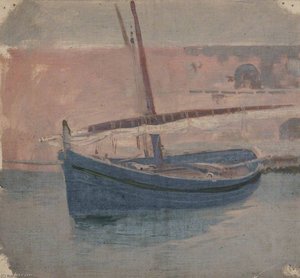
John Fraser, 1838 – 1898

Pinturas de John Fraser: As 60 Obras Mais Famosas, Classificadas

A pintura mais famosa de John Fraser é 'Defender' in the Atlantic (1910), no Torre Abbey Historic House And Gardens, em Torquay. Com Low Tide, Whitstable Harbour, Kent (1885) e Chain Pier, Brighton, East Sussex (1883), completam-se as três obras que todos reconhecem. O nosso catálogo lista 60 obras de John Fraser; as 60 abaixo são as mais admiradas no mundo, cada uma com o seu ano, o museu que a detém e a sua importância.

Classificado de acordo com o nosso índice de popularidade, que combina buscas, visitas e pedidos de cada obra. Atualizado em Outubro 2026. Cada obra-prima nesta página pode ser encomendada como uma reprodução em óleo pintada à mão, com qualidade de museu, ou como uma impressão de fine art, no tamanho de sua escolha.

Retrato de John Fraser
John Fraser · 1838 – 1898
Nascimento · falecimento
1838 – 1898
Movimento
Impressionism
Obras em nosso catálogo
60
Mais famosas
'Defender' in the Atlantic (1910)
Mais obras em
National Maritime Museum

As 10 pinturas mais famosas de John Fraser

'Defender' in the Atlantic (1910) de John Fraser
1

'Defender' in the Atlantic

1910 · Oil On Canvas · Torre Abbey Historic House And Gardens, Torquay

A large sailboat with three sails occupies the center of a vast, blue expanse. The vessel floats amidst the open ocean, isolated from any visible land or human presence. The composition focuses entirely on the boat, which remains the singular point of interest against the surrounding waters. The scene is characterized by a sense of stillness and calm, capturing a moment of quietude on the Atlantic.

John Fraser, pinturas de 11 a 60

Pinturas de John Fraser por período

Os temas que John Fraser mais pintou

Os quatro temas que mais se repetem entre estas obras-primas, com o melhor exemplo de cada um.

Onde ver as pinturas de John Fraser

Os 5 museus que detêm a maioria das pinturas desta página.

Museu Cidade Obras de John Fraser Pinturas desta lista
National Maritime Museum, LondresNational Maritime Museum Londres 24 A Large Sloop Yacht and a Barge, A Zeppelin Raid, 8 October 1915, A Lifeboat, c.1920
Torre Abbey Historic House And Gardens, TorquayTorre Abbey Historic House And Gardens Torquay 1 'Defender' in the Atlantic
Walker Art Gallery, LiverpoolWalker Art Gallery Liverpool 1 On the Moray Firth
McNay Art Museum, San AntonioMcNay Art Museum San Antonio 1 Quadrado Dentro de Quadrado II
Royal College of Music Museum, LondonRoyal College of Music Museum London 1 Costume design for Miss Bentson in Lakme by Delibes

As pinturas mais famosas de John Fraser, ano a ano

John Fraser trabalhou por apenas 5 anos, de 1881 a 1885. Aqui está essa breve carreira, ano a ano, através de suas pinturas mais famosas.

  1. 1881
  2. 1883
  3. 1885
  4. 1885

Dúvidas sobre as pinturas de John Fraser

Qual é a pintura mais famosa de John Fraser?Mostrar a resposta

'Defender' in the Atlantic (1910), Torre Abbey Historic House And Gardens, Torquay. Seguem-se Low Tide, Whitstable Harbour, Kent (1885) e Chain Pier, Brighton, East Sussex (1883).

Quais são as 10 principais pinturas de John Fraser?Mostrar a resposta

'Defender' in the Atlantic, Low Tide, Whitstable Harbour, Kent, Chain Pier, Brighton, East Sussex, Low Tide, Whitstable Harbour, Kent, On the Moray Firth, Hulks off Portsmouth, From the Leas, A Large Sloop Yacht and a Barge, A Large Sloop Yacht and a Barge e A Lifeboat. O ranking acima apresenta o ano e o museu de cada uma.

Quantas pinturas John Fraser fez?Mostrar a resposta

Nosso catálogo lista 60 obras de John Fraser, datadas de 1881 a 1885.

Onde estão as pinturas mais famosas de John Fraser?Mostrar a resposta

A maioria deles está em National Maritime Museum (Londres), Torre Abbey Historic House And Gardens (Torquay) e Walker Art Gallery (Liverpool). A tabela acima lista os museus um a um.

Quando é que John Fraser pintou as suas obras mais famosas?Mostrar a resposta

Em 1885: 2 das 60 obras nesta página datam dessa época, entre elas Low Tide, Whitstable Harbour, Kent.

Quais são as pinturas mais antigas e mais recentes de John Fraser?Mostrar a resposta

A obra mais antiga nesta página é de On the Moray Firth (1881), e a mais recente é de Low Tide, Whitstable Harbour, Kent (1885).

O que John Fraser mais pintou?Mostrar a resposta

Ocean (3), Tranquility (3) e Water (2), entre as 60 obras nesta página.

A qual movimento artístico John Fraser pertence?Mostrar a resposta

Impressionism e Realism, como mostram as pinturas nesta página.

Quais pinturas de John Fraser posso ver no National Maritime Museum?Mostrar a resposta

A Large Sloop Yacht and a Barge, A Zeppelin Raid, 8 October 1915 e A Lifeboat, c.1920 estão entre as 24 obras nesta página pertencentes ao National Maritime Museum, Londres.

Posso comprar uma reprodução de uma pintura de John Fraser?Mostrar a resposta

Sim. Todas as pinturas desta página podem ser encomendadas como uma reprodução em óleo pintada à mão com qualidade de museu ou como uma impressão de fine art, no tamanho de sua escolha, a partir da própria página da pintura.

Sobre John Fraser

A Life Between Light and Paper

John Arthur Fraser began his days in London, England, born on January 9th, 1838. His father, a tailor from Portsoy, Scotland, carried the political weight of the Chartist movement into their home, while his maternal grandparents had settled in Stanstead, Lower Canada, years earlier. By the time Fraser reached his twenties, he moved to Montreal, finding work as a decorative painter. It was here, in 1860, that his path crossed with William Notman. He joined Notman’s firm not merely as an artist, but as a specialist in color printing. His hands worked on the edges of photography, tinting portraits and adding watercolor washes to photographic paper to create depth and life.

This period in Montreal shaped his eye for detail. Working within the art department of a major photographic studio required a disciplined way of seeing. He learned to translate the flat reality of a negative into something with atmosphere. Alongside assistants like Henry Sandham, he helped produce cartes-de-visite and cabinet photographs that carried his subtle touches of color. His work was often about what could be added to a captured moment—a soft sky or a textured landscape behind a seated subject.

The Expansion Westward

As the Canadian Pacific Railway pushed its tracks toward the mountains, Fraser found himself documenting the changing terrain. He took on commissions that placed him in the heart of the wilderness, from Banff to Jasper National Park. These were not mere sketches; they were records of a landscape being opened to the world. His paintings of the Rockies, such as Fishing Camp, the Rockies, captured the heavy presence of mountains like Mt. Carroll. He used a precise brush to note the way light hit a granite face or how shadows pooled in a mountain pass.

His style grew from these observations. While his roots were in the meticulous realism required for photographic tinting, he began to use color with a lightness that suggested the influence of Impressionism. He focused on the clarity of the air and the specific hues of the Canadian woods and waterways. His landscapes often moved between the heavy textures of oil on canvas and the translucent layers of watercolor, always seeking to capture the actual light of the Eastern Townships or the New Hampshire forests.

Institutional Roots and Later Years

Fraser’s presence was felt in the very structures of the Canadian art community. He did not just paint; he helped build the organizations that supported others. His name is tied to several foundational groups:

  • Royal Canadian Academy of Arts: He was a charter member.
  • Society of Canadian Artists: He was also a charter member.
  • Ontario Society of Artists: He served as a founder and held the position of vice-president from 1872 to 1874.

In 1868, he moved to Toronto, eventually opening the firm Notman and Fraser. This business venture combined his entrepreneurial spirit with his technical skill. Even as he moved through cities like Boston and New York, his subjects remained tied to the North American landscape. He died in New York City on January 1st, 1898, leaving behind a body of work that documented the physical and cultural expansion of a young nation through the lens of both the brush and the camera.

Todas as 60 obras de John Fraser →