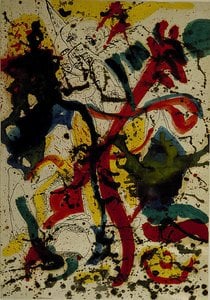
Jackson Pollock, 1912 – 1956

Jackson Pollock: The 100 Most Famous Paintings

Ritmo Outonal Número 30 is the most famous painting by Jackson Pollock. Número 1, 1949 (1950) and Convergência are the next two works the world knows best. From the 186 works of Jackson Pollock in our catalogue, here are the 100 that collectors and museum visitors look at most, with the year, the museum and the story of each.

Ranked by our popularity score, which combines the searches, visits and orders for each work. Updated Outubro 2026. Every masterpiece on this page can be ordered as a museum-quality, hand-painted oil reproduction or a fine art print, at the size you choose.

Portrait of Jackson Pollock
Jackson Pollock · 1912 – 1956
Born · died
1912 – 1956, Cody
Movement
Abstract expressionism
Works in our catalogue
186
Most famous
Ritmo Outonal Número 30
Most works at
MoMA - Museu de Arte Moderna

Top 10: Jackson Pollock's best-known paintings

Ritmo Outonal Número 30 by Jackson Pollock
1

Ritmo Outonal Número 30

Óleo sobre tela

“Autumn Rhythm. Number 30, 1950” ergue-se como uma obra fundamental dentro da contribuição revolucionária de Jackson Pollock para o Expressionismo Abstrato. Esta tela de grandes dimensões não é meramente uma pintura; é uma experiência imersiva – um registro visual de energia, gesto e do envolvimento profundamente pessoal do artista com o próprio processo criativo.

Número 1, 1949 (1950) by Jackson Pollock
2

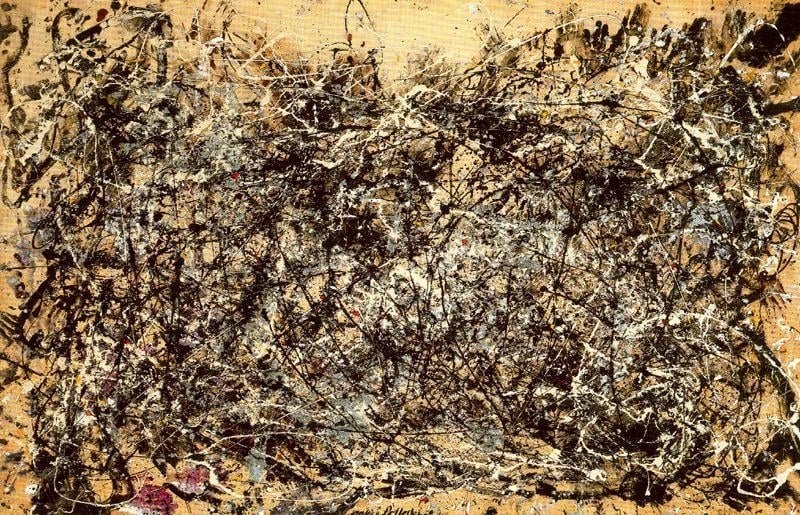
Número 1, 1949

1950 · Óleo sobre tela · Private collection, Nova York

Criada em 1950, esta obra cativante personifica o espírito revolucionário do Expressionismo Abstrato e se destaca como um exemplo primordial da icônica técnica de “gotejamento” de Jackson Pollock. Com dimensões impressionantes – 240 x 120 cm – a tela não atrai apenas pela sua escala, mas também pela pura energia que emana de sua complexa superfície. A obra transcende a mera representação visual; é um portal para o universo interior…

Convergência by Jackson Pollock
3

Convergência

Óleo sobre tela

A obra Convergence, de Jackson Pollock, não é simplesmente uma pintura; é uma experiência visceral — um testemunho monumental do poder da expressão abstrata e uma obra definidora da arte americana do pós-guerra. Criada durante um momento crucial na história da arte, esta peça incorpora a inovação, desafiando noções tradicionais de representação e convidando os espectadores para um mundo dinâmico de cor e energia.

Número 1A by Jackson Pollock
4

Número 1A

Óleo sobre tela

A Essência do Expressionismo Abstrato "Número 1A", de Jackson Pollock, é um exemplo quintessencial do Expressionismo Abstrato, um movimento que redefiniu a arte americana em meados do século XX. Esta peça cativante incorpora a energia bruta e a espontaneidade pelas quais Pollock é renomado, tornando-a uma aquisição indispensável para qualquer coleção de arte contemporânea ou interior moderno. Uma Dança de Caos e Controle A obra apresenta uma composição abstrata caracterizada…

Luz Branca (1954) by Jackson Pollock
5

Luz Branca

1954 · Óleo sobre tela · MoMA - Museu de Arte Moderna, Nova York

“White Light” é mais do que uma pintura; é um portal para a intensidade visceral do expressionismo abstrato. Esta obra cativante convida o espectador a mergulhar em um mundo de movimento espontâneo, cores vibrantes e linhas gestuais que capturam a essência da emoção humana. A composição densa e aparentemente caótica revela a maestria do artista em traduzir estados interiores complexos através de uma explosão cromática, texturas ricas e traços expressivos…

One. Number 31, 1950 by Jackson Pollock
6

One. Number 31, 1950

Painting

In the pantheon of modern art, few works command the room with such raw, unbridled intensity as Paul Jackson Pollock’s “One: Number 31, 1950.” To stand before this canvas is to witness a moment of pure, unfiltered creation captured in time. As a cornerstone of the Abstract Expressionist movement, this painting transcends the boundaries of traditional composition, offering instead a dense, rhythmic web of energy that seems to pulse with…

Number 5 (1948) by Jackson Pollock
7

Number 5

1948 · Óleo sobre tela

A Universe Unfurled: Decoding Jackson Pollock’s No. 5, 1948 Jackson Pollock’s *No. 5, 1948* isn't simply a painting; it is an event frozen in time – a visual record of energy, gesture, and the very act of creation. This monumental work stands as perhaps the most iconic example of Abstract Expressionism, captivating viewers for decades with its complex layering and seemingly chaotic beauty. It’s a piece that demands attention, sparking…

Mural (1943) by Jackson Pollock
8

Mural

1943 · Acrylic On Canvas

Jackson Pollock's "Mural," completed in 1943, isn't merely a painting; it’s an immersive experience, a visceral embodiment of the burgeoning abstract expressionist movement. Commissioned by Peggy Guggenheim as a centerpiece for her Manhattan townhouse, this monumental work – measuring a commanding 247 x 605 cm – immediately announces Pollock’s arrival as a revolutionary force in the art world. The sheer scale invites contemplation, drawing the viewer into a swirling vortex…

Number 5 (1948) by Jackson Pollock
9

Number 5

1948 · Oil On Canvas

Jackson Pollock’s *No. 5*, created in 1948, stands as an emblem of Abstract Expressionism—a movement that irrevocably altered the landscape of modern art. More than just a painting; it's a visceral embodiment of emotion, intellect, and revolutionary technique, captivating viewers with its mesmerizing complexity and enduring legacy. This monumental canvas, measuring eight by four feet on fiberboard, transcends mere visual representation, inviting contemplation about the very nature of artistic expression…

Alchemy (1947) by Jackson Pollock
10

Alchemy

1947 · Acrylic On Canvas

A Dance of Chaos and Transformation: Exploring Jackson Pollock’s Alchemy The Genesis of Spontaneity Decoding the Drip Technique Historical Resonance and Symbolic Weight A Legacy of Innovation Jackson Pollock’s *Alchemy*, a monumental work from 1947, isn't merely a painting; it’s an immersive experience, a visceral embodiment of the burgeoning Abstract Expressionist movement. Created during a pivotal moment in American art history, this piece captures the raw energy and revolutionary spirit…

The rest of the Jackson Pollock ranking, 11 to 100

Number 6 (1949) by Jackson Pollock
#12

Number 6

1949

Number 6 stands as a pivotal work within Jackson Pollock's oeuvre and the broader movement of Abstract Expressionism. Emerging in post-World War II America, this style rejected traditional…

Commission a hand-painted copy →
Number 23, 1951 by Jackson Pollock
#13

Number 23, 1951

Chrysler Museum of Art

Paul Jackson Pollock's "Number 23, 1951" isn’t merely a painting; it’s an immersion. Created during a pivotal period of his artistic evolution – the “black pourings” – this…

Bring it home →
Number 1 (1948) by Jackson Pollock
#14

Number 1

1948 · MoMA - Museu de Arte Moderna

Jackson Pollock's "Number 1, 1948," housed within the hallowed halls of the Museum of Modern Art in New York, isn’t merely a painting; it’s an immersion. It’s a…

Bring it home →
There Were Seven in Eight (1945) by Jackson Pollock
#15

There Were Seven in Eight

1945 · MoMA - Museu de Arte Moderna

A Descent Into Chaotic Beauty The canvas of Jackson Pollock’s 1945 masterpiece, "There Were Seven in Eight," serves as a visceral gateway into the turbulent heart of Abstract…

Bring it home →
Saint by Jackson Pollock
#16

Saint

Jackson Pollock is widely regarded as one of the most influential artists of the 20th century, and his painting Saint is a quintessential example of his unique style.…

Order a reproduction →
The She Wolf (1943) by Jackson Pollock
#17

The She Wolf

1943

Jackson Pollock's “The She Wolf,” completed in 1943, is more than just an abstract canvas; it’s a visceral plunge into the heart of early Abstract Expressionism and a…

Bring it home →
Composition with Pouring II (1943) by Jackson Pollock
#18

Composition with Pouring II

1943

Created in 1943, "Composition with Pouring II" stands as a pivotal work in Jackson Pollock's career and the broader development of Abstract Expressionism. While often considered an early…

Bring it home →
Blue poles (Number 11) (1952) by Jackson Pollock
#19

Blue poles (Number 11)

1952

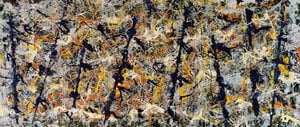
Jackson Pollock’s “Blue Poles (Number 11),” completed in 1952, isn’t merely a painting; it’s an explosion of controlled chaos, a visceral embodiment of the abstract expressionist movement. Measuring…

Commission a hand-painted copy →
Yellow Islands by Jackson Pollock
#21

Yellow Islands

A Symphony of Chaos: Exploring Jackson Pollock’s ‘Yellow Islands’ Jackson Pollock's ‘Yellow Islands’, painted in 1952, stands as a pivotal work within the Abstract Expressionist movement – a…

Bring it home →
The Flame (1938) by Jackson Pollock
#23

The Flame

1938

The painting The Flame consists of oil on fiberboard, measuring 51 x 76 cm. The surface features a central motif of an incandescent blaze that moves through an…

Commission a hand-painted copy →
Portrait and a Dream by Jackson Pollock
#24

Portrait and a Dream

Jackson Pollock’s Portrait and a Dream (1953) isn’t merely a painting; it’s an immersion into the very heart of Abstract Expressionism, a visceral embodiment of the artist’s process…

Order a reproduction →
Number 3 (1948) by Jackson Pollock
#25

Number 3

1948

Jackson Pollock: A Revolutionary in Abstract Expressionism Jackson Pollock (1912-1956) stands as a monumental figure within the abstract expressionist movement, forever altering the trajectory of modern art. His…

Commission a hand-painted copy →
Ocean Greyness by Jackson Pollock
#26

Ocean Greyness

Ocean Greyness is an oil painting created by Jackson Pollock in 1953. This work measures 229 x 146.7 cm and is currently held in the Solomon R. Guggenheim…

Bring it home →
Lucifer (1947) by Jackson Pollock
#28

Lucifer

1947

Jackson Pollock’s “Lucifer,” painted in 1947, isn’t merely a painting; it’s an immersion. Measuring a substantial 268 x 104 cm, this work embodies the raw energy and profound…

Commission a hand-painted copy →
Woman by Jackson Pollock
#29

Woman

Jackson Pollock's “Woman,” completed in 1945 and currently residing within the hallowed halls of the Museum of Modern Art in New York City, isn’t merely a painting; it’s…

Commission a hand-painted copy →
Untitled (Naked Man) by Jackson Pollock
#30

Untitled (Naked Man)

A Figure Forged in Turmoil: Exploring Pollock’s ‘Untitled (Naked Man)’ This powerful painting by Jackson Pollock plunges the viewer into a vortex of emotion and raw energy. Depicting…

Order a reproduction →
Lavender Mist_Number 1 by Jackson Pollock
#31

Lavender Mist_Number 1

Jackson Pollock’s “Lavender Mist_Number 1” isn't merely a painting; it’s an immersion, a visceral experience captured on canvas. This seminal work from the late 1940s embodies the revolutionary…

Order a reproduction →
Birth by Jackson Pollock
#32

Birth

A Tempestuous Birth: Decoding Pollock’s Abstract Vision Jackson Pollock's *Birth* (1948-51) is a pivotal work within his mature “drip” period and a cornerstone of Abstract Expressionism. More than…

Bring it home →
Blue (Moby Dick) by Jackson Pollock
#33

Blue (Moby Dick)

Jackson Pollock's “Blue (Moby Dick),” painted in 1943, isn’t merely a canvas splashed with color; it’s an immersive experience, a visual embodiment of the anxieties and primal forces…

Bring it home →
The key (1946) by Jackson Pollock
#34

The key

1946 · Art Institute of Chicago

A Dance Across Canvas: Exploring Jackson Pollock’s ‘The Key’ Subject Matter & Composition The artwork depicts a group of individuals engaged in various postures—seated on chairs, standing upright,…

Commission a hand-painted copy →
Untitled II by Jackson Pollock
#35

Untitled II

To stand before an Untitled II by Paul Jackson Pollock is not merely to observe paint on canvas; it is to witness an event. It is a raw,…

Order a reproduction →
Cathedral by Jackson Pollock
#36

Cathedral

Introduction to Jackson Pollock and Abstract Expressionism Paul Jackson Pollock, known professionally as Jackson Pollock, was an American painter and a major figure in the abstract expressionist movement.…

Bring it home →
Number 27, 1950 by Jackson Pollock
#38

Number 27, 1950

Jackson Pollock’s ‘Number 27, 1950’: A Symphony of Controlled Chaos Number 27, 1950 is a landmark achievement in the history of Abstract Expressionism, embodying the movement's radical departure…

Commission a hand-painted copy →
Circumcision January (1946) by Jackson Pollock
#40

Circumcision January

1946

Jackson Pollock, a titan of 20th-century art, remains synonymous with abstract expressionism. His painting, Circumcision January, exemplifies his groundbreaking approach and continues to captivate viewers with its dynamic…

Bring it home →
Sheet of Studies (1941) by Jackson Pollock
#41

Sheet of Studies

1941

A Window into Pollock’s Subconscious: “Sheet of Studies” (1941) This intensely energetic work on paper, created in 1941, offers a fascinating glimpse into the formative period of Jackson…

Bring it home →
Number 12, 1949 by Jackson Pollock
#42

Number 12, 1949

A Universe Within: Decoding Jackson Pollock’s “Number 12, 1949” Jackson Pollock's "Number 12, 1949" isn't simply a painting; it’s an event frozen in time – a visual record…

Order a reproduction →
War by Jackson Pollock
#43

War

War: A Descent into Chaos – Jackson Pollock’s Post-Traumatic Masterpiece Jackson Pollock's *War*, painted in 1947, isn’t merely a canvas splashed with color; it’s a visceral embodiment of…

Bring it home →
Marrón y plata by Jackson Pollock
#44

Marrón y plata

A Symphony of Shadow and Silver: Exploring Jackson Pollock’s “Marrón y plata” Jackson Pollock's "Marrón y plata" ("Brown and Silver") stands as a pivotal work within his celebrated…

Bring it home →
Number 10 (1949) by Jackson Pollock
#46

Number 10

1949

A Tempestuous Vision: Exploring Jackson Pollock’s ‘Number 10’ Number 10, created in 1949, stands as a monumental example of Jackson Pollock's revolutionary drip painting technique and the apex…

Commission a hand-painted copy →
Untitled 28 by Jackson Pollock
#47

Untitled 28

A Visceral Encounter: Decoding Jackson Pollock’s “Untitled 28” This intensely compelling work by Jackson Pollock, known simply as “Untitled 28,” offers a raw and unsettling glimpse into the…

Order a reproduction →
Number 25 (1950) by Jackson Pollock
#48

Number 25

1950

To stand before Number 25 is to confront pure, unmediated action. This canvas does not merely depict an image; it records an event—a moment of intense physical and…

Untitled (1939) by Jackson Pollock
#49

Untitled

1939 · Art Institute of Chicago

The canvas known as Untitled emerges from 1939, a moment when Jackson Pollock begins to navigate the turbulent currents of his own creative impulses. This abstract expressionist work…

Commission a hand-painted copy →
Untitled 6 by Jackson Pollock
#50

Untitled 6

A Tempest of Emotion: Exploring Jackson Pollock’s Untitled 6 This captivating work by Jackson Pollock plunges viewers into a dynamic world of abstract expressionism. *Untitled 6* is not…

Order a reproduction →
Full Fathom Five by Jackson Pollock
#51

Full Fathom Five

In the annals of American art history, few works capture the raw, unbridled energy of a movement quite like Paul Jackson Pollock’s Full Fathom Five. Painted in 1947,…

Bring it home →
Figures in a Landscape (1937) by Jackson Pollock
#52

Figures in a Landscape

1937

To encounter Jackson Pollock’s "Figures in a Landscape" is to step into a realm where the boundaries between reality and the subconscious begin to dissolve. Created in 1937,…

Bring it home →
Cut out by Jackson Pollock
#54

Cut out

Jackson Pollock, born on January 28, 1912, was an American painter who played a significant role in the abstract expressionist movement. He is renowned for his unique style…

Commission a hand-painted copy →
Masked Image by Jackson Pollock
#55

Masked Image

The canvas breathes with a restless energy, presenting a singular, stylized visage that seems to emerge from a thicket of overlapping shapes. This is not a portrait in…

Order a reproduction →
Untitled by Jackson Pollock
#56

Untitled

A Glimpse into Pollock’s Preparatory Process: An Early Study in Motion This captivating work on paper offers a rare look into Jackson Pollock's artistic development *before* his iconic…

Order a reproduction →
Portrait of H.M by Jackson Pollock
#57

Portrait of H.M

Paul Jackson Pollock's “Portrait of H.M.”, a work shrouded in mystery and brimming with raw energy, isn’t merely a painting; it’s an immersive experience. Created during a turbulent…

Commission a hand-painted copy →
Summertime: Number 9A (1948) by Jackson Pollock
#58

Summertime: Number 9A

1948 · Tate Modern

Jackson Pollock’s “Summertime: Number 9A,” painted in 1948, isn't merely a canvas splashed with color; it’s an immersive experience, a visceral representation of the artist’s state of mind…

Order a reproduction →
Untitled (1941) by Jackson Pollock
#59

Untitled

1941

A Moment Suspended: Exploring Jackson Pollock’s 1941 Untitled Work This striking work by Jackson Pollock, created in 1941, offers a fascinating glimpse into the artist's formative years –…

Order a reproduction →
Untitled (Silkscreen I) by Jackson Pollock
#60

Untitled (Silkscreen I)

In the realm of Abstract Expressionism, few works capture the raw, unbridled tension of human struggle as poignantly as Paul Jackson Pollock’s “Untitled (Silkscreen I).” This striking black…

Bring it home →
Grayed Rainbow by Jackson Pollock
#61

Grayed Rainbow

Art Institute of Chicago

Jackson Pollock was a revolutionary figure in the abstract expressionist movement, reshaping artistic perception and challenging conventional notions of painting. His groundbreaking drip technique—characterized by pouring and splattering…

Commission a hand-painted copy →
The Water Bull (1946) by Jackson Pollock
#62

The Water Bull

1946 · Stedelijk Museum

Subject and Composition This captivating abstract masterpiece immerses viewers in a whirlwind of vibrant colors and dynamic forms. While its subject remains open to interpretation, the energetic interplay…

Bring it home →
Totem Lesson 2 (1945) by Jackson Pollock
#63

Totem Lesson 2

1945

Totem Lesson 2: An Exploration of Abstract Expressionism’s Chaotic Harmony Paul Jackson Pollock's "Totem Lesson 2," painted in 1945, stands as a cornerstone of Abstract Expressionism—a movement that…

Bring it home →
Figure by Jackson Pollock
#64

Figure

Jackson Pollock, a name synonymous with Abstract Expressionism and the revolutionary ‘drip’ technique, also harbored a period of intensely focused figuration that often goes unacknowledged. The work simply…

Bring it home →
Untitled 9 by Jackson Pollock
#65

Untitled 9

A Tempest of Emotion: Decoding Jackson Pollock’s “Untitled 9” This intensely evocative work by Jackson Pollock, designated “Untitled 9,” plunges the viewer into a swirling vortex of color…

Commission a hand-painted copy →
Stenographic Figure (1942) by Jackson Pollock
#66

Stenographic Figure

1942

Jackson Pollock's 'Stenographic Figure,' painted in 1942, isn’t merely a depiction of a horse and rider; it’s a visceral embodiment of the anxieties and burgeoning freedom defining Abstract…

Order a reproduction →
Number 3 (1949) by Jackson Pollock
#67

Number 3

1949

A Revolution in Paint: Exploring Jackson Pollock’s ‘Number 3’ Jackson Pollock's 'Number 3', created in 1949, stands as a monumental achievement within the Abstract Expressionist movement. Measuring 157…

Bring it home →
Untitled 8 by Jackson Pollock
#68

Untitled 8

The air feels heavy with the restless energy of Jackson Pollock as he confronts the vastness of "Untitled 8." This monumental painting emerges from a period of profound…

Order a reproduction →
Number 8 by Jackson Pollock
#69

Number 8

Jackson Pollock's "Number 8," created in 1949, stands as a pivotal work within the Abstract Expressionist movement. This piece exemplifies Pollock’s revolutionary “drip technique,” where paint was poured…

Bring it home →
Head by Jackson Pollock
#70

Head

A Visceral Exploration of the Human Condition Jackson Pollock’s *Head*, a work shrouded in some mystery due to its lack of definitive dating and detailed documentation, presents a…

Commission a hand-painted copy →
Circle (1941) by Jackson Pollock
#72

Circle

1941

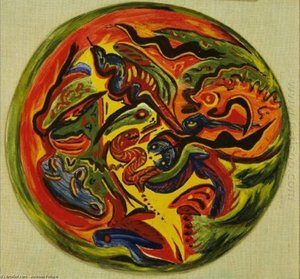
Jackson Pollock’s Circle: A Dance of Color and Chaos Jackson Pollock's “Circle,” painted in 1941, isn’t merely a depiction of a circle; it’s an embodiment of the burgeoning…

Order a reproduction →
Untitled 23 by Jackson Pollock
#73

Untitled 23

A Chaotic Symphony in Black and White: Deconstructing Pollock’s “Untitled 23” Jackson Pollock's "Untitled 23" isn’t merely an ink drawing; it’s a visceral exploration of energy, anxiety, and…

Commission a hand-painted copy →
Easter and the Totem (1953) by Jackson Pollock
#74

Easter and the Totem

1953

Unveiling Jackson Pollock’s “Easter and the Totem” A Masterpiece of Abstract Expressionism: Jackson Pollock's 1953 painting, Easter and the Totem, stands as a pivotal work within the Abstract…

Bring it home →
Untitled (Composition with Pouring I) by Jackson Pollock
#75

Untitled (Composition with Pouring I)

A Revolution in Paint: Exploring Jackson Pollock’s “Untitled (Composition with Pouring I)” This captivating work embodies the raw energy and groundbreaking innovation that defined Jackson Pollock's contribution to…

Bring it home →
Untitled 13 by Jackson Pollock
#76

Untitled 13

In the pantheon of twentieth-century art, few names command as much visceral respect and intrigue as Jackson Pollock. His work Untitled 13 serves as a profound testament to…

Order a reproduction →
Male and Female (1942) by Jackson Pollock
#78

Male and Female

1942

Jackson Pollock: A Pioneer of Abstract Expressionism Jackson Pollock (1912–1956) stands as one of the most transformative figures in 20th-century art, irrevocably altering perceptions of painting and establishing…

Commission a hand-painted copy →
Miners by Jackson Pollock
#79

Miners

Paul Jackson Pollock: A Pioneer of Abstract Expressionism Paul Jackson Pollock (1912-1956) stands as one of the most influential figures in 20th-century art, irrevocably shaping the trajectory of…

Bring it home →
GREETINGS by Jackson Pollock
#80

GREETINGS

Paul Jackson Pollock's “Greetings” stands as a testament to the radical spirit of Abstract Expressionism, encapsulating the movement’s core tenets within a deceptively simple composition. This artwork, created…

Bring it home →
Troubled Queen by Jackson Pollock
#81

Troubled Queen

A Realm of Inner Turmoil: Exploring Jackson Pollock’s Abstract Vision This captivating work by Jackson Pollock invites viewers into a dynamic world of color and form, embodying the…

Commission a hand-painted copy →
Number 23 (1948) by Jackson Pollock
#82

Number 23

1948

Jackson Pollock’s “Number 23,” completed in 1948, stands as an undeniable cornerstone of Abstract Expressionism—a movement that fundamentally challenged artistic conventions and prioritized emotional expression over representational accuracy.…

Bring it home →
Untitled (Silkcreen no. VI) by Jackson Pollock
#83

Untitled (Silkcreen no. VI)

A Dance of Chaos and Connection: Exploring Jackson Pollock’s “Untitled (Silkcreen no. VI)” Paul Jackson Pollock's "Untitled (Silkcreen no. VI)" stands as an emblem of Abstract Expressionism, a…

Order a reproduction →
Untitled 27 by Jackson Pollock
#84

Untitled 27

Jackson Pollock's “Untitled 27,” a monumental drip painting from 1950, stands as an emblem of Abstract Expressionism—a movement that irrevocably altered the course of twentieth-century art. More than…

Order a reproduction →
Silver and Black I by Jackson Pollock
#85

Silver and Black I

A Symphony of Chaos: Exploring Jackson Pollock’s “Silver and Black I” “Silver and Black I” is a powerful example of Jackson Pollock's revolutionary contribution to Abstract Expressionism, created…

Commission a hand-painted copy →
Untitled 4 by Jackson Pollock
#86

Untitled 4

In the realm of Abstract Expressionism, few works capture the raw, unbridled energy of the human psyche quite like Paul Jackson Pollock’s Untitled 4. This mesmerizing monochrome composition…

Bring it home →
Shimmering Substance (1946) by Jackson Pollock
#87

Shimmering Substance

1946

Shimmering Substance: A Dance of Chaos and Control Jackson Pollock’s “Shimmering Substance,” completed in 1946, stands as a cornerstone of Abstract Expressionism—a movement that irrevocably altered the landscape…

Order a reproduction →
Composition by Jackson Pollock
#88

Composition

Jackson Pollock executed the painting titled Composition in 1949. This work emerged during a period when the artist was developing a specific approach to the canvas, moving away…

Order a reproduction →
Gothic by Jackson Pollock
#89

Gothic

The canvas known as Gothic emerges from the creative mind of Paul Jackson Pollock. Created in 1944, this work exists within the permanent collection of The Museum of…

Order a reproduction →
Untitled (Cut-out) by Jackson Pollock
#91

Untitled (Cut-out)

In the pantheon of Abstract Expressionism, few works capture the raw, visceral energy of the mid-century avant-garde quite like Paul Jackson Pollock’s "Untitled (Cut-out)." Created in 1954, a…

Bring it home →
Going West (1935) by Jackson Pollock
#92

Going West

1935

Jackson Pollock's "Going West," painted in 1935, isn’t merely a depiction of a winter landscape; it’s a deeply personal narrative woven into the fabric of American pioneering spirit.…

Order a reproduction →
Number 2 (1951) by Jackson Pollock
#93

Number 2

1951

A Symphony of Chaos and Color: Decoding Jackson Pollock’s “Number 2” Jackson Pollock's "Number 2," completed in 1951, stands as a cornerstone of Abstract Expressionism—a movement that irrevocably…

Commission a hand-painted copy →
Number 3, 1950 by Jackson Pollock
#94

Number 3, 1950

A Universe of Color: Exploring Jackson Pollock’s Number 3, 1950 Jackson Pollock's *Number 3, 1950* is arguably one of the most iconic and significant works of Abstract Expressionism.…

Bring it home →
Untitled 1 by Jackson Pollock
#95

Untitled 1

Paul Jackson Pollock (1912-1956), a titan of Abstract Expressionism, remains one of the most enigmatic figures in twentieth-century art. His monumental canvases—like “Untitled 1”—are not merely splashes of…

Commission a hand-painted copy →
Echo by Jackson Pollock
#96

Echo

Jackson Pollock’s “Echo,” Number 25, 1951, stands as a testament to the fervor of Abstract Expressionism—a movement that sought to liberate art from representational constraints and delve into…

Order a reproduction →
Composition with Woman by Jackson Pollock
#97

Composition with Woman

A Vortex of Emotion: Decoding Jackson Pollock’s Abstract Expressionism This captivating painting embodies the raw energy and emotional intensity that define Jackson Pollock's revolutionary contribution to 20th-century art.…

Commission a hand-painted copy →
Untitled (1941) by Jackson Pollock
#98

Untitled

1941

Jackson Pollock's "Untitled," painted in 1941, stands as a cornerstone of Abstract Expressionism—a movement that fundamentally challenged artistic conventions and prioritized spontaneous gesture over meticulous representation. This monumental…

Order a reproduction →
Cabeça Laranja by Jackson Pollock
#99

Cabeça Laranja

Jackson Pollock, um nome que ressoa com a força da abstração e a liberdade da expressão, nos presenteia com “Orange Head” – uma obra-prima que transcende a mera…

Bring it home →
Untitled (13) (1943) by Jackson Pollock
#100

Untitled (13)

1943

Jackson Pollock: A Pioneer of Abstract Expressionism Jackson Pollock (1912-1956) stands as one of the most influential figures in 20th-century art, irrevocably altering the landscape of painting and…

Bring it home →

Jackson Pollock's paintings by period

Drip Period

1948 · 3 works in this list

The subjects Jackson Pollock painted most

The four subjects that return most often among these masterpieces, with the finest example of each.

Where to see Jackson Pollock's paintings

The 6 museums that hold the most of the paintings on this page.

Museum City Works by Jackson Pollock Paintings from this list
MoMA - Museu de Arte Moderna, Nova YorkMoMA - Museu de Arte Moderna Nova York 4 Luz Branca, Number 1, There Were Seven in Eight
Art Institute of Chicago, ChicagoArt Institute of Chicago Chicago 3 The key, Untitled, Grayed Rainbow
Private collection, Nova YorkPrivate collection Nova York 1 Número 1, 1949
Chrysler Museum of Art, NorfolkChrysler Museum of Art Norfolk 1 Number 23, 1951
Tate Modern, LondresTate Modern Londres 1 Summertime: Number 9A
Stedelijk Museum, AmsterdãStedelijk Museum Amsterdã 1 The Water Bull

Jackson Pollock through the decades: one masterpiece for each

  1. 1930s
    The Flame (1938) by Jackson Pollock
    No. 23 of 100

    The Flame

    Age 18 – 27

    The painting The Flame consists of oil on fiberboard, measuring 51 x 76 cm. The surface features a central motif of an incandescent blaze that moves through an…

  2. 1940s
    Number 5 (1948) by Jackson Pollock
    No. 7 of 100

    Number 5

    Age 28 – 37

    A Universe Unfurled: Decoding Jackson Pollock’s No. 5, 1948 Jackson Pollock’s *No. 5, 1948* isn't simply a painting; it is an event frozen in time – a visual…

  3. 1950s
    Número 1, 1949 (1950) by Jackson Pollock
    No. 2 of 100

    Número 1, 1949

    Age 38 – 44 · Private collection

    Criada em 1950, esta obra cativante personifica o espírito revolucionário do Expressionismo Abstrato e se destaca como um exemplo primordial da icônica técnica de “gotejamento” de Jackson Pollock.…

Jackson Pollock's paintings: frequently asked questions

What is the most famous Jackson Pollock painting?Show the answer

Ritmo Outonal Número 30. Next come Número 1, 1949 (1950) and Convergência.

Which are the 10 most famous Jackson Pollock paintings?Show the answer

Ritmo Outonal Número 30, Número 1, 1949, Convergência, Número 1A, Luz Branca, One. Number 31, 1950, Number 5, Mural, Number 5 and Alchemy. The ranking above gives the year and the museum of each.

How many paintings by Jackson Pollock are there?Show the answer

Our catalogue lists 186 works by Jackson Pollock, dated from 1935 to 1954.

Where can I see the most famous Jackson Pollock paintings?Show the answer

Most of them are in MoMA - Museu de Arte Moderna (Nova York), Art Institute of Chicago (Chicago) and Private collection (Nova York). The table above lists the museums one by one.

In which period did Jackson Pollock paint the best-known works?Show the answer

In 1940s: 29 of the 100 works on this page date from then, among them Number 5.

What is the earliest famous Jackson Pollock painting, and the latest?Show the answer

The earliest on this page is Going West (1935), the latest Luz Branca (1954).

What subjects did Jackson Pollock paint?Show the answer

Drip painting (40), Color field (30) and Chaos (27), among the 100 works on this page.

What did Jackson Pollock paint on, and with what?Show the answer

Acrylic On Canvas: 36 of the 100 works on this page.

Which movement does Jackson Pollock's art belong to?Show the answer

Abstract expressionism, as the paintings on this page show.

What Jackson Pollock paintings does the MoMA - Museu de Arte Moderna hold?Show the answer

Luz Branca, Number 1 and There Were Seven in Eight are among the 3 works on this page held by the MoMA - Museu de Arte Moderna, Nova York.

Where can I buy a Jackson Pollock reproduction?Show the answer

Yes. Every painting on this page can be ordered as a museum-quality, hand-painted oil reproduction or a fine art print, in the size you choose, from the painting's own page.

Jackson Pollock: biography

Primeiros Anos, Família e Formação

A história de Paul Jackson Pollock começa nas paisagens áridas de Cody, Wyoming, onde nasceu em 28 de janeiro de 1912. Ele era o mais jovem de cinco irmãos, filho de Stella May McClure e LeRoy Pollock. Seu pai trabalhava como agrimensor, uma profissão que exigia movimento constante através do vasto Oeste americano. Essa existência nômade fez com que os primeiros anos do jovem fossem definidos por mudanças frequentes, uma inquietude que parecia espelhar os horizontes mutáveis do trabalho de seu pai. Essas viagens precoces pelo Oeste proporcionaram-lhe um encontro direto e imediato com o mundo natural e com a ressonância espiritual da arte nativa americana, impressões que se assentariam silenciosamente em seu subconsciente muito antes de ele jamais segurar um pincel.

Conforme crescia, a busca por um senso de pertencimento o conduziu em direção à energia urbana da costa. Ele se matriculou na Manual Arts High School, em Los Angeles, buscando uma estrutura formal para seus impulsos emergentes. No entanto, a verdadeira moldagem de seu traço ocorreu muito mais tarde, quando se mudou para a cidade de Nova York. Foi lá, na Art Students League, que ele iniciou um longo e transformador período de estudos. De 1929 a 1942, ele trabalhou sob a orientação de Thomas Hart Benton. Enquanto Benton enfatizava composições rítmicas e o peso narrativo da vida americana, o jovem estudante já começava a derivar em direção às suas próprias verdades internas, muito mais abstratas.

O Desenvolvimento de uma Técnica Única

Por volta de 1947, uma mudança profunda havia se instalado na maneira como ele abordava a tela. Ele se afastou do cavalete tradicional, optando por estender suas telas diretamente no chão. Essa mudança permitiu que ele se posicionasse sobre sua obra, tornando-se parte integrante do próprio ato criativo. Ele não apenas aplicava a tinta; ele a gotejava, espalhava e lançava de cima, deixando o líquido cair em padrões imprevisíveis. Esse método transformou o ato de pintar em uma performance física, onde a gravidade e o gesto ditavam a forma final.

Suas ferramentas eram tão não convencionais quanto seus métodos. Ele recorria a gravetos, facas e até seringas para manipular o meio fluido. Por vezes, utilizava desempenadeiras ou tinta líquida para alcançar texturas específicas. Frequentemente, ele riscava a superfície ou utilizava objetos estranhos para construir uma camada espessa de tinta, conferindo uma qualidade tátil e escultural à obra. Esse processo dizia menos respeito ao trabalho controlado do pincel e mais a uma liberação rítmica, quase primordial, de energia sobre a superfície.

Obras-Chave e Expressões Artísticas

Ao afastar-se das restrições do cavalete, suas telas passaram a refletir um envolvimento mais visceral com o meio pictórico. Em 1943, ele produziu Mural, uma obra monumental que mede cerca de 2,4 por 6,1 metros, demonstrando sua capacidade de dominar uma superfície vasta. Durante este período, suas explorações pelo subconsciente e pelo próprio ato de pintar deram origem a obras como Eyes in the Heat, criada por volta de 1946. Estas peças não eram meramente imagens, mas registros de uma presença física, onde o movimento de todo o seu corpo ditava o posicionamento de cada respingo e mancha de cor.

Os anos que se seguiram viram o aperfeiçoamento de suas composições rítmicas e "all-over", que viriam a definir sua reputação. Ele buscava criar uma sensação de espaço infinito, onde nenhum ponto isolado exercesse dominância sobre os demais. Essa abordagem é evidente em Number 1, 1949, uma obra que captura um transbordamento bruto de energia, e em Lavender Mist, Number 1, 1950, que permanece como uma peça fundamental de sua produção. Nestas obras, o jogo entre o controle e o acaso cria um equilíbrio delicado, como se a tinta fosse libertada, em vez de simplesmente aplicada.

Seus experimentos tardios continuaram a desafiar os limites de como a tinta poderia ser manipulada sobre uma superfície horizontal. Ele frequentemente utilizava gravetos, facas ou até as próprias latas para lançar o pigmento, resultando em redes complexas de linhas. Este método é claramente visível em Blue Poles, Number 11, 1952 e na enérgica Convergence. Através destas obras, Jackson Pollock alcançou um estado em que a pintura parecia possuir vida própria, emergindo de uma imersão profunda em sua própria imaginação.

Patronos, Ateliê e Encomendas

O percurso de sua carreira foi moldado tanto pela necessidade pública quanto pela generosidade de alguns apoiadores vitais. Entre 1938 e 1942, ele encontrou um trabalho constante como pintor para o WPA Federal Art Project, um período que proporcionou o ritmo necessário ao desenvolvimento de sua prática. Essa estabilidade deu lugar a uma aliança mais pessoal e transformadora quando Peggy Guggenheim lhe ofereceu um contrato de galeria em julho de 1943. O apoio dela revelou-se mais do que profissional; em 1945, ela forneceu um adiantamento de 2.000 dólares para ajudá-lo a garantir uma casa, um gesto que entrelaçou profundamente sua vida pessoal com sua sobrevivência artística.

Sua vida criativa acabou encontrando seu centro em East Hampton, Nova York. Lá, na Pollock-Krasner House and Studio, ele viveu e trabalhou ao lado de sua esposa, Lee Krasner. O ateliê era um lugar de intenso movimento físico, onde as fronteiras entre o artista e a tela se dissolviam. Ele frequentemente se afastava do cavalete tradicional, preferindo estender suas telas diretamente no chão para interagir com a tinta por todos os lados. Este espaço de trabalho não era meramente uma sala de produção, mas um local de energia profunda e inquieta, onde seus experimentos mais radicais ganharam vida.

Anos Finais e Morte

A vida pessoal do artista estava profundamente entrelaçada com as suas lutas criativas. Em 1945, casou-se com a artista Lee Krasner, uma união que representou uma presença significativa em sua vida durante os seus anos mais transformadores. No entanto, sob a superfície de sua ascensão profissional, uma sombra persistente permanecia. Ele lutou contra o vício do álcool durante toda a sua vida, uma batalha que frequentemente complicava sua existência e sua capacidade de navegar pelas pressões de sua crescente fama.

Essa turbulência interna e externa encontrou um fim trágico em East Hampton, Nova York, EUA. Em 11 de agosto de 1956, aos 44 anos, sua vida foi interrompida em um acidente súbito e violento. Enquanto dirigia, ele se envolveu em uma colisão de um único veículo causada pelo álcool. O acidente revelou-se fatal, deixando para trás um legado que era tão tumultuado quanto a tinta que ele lançava sobre suas telas.

Legado e Influência na Arte Moderna

As ondas de choque de seus métodos radicais ecoaram muito além das paredes do estúdio em East Hampton. Ao romper o vínculo tradicional entre o pincel e o cavalete, Jackson Pollock tornou-se uma figura central no movimento Expressionista Abstrato, uma mudança que alterou fundamentalmente a trajetória da criatividade americana. Sua presença ajudou a consolidar a posição de Nova York como um centro global para a arte moderna, deslocando o coração da vanguarda do domínio europeu. Ele foi um dos primeiros pintores americanos a ser reconhecido como um igual aos grandes mestres europeus do século XX, provando que uma linguagem nova e visceral poderia emergir do solo dos Estados Unidos.

Sua influência atuou como um catalisador para muitos movimentos artísticos subsequentes que o seguiram. A maneira como ele se envolvia com a tela — tratando-a como uma arena para a ação física, em vez de uma mera superfície para representação — abriu portas para muitos que buscavam expressar o subconsciente através do gesto. Essa ênfase no próprio processo de criação deixou uma marca permanente na história da arte moderna, garantindo que o espontâneo e o não planejado ocupassem para sempre um lugar no repertório do artista.

Onde Ver as Obras Hoje

Para testemunhar os rastros físicos de seu movimento, é necessário viajar até as grandes instituições que preservaram sua energia radical. Em Nova York, o Museum of Modern Art abriga diversas de suas telas, permitindo que os espectadores se posicionem diante das composições vastas e descentralizadas que definiram sua era. A National Gallery of Art, em Washington D.C., também mantém suas obras, oferecendo um espaço para observar as intrincadas redes de cor que ele alcançou através de seus métodos únicos. Do outro lado do Atlântico, a Tate Gallery, em Londres, mantém sua presença viva em suas coleções, garantindo que sua influência alcance muito além das costas americanas.

Para aqueles que buscam uma conexão mais íntima com seu processo, a Pollock-Krasner House and Studio, em East Hampton, oferece um profundo sentido de lugar. Este local, um Monumento Histórico Nacional, foi o espaço onde ele e sua esposa, Lee Krasner, viveram e trabalharam. A propriedade permanece como um elo vital com sua vida, preservando o ambiente que nutriu sua transição das formas tradicionais para os métodos espontâneos sobre o chão, que mudaram o curso da pintura moderna. Caminhar por esses espaços proporciona uma percepção da escala e da realidade física de sua luta criativa.

  • Number 1, 1949
  • Blue Poles: Number 11, 1952
  • Mural (1943)
  • Convergence

All 186 works by Jackson Pollock →