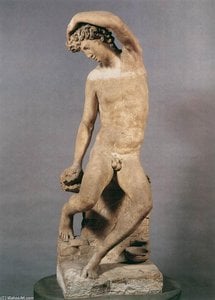
Benvenuto Cellini, 1500 – 1571

Pinturas de Benvenuto Cellini: As 80 Obras Mais Famosas, Classificadas

A pintura mais famosa de Benvenuto Cellini é Saleiro (1540), no Kunsthistorisches Museum, em Viena. Com Jupiter (1545) e Crucifix (detail) (1562), completam-se as três obras que todos reconhecem. O nosso catálogo lista 80 obras de Benvenuto Cellini; as 80 abaixo são as mais admiradas no mundo, cada uma com o seu ano, o museu que a detém e a sua importância.

Classificado de acordo com o nosso índice de popularidade, que combina buscas, visitas e pedidos de cada obra. Atualizado em Outubro 2026. Cada obra-prima nesta página pode ser encomendada como uma reprodução em óleo pintada à mão, com qualidade de museu, ou como uma impressão de fine art, no tamanho de sua escolha.

Retrato de Benvenuto Cellini
Benvenuto Cellini · 1500 – 1571
Nascimento · falecimento
1500 – 1571, Florença
Movimento
Maneirismo
Obras em nosso catálogo
80
Mais famosas
Saleiro (1540)
Mais obras em
Museo Nazionale del Bargello

As 10 pinturas mais famosas de Benvenuto Cellini

Saleiro (1540) de Benvenuto Cellini
1

Saleiro

1540 · Ouro · Kunsthistorisches Museum, Viena

A Saliera, confeccionada em ouro laminado, foi criada por Benvenuto Cellini para Francisco I da França entre 1540 e 1543. De seu descendente Carlos IX, a obra passou ao Arquiduque Fernando II. Este saleiro revela uma profunda alegoria da Terra e do intercâmbio entre a terra e o mar; seu lado direito apresenta um homem com um tridente e um navio simbolizando as águas, enquanto o lado esquerdo exibe uma…

Jupiter (1545) de Benvenuto Cellini
2

Jupiter

1545 · Bronze · Museo Nazionale del Bargello, Florença

To stand before this magnificent depiction of Jupiter is to confront raw, untamed power rendered in the enduring majesty of bronze. This sculpture does not merely represent a god; it embodies the very force of nature—the thunderous authority that commands the skies. The figure dominates the space with an undeniable gravitas, his musculature meticulously articulated as if carved by the passing winds themselves. Observe the dynamic tension captured in his…

Crucifix (detail) (1562) de Benvenuto Cellini
3

Crucifix (detail)

1562 · Marble · Monastério de San Lorenzo, El Escorial

Benvenuto Cellini’s 1562 marble sculpture, “Crucifix (detail),” is not merely a depiction of Christ’s suffering; it’s an immersive experience. Within the dimly lit confines of El Escorial, this intimate piece draws you into a world of profound emotion and technical mastery – a testament to Cellini's genius as both goldsmith and sculptor. The sculpture immediately commands attention with its stark realism and the palpable sense of agony radiating from the…

Morion for Francesco I de' Medici (1570) de Benvenuto Cellini
4

Morion for Francesco I de' Medici

1570 · Metalwork · Staatliche Kunstsammlungen, Dresden

In the grand tapestry of the Italian Renaissance, few objects capture the intersection of martial prestige and artistic virtuosity as profoundly as the Morion for Francesco I de' Medici. Created in 1570 by the legendary polymath Benvenuto Cellini, this is far more than a mere piece of protective headgear; it is a sculptural triumph rendered in metal. As a quintessential example of Mannerism, the Morion rejects the tranquil equilibrium of…

Danae and her Son Perseus (1545) de Benvenuto Cellini
5

Danae and her Son Perseus

1545 · Bronze · Museo Nazionale del Bargello, Florença

The bronze sculpture Danae and her Son Perseus by Benvenuto Cellini captures a moment of divine intersection. Created between 1545 and 1553 for Cosimo I de' Medici, the work depicts the mythological event where Zeus visits Danae in the form of golden rain. This Renaissance Mannerist piece resides within the Museo Nazionale del Bargello in Florence, Italy.

Nymph of Fontainebleau (1542) de Benvenuto Cellini
6

Nymph of Fontainebleau

1542 · Bronze · Museu do Louvre, Paris

To stand before the Nymph of Fontainebleau is to step directly into the languid, sun-dappled world of the Italian Renaissance. This magnificent bronze sculpture by Benvenuto Cellini does more than merely depict a figure; it captures an ephemeral moment—a breath held between slumber and awakening. The central subject, the reclining nymph, embodies a timeless confluence of nature’s grace and mythological mystery. Her pose is one of exquisite repose, her body…

Perseus (1540) de Benvenuto Cellini
7

Perseus

1540 · Bronze · Museo Nazionale del Bargello, Florença

In the heart of Florence’s Piazza della Signoria, amidst the architectural grandeur of the Loggia dei Lanzi, stands a masterpiece that captures the very essence of Mannerist tension and heroic triumph. Benvenuto Cellini’s Perseus is not merely a sculpture; it is a dramatic performance frozen in bronze. Created between 1545 and 1554, this monumental work depicts the legendary hero Perseus at the climactic moment of his mythic journey. He stands…

Bust of Cosimo I (detail) (1546) de Benvenuto Cellini
8

Bust of Cosimo I (detail)

1546 · Bronze · Museo Nazionale del Bargello, Florença

In the heart of the Italian Renaissance, where the pursuit of beauty met the raw ambition of political power, Benvenuto Cellini forged a masterpiece that transcends mere portraiture. The Bust of Cosimo I is not simply a likeness of the Grand Duke of Tuscany; it is a profound meditation on authority, captured in the enduring medium of bronze. To gaze upon this work is to step into the vibrant, often…

Bust of Bindo Altoviti (1549) de Benvenuto Cellini
9

Bust of Bindo Altoviti

Benvenuto Cellini's “Bust of Bindo Altoviti,” crafted in 1549, isn’t merely a sculpted likeness; it’s a meticulously constructed window into the heart of Renaissance Florence. This bronze masterpiece, now residing within the Isabella Stewart Gardner Museum in Boston, transcends simple portraiture to become a profound meditation on wealth, power, and the very essence of human representation. The subject, Bindo Altoviti, a prominent Florentine banker and astute political player, is rendered…

Perseus (1540) de Benvenuto Cellini
10

Perseus

1540 · Bronze · Museo Nazionale del Bargello, Florença

In the heart of Florence, amidst the architectural grandeur of the Loggia dei Lanzi, stands a masterpiece that captures the very essence of human struggle and divine victory. Benvenuto Cellini’s Perseus is not merely a sculpture; it is a breathtaking moment frozen in bronze, a dramatic climax of Greek mythology brought to life through the virtuosity of the Mannerist style. As the light dances across its aged patina, the figure…

Benvenuto Cellini, pinturas de 11 a 80

Crucifix (1562) de Benvenuto Cellini
#11

Crucifix

1562 · Monastério de San Lorenzo

Benvenuto Cellini's 1562 bronze sculpture, “Crucifix,” stands as a profoundly moving testament to the Renaissance spirit—a collision of technical mastery, religious fervor, and deeply personal emotion. More than…

Nymph of Fontainebleau (detail) (1542) de Benvenuto Cellini
#12

Nymph of Fontainebleau (detail)

1542 · Museu do Louvre

To encounter a detail of Benvenuto Cellini’s Nymph of Fontainebleau is to step directly into the languid, sun-dappled world of the High Renaissance. This exquisite bronze sculpture, cast…

Minerva (1545) de Benvenuto Cellini
#13

Minerva

1545 · Museo Nazionale del Bargello

Benvenuto Cellini's "Minerva," crafted in 1545 during the twilight of the High Renaissance, isn't merely a bronze sculpture; it’s a meticulously constructed embodiment of Roman virtue and strategic…

Mercury (1545) de Benvenuto Cellini
#14

Mercury

1545 · Museo Nazionale del Bargello

In the quiet presence of this bronze, one senses the shifting tides of the sixteenth century. Completed in 1545, Benvenuto Cellini’s Mercury marks a departure from the balanced…

Nymph of Fontainebleau (detail) (1542) de Benvenuto Cellini
#15

Nymph of Fontainebleau (detail)

1542 · Museu do Louvre

The bronze surface holds a quiet tension, as if the figure might stir at any moment. In this close view, we find ourselves pressed against the smooth, cool…

Perseus (15) (1545) de Benvenuto Cellini
#16

Perseus (15)

1545 · Loggia dei Lanzi

To stand before Benvenuto Cellini's monumental bronze, Perseus with the Head of Medusa, is to be arrested by a moment of sublime, violent apotheosis. This sculpture does not…

Salt Cellar (1540) de Benvenuto Cellini
#17

Salt Cellar

1540 · Kunsthistorisches Museum

To behold Benvenuto Cellini’s Saliera is to step into the opulent heart of the Italian Renaissance, where the boundaries between functional object and profound sculpture dissolve entirely. This…

Salt Cellar (detail) (1540) de Benvenuto Cellini
#18

Salt Cellar (detail)

1540 · Kunsthistorisches Museum

In the hallowed halls of the Kunsthistorisches Museum in Vienna, there exists a treasure that transcends the boundaries of mere functional objecthood to become a profound meditation on…

Ganymede (1548) de Benvenuto Cellini
#19

Ganymede

1548 · Museo Nazionale del Bargello

To stand before Benvenuto Cellini's bronze depiction of Ganymede is to encounter a moment suspended between divine beauty and youthful vulnerability. This masterful sculpture, executed in the vibrant…

Salt Cellar (detail) (1540) de Benvenuto Cellini
#20

Salt Cellar (detail)

1540 · Kunsthistorisches Museum

In the grand tapestry of the Italian Renaissance, few objects capture the audacious spirit of Mannerism as vibrantly as Benvenuto Cellini’s Salt Cellar. Created around 1543 for the…

Bust of Cosimo I (detail) (1546) de Benvenuto Cellini
#21

Bust of Cosimo I (detail)

1546 · Museo Nazionale del Bargello

To gaze upon this detail from Benvenuto Cellini's Bust of Cosimo I is to encounter not merely a portrait, but a monumental declaration of power and Renaissance ambition.…

Juno (1540) de Benvenuto Cellini
#22

Juno

1540 · Museu do Louvre

To stand before Benvenuto Cellini's depiction of Juno is to encounter a moment suspended in the golden haze of the Renaissance. This work, executed around 1540, transcends mere…

Leve para casa →
Salt Cellar (1540) de Benvenuto Cellini
#23

Salt Cellar

1540 · Kunsthistorisches Museum

Benvenuto Cellini's Salt Cellar, a shimmering testament to the heights of Renaissance goldsmithing, isn’t merely a container for salt; it’s a miniature cosmos, a meticulously crafted allegory brimming…

Perseus (1545) de Benvenuto Cellini
#24

Perseus

1545 · Loggia dei Lanzi

In the heart of Florence’s sun-drenched Loggia dei Lanzi, where the shadows of history dance against classical stone, stands one of the most arresting spectacles of the Mannerist…

Medallion with Leda and the Swan (1520) de Benvenuto Cellini
#25

Medallion with Leda and the Swan

1520 · Museo Nazionale del Bargello

In the delicate, shimmering expanse of Benvenuto Cellini’s Medallion with Leda and the Swan, we find a moment suspended in the amber of the Italian Renaissance. Created around…

Cope pin (front and back) (1520) de Benvenuto Cellini
#26

Cope pin (front and back)

1520 · British Museum

Benvenuto Cellini's "Cope Pin (Front and Back)," crafted in 1520 for Pope Clement VII, transcends the boundaries of a mere decorative object. It’s a potent emblem of Renaissance…

Perseus (1545) de Benvenuto Cellini
#27

Perseus

1545 · Loggia dei Lanzi

In the heart of Florence, within the sun-drenched, open-air majesty of the Loggia dei Lanzi, stands a masterpiece that captures the very essence of human struggle and divine…

Salt Cellar (8) (1540) de Benvenuto Cellini
#28

Salt Cellar (8)

1540 · Kunsthistorisches Museum

Benvenuto Cellini's “Salt Cellar” (Saliera), completed in 1543 for King Francis I of France, isn’t merely a container for seasoning; it’s a shimmering embodiment of the Renaissance spirit—a…

Salt Cellar (detail) (16) (1540) de Benvenuto Cellini
#29

Salt Cellar (detail) (16)

1540 · Kunsthistorisches Museum

The Kunsthistorisches Museum in Vienna holds within its walls not merely a container for salt, but a miniature drama sculpted in gold and enamel—Benvenuto Cellini’s celebrated “Salt Cellar,”…

Leve para casa →
Apollo and Hyacinth (detail) (1540) de Benvenuto Cellini
#30

Apollo and Hyacinth (detail)

1540 · Museo Nazionale del Bargello

Benvenuto Cellini’s “Apollo and Hyacinth,” a meticulously rendered marble sculpture from the 1540s, isn’t merely a depiction of a tragic myth; it’s a profound meditation on loss, divine…

Perseus (detail) (12) (1545) de Benvenuto Cellini
#31

Perseus (detail) (12)

1545 · Loggia dei Lanzi

Benvenuto Cellini's “Perseus (detail) (12)” isn’t merely a depiction of the legendary hero; it’s a visceral embodiment of Renaissance ambition, technical prowess, and a profound engagement with classical…

Perseus (detail) (1545) de Benvenuto Cellini
#32

Perseus (detail)

1545 · Loggia dei Lanzi

In the sun-drenched, open-air majesty of Florence’s Loggia dei Lanzi, a breathtaking moment remains frozen in bronze. Benvenuto Cellini’s Perseus with the Head of Medusa is far more…

Perseus (detail) (1545) de Benvenuto Cellini
#33

Perseus (detail)

1545 · Loggia dei Lanzi

The bronze sculpture of Perseus holding aloft the severed head of Medusa, attributed to Benvenuto Cellini and crafted in 1545, stands as a monumental achievement within the Italian…

Shield (1572) de Benvenuto Cellini
#34

Shield

1572 · Museu do Louvre

Benvenuto Cellini’s “Shield,” completed in 1572, stands as a captivating emblem of the High Renaissance's waning influence and the burgeoning Mannerist style. Currently residing within the Louvre Museum’s…

Perseus (1540) de Benvenuto Cellini
#35

Perseus

1540 · Museo Nazionale del Bargello

The bronze sculpture titled Perseus was created by the artist Benvenuto Cellini. This work depicts the mythological figure Perseus holding the severed head of the Gorgon Medusa. The…

Seal of Cardinal Ippolito d'Este (1540) de Benvenuto Cellini
#36

Seal of Cardinal Ippolito d'Este

1540 · Musée des Beaux-Arts de Lyon

Commissioned in 1540 by Cardinal Ippolito d'Este, this relief sculpture embodies the stylistic shifts of the Florentine Renaissance. Moving away from the balanced ideals of the High Renaissance,…

Cope pin (profile) (1520) de Benvenuto Cellini
#37

Cope pin (profile)

1520 · British Museum

The drawing titled Cope pin (profile) was executed by the goldsmith and sculptor Benvenuto Cellini. Created around 1520, the work represents a detailed design for a liturgical accessory.…

Leve para casa →
Gunpowder case (1570) de Benvenuto Cellini
#38

Gunpowder case

1570 · Royal Armouries

In the grand tapestry of the Italian Renaissance, few names resonate with as much dramatic flair and technical virtuosity as Benvenuto Cellini. His Gunpowder Case, crafted around 1570,…

Portrait Bust of Cosimo I de de Benvenuto Cellini
#39

Portrait Bust of Cosimo I de

Legion of Honor

In the heart of the Italian Renaissance, where the shadows of political intrigue met the brilliance of humanistic discovery, Benvenuto Cellini breathed life into metal. His Portrait Bust…

Shield for Francesco I de' Medici (detail) (11) (1570) de Benvenuto Cellini
#40

Shield for Francesco I de' Medici (detail) (11)

1570 · Staatliche Kunstsammlungen

To gaze upon the Shield for Francesco I de' Medici is to step directly into the heart of the Italian Renaissance, where metalwork transcends utility to become high…

Shield for Francesco I de' Medici (detail) (1570) de Benvenuto Cellini
#44

Shield for Francesco I de' Medici (detail)

1570 · Staatliche Kunstsammlungen

To behold the detail of Benvenuto Cellini’s Shield for Francesco I de' Medici is to step directly into the shimmering heart of the late Renaissance. Crafted around 1570,…

Ganymede (8) (1548) de Benvenuto Cellini
#45

Ganymede (8)

1548 · Museo Nazionale del Bargello

The bronze surface catches the light in a way that mimics the warmth of skin. In this 1548 sculpture, a youth stands caught in a sudden, muscular tension.…

Project for a seal (1563) de Benvenuto Cellini
#46

Project for a seal

1563 · British Museum

In the heart of the sixteenth century, amidst the vibrant intellectual ferment of Florence, Benvenuto Cellini breathed life into a vision that would serve as a cornerstone for…

Leve para casa →
Shield for Francesco I de' Medici (1570) de Benvenuto Cellini
#47

Shield for Francesco I de' Medici

1570 · Staatliche Kunstsammlungen

To behold Benvenuto Cellini’s Shield for Francesco I de' Medici is to step directly into the shimmering heart of the High Renaissance. Crafted around 1570, this extraordinary metalwork…

Bust of Cosimo I (1546) de Benvenuto Cellini
#48

Bust of Cosimo I

1546 · Museo Nazionale del Bargello

Benvenuto Cellini’s “Bust of Cosimo I” is more than just a sculpted likeness; it's a meticulously crafted embodiment of power, ambition, and the very spirit of the Florentine…

Medal of Alessandro de' Medici (1530) de Benvenuto Cellini
#49

Medal of Alessandro de' Medici

1530 · Museo Nazionale del Bargello

Benvenuto Cellini’s “Medal of Alessandro de’ Medici,” a small yet profoundly resonant bronze piece from 1530, isn’t merely a commemorative coin; it’s a meticulously crafted microcosm of Renaissance…

Leve para casa →
The Rescue of Andromeda (detail) (1550) de Benvenuto Cellini
#50

The Rescue of Andromeda (detail)

1550 · Museo Nazionale del Bargello

Benvenuto Cellini’s “The Rescue of Andromeda” is more than just a bronze sculpture; it's a vibrant tableau of myth, heroism, and the burgeoning spirit of Mannerism that defined…

'Giulio' of Alessandro de' Medici (1530) de Benvenuto Cellini
#51

'Giulio' of Alessandro de' Medici

1530 · Museo Nazionale del Bargello

A Glimpse Into Renaissance Power: Examining Cellini’s ‘Giulio’ of Alessandro de' Medici Coin The coin before us—a diminutive yet powerfully resonant testament to the Florentine Renaissance—represents more than…

Francis I, King of France (1537) de Benvenuto Cellini
#53

Francis I, King of France

1537 · Museu Fitzwilliam

In the delicate interplay of light and shadow upon a polished bronze surface, one encounters more than just a portrait; one meets the very essence of Renaissance sovereignty.…

Medal of Clement VII (obverse) (1534) de Benvenuto Cellini
#54

Medal of Clement VII (obverse)

1534 · Museo Nazionale del Bargello

In the delicate, shimmering expanse of a mere four centimeters, Benvenuto Cellini managed to capture the weight of an entire era. The Medal of Clement VII is not…

Shield for Francesco I de' Medici (detail) (1570) de Benvenuto Cellini
#58

Shield for Francesco I de' Medici (detail)

1570 · Staatliche Kunstsammlungen

The Shield for Francesco I de' Medici (detail), created around 1570, stands as a mesmerizing testament to the extraordinary skill of Benvenuto Cellini. This intricately crafted metalwork piece…

Bust of Cosimo I (detail) (1546) de Benvenuto Cellini
#59

Bust of Cosimo I (detail)

1546 · Museo Nazionale del Bargello

The bronze figure of Cosimo I de' Medici, ruler of Florence and Tuscany, stands as more than just a portrait; it is a meticulously crafted embodiment of Renaissance…

Leve para casa →
Shield for Francesco I de' Medici (detail) (10) (1570) de Benvenuto Cellini
#60

Shield for Francesco I de' Medici (detail) (10)

1570 · Staatliche Kunstsammlungen

In the heart of the late Renaissance, where the boundaries between craftsmanship and fine art dissolved into pure brilliance, Benvenuto Cellini forged a legacy that transcends mere metalwork.…

Salt Cellar (detail) (1540) de Benvenuto Cellini
#61

Salt Cellar (detail)

1540 · Kunsthistorisches Museum

The Salt Cellar of Francis I, crafted by the Florentine master Benvenuto Cellini between 1540 and 1543, is more than just a container for salt and pepper; it's…

Leve para casa →
Apollo and Hyacinth (1540) de Benvenuto Cellini
#62

Apollo and Hyacinth

1540 · Museo Nazionale del Bargello

In the hallowed halls of the Galleria Nazionale di Palazzo Barberini in Rome, there exists a profound meditation on loss and divine grace captured in stone. Benvenuto Cellini’s…

Study for a seal (1560) de Benvenuto Cellini
#64

Study for a seal

1560 · Museu do Louvre

The world of 16th-century Florence pulsed with artistic fervor, a crucible where innovation and tradition intertwined to forge masterpieces that continue to captivate us centuries later. Among the…

Leve para casa →
The Rescue of Andromeda (detail) (1550) de Benvenuto Cellini
#66

The Rescue of Andromeda (detail)

1550 · Museo Nazionale del Bargello

Benvenuto Cellini's "The Rescue of Andromeda" – specifically this exquisite detail depicting the confrontation between Perseus and Medusa – is more than just a bronze sculpture; it’s a…

Helmet (1570) de Benvenuto Cellini
#67

Helmet

1570 · Museu do Louvre

Benvenuto Cellini’s “Helmet,” created around 1570, stands as a testament to the zenith of Renaissance artistry and the flamboyant spirit of Mannerism. More than just armor—though exquisitely crafted—it…

Encomendar uma reprodução →
Perseus (13) (1540) de Benvenuto Cellini
#68

Perseus (13)

1540 · Museo Nazionale del Bargello

Benvenuto Cellini's bronze sculpture of Perseus with the Head of Medusa, completed around 1545-1554 for Duke Cosimo I de’ Medici in Florence, is far more than a mere…

Encomendar uma reprodução →
The Rescue of Andromeda (1550) de Benvenuto Cellini
#69

The Rescue of Andromeda

1550 · Museo Nazionale del Bargello

Benvenuto Cellini's "The Rescue of Andromeda," completed around 1550, is more than just a bronze sculpture; it’s a vibrant distillation of Renaissance mythology, a testament to the artist’s…

Ganymede (1540) de Benvenuto Cellini
#71

Ganymede

1540 · Museo Nazionale del Bargello

Benvenuto Cellini’s sculpture of Ganymede stands as a testament to the artistic fervor of the Mannerist period, capturing a moment of profound beauty and spiritual contemplation. Executed in…

Medal of François I (1540) de Benvenuto Cellini
#72

Medal of François I

1540 · Museo Nazionale del Bargello

Benvenuto Cellini’s *Medal of François I*, created in 1543 for the French King, stands as a pinnacle of Renaissance sculpture and embodies the stylistic fervor of Mannerism. More…

Narcissus (1540) de Benvenuto Cellini
#73

Narcissus

1540 · Museo Nazionale del Bargello

Narcissus by CELLINI, Benvenuto Benvenuto Cellini’s “Narcissus” stands as a testament to Renaissance artistry—a sculpture embodying both meticulous craftsmanship and profound contemplation. Created in 1540 during Cellini's prolific…

Leve para casa →
Sakuki Greyhound de Benvenuto Cellini
#79

Sakuki Greyhound

Museo Nazionale del Bargello

In the quiet halls of the Museo Nazionale del Bargello in Florence, there exists a small yet profound masterpiece that commands attention through its sheer vitality. Benvenuto Cellini’s…

Satyr de Benvenuto Cellini
#80

Satyr

National Gallery of Art

Benvenuto Cellini’s “Satyr” stands as a captivating testament to the dynamism and sensual allure that defined the Mannerist period in Italian art. Completed around 1545, this bronze sculpture…

Leve para casa →

Pinturas de Benvenuto Cellini por período

Os temas que Benvenuto Cellini mais pintou

Os quatro temas que mais se repetem entre estas obras-primas, com o melhor exemplo de cada um.

Onde ver as pinturas de Benvenuto Cellini

Os 8 museus que detêm a maioria das pinturas desta página.

Museu Cidade Obras de Benvenuto Cellini Pinturas desta lista
Museo Nazionale del Bargello, FlorençaMuseo Nazionale del Bargello Florença 30 Jupiter, Danae and her Son Perseus, Perseus
Kunsthistorisches Museum, VienaKunsthistorisches Museum Viena 10 Saleiro, Salt Cellar, Salt Cellar (detail)
Museu do Louvre, ParisMuseu do Louvre Paris 7 Nymph of Fontainebleau, Nymph of Fontainebleau (detail), Nymph of Fontainebleau (detail)
Loggia dei Lanzi, FlorençaLoggia dei Lanzi Florença 7 Perseus (15), Perseus, Perseus
Staatliche Kunstsammlungen, DresdenStaatliche Kunstsammlungen Dresden 6 Morion for Francesco I de' Medici, Shield for Francesco I de' Medici (detail) (11), Shield for Francesco I de' Medici (detail)
Museo Glauco Lombardi, ParmaMuseo Glauco Lombardi Parma 5 Gold and amethyst parure donated by Maria Luigia to one of her palace ladies, Detail of the gold and amethyst parure donated by Maria Luigia to one of her palace ladies, Gold and amethyst parure donated by Maria Luigia to one of her palace ladies
British Museum, LondresBritish Museum Londres 3 Cope pin (front and back), Cope pin (profile), Project for a seal
Monastério de San Lorenzo, El EscorialMonastério de San Lorenzo El Escorial 2 Crucifix (detail), Crucifix

A pintura mais famosa de cada década de Benvenuto Cellini

  1. 1520s
    Medallion with Leda and the Swan (1520) de Benvenuto Cellini
    Posição 25 de 80

    Medallion with Leda and the Swan

    Idade 20 – 29 · Museo Nazionale del Bargello

    In the delicate, shimmering expanse of Benvenuto Cellini’s Medallion with Leda and the Swan, we find a moment suspended in the amber of the Italian Renaissance. Created around…

  2. 1530s
  3. 1540s
    Saleiro (1540) de Benvenuto Cellini
    Posição 1 de 80

    Saleiro

    Idade 40 – 49 · Kunsthistorisches Museum

    A Saliera, confeccionada em ouro laminado, foi criada por Benvenuto Cellini para Francisco I da França entre 1540 e 1543. De seu descendente Carlos IX, a obra passou…

  4. 1550s
    The Rescue of Andromeda (detail) (1550) de Benvenuto Cellini
    Nº 50 de 80

    The Rescue of Andromeda (detail)

    Idade 50 – 59 · Museo Nazionale del Bargello

    Benvenuto Cellini’s “The Rescue of Andromeda” is more than just a bronze sculpture; it's a vibrant tableau of myth, heroism, and the burgeoning spirit of Mannerism that defined…

  5. 1560s
    Crucifix (detail) (1562) de Benvenuto Cellini
    #3 de 80

    Crucifix (detail)

    Idade 60 – 69 · Monastério de San Lorenzo

    Benvenuto Cellini’s 1562 marble sculpture, “Crucifix (detail),” is not merely a depiction of Christ’s suffering; it’s an immersive experience. Within the dimly lit confines of El Escorial, this…

  6. 1570s
    Morion for Francesco I de' Medici (1570) de Benvenuto Cellini
    Nº 4 de 80

    Morion for Francesco I de' Medici

    Idade 70 – 71 · Staatliche Kunstsammlungen

    In the grand tapestry of the Italian Renaissance, few objects capture the intersection of martial prestige and artistic virtuosity as profoundly as the Morion for Francesco I de'…

Dúvidas sobre as pinturas de Benvenuto Cellini

Qual é a pintura mais famosa de Benvenuto Cellini?Mostrar a resposta

Saleiro (1540), Kunsthistorisches Museum, Viena. Seguem-se Jupiter (1545) e Crucifix (detail) (1562).

Qual era a idade de Benvenuto Cellini quando Saleiro foi pintada?Mostrar a resposta

40 anos: Saleiro data de 1540 e Benvenuto Cellini nasceu em 1500.

Quais são as 10 principais pinturas de Benvenuto Cellini?Mostrar a resposta

Saleiro, Jupiter, Crucifix (detail), Morion for Francesco I de' Medici, Danae and her Son Perseus, Nymph of Fontainebleau, Perseus, Bust of Cosimo I (detail), Bust of Bindo Altoviti e Perseus. O ranking acima apresenta o ano e o museu de cada uma.

Quantas pinturas Benvenuto Cellini fez?Mostrar a resposta

Nosso catálogo lista 80 obras de Benvenuto Cellini, datadas de 1520 a 1570.

Onde estão as pinturas mais famosas de Benvenuto Cellini?Mostrar a resposta

A maioria deles está em Museo Nazionale del Bargello (Florença), Kunsthistorisches Museum (Viena) e Museu do Louvre (Paris). A tabela acima lista os museus um a um.

Quando é que Benvenuto Cellini pintou as suas obras mais famosas?Mostrar a resposta

Em 1540s: 42 das 80 obras nesta página datam dessa época, entre elas Saleiro.

Quais são as pinturas mais antigas e mais recentes de Benvenuto Cellini?Mostrar a resposta

A obra mais antiga nesta página é de Medallion with Leda and the Swan (1520), e a mais recente é de Morion for Francesco I de' Medici (1570).

O que Benvenuto Cellini mais pintou?Mostrar a resposta

Renaissance (37), Mythology (34) e Sculpture (23), entre as 80 obras nesta página.

Qual técnica Benvenuto Cellini mais utilizou?Mostrar a resposta

Bronze: 30 de um total de 80 obras nesta página.

A qual movimento artístico Benvenuto Cellini pertence?Mostrar a resposta

Maneirismo, como mostram as pinturas nesta página.

Quais pinturas de Benvenuto Cellini posso ver no Museo Nazionale del Bargello?Mostrar a resposta

Jupiter, Danae and her Son Perseus e Perseus estão entre as 30 obras nesta página pertencentes ao Museo Nazionale del Bargello, Florença.

Posso comprar uma reprodução de uma pintura de Benvenuto Cellini?Mostrar a resposta

Sim. Todas as pinturas desta página podem ser encomendadas como uma reprodução em óleo pintada à mão com qualidade de museu ou como uma impressão de fine art, no tamanho de sua escolha, a partir da própria página da pintura.

Sobre Benvenuto Cellini

Benvenuto Cellini: Um Gênio Renascentista Entre a Arte e a Aventura

Benvenuto Cellini, um nome que ressoa com a exuberância e o espírito indomável do Renascimento italiano, foi muito mais do que um simples artista. Ele personificou a figura do homem universal, dominando a ourivesaria, a escultura, a música, a escrita e até mesmo as artes da guerra. Sua vida, narrada em uma autobiografia vibrante e reveladora, é uma crônica fascinante de ambição, talento, perigo e triunfo, oferecendo um vislumbre único do mundo artístico e social da Itália nos séculos XVI.

Da Música à Ourofexaria: A Formação de um Artista Multifacetado

Nascido em Florença em 1500, filho de um músico e fabricante de instrumentos, Cellini inicialmente demonstrou aptidão para a música. No entanto, aos quinze anos, sua paixão pela arte o levou a convencer seu pai a permitir que aprendesse a arte da ourivesaria com Marcone. Essa decisão marcaria o início de uma jornada artística extraordinária, embora não isenta de desafios. Aos dezesseis anos, envolvido em um confronto, foi banido de Florença e passou um período trabalhando em Siena sob a tutela do ourives Fracastoro. Essas experiências iniciais moldaram seu caráter e aprimoraram suas habilidades técnicas, lançando as bases para o sucesso futuro.

Obras-Primas que Encarnam o Espírito Mannerista

A genialidade de Cellini se manifesta em uma série de obras-primas que exemplificam o estilo Mannerista, caracterizado pela dramaticidade, a elegância e a complexidade. O *Altar da Catedral de Florença*, embora inacabado, demonstra sua ambição monumental. No entanto, é o *Cálice de Sal para Francisco I* que se destaca como talvez sua obra mais famosa – uma peça deslumbrante em prata e esmalte, repleta de figuras dinâmicas e detalhes intrincados, atualmente abrigada no Kunsthistorisches Museum em Viena. A escultura *Perseu com a Cabeça de Medusa*, exibida na Loggia dei Lanzi em Florença, é outro testemunho de sua maestria técnica e composicional, capturando o momento triunfal do herói grego com uma expressividade impressionante. Além disso, suas medalhas, como a dedicada a Leda e o Cisne, revelam sua habilidade em combinar mitologia clássica com um requinte artesanal inigualável.

A Autobiografia: Um Retrato Íntimo de um Artista

Além de seu talento artístico, Cellini deixou um legado literário duradouro através de sua autobiografia. Escrita em um estilo vívido e pessoal, a obra oferece uma visão privilegiada da vida de um artista renascentista, repleta de anedotas sobre patronos, rivalidades e aventuras pessoais. Embora por vezes tendenciosa e autoelogiativa, a autobiografia é uma fonte inestimável para compreender o contexto artístico, social e cultural da época. Através de suas palavras, somos transportados para um mundo de intrigas palacianas, festas extravagantes e paixões intensas, revelando a personalidade complexa e multifacetada de Benvenuto Cellini.

Um Legado Duradouro: O Artista Como Ícone do Renascimento

Benvenuto Cellini faleceu em Florença em 1571, deixando para trás um legado artístico e literário que continua a inspirar admiração e fascínio. Sua habilidade técnica, sua inovação artística e sua autobiografia cativante o consagraram como uma das figuras mais importantes do Mannerismo. Ele personifica o ideal renascentista – um homem de múltiplas habilidades, impulsionado pela ambição e ousado em expressar sua individualidade. Suas obras, celebradas por sua beleza, artesanato impecável e poder dramático, garantem seu lugar como um dos pilares da história da arte ocidental.

Todas as 80 obras de Benvenuto Cellini →