Antoon van Dyck, 1599 – 1641

Antoon van Dyck: The 100 Most Famous Paintings

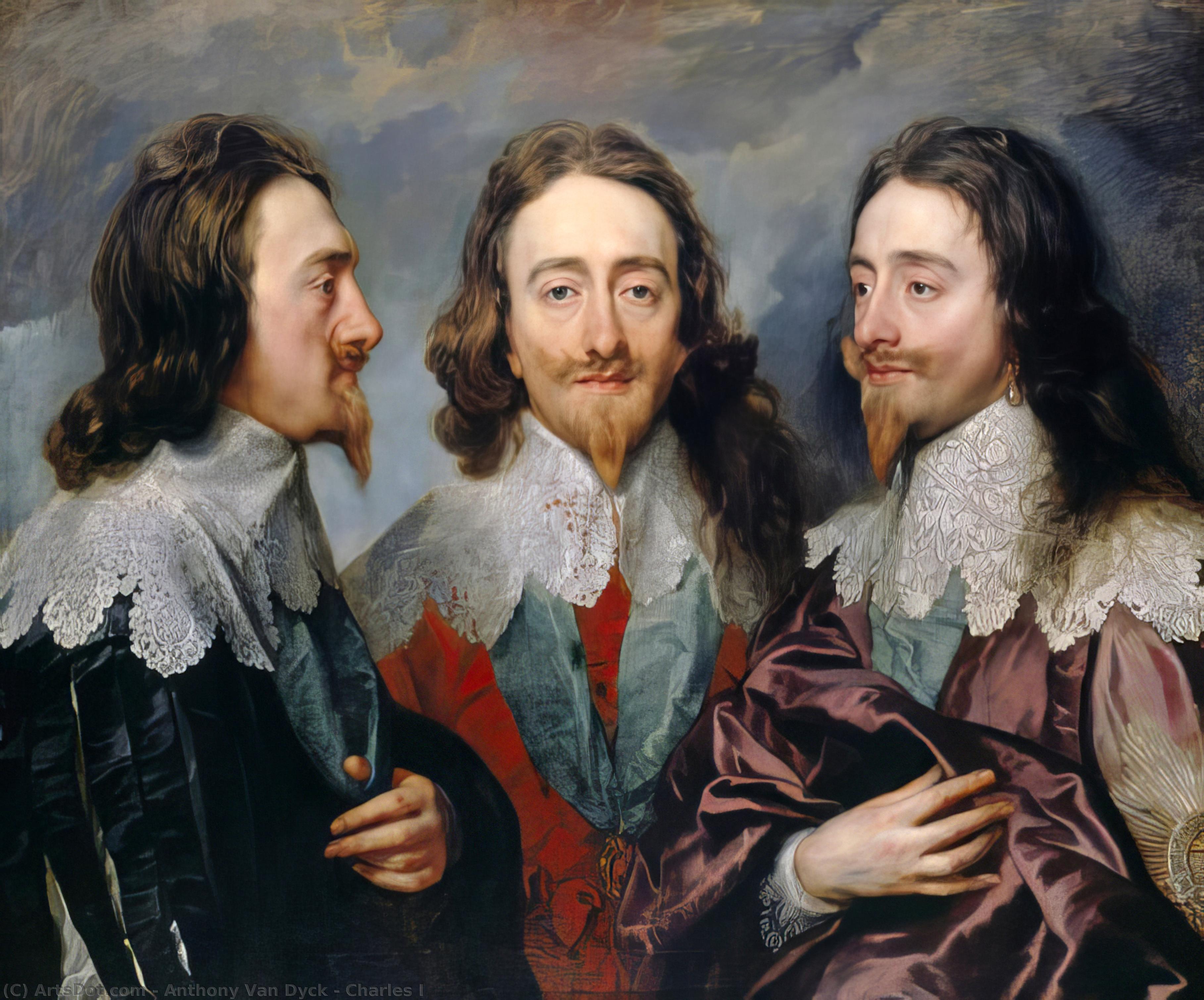
Charles I em Três Posições (1636) is the most famous painting by Antoon van Dyck, held by the Royal Collection in Londres. Family Portrait (1621) and Portrait of Isabella Clara Eugenia as Widow (1628) are the next two works the world knows best. From the 1,620 works of Antoon van Dyck in our catalogue, here are the 100 that collectors and museum visitors look at most, with the year, the museum and the story of each.

Ranked by our popularity score, which combines the searches, visits and orders for each work. Updated Outubro 2026. Every masterpiece on this page can be ordered as a museum-quality, hand-painted oil reproduction or a fine art print, at the size you choose.

Portrait of Antoon van Dyck
Antoon van Dyck · 1599 – 1641
Born · died
1599 – 1641, Antuérpia
Movement
Baroque elegance
Works in our catalogue
1.620
Most famous
Charles I em Três Posições (1636)
Most works at
Bavarian State Painting Collections

Top 10: Antoon van Dyck's best-known paintings

Charles I em Três Posições (1636) by Antoon van Dyck
1

Charles I em Três Posições

1636 · Óleo sobre tela · Royal Collection, Londres

"Charles I em Três Posições" é um exemplo extraordinário da maestria de Sir Anthony van Dyck no retrato barroco. Pintada entre 1635 e 1636, esta obra-prima em óleo sobre tela revela a habilidade excepcional do artista flamengo e sua profunda influência na arte europeia. A pintura faz parte da prestigiante Royal Collection e atualmente está exposta no King's Drawing Room, no Castelo de Windsor.

Family Portrait (1621) by Antoon van Dyck
2

Family Portrait

1621 · Oil On Canvas · Museu Hermitage, São Petersburgo

To gaze upon this magnificent family portrait is to step directly into the opulent drawing rooms of the early seventeenth century. It captures not merely three figures—a distinguished man, an elegant woman, and a cherished child—but an entire tableau of familial pride and societal standing. The composition itself speaks volumes; every fold of fabric, every carefully placed hand, contributes to a narrative of enduring connection. The rich, dramatic red background…

Portrait of Isabella Clara Eugenia as Widow (1628) by Antoon van Dyck
3

Portrait of Isabella Clara Eugenia as Widow

1628 · Oil On Canvas · Museo de Arte de Ponce, Ponce

Sir Anthony van Dyck’s “Portrait of Isabella Clara Eugenia as Widow” is more than just a depiction of a noblewoman; it's a carefully constructed tableau of power, grief, and the enduring legacy of a formidable ruler. Painted in 1628, this oil-on-canvas work transports us to the heart of the Spanish Netherlands during a period of significant political and personal upheaval. Isabella Clara Eugenia, daughter of Philip II of Spain, served…

Jacqueline van Caestre (1622) by Antoon van Dyck
4

Jacqueline van Caestre

1622 · Oil On Panel · Royal Łazienki Museum, Varsóvia

The portrait of Jacqueline van Caestre, painted in 1622 by the masterful Sir Anthony van Dyck, is more than a mere likeness; it’s a carefully constructed tableau of wealth, status, and burgeoning domesticity. Within its richly layered composition lies a captivating story of a noblewoman navigating the complexities of marriage and courtly life in 17th-century Antwerp. Van Dyck, already establishing his signature style—characterized by an almost sensual realism and a…

Susanna and the Elders (1622) by Antoon van Dyck
5

Susanna and the Elders

1622 · Óleo sobre tela · Alte Pinakothek, Munique

In the grand tapestry of the Flemish Baroque, few works capture the visceral intersection of vulnerability and voyeurism as profoundly as Sir Anthony van Dyck’s Susanna and the Elders. Painted around 1622, this monumental canvas is far more than a mere biblical illustration; it is a psychological drama frozen in time. The scene centers on Susanna, a figure of profound grace and purity, caught in a moment of harrowing intrusion.…

Genoese Noblewoman (1622) by Antoon van Dyck
6

Genoese Noblewoman

1622 · Oil On Canvas · The Frick Collection, Nova Iorque

Anthony van Dyck's "Genoese Noblewoman," painted circa 1625-1627, isn’t merely a portrait; it’s a meticulously crafted window into the opulent world of early 17th-century Genoa. This captivating work, now residing within The Frick Collection in New York City, offers a rare glimpse into the refined tastes and social dynamics of a wealthy Italian city-state – a vibrant hub of commerce, art, and cultural exchange during a period of immense artistic…

Henrietta Maria (1635) by Antoon van Dyck
7

Henrietta Maria

1635 · Oil On Canvas

The gaze of Henrietta Maria meets the viewer through this commanding portrait by Anthony van Dyck. Executed in 1636, the work captures Henrietta Maria of France in a moment of poised royal dignity. She exists here as the Queen of England, a position she holds through her marriage to King Charles I. The painting functions as a visual declaration of her status and her presence within the English court.

Portrait of Queen Henrietta-Maria (1638) by Antoon van Dyck
8

Portrait of Queen Henrietta-Maria

1638 · Oil On Canvas · Museu Hermitage, São Petersburgo

To stand before this portrait is to encounter the quiet gravity of the seventeenth-century English court. The Queen stands slightly off-center, her figure anchored by the heavy weight of crimson drapery and a draped table. There is a certain stillness here, a moment caught between the political tensions of 1638 and the personal dignity of the sitter. Van Dyck uses light to sculpt her form, pulling her face and chest…

The healing of the paralytic (1620) by Antoon van Dyck
9

The healing of the paralytic

1620 · Oil On Canvas · Bavarian State Painting Collections, Munique

In this oil painting, titled The healing of the paralytic, Anthony van Dyck explores a moment of profound spiritual intervention. The work, which dates to about 1618-20, captures the immediate aftermath of a miracle. We find ourselves witnessing the precise instant of transition between infirmity and restoration. The subject matter is drawn from the New Testament, specifically the narratives found in Matthew 9:1-8 or John 5:1-15.

Portrait of Alexandre della Faille (1589-1653) (1632) by Antoon van Dyck
10

Portrait of Alexandre della Faille (1589-1653)

1632 · Oil On Canvas · Museus Reais de Belas Artes da Bélgica, Bruxelas

A dignified three-quarter length portrait, this work captures a middle-aged man positioned centrally against a dark, atmospheric background. The subject, Alexandre della Faille, is rendered with a sense of quiet authority and formal composure. A voluminous white ruff collar acts as the primary focal point, its crisp texture contrasting sharply against the heavy, dark fabric of his cloak. Light enters from the upper left, casting soft shadows across the right…

The rest of the Antoon van Dyck ranking, 11 to 100

The Pietà (1629) by Antoon van Dyck
#12

The Pietà

1629 · Museu do Prado

Step closer to observe the weight of this scene. In this 1629 composition, we find the Virgin Mary cradling the limp, pale body of Christ. The arrangement is…

Order a reproduction →
The Lomellini Family (1627) by Antoon van Dyck
#16

The Lomellini Family

1627

To stand before 'The Lomellini Family' is to step directly into the gilded drawing rooms of 17th-century Genoese aristocracy. Anthony van Dyck, a painter whose elegance seemed to…

Order a reproduction →
Moses and the Brazen Serpent (1530) by Antoon van Dyck
#19

Moses and the Brazen Serpent

1530

Moses and the Brazen Serpent by Anthony van Dyck captures a moment of divine intervention from the Book of Numbers. The oil painting on canvas depicts the biblical…

Samson and Delilah (1630) by Antoon van Dyck
#24

Samson and Delilah

1630 · Kunsthistorisches Museum

In the grand tapestry of the Flemish Baroque, few moments capture the tension between divine strength and human frailty as poignantly as Sir Anthony van Dyck’s Samson and…

Bring it home →
Charles I (1600-49) on Horseback (1635) by Antoon van Dyck
#26

Charles I (1600-49) on Horseback

1635 · Hampton Court Palace

The scene unfolds with the commanding presence of Charles I (1600-49) on Horseback, a work by the artist Anthony van Dyck. Created in 1635, the portrait captures the…

Bring it home →
Cupid and Psyche (1640) by Antoon van Dyck
#27

Cupid and Psyche

1640 · Royal Collection

Anthony van Dyck's "Cupid and Psyche," painted in 1640, is more than just a depiction of a mythological romance; it’s a distillation of the Baroque spirit – a…

Bring it home →
Queen Henrietta Maria of England (1620) by Antoon van Dyck
#28

Queen Henrietta Maria of England

1620 · Bavarian State Painting Collections

In this three-quarter length portrait, Anthony van Dyck positions Queen Henrietta Maria of England slightly off-center. This subtle shift creates a quiet tension within the frame. A luminous…

Bring it home →
Queen Henrietta Maria of England (1639) by Antoon van Dyck
#30

Queen Henrietta Maria of England

1639 · Statens Museum For Kunst

Queen Henrietta Maria of England, painted by Anthony van Dyck, captures the queen consort of Charles I. Dated 1636, the portrait presents the woman who was born in…

Bring it home →
Saint Sebastian and the Angel (1631) by Antoon van Dyck
#31

Saint Sebastian and the Angel

1631 · Galleria Sabauda

A diagonal line cuts through the composition, pulling the eye from the descending angel down to the slumped, pale form of Saint Sebastian. The saint’s skin is luminous,…

Bring it home →
Portrait of a painter (1640) by Antoon van Dyck
#32

Portrait of a painter

1640 · Kunstmuseum Basel

We are looking at Portrait of a painter, a work by Sir Anthony van Dyck. Created about 1640, this piece presents a man whose identity is tied closely…

Bring it home →
St Jerome (1620) by Antoon van Dyck
#35

St Jerome

1620 · Nationalmuseum

The composition centers on the muscular, elderly figure of St. Jerome, positioned in a wilderness setting. His torso is partially exposed, draped in a voluminous red cloth that…

Order a reproduction →
Venetia, Lady Digby (1634) by Antoon van Dyck
#36

Venetia, Lady Digby

1634

To stand before this magnificent portrait is to step directly into the dramatic heart of the seventeenth century. Sir Anthony van Dyck’s depiction of Venetia, Lady Digby is…

Order a reproduction →
Crucifixion (1622) by Antoon van Dyck
#38

Crucifixion

1622 · San Zaccaria

Sir Anthony van Dyck's 1622 depiction of the Crucifixion is not merely a representation of a biblical event; it’s a visceral exploration of human suffering and spiritual anguish,…

Commission a hand-painted copy →
Ottaviano Canevari (1627) by Antoon van Dyck
#40

Ottaviano Canevari

1627 · The Frick Collection

Sir Anthony van Dyck’s 1627 portrait of Ottaviano Canevari is more than simply a likeness; it's a carefully constructed tableau of intellect, status, and the quiet dignity of…

Bring it home →
Lamentation of Christ (1620) by Antoon van Dyck
#41

Lamentation of Christ

1620 · Bavarian State Painting Collections

In this 1620 work, we find ourselves drawn into a tight, pyramidal arrangement of figures that centers entirely on the lifeless body of Christ. A heavy, sacred silence…

Commission a hand-painted copy →
Saint Sebastian (1620) by Antoon van Dyck
#44

Saint Sebastian

1620 · Bavarian State Painting Collections

The oil on canvas known as Saint Sebastian is an artwork by Anthony van Dyck. Created about 1620, the painting captures a moment of martyrdom. The figure is…

Order a reproduction →
Sir Kenelm Digby (1640) by Antoon van Dyck
#47

Sir Kenelm Digby

1640 · National Portrait Gallery

To gaze upon this portrait of Sir Kenelm Digby is to step directly into the opulent, charged atmosphere of the early seventeenth century English court. The subject, depicted…

Commission a hand-painted copy →
Portrait of an Old Man (1618) by Antoon van Dyck
#49

Portrait of an Old Man

1618 · Liechtenstein Museum

Sir Anthony van Dyck's "Portrait of an Old Man," painted circa 1618, is more than a simple likeness; it’s a profound meditation on time, wisdom, and the quiet…

Order a reproduction →
Portrait of a Man (1922) by Antoon van Dyck
#50

Portrait of a Man

1922 · Bavarian State Painting Collections

This work is a Portrait of a Man by the Flemish Baroque artist Anthony van Dyck. Dated 1922, the painting presents a formal, full-length composition. The subject is…

Order a reproduction →
Charles I in Three Positions (1636) by Antoon van Dyck
#51

Charles I in Three Positions

1636 · Royal Collection

In the grand tapestry of Baroque portraiture, few works command the room with as much quiet authority as Sir Anthony van Dyck’s “Charles I in Three Positions.” Completed…

Order a reproduction →
Portrait of a Genovese Gentleman (1621) by Antoon van Dyck
#53

Portrait of a Genovese Gentleman

1621 · Gemäldegalerie

To stand before this portrait is to step directly into the opulent, sophisticated world of early 17th-century European aristocracy. Sir Anthony van Dyck, the Flemish master whose brushstrokes…

Order a reproduction →
Portrait of a Man (1618) by Antoon van Dyck
#58

Portrait of a Man

1618 · Liechtenstein Museum

Sir Anthony van Dyck's “Portrait of a Man,” painted circa 1618-1619, is not merely a likeness; it’s a carefully constructed meditation on presence and authority. This small yet…

Commission a hand-painted copy →
Marie de Raet (1631) by Antoon van Dyck
#59

Marie de Raet

1631 · Wallace Collection

To stand before Marie de Raet is to be enveloped in the profound stillness of the early seventeenth century. This magnificent portrait by Sir Anthony van Dyck, dating…

Bring it home →
The Virgin and Child (1631) by Antoon van Dyck
#63

The Virgin and Child

1631 · Buckingham Palace

In this Baroque oil painting, the Virgin Mary is positioned at the center of a pyramidal structure, cradling the Christ Child. She wears a rose-colored tunic beneath a…

Order a reproduction →
Lord George Stuart (1638) by Antoon van Dyck
#64

Lord George Stuart

1638 · National Portrait Gallery

To gaze upon this portrait of Lord George Stuart is to step directly into the opulent, yet deeply thoughtful, world of early seventeenth-century English aristocracy. Sir Anthony van…

Order a reproduction →
Queen Henrietta Maria (1760) by Antoon van Dyck
#66

Queen Henrietta Maria

1760 · Birmingham Museum and Art Gallery

In this oil on canvas work from 1636, Sir Anthony van Dyck presents Queen Henrietta Maria. The portrait captures the queen, who lived from 1609 to 1669, with…

Order a reproduction →
The Polish Rider (1620) by Antoon van Dyck
#69

The Polish Rider

1620 · Bavarian State Painting Collections

The composition is dominated by the diagonal movement of the horse and rider. This movement creates a sense of forward momentum across the canvas. The subject is a…

Order a reproduction →
Rainha Henrietta Maria (1636) by Antoon van Dyck
#73

Rainha Henrietta Maria

1636 · Metropolitan Museum of Art

A obra "Rainha Henrietta Maria", pintada por Anthony van Dyck em 1636, é muito mais do que um simples retrato; é um documento meticulosamente elaborado de poder, fé…

Order a reproduction →
Lady Dacre (1633) by Antoon van Dyck
#74

Lady Dacre

1633 · Denver Art Museum

Sir Anthony van Dyck’s “Lady Dacre” is not merely a portrait; it's a carefully constructed tableau of Renaissance elegance, imbued with subtle symbolism and the quiet dignity of…

Commission a hand-painted copy →
Charles i - (16) by Antoon van Dyck
#76

Charles i - (16)

In this work, titled Charles i - (16), Anthony van Dyck presents a formal bust-length depiction of the monarch. The subject is Charles I, who held the titles…

Bring it home →
Deux têtes d (1650) by Antoon van Dyck
#77

Deux têtes d

1650 · Museu de Belas Artes de Lyon

Sir Anthony van Dyck's "Deux têtes d" – literally, “Two Heads” – is not merely a painting; it’s an arresting tableau of psychological depth and subtle drama. Completed…

Bring it home →
Christ carrying the Cross by Antoon van Dyck
#83

Christ carrying the Cross

Musei di Strada Nuova

In Christ carrying the Cross by Anthony van Dyck, the viewer is met with a tightly cropped, bust-length portrait. The composition focuses entirely on the upper torso and…

Bring it home →
Ecce Homo (1626) by Antoon van Dyck
#85

Ecce Homo

1626 · The Barber Institute of Fine Arts

Sir Anthony van Dyck’s “Ecce Homo,” painted circa 1625-1626, is not merely a depiction of Christ before Pilate; it's an intensely human portrayal of sorrow, humility, and the…

Bring it home →
Margareta Snyders (1620) by Antoon van Dyck
#86

Margareta Snyders

1620

To gaze upon Anthony Van Dyck's portrait of Margareta Snyders is to step directly into the opulent, emotionally charged world of the early seventeenth century. This painting, executed…

Bring it home →
Margareta de Vos (1620) by Antoon van Dyck
#87

Margareta de Vos

1620 · The Frick Collection

Sir Anthony van Dyck’s “Margareta de Vos,” painted in 1620, is more than just a portrait; it's a meticulously crafted tableau of wealth, status, and subtle artistry. This…

Order a reproduction →
Portrait of a Man (1618) by Antoon van Dyck
#90

Portrait of a Man

1618 · Liechtenstein Museum

In this formal portrait from 1618, Sir Anthony van Dyck presents a man positioned slightly off-center, facing forward to engage the viewer directly. The composition is characterized by…

Bring it home →
Portrait of James Hamilton (1630) by Antoon van Dyck
#92

Portrait of James Hamilton

1630 · Liechtenstein Museum

A Noble Presence: Unveiling Anthony van Dyck’s Portrait of James Hamilton The image before you captures not merely a likeness, but the very essence of 17th-century power and…

Bring it home →
Carlos I a Cavalo (1635) by Antoon van Dyck
#93

Carlos I a Cavalo

1635 · National Gallery

A pintura “Charles I on Horseback” (Charles I a Cavalo), criada pelo mestre flamengo Sir Anthony van Dyck em 1635, transcende a mera representação de um rei; é…

Bring it home →
The Lomellini Family (1626) by Antoon van Dyck
#96

The Lomellini Family

1626 · National Gallery of Scotland

To stand before Sir Anthony van Dyck’s “The Lomellini Family” is to step directly into the gilded drawing rooms of seventeenth-century Genoa, where the air feels heavy with…

Commission a hand-painted copy →
Sansão e Délilah (1620) by Antoon van Dyck
#97

Sansão e Délilah

1620

Esta poderosa obra-prima retrata vividamente a história bíblica de Sansão e Dalila, capturando um momento crucial repleto de tensão, traição e intensidade emocional. A cena apresenta Dalila, com…

Order a reproduction →
Abraham and Isaac (1617) by Antoon van Dyck
#98

Abraham and Isaac

1617 · Galeria Nacional de Praga

Sir Anthony van Dyck's “Abraham and Isaac,” painted in 1617, is more than just a biblical scene; it’s a profound meditation on faith, obedience, and the agonizing weight…

Commission a hand-painted copy →
Portrait of Anna van Craesbecke (1635) by Antoon van Dyck
#99

Portrait of Anna van Craesbecke

1635 · Staatliche Museen

Sir Anthony van Dyck’s “Portrait of Anna van Craesbecke,” painted in 1635, is more than just a likeness; it's a meticulously crafted tableau of aristocratic life and the…

Bring it home →
A wooded ridge (1630) by Antoon van Dyck
#100

A wooded ridge

1630 · Art Gallery of South Australia

Sir Anthony van Dyck's "A Wooded Ridge," painted around 1630, isn’t merely a landscape; it’s an invitation into a hushed and contemplative realm. This evocative piece, rendered in…

Bring it home →

Antoon van Dyck's paintings by period

The subjects Antoon van Dyck painted most

The four subjects that return most often among these masterpieces, with the finest example of each.

Where to see Antoon van Dyck's paintings

The 8 museums that hold the most of the paintings on this page.

Museum City Works by Antoon van Dyck Paintings from this list
Bavarian State Painting Collections, MuniqueBavarian State Painting Collections Munique 57 The healing of the paralytic, Equestrian Portrait of Charles I of England, Queen Henrietta Maria of England
Museu Hermitage, São PetersburgoMuseu Hermitage São Petersburgo 25 Family Portrait, Portrait of Queen Henrietta-Maria, Portrait of Charles I, King of the Great Britain (1600-1649)
Royal Collection, LondresRoyal Collection Londres 29 Charles I em Três Posições, Cupid and Psyche, Charles I in Three Positions
Liechtenstein Museum, VienaLiechtenstein Museum Viena 23 Portrait of an Old Man, Portrait of a Man, Portrait of a Man
The Frick Collection, Nova IorqueThe Frick Collection Nova Iorque 8 Genoese Noblewoman, Ottaviano Canevari, Margareta de Vos
Wallace Collection, LondresWallace Collection Londres 9 Queen Henrietta Maria, Marie de Raet
National Portrait Gallery, LondresNational Portrait Gallery Londres 6 Sir Kenelm Digby, Lord George Stuart
Galeria Nacional de Retratos de Escócia, EdimburgoGaleria Nacional de Retratos de Escócia Edimburgo 5 Thomas Hamilton, 2nd Earl of Haddington, 1600 - 1640, Alexander Henderson (c.1583–1646), Presbyterian Divine and Diplomatist

Antoon van Dyck through the decades: one masterpiece for each

  1. 1610s
    The Martyrdom of Saint Sebastian (1616) by Antoon van Dyck
    #45 of 100

    The Martyrdom of Saint Sebastian

    Age 11 – 20 · Bavarian State Painting Collections

    The Martyrdom of Saint Sebastian emerges from the shadows of the Baroque era, a religious work that captures a moment of profound transition. In this painting by Sir…

  2. 1620s
    Family Portrait (1621) by Antoon van Dyck
    #2 of 100

    Family Portrait

    Age 21 – 30 · Museu Hermitage

    To gaze upon this magnificent family portrait is to step directly into the opulent drawing rooms of the early seventeenth century. It captures not merely three figures—a distinguished…

  3. 1630s
    Charles I em Três Posições (1636) by Antoon van Dyck
    Rank 1 / 100

    Charles I em Três Posições

    Age 31 – 40 · Royal Collection

    "Charles I em Três Posições" é um exemplo extraordinário da maestria de Sir Anthony van Dyck no retrato barroco. Pintada entre 1635 e 1636, esta obra-prima em óleo…

  4. 1640s
    Queen Henrietta Maria (1640) by Antoon van Dyck
    No. 17 of 100

    Queen Henrietta Maria

    Age 41 – 42 · Wallace Collection

    The Queen sits in a moment of quiet poise, her figure angled slightly away from the viewer to create a sense of graceful movement. She is draped in…

Antoon van Dyck's paintings: frequently asked questions

What is the most famous Antoon van Dyck painting?Show the answer

Charles I em Três Posições (1636), Royal Collection, Londres. Next come Family Portrait (1621) and Portrait of Isabella Clara Eugenia as Widow (1628).

At what age did Antoon van Dyck paint Charles I em Três Posições?Show the answer

37 years old: Charles I em Três Posições dates from 1636 and Antoon van Dyck was born in 1599.

Which are the 10 most famous Antoon van Dyck paintings?Show the answer

Charles I em Três Posições, Family Portrait, Portrait of Isabella Clara Eugenia as Widow, Jacqueline van Caestre, Susanna and the Elders, Genoese Noblewoman, Henrietta Maria, Portrait of Queen Henrietta-Maria, The healing of the paralytic and Portrait of Alexandre della Faille (1589-1653). The ranking above gives the year and the museum of each.

How many paintings by Antoon van Dyck are there?Show the answer

Our catalogue lists 1,620 works by Antoon van Dyck, dated from 1616 to 1641.

Where can I see the most famous Antoon van Dyck paintings?Show the answer

Most of them are in Bavarian State Painting Collections (Munique), Museu Hermitage (São Petersburgo) and Royal Collection (Londres). The table above lists the museums one by one.

In which period did Antoon van Dyck paint the best-known works?Show the answer

In 1630s: 44 of the 100 works on this page date from then, among them Charles I em Três Posições.

What is the earliest famous Antoon van Dyck painting, and the latest?Show the answer

The earliest on this page is The Martyrdom of Saint Sebastian (1616), the latest Portrait of Prince Charles Louis, Elector Palatine (1641).

What subjects did Antoon van Dyck paint?Show the answer

Man (22), Portraiture (20) and Portrait (18), among the 100 works on this page.

What did Antoon van Dyck paint on, and with what?Show the answer

Oil On Canvas: 75 of the 100 works on this page.

Which movement does Antoon van Dyck's art belong to?Show the answer

Baroque elegance, as the paintings on this page show.

What Antoon van Dyck paintings does the Bavarian State Painting Collections hold?Show the answer

The healing of the paralytic, Equestrian Portrait of Charles I of England and Queen Henrietta Maria of England are among the 10 works on this page held by the Bavarian State Painting Collections, Munique.

Where can I buy a Antoon van Dyck reproduction?Show the answer

Yes. Every painting on this page can be ordered as a museum-quality, hand-painted oil reproduction or a fine art print, in the size you choose, from the painting's own page.

Antoon van Dyck: biography

Juventude, Família e Formação

Nascido em Antuérpia em 22 de março de 1599, Sir Anthony van Dyck ingressou num mundo de comércio e artesanato. Ele era o sétimo de doze filhos de Maria Cupers e Francoïs "Frans" van Dijck, um mercador de seda. Esta criação num ambiente próspero proporcionou uma base sólida para uma criança que demonstrava uma aptidão precoce e notável para as artes visuais. Aos dez anos de idade, a sua educação formal nas artes pictóricas teve início sob a orientação de Hendrick van Balen, o Velho.

O seu desenvolvimento foi marcado por uma ascensão rápida através das estruturas tradicionais do mundo artístico flamengo. Ele não permaneceu muito tempo no estatuto de um mero estudante; a sua proficiência técnica permitiu-lhe caminhar em direção à independência com uma velocidade notável. Em 18 de outubro de 1617, alcançou o marco significativo de ser admitido na Guilda de Santo Lucas de Antuérpia como mestre livre. Este reconhecimento profissional precoce sinalizou a chegada de um talento que, em breve, ultrapassaria as fronteiras da sua cidade natal.

  • Autorretrato (datado de 1613–14)

A Influência de Peter Paul Rubens

A trajetória da carreira de António Van Dyck foi fundamentalmente moldada pelo seu tempo no ateliê de Peter Paul Rubens. Não se tratava de uma mera aprendizagem; o jovem artista ascendeu ao posto de assistente principal do mestre, uma posição que exigia tanto precisão técnica quanto a capacidade de absorver uma linguagem visual complexa. O próprio Rubens reconheceu o talento excepcional do seu protegido, descrevendo o jovem como o melhor de todos os seus alunos. Esta mentoria proporcionou a António Van Dyck uma ligação direta com as principais correntes artísticas do século XVII, permitindo-lhe observar, em primeira mão, a criação de composições de grande escala e a gestão de uma oficina prolífica.

A influência de Rubens manifestava-se sobre o jovem artista através de um foco partilhado na expressão, no gesto e na forma. Embora António Van Dyck acabasse por desenvolver um estilo mais refinado e composto, os seus primeiros anos foram dedicados a emular a energia e a capacidade de observação do seu mentor. Aprendeu a traduzir a vitalidade da vida em óleo e pigmento, uma habilidade que lhe permitiria, mais tarde, transcender a energia robusta do estilo de Rubens em direção a algo mais subtil. As bases técnicas lançadas neste ateliê forneceram as ferramentas necessárias para a sua eventual ascensão às cortes reais da Europa.

Viagens Artísticas na Itália e em Gênova

Aos finais da adolescência, António Van Dyck já havia alcançado o sucesso como pintor independente, um feito que lhe conferiu o ímpeto necessário para partir dos Países Baixos. Entre 1621 e o final de 1627, ele viajou pela Itália, um período que viria a refinar sua habilidade de navegar pelas complexas hierarquias sociais da nobreza europeia. Esta era de viagens foi menos um errar sem rumo e mais uma imersão estratégica na linguagem visual da elite do Mediterrâneo.

Sua passagem por Gênova revelou-se particularmente significativa. Ele encontrou uma clientela constante entre os patricios genoveses, cujas sensibilidades aristocráticas harmonizavam-se perfeitamente com seu estilo em constante evolução. Suas representações destas famílias locais foram recebidas com grande favor na cidade, estabelecendo-o como um pintor capaz de capturar a dignidade específica exigida pela alta sociedade. Nestes retratos, ele transcendeu a mera semelhança física para abordar a posição social e o caráter intrínseco de seus modelos.

Serviço à Corte Inglesa

A ligação de António Van Dyck com a coroa inglesa teve o seu início muito antes do seu assentamento permanente em Londres. Em 1620, ele ingressou ao serviço do Rei Jaime I, um compromisso breve que precedeu as suas extensas viagens pela Itália e pelos Países Baixos Espanhóis. Estes anos de movimento e de encomendas variadas prepararam-no para uma chegada muito mais profunda. Por volta de 1632, já estava de regresso à Inglaterra, estabelecendo-se na corte onde a sua reputação como um retratista de excelência se consolidaria. No mesmo ano, foi nomeado 'principalle Paynter in Ordinary to their Majesties', um cargo que o colocou no epicentro da vida real.

A sua presença em Londres transformou a linguagem visual da monarquia. Ele afastou-se da retratística rígida e formal do passado, optando, em vez disso, por apresentar o rei e a aristocracia com um sentido de graça natural e autoridade. A sua capacidade de capturar a essência e o caráter dos seus modelos permitiu-lhe tornar-se o principal pintor da corte na Inglaterra. António Van Dyck não se limitava a registar rostos; ele construía uma imagem de poder que influenciaria a corte inglesa por gerações. A sua obra durante este período conferiu uma sensação de dignidade e compostura que definiu a estética de toda uma era.

Técnica e Estilo Artístico

António Van Dyck possuía uma versatilidade técnica que o permitia transitar com fluidez entre a aplicação densa da pintura a óleo e as linhas precisas e nítidas da gravura em metal. Como um desenhista consumado, ele compreendia a necessidade estrutural de uma base sólida antes de aplicar a cor. Suas composições baseavam-se frequentemente num arranjo magistral da forma, utilizando um jogo dramático de luz e sombra para definir os contornos de seus modelos. Este uso do chiaroscuro conferia uma sensação de profundidade e volume, particularmente em suas cenas religiosas e mitológicas, onde a luz parecia emergir das trevas para realçar um gesto ou uma expressão específica.

Sua paleta era caracterizada por cores profundas e saturadas, aliadas a uma atenção meticulosa aos detalhes minuciosos da textura. Fosse ao retratar o brilho da seda ou o grão sutil da pele, ele mantinha um senso de refinamento que evitava a rusticidade de alguns de seus contemporâneos. Esta precisão não se limitava às suas encomendas formais; sua habilidade em capturar o movimento e o caráter permitia-lhe destacar-se em diversos gêneros, desde a grandiosidade das narrativas mitológicas até a intimidade da profundidade psicológica de sua retratística. Ele detinha um talento especial para utilizar a luz de modo a sugerir a posição social ou o temperamento interior de um modelo, empregando frequentemente gestos amplos e fundos cuidadosamente escolhidos para emoldurar o indivíduo.

Legado e Influência Duradoura

A morte de Sir Anthony van Dyck em Londres, a 9 de dezembro de 1641, marcou o fim de uma carreira que já havia remodelado a linguagem visual das cortes europeias. Seguindo os passos de Peter Paul Rubens, ele emergiu como o pintor flamengo mais significativo do século XVII. Sua presença na corte inglesa estabeleceu um padrão de retratística que influenciaria o rumo da arte pelos 150 anos seguintes. António Van Dyck possuía uma habilidade singular de definir a posição social e o caráter de seus modelos através de uma técnica refinada, que se tornou o paradigma para as gerações subsequentes de pintores.

Seu impacto estendeu-se muito além das fronteiras da Inglaterra. Ao longo de todo o período, sua obra exerceu uma influência profunda sobre a arte produzida em toda a Europa. Esse alcance foi impulsionado por sua versatilidade, transitando com maestria entre as exigências das narrativas religiosas e os sofisticados requerimentos da aristocracia. Ele não se limitava a registrar rostos; ele construía uma imagem de autoridade e graça que se tornou a estética preferida para aqueles que buscavam projetar poder e status.

  • Charles I in Three Positions (1636)
  • The Balbi Children
  • Self-Portrait (1622)

All 1620 works by Antoon van Dyck →