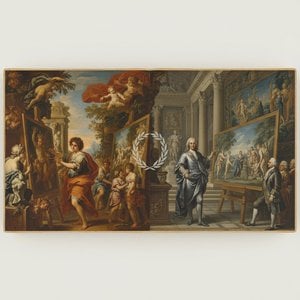
Simone Barabino: A Valpolicella Visionary Lost in Milan
Simone Barabino (born Valpolicella, Italy) remains a figure shrouded in artistic obscurity, yet his paintings possess a haunting beauty and profound spiritual depth that continue to intrigue scholars of late Mannerism. Despite a turbulent relationship with his mentor Bernardo Castello and a subsequent relocation to Milan where he ceased painting altogether, Barabino’s output—primarily focused on religious iconography—offers glimpses into the artistic currents of his time and reveals an individual grappling with both intellectual ambition and personal hardship.
Early Training and Influences
Barabino's formative years were spent under the tutelage of Bernardo Castello, a prominent Valpolicella artist known for his meticulous realism and adherence to classical ideals. Castello instilled in Barabino a disciplined approach to technique—particularly disegno—emphasizing careful observation and anatomical accuracy. However, their differing artistic visions soon led to a bitter feud, culminating in Barabino’s departure from Castello's studio and a move to Milan in the mid-16th century. This rupture undoubtedly fueled Barabino’s own creative explorations, exposing him to the burgeoning humanist spirit of the city and fostering connections with artists like Andrea Palladio, whose architectural designs profoundly impacted Barabino’s aesthetic sensibilities.
Notable Works: Expressions of Faith
Barabino's artistic legacy rests primarily on a handful of significant paintings that showcase his distinctive style—characterized by subdued colors, expressive drapery folds, and an unsettling stillness that conveys psychological complexity. “San Diego Restoring Sight to Blind Child,” commissioned for the Nunziata del Guastato church in Genoa, exemplifies Barabino’s masterful use of chiaroscuro – dramatic contrasts between light and dark – to heighten the emotional impact of the scene. The depiction captures a moment of profound compassion as San Diego tenderly touches the eyes of a blind child, symbolizing divine mercy and illuminating faith. Similarly, “Dead Christ with the Virgin and Saints Michael and Andrew,” executed for the Church of San Girolamo in Milan, presents a powerfully evocative portrayal of Jesus’s lifeless body—a testament to Barabino's ability to convey spiritual solemnity through meticulous detail and subtle shading. The composition is deliberately austere, focusing on the central figure while emphasizing the Virgin Mary’s sorrowful gaze and the saints’ expressions of reverence.
A Disconnected Artist: Milan and Subsequent Silence
Barabino’s time in Milan proved unproductive artistically; he abandoned painting altogether, seemingly disillusioned by the artistic landscape of the city and perhaps burdened by personal difficulties. The reasons for his sudden cessation remain elusive, adding to the mystique surrounding his life and work. Despite occasional commissions—primarily portraits—he never achieved the renown enjoyed by many of his contemporaries, leaving behind a relatively small body of paintings that nevertheless stand as compelling examples of late Mannerist art.
Historical Significance: Echoes of Castello’s Legacy
Barabino's artistic trajectory reflects broader trends within Italian Renaissance painting – namely, the gradual shift away from idealized beauty towards a more psychologically nuanced representation of human experience. While influenced by Castello’s classical training, Barabino nevertheless developed his own distinctive voice—one marked by an unsettling stillness and a preoccupation with themes of suffering and redemption. His paintings serve as valuable documents for understanding the artistic debates of his era and offer insights into the evolving spiritual landscape of sixteenth-century Italy. Though largely forgotten today, Simone Barabino’s enduring images continue to resonate with viewers who appreciate the profound beauty and emotional power inherent in his masterful depictions of faith and compassion.