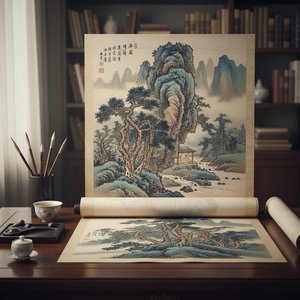
Sha Fu: A Master of Tranquil Landscapes
Sha Fu (1831–1906) stands as a pivotal figure in Qing Dynasty Chinese painting, celebrated for his serene depictions of mountainous landscapes imbued with profound spiritual resonance. Born in Beijing during the reign of Emperor Xianfeng, Sha Fu emerged from a family steeped in artistic tradition—his father was also a painter—establishing him within a lineage dedicated to capturing the sublime beauty of nature and conveying its influence on human contemplation. This heritage profoundly shaped his artistic vision and underpinned his unwavering commitment to mastering the techniques of ink wash painting (shan shui).
- Early Life & Training: Sha Fu’s formative years were spent honing his skills under the tutelage of renowned masters, absorbing stylistic precepts that would define his oeuvre. He diligently studied the works of Wang Fengshan and Zhao Menggui, artists who championed a contemplative approach to landscape painting—a tradition emphasizing observation, reflection, and an understanding of Daoist philosophy.
- Shanghai Residency & Artistic Flourishing: Moving to Shanghai in 1863 marked a significant turning point in Sha Fu’s career. The burgeoning cosmopolitan city offered him access to new patrons and artistic influences, propelling his output and solidifying his reputation as one of Shanghai's foremost painters. During this period, he embraced the vibrant spirit of Impressionism, subtly incorporating elements of Western aesthetics into his compositions.
Sha Fu’s distinctive style is characterized by a masterful command of ink wash technique—particularly broad, expressive brushstrokes—combined with meticulous attention to detail in rendering rocks, trees, and water features. He favored the alum paper medium, renowned for its ability to absorb ink evenly and produce luminous tonal gradations. His landscapes are not merely representations of scenery; they serve as conduits for conveying a sense of stillness, harmony, and spiritual contemplation—reflecting the core tenets of Daoist thought. Recurring motifs include pine trees symbolizing resilience and longevity, bamboo representing uprightness and virtue, and misty mountains embodying transcendence.
- Notable Works: Among Sha Fu’s most celebrated paintings are “The Peach and Plum Garden” and “Woman Lost in Thought Beneath a Wutong Tree,” both executed with exceptional sensitivity to color and composition. These pieces exemplify his ability to capture the ethereal beauty of twilight landscapes, conveying an atmosphere of profound serenity and introspection.
- Influence & Legacy: Sha Fu’s artistic legacy extends far beyond his own lifetime. He profoundly impacted subsequent generations of Chinese painters who sought to emulate his stylistic innovations and philosophical depth. His work continues to inspire admiration for its understated elegance and its ability to evoke a contemplative response in viewers—solidifying his position as an enduring icon of Qing Dynasty art.
Sha Fu’s contribution to the artistic landscape of the Qing Dynasty is undeniable. He skillfully blended traditional Daoist principles with Western Impressionistic influences, creating landscapes that transcend mere visual depiction and invite contemplation on the fundamental questions of existence. His paintings remain treasured artifacts—testaments to a period of artistic brilliance and spiritual exploration—and continue to resonate powerfully with audiences today.