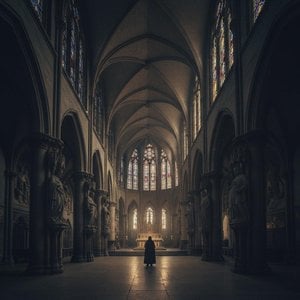
Robert Taylor Carson: Bridging Academic Realism and Southern Gothic
Robert Taylor Carson (1884–1951), born in Oxford, England, was a prolific portrait painter whose distinctive style—characterized by meticulous academic realism infused with the melancholic spirit of Southern Gothic—established him as one of Britain’s foremost artists of his era. His artistic journey began amidst the intellectual fervor of the Edwardian period, nurtured by formal training at Slade School of Fine Art and subsequently honed through independent study and travel to Italy and Spain. Carson's unwavering dedication to mastering traditional techniques—particularly oil painting—became a cornerstone of his oeuvre, resulting in canvases imbued with luminous color palettes and painstakingly rendered surfaces that capture both physical likeness and psychological depth. Carson’s formative years were marked by exposure to influential thinkers and artists such as Walter Sickert and Cyril Leonard Partridge, fostering a deep appreciation for Impressionism and Symbolism alongside a burgeoning fascination with the darker currents of human emotion. He absorbed the stylistic innovations of Futurists like Umberto Boccioni and Giacomo Matteotti, experimenting with dynamic compositions and bold brushstrokes—a departure from the prevailing academic conventions—yet retaining a core commitment to anatomical precision. His Italian explorations yielded inspiration from Iberian art traditions and incorporated elements of decorative patterning into his portraits. Carson’s artistic hallmark lay in his masterful execution of portraiture—a genre he pursued with unwavering seriousness and intellectual curiosity throughout his career. He eschewed sentimental embellishments, prioritizing instead a rigorously objective representation of his subjects’ physical features and expressions. However, Carson transcended mere anatomical accuracy by delving beneath the surface to capture elusive psychological nuances—a hallmark of Southern Gothic that resonated deeply within his canvases. His meticulous attention to detail—evident in the rendering of skin textures, drapery folds, and subtle tonal gradations—was achieved through painstaking layering of glazes and impasto techniques, resulting in surfaces that shimmered with luminosity and conveyed a palpable sense of presence. He amassed a distinguished clientele comprising prominent figures from British society—including Sir William Johnston (Lord Mayor), Professor Sir Douglas Lloyd Savory, and G. I.—resulting in a substantial body of portrait commissions that cemented his reputation as one of the era’s most respected artists. His portraits are housed in prestigious institutions worldwide—including The Robert McLaughlin Gallery (Canada) and Oxford's Taylor Institution Library—serving as enduring testaments to his artistic vision and technical prowess. Carson’s influence extended beyond his immediate contemporaries, inspiring subsequent generations of portrait painters who sought to emulate his unwavering commitment to academic realism and his ability to imbue his canvases with psychological resonance. Ultimately, Carson's artistic legacy resides in his masterful synthesis of academic realism and Southern Gothic sensibilities. He captured not only the outward appearance of his subjects but also their inner turmoil—a preoccupation with isolation, longing, and existential anxieties that aligns seamlessly with the thematic concerns of Carson McCullers’ novels and films. Carson’s canvases stand as poignant reflections on the human condition—illuminating the complexities of identity and confronting the unsettling realities of mortality—solidifying his place among the most significant artists of the 20th century.Perguntas e Respostas
Posso ordenar as obras de Robert Taylor Carson por cor?
O Índice de Cores de Robert Taylor Carson organiza as obras do artista por cores.
Posso explorar as obras de Robert Taylor Carson por tema?
O Atlas de Temas de Robert Taylor Carson é uma página que mapeia as obras do artista por seus temas.
Quantas obras de Robert Taylor Carson estão disponíveis para explorar?
Você pode explorar 6 obras de arte obras de Robert Taylor Carson na página Todas as obras.