A Quiet Chronicler of Victorian Scotland: The Life and Art of Patrick William Adam
Patrick William Adam, born in 1854, remains a somewhat understated figure within the pantheon of Scottish artists, yet his contribution to capturing the essence of late Victorian and Edwardian life is undeniably significant. Unlike many of his contemporaries who sought dramatic or overtly political subjects, Adam found beauty and meaning in the everyday – in the quiet dignity of interiors, the subtle grandeur of landscapes, and the intimate portrayal of portraiture. His work offers a poignant glimpse into a world on the cusp of change, meticulously documented with a sensitivity that resonates even today. While biographical details are often sparse, we know he was deeply connected to the artistic community of his time, most notably as a co-founder of the influential Society of Eight in 1894. This group, dedicated to promoting a distinctly Scottish aesthetic, provided a crucial platform for Adam and his peers to showcase their talents and challenge prevailing artistic norms.From Academic Foundations to Personal Vision
Adam’s artistic journey began with formal training at the Trustees' Academy in Edinburgh, an institution renowned for its rigorous academic approach. This foundation instilled in him a mastery of technique – a precise draughtsmanship, a nuanced understanding of light and shadow, and a keen eye for detail. However, Adam wasn’t content to simply replicate what he was taught. He gradually developed a distinctive style that moved beyond strict realism towards a more atmospheric and emotionally evocative representation of his subjects. Early works often featured detailed depictions of Scottish castles and stately homes, reflecting the prevailing interest in national heritage. But even within these conventional themes, hints of Adam’s unique sensibility emerge – a softness in the rendering of textures, a particular focus on the play of light through windows, and an almost palpable sense of stillness. He wasn't interested in grand historical narratives; instead, he focused on the *feeling* of a place, its history subtly embedded within the walls and furnishings.The Society of Eight and the Rise of Scottish Identity
The formation of the Society of Eight marked a pivotal moment in Adam’s career. Alongside artists like Sir George Washington Stirling Maxwell and William Oliver, he actively championed a uniquely Scottish artistic voice. The group deliberately eschewed the influence of London-based art circles, seeking instead to draw inspiration from their own cultural heritage and landscape. This wasn't about rejecting all external influences, but rather about filtering them through a distinctly Scottish lens. Adam’s contributions to the Society were characterized by his exquisite watercolour paintings, often depicting interiors that showcased the beauty of traditional Scottish craftsmanship and domestic life. These works weren’t merely decorative; they were statements of national pride, celebrating the skills and artistry of Scottish artisans. The Society's exhibitions proved highly successful, attracting critical acclaim and establishing a strong market for their work.Themes and Techniques: A Master of Atmosphere
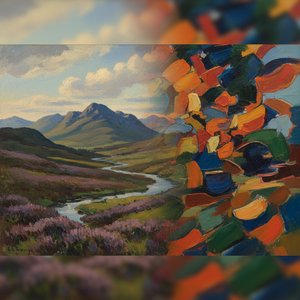
Adam’s oeuvre is remarkably consistent in its thematic focus – landscapes, interiors, and portraits. However, within these broad categories, he explored a range of subtle variations. His landscapes are rarely dramatic or imposing; instead, they capture the quiet beauty of the Scottish countryside, often shrouded in mist or bathed in soft light. He possessed an exceptional ability to convey atmosphere, creating a sense of mood and place that draws the viewer into the scene. His interiors are perhaps his most celebrated works, meticulously rendered with a remarkable attention to detail. He wasn’t interested in simply documenting the objects within a room; he sought to capture the *life* of the space – the warmth of a fire, the patina of age on furniture, the subtle play of light across surfaces. His technique was masterful, employing delicate watercolour washes and precise brushwork to create a sense of depth and texture. He often used glazing techniques to build up layers of colour, resulting in paintings that possess a luminous quality.Legacy and Historical Significance
Patrick William Adam died in 1929, leaving behind a body of work that continues to captivate and inspire. While he may not be as widely recognized as some of his contemporaries, his contribution to Scottish art is undeniable. He was a master of atmosphere, a meticulous craftsman, and a quiet chronicler of Victorian Scotland. His paintings offer a poignant glimpse into a world on the cusp of change, meticulously documented with a sensitivity that resonates even today.- His work provides valuable insights into the domestic life and material culture of late Victorian and Edwardian Scotland.
- He played a crucial role in promoting a distinctly Scottish artistic identity through his involvement with the Society of Eight.
- Adam’s paintings continue to be highly sought after by collectors and museums, testament to their enduring beauty and historical significance.
Perguntas e Respostas
Como posso encontrar obras de Patrick William Adam em uma paleta específica?
As obras de Patrick William Adam podem ser exploradas por paleta de cores na página de Por Paletas do artista.
Onde as obras de Patrick William Adam estão agrupadas por palavras-chave?
As obras de Patrick William Adam podem ser exploradas por palavra-chave na página de Por Palavras-chave do artista. Cada palavra-chave agrupa as obras relacionadas.
Em qual período histórico Patrick William Adam trabalhou?
Patrick William Adam trabalhou no período 19th Century. O período situa a atividade do artista na história.