Olga Rosanova, 1886 – 1918

As 97 pinturas mais famosas de Olga Rosanova

A pintura que tornou Olga Rosanova famoso(a) é Non-objective Composition (1916). Female Portrait (1907) e Portrait of a girl (1911) seguem-lhes nos corações de colecionadores e visitantes de museus. Dos 98 trabalhos de Olga Rosanova em nosso catálogo, estas 97 são as obras mais admiradas, cada uma apresentada com a sua data, o seu museu e o que a torna única.

Classificado de acordo com o nosso índice de popularidade, que combina buscas, visitas e pedidos de cada obra. Atualizado em Novembro 2026. Cada obra-prima nesta página pode ser encomendada como uma reprodução em óleo pintada à mão, com qualidade de museu, ou como uma impressão de fine art, no tamanho de sua escolha.

Retrato de Olga Rosanova
Olga Rosanova · 1886 – 1918
Nascimento · falecimento
1886 – 1918, Melenki
Movimento
Cubism
Obras em nosso catálogo
98
As mais famosas
Non-objective Composition (1916)
Mais obras em
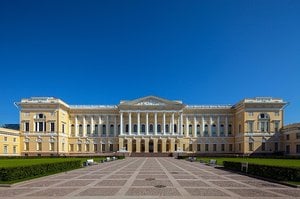
Museu Estatal Russo

Olga Rosanova: as dez obras-primas

Non-objective Composition (1916) de Olga Rosanova
1

Non-objective Composition

1916 · Collage

The gaze meets Non-objective Composition, a work that exists as a collage on paper. Created by the artist Olga Rozanova, this piece emerges from the year 1916. It presents a world where the physical boundaries of the medium begin to shift, inviting a sense of wonder at how simple materials can suggest such complex, rhythmic movement.

Reprodução em óleo pintada à mão de $199 30 × 33 cm
Female Portrait (1907) de Olga Rosanova
2

Female Portrait

1907 · Oil On Canvas · Ivanovo Regional Art Museum, Ivanovo Urban Okrug

The artwork titled Female Portrait is a formal portrait of a woman created by Olga Rozanova. This oil on canvas piece dates to 1907. It captures the subject in a moment of quietude, presenting a singular figure against a backdrop of deep color. The woman remains the central focus of the composition.

Reprodução em óleo pintada à mão de $199 30 × 33 cm
Portrait of a girl (1911) de Olga Rosanova
3

Portrait of a girl

1911 · Oil On Canvas

In "Portrait of a girl" by Olga Rozanova, a young subject sits at the center of a quiet, heavy world. The girl faces forward, her presence anchored by a straightforward frontal view that demands an immediate encounter. Her gaze is direct, carrying a weight of melancholy that settles in the stillness of her expression. She is a singular point of focus amidst a deep, enveloping atmosphere.

Reprodução em óleo pintada à mão de $199 28 × 36 cm Mesmo tamanho da original $327 60 × 80 cm Encomendar no tamanho original →
Jack of Diamonds (1915) de Olga Rosanova
4

Jack of Diamonds

1915 · Oil

Jack of Diamonds is a significant work by the Russian avant-garde artist Olga Rozanova. Created about 1915, this piece belongs to her celebrated Playing Cards series. This specific collection represents the height of her artistic career, marking a period of profound experimentation and formal maturity.

Reprodução em óleo pintada à mão de $199 28 × 35 cm Mesmo tamanho da original $351 69 × 80 cm Encomendar no tamanho original →
Queen of Diamonds (1915) de Olga Rosanova
5

Queen of Diamonds

1915 · Oil On Canvas

The gaze meets Queen of Diamonds, a work that pulses with the energy of a shifting era. Painted in 1915, this piece emerges from the creative spirit of Olga Rozanova. The artist, who entered the world in 1886 in Melenki, Russia, brings a distinct sense of movement to the canvas. Every line and shape seems to vibrate with a life of its own, as if the colors are still settling…

Reprodução em óleo pintada à mão de $199 27 × 37 cm Mesmo tamanho da original $339 64 × 81 cm Encomendar no tamanho original →
Portrait of Lady in Green Dress (1912) de Olga Rosanova
6

Portrait of Lady in Green Dress

1912 · Oil On Canvas · Astrakhan State Art Gallery, Astrakhan

In "Portrait of Lady in Green Dress" by Olga Rozanova, a seated woman occupies the center of a vertical plane. She is captured from the waist up, her figure positioned slightly off-center against a fractured environment. Her gaze remains steady, meeting the viewer with a sense of contemplative stillness. The composition lacks traditional depth, utilizing a flattened perspective that pulls the subject toward the surface of the canvas.

Reprodução em óleo pintada à mão de $199 24 × 41 cm Mesmo tamanho da original $580 89 × 140 cm Encomendar no tamanho original →
Portrait (1913) de Olga Rosanova
7

Portrait

1913 · Oil On Canvas

Olga Rozanova’s Portrait, executed about 1913, utilizes a Cubist-style abstract approach to dismantle traditional representation. The composition is built upon fragmented geometric forms that create a complex, layered structure. Through a dynamic interplay of sharp angles and curved shapes, the artist establishes a sense of movement within a flattened, multi-dimensional perspective. This spatial arrangement rejects conventional depth in favor of the structural complexity characteristic of early 20th-century Cubism.

Reprodução em óleo pintada à mão de $199 25 × 41 cm Mesmo tamanho da original $321 54 × 86 cm Encomendar no tamanho original →
In Cafe (1912) de Olga Rosanova
8

In Cafe

1912 · Oil · Museu Estatal Russo, São Petersburgo

In this work, titled In Cafe, we encounter a significant piece by the Russian avant-garde artist Olga Rozanova. Created about 1912, the painting captures a quiet, perhaps heavy, moment between two figures. It is a work that reflects the artist's presence within the radical circles of the early twentieth century, specifically during a period when she was navigating the shifting boundaries of modernism.

Reprodução em óleo pintada à mão de $199 37 × 27 cm Mesmo tamanho da original $335 83 × 61 cm Encomendar no tamanho original →
Simultaneous Representation of Kings of Hearts and Diamonds (1915) de Olga Rosanova
9

Simultaneous Representation of Kings of Hearts and Diamonds

1915 · Gouache · Astrakhan State Art Gallery, Astrakhan

In the quiet evolution of the Russian avant-garde, Simultaneous Representation of Kings of Hearts and Diamonds by Olga Rozanova emerges as a significant moment of creative maturity. Painted about 1915, this work belongs to the artist's celebrated Playing Cards series. This specific collection represents the height of her artistic career, marking a period where her experimentation with form and color reached a profound synthesis.

Reprodução em óleo pintada à mão de $199 28 × 36 cm Mesmo tamanho da original $351 66 × 84 cm Encomendar no tamanho original →
Selfportrait (1912) de Olga Rosanova
10

Selfportrait

1912 · Oil · Ivanovo Regional Art Museum, Ivanovo Urban Okrug

In this 1912 work, the artist Olga Rozanova turns her gaze inward, presenting a Selfportrait that captures her own likeness. The composition focuses on a single figure, rendered in a bust-length view that brings the subject into immediate proximity with the viewer. There is a quiet intensity in the way she meets the eye, a steady and direct gaze that anchors the entire piece. Through this intimate perspective, the boundaries…

Reprodução em óleo pintada à mão de $199 34 × 29 cm Mesmo tamanho da original $274 62 × 52 cm Encomendar no tamanho original →

Mais obras-primas de Olga Rosanova, de 11 a 97

Suprematism (1916) de Olga Rosanova
#12

Suprematism

1916 · Galeria Tretyakov

The painting Suprematism is a work by Olga Rozanova. Created in 1916, this oil on canvas captures a moment of radical transition. The artist, born in 1886 in…

Leve para casa a partir de $199 →
Boulevard (1911) de Olga Rosanova
#22

Boulevard

1911 · Samara Art Museum

Olga Rozanova’s Boulevard, created about 1911, utilizes the simplified forms and bold color application characteristic of Naive Art or Primitivism. The composition centers on a scene set along…

Encomendar uma reprodução a partir de $199 →
Illustration for Souz Molodyozhi (1913) de Olga Rosanova

The work titled Illustration for Souz Molodyozhi is a Cubist Charcoal Drawing by the artist Olga Rozanova. Created in 1913, this piece exists within the public domain. It…

Color Painting (1917) de Olga Rosanova
#26

Color Painting

1917 · Museu Estatal Russo

We are looking at Color Painting, a work also known as Non-Objective Composition. This piece was executed in 1917, a period of significant transformation for its creator. The…

Suprematism (1916) de Olga Rosanova
#37

Suprematism

1916 · Slobodskoy Museum and Exhibition Center

The painting Suprematism is a work by Olga Rozanova, created in 1916. It emerged from a period of radical transition in the Russian avant-garde. The canvas captures a…

Leve para casa a partir de $199 →
Watches and Cards (1915) de Olga Rosanova
#39

Watches and Cards

1915 · Samara Art Museum

Watches and Cards is a work by the Russian avant-garde artist Olga Rozanova. Created about 1915, this piece emerged during a period of intense formal experimentation for the…

Leve para casa a partir de $199 →
Beerhouse (1914) de Olga Rosanova
#44

Beerhouse

1914

The painting titled Beerhouse emerged in 1914. It is a work by Olga Rozanova, an artist born in 1886 in Melenki, Russia. This piece captures a specific, fragmented…

Leve para casa a partir de $199 →
Moderne Movie Theater (1915) de Olga Rosanova
#67

Moderne Movie Theater

1915 · Slobodskoy Museum and Exhibition Center

The painting titled Moderne Movie Theater was created by the Russian avant-garde artist Olga Rozanova. This work dates to about 1915. It emerged during a period of intense…

Leve para casa a partir de $199 →
Room (1915) de Olga Rosanova
#74

Room

1915

The gaze meets Room, a work that exists as a fragment of a shifting reality. Painted in 1915, this piece emerges from the restless energy of the Russian…

Leve para casa a partir de $199 →

Pinturas de Olga Rosanova por período

Os temas que Olga Rosanova mais pintou

Os quatro temas que mais se repetem entre estas obras-primas, com o melhor exemplo de cada um.

Onde ver as pinturas de Olga Rosanova

Os 8 museus que detêm a maioria das pinturas desta página.

Museus Cidade Obras de Olga Rosanova Pinturas desta lista
Museu Estatal Russo, São PetersburgoMuseu Estatal Russo São Petersburgo 21 In Cafe, Non-Objective Composition (Suprematism), Restaurant
Galeria Tretyakov, MoscovoGaleria Tretyakov Moscovo 9 Suprematism, Female Portrait, Sideboard with Dishes
Samara Art Museum, SamaraSamara Art Museum Samara 6 Boulevard, Watches and Cards, construction work
Slobodskoy Museum and Exhibition Center Municipal Formation of the City of Slobodskoy 5 Suprematism, Cityscape, Moderne Movie Theater
Nizhny Novgorod State Art Museum, Nizhny NovgorodNizhny Novgorod State Art Museum Nizhny Novgorod 4 Suprematism, Still life. Gloxinias, Queen of diamonds
Ivanovo Regional Art Museum, Ivanovo Urban OkrugIvanovo Regional Art Museum Ivanovo Urban Okrug 3 Female Portrait, Selfportrait, Jack of Clubs
Astrakhan State Art Gallery, AstrakhanAstrakhan State Art Gallery Astrakhan 3 Portrait of Lady in Green Dress, Simultaneous Representation of Kings of Hearts and Diamonds, Still-life. Vase
Yekaterinburg Museum of Fine Arts, EcaterimburgoYekaterinburg Museum of Fine Arts Ecaterimburgo 2 Lady in pink (Artist's sister Anna Rozanova), Non-Objective Composition (Suprematism)

Olga Rosanova, ano a ano: as pinturas que definem sua obra

Uma década de pintura, de 1907 a 1917, foi tudo o que Olga Rosanova precisava: aqui estão as suas obras-primas, ano a ano.

  1. 1907
    Female Portrait (1907) de Olga Rosanova
    #2 de 97

    Female Portrait

    Idade: 21 · Ivanovo Regional Art Museum

    The artwork titled Female Portrait is a formal portrait of a woman created by Olga Rozanova. This oil on canvas piece dates to 1907. It captures the subject…

  2. 1907
    Female Portrait (1907) de Olga Rosanova
    #13 de 97

    Female Portrait

    Idade: 21 · Galeria Tretyakov

    In this oil on canvas, Olga Rozanova presents Female Portrait, a work dating to 1907. It represents a significant moment in her early development, originating from her formative…

  3. 1907
  4. 1909
    Landscape (1909) de Olga Rosanova
    Nº 16 de 97

    Landscape

    Idade: 23

    In "Landscape" by Olga Rozanova, a central orange path cuts through the scene, pulling the eye forward toward a distant horizon line. To the left, dark vertical tree…

  5. 1910
    Abstract Composition (1910) de Olga Rosanova
    Nº 19 de 97

    Abstract Composition

    Idade: 24 · Museu Estatal Russo

    is a work by the Russian artist Olga Rozanova. Created about 1910, the painting emerged during a period of intense experimentation in the Russian avant-garde. The canvas captures…

  6. 1910
    The Composition with the Train (1910) de Olga Rosanova
    Posição 20 de 97

    The Composition with the Train

    Idade: 24

    The Composition with the Train is a work by Olga Rozanova, an artist who emerged as a significant figure within the Russian avant-garde. Created about 1910, this piece…

  7. 1910
    Still Life (1910) de Olga Rosanova
    Nº 21 de 97

    Still Life

    Idade: 24 · Radishchev Art Museum

    In "Still Life" by Olga Rozanova, the arrangement of objects creates a quiet tension between recognizable forms and abstraction. The central focus is a white pitcher with two…

  8. 1911
    Portrait of a girl (1911) de Olga Rosanova
    Posição 3 de 97

    Portrait of a girl

    Idade: 25

    In "Portrait of a girl" by Olga Rozanova, a young subject sits at the center of a quiet, heavy world. The girl faces forward, her presence anchored by…

  9. 1911
    Restaurant (1911) de Olga Rosanova
    Nº 18 de 97

    Restaurant

    Idade: 25 · Museu Estatal Russo

    This oil painting, titled Restaurant, was created by Olga Rozanova in 1911. It represents a significant moment in the artist's early development, capturing a period of intense experimentation…

  10. 1911
    Boulevard (1911) de Olga Rosanova
    #22 de 97

    Boulevard

    Idade: 25 · Samara Art Museum

    Olga Rozanova’s Boulevard, created about 1911, utilizes the simplified forms and bold color application characteristic of Naive Art or Primitivism. The composition centers on a scene set along…

  11. 1912
    Portrait of Lady in Green Dress (1912) de Olga Rosanova
    Posição 6 de 97

    Portrait of Lady in Green Dress

    Idade: 26 · Astrakhan State Art Gallery

    In "Portrait of Lady in Green Dress" by Olga Rozanova, a seated woman occupies the center of a vertical plane. She is captured from the waist up, her…

  12. 1912
    In Cafe (1912) de Olga Rosanova
    Posição 8 de 97

    In Cafe

    Idade: 26 · Museu Estatal Russo

    In this work, titled In Cafe, we encounter a significant piece by the Russian avant-garde artist Olga Rozanova. Created about 1912, the painting captures a quiet, perhaps heavy,…

  13. 1912
    Selfportrait (1912) de Olga Rosanova
    Posição 10 de 97

    Selfportrait

    Idade: 26 · Ivanovo Regional Art Museum

    In this 1912 work, the artist Olga Rozanova turns her gaze inward, presenting a Selfportrait that captures her own likeness. The composition focuses on a single figure, rendered…

  14. 1913
    Portrait (1913) de Olga Rosanova
    Nº 7 de 97

    Portrait

    Idade: 27

    Olga Rozanova’s Portrait, executed about 1913, utilizes a Cubist-style abstract approach to dismantle traditional representation. The composition is built upon fragmented geometric forms that create a complex, layered…

  15. 1913
    Illustration for Souz Molodyozhi (1913) de Olga Rosanova
    Posição 25 de 97

    Illustration for Souz Molodyozhi

    Idade: 27

    The work titled Illustration for Souz Molodyozhi is a Cubist Charcoal Drawing by the artist Olga Rozanova. Created in 1913, this piece exists within the public domain. It…

  16. 1914
    Fire in the City (1914) de Olga Rosanova
    Posição 27 de 97

    Fire in the City

    Idade: 28

    Olga Rozanova captured a moment of urban upheaval in Fire in the City. Painted about 1914, the work presents an energetic and chaotic scene. It exists as a…

  17. 1914
    Colour Compostion (1914) de Olga Rosanova
    Nº 28 de 97

    Colour Compostion

    Idade: 28

    Olga Rozanova produced Colour Compostion about 1914. This work emerged during a period when the artist was navigating the radical shifts of the Russian avant-garde. Born in 1886…

  18. 1914
    Colour Composition (1914) de Olga Rosanova
    Nº 29 de 97

    Colour Composition

    Idade: 28

    Colour Composition is a work by the Russian artist Olga Rozanova. Created in 1914, the piece emerged during a period of intense experimentation within the Russian avant-garde. The…

  19. 1915
    Jack of Diamonds (1915) de Olga Rosanova
    Nº 4 de 97

    Jack of Diamonds

    Idade: 29

    Jack of Diamonds is a significant work by the Russian avant-garde artist Olga Rozanova. Created about 1915, this piece belongs to her celebrated Playing Cards series. This specific…

  20. 1915
    Queen of Diamonds (1915) de Olga Rosanova
    #5 de 97

    Queen of Diamonds

    Idade: 29

    The gaze meets Queen of Diamonds, a work that pulses with the energy of a shifting era. Painted in 1915, this piece emerges from the creative spirit of…

  21. 1915
    Simultaneous Representation of Kings of Hearts and Diamonds (1915) de Olga Rosanova
    #9 de 97

    Simultaneous Representation of Kings of Hearts and Diamonds

    Idade: 29 · Astrakhan State Art Gallery

    In the quiet evolution of the Russian avant-garde, Simultaneous Representation of Kings of Hearts and Diamonds by Olga Rozanova emerges as a significant moment of creative maturity. Painted…

  22. 1916
    Non-objective Composition (1916) de Olga Rosanova
    #1 de 97

    Non-objective Composition

    Idade: 30

    The gaze meets Non-objective Composition, a work that exists as a collage on paper. Created by the artist Olga Rozanova, this piece emerges from the year 1916. It…

  23. 1916
    Suprematism (1916) de Olga Rosanova
    Posição 12 de 97

    Suprematism

    Idade: 30 · Galeria Tretyakov

    The painting Suprematism is a work by Olga Rozanova. Created in 1916, this oil on canvas captures a moment of radical transition. The artist, born in 1886 in…

  24. 1917
    Color Painting (1917) de Olga Rosanova
    #26 de 97

    Color Painting

    Idade: 31 · Museu Estatal Russo

    We are looking at Color Painting, a work also known as Non-Objective Composition. This piece was executed in 1917, a period of significant transformation for its creator. The…

  25. 1917
    Non-Objective Composition. Color painting (1917) de Olga Rosanova
    Posição 43 de 97

    Non-Objective Composition. Color painting

    Idade: 31 · National Art Museum of Azerbaijan

    Non-Objective Composition. Color painting is a work created by the artist Olga Rozanova. The piece was executed in 1917. It emerged from a period of intense creative shifts…

As obras-primas de Olga Rosanova: perguntas e respostas

Por qual pintura Olga Rosanova é mais conhecido(a)?Mostrar a resposta

Non-objective Composition (1916). Seguem-se Female Portrait (1907) e Portrait of a girl (1911).

Qual era a idade de Olga Rosanova quando pintou Non-objective Composition?Mostrar a resposta

30 anos: Non-objective Composition data de 1916 e Olga Rosanova nasceu em 1886.

Quais são as dez maiores pinturas de Olga Rosanova?Mostrar a resposta

Non-objective Composition, Female Portrait, Portrait of a girl, Jack of Diamonds, Queen of Diamonds, Portrait of Lady in Green Dress, Portrait, In Cafe, Simultaneous Representation of Kings of Hearts and Diamonds e Selfportrait. O ranking acima apresenta o ano e o museu de cada uma.

Quantas obras Olga Rosanova pintou?Mostrar a resposta

Nosso catálogo lista 98 obras de Olga Rosanova, datadas de 1907 a 1917.

Em quais museus posso ver as obras-primas de Olga Rosanova?Mostrar a resposta

A maioria deles está em Museu Estatal Russo (São Petersburgo), Galeria Tretyakov (Moscovo) e Samara Art Museum (Samara). A tabela acima lista os museus um a um.

Quando é que Olga Rosanova pintou as suas obras-primas?Mostrar a resposta

Em 1915: 22 das 97 obras nesta página datam dessa época, entre elas Jack of Diamonds.

Quais são as primeiras e as últimas pinturas famosas de Olga Rosanova?Mostrar a resposta

A obra mais antiga nesta página é de Female Portrait (1907), e a mais recente é de Color Painting (1917).

Quais eram os temas favoritos de Olga Rosanova?Mostrar a resposta

Geometric shapes (26), Woman (11) e Flowers (10), entre as 97 obras nesta página.

Qual técnica Olga Rosanova preferia?Mostrar a resposta

Oil On Canvas: 54 de um total de 97 obras nesta página.

A que movimento artístico Olga Rosanova pertence?Mostrar a resposta

Cubism, como mostram as pinturas nesta página.

Quais obras-primas de Olga Rosanova estão expostas no Museu Estatal Russo?Mostrar a resposta

In Cafe, Non-Objective Composition (Suprematism) e Restaurant estão entre as 21 obras nesta página pertencentes ao Museu Estatal Russo, São Petersburgo.

Posso adquirir uma reprodução de uma obra-prima de Olga Rosanova?Mostrar a resposta

Sim. Todas as pinturas desta página podem ser encomendadas como uma reprodução em óleo pintada à mão com qualidade de museu ou como uma impressão de fine art, no tamanho de sua escolha, a partir da própria página da pintura.

A vida de Olga Rosanova

Uma Vida Iluminada: A Pioneira Visão de Olga Rozanova

Olga Vladimirovna Rozanova, um nome que ressoa com crescente força nos anais da arte do século XX, foi uma artista vanguardista russa cuja vida tragicamente curta belisava uma carreira notavelmente prolífica e inovadora. Nascida em 1886 em Melenki, Rússia, para uma família imersa tanto no dever cívico – seu pai era um oficial de polícia distrital – quanto na tradição religiosa através de seu avô padre ortodoxo, o caminho de Rozanova divergiu da convenção enquanto perseguia o florescente mundo da arte moderna em Moscou. Após se formar no Ginásio Feminino de Vladimir em 1904, ela mergulhou no treinamento artístico, primeiro na Escola de Arte Bolshakov sob Nikolai Ulyanov e o escultor Andrey Matveev, depois auditando cursos na Escola Stroganov de Artes Aplicadas e finalmente aprimorando suas habilidades no estúdio particular de Konstantin Yuon. Esses anos formativos lançaram as bases para uma exploração inquieta que a veria navegar e contribuir para alguns dos movimentos artísticos mais radicais de sua época.

Do Neoprimitivismo à Beira da Abstração

O trabalho inicial de Rozanova refletiu as vibrantes influências, muitas vezes folclóricas, do Neoprimitivismo, um movimento que buscava inspiração na arte tradicional russa e na cultura camponesa. No entanto, ela rapidamente gravitou em direção ao dinamismo do Cubo-Futurismo por volta de 1913, cativada pelo abraço futurista italiano da velocidade, tecnologia e energia da vida moderna. Essa fascinação culminou com sua participação na Primeira Exposição Internacional Futurista Livre em Roma em 1914, um passo ousado que trouxe seu trabalho a um público internacional. Peças como “Num Café” desse período demonstram uma síntese de sensibilidades russas com as formas fragmentadas e as linhas enérgicas características do Futurismo. No entanto, Rozanova não estava simplesmente imitando; ela estava absorvendo e transformando essas influências, infundindo-as com uma intensidade emocional distintamente russa. Este período também viu sua colaboração inovadora com o poeta Aleksei Kruchenykh, resultando em “samopismo”, uma forma revolucionária de livro Futurista onde texto e imagem estavam inextricavelmente ligados – um precursor da poesia concreta e literatura visual.

A Virada Suprematista e a Busca do Sentimento Puro

Um momento crucial ocorreu em 1916 quando Rozanova se juntou ao grupo Supremus de Kazimir Malevich, abraçando a abstração pura como a derradeira expressão artística. Embora profundamente influenciada pelas teorias de Malevich, ela não simplesmente replicava suas formas geométricas. Em vez disso, ela traçou seu próprio curso dentro do Suprematismo, priorizando a cor e a ressonância emocional sobre a estrutura rígida. Suas telas se tornaram campos de cores vibrantes, camadas e interações para evocar um senso de energia espiritual e experiência interior. Ela acreditava que a cor possuía um poder inerente para comunicar diretamente com a alma, contornando o pensamento racional. Essa ênfase no sentimento subjetivo distinguiu seu trabalho da abordagem mais austera de Malevich e prenunciou desenvolvimentos posteriores na arte abstrata. Sua “Composição Não Objetiva (Suprematismo)” exemplifica essa mudança, mostrando uma interação dinâmica de formas e cores que pulsam com vida.

Um Legado Forjado em Cor: Antecipando o Expressionismo Abstrato

Em seus últimos anos, Rozanova desenvolveu o que chamou de "pintura de cor", caracterizada por telas ousadas e simples apresentando grandes áreas de cor saturada. Esses trabalhos, como “Faixa Verde”, são notavelmente premonitórios, antecipando as pinturas de Campo de Cor de Mark Rothko e Barnett Newman décadas depois. Eles representam uma redução radical a formas essenciais e tons, visando evocar respostas emocionais profundas através da pura experiência visual. Infelizmente, a carreira promissora de Rozanova foi interrompida por uma doença; ela sucumbiu à difteria em Moscou em 1918, aos trinta e dois anos. Apesar de sua morte prematura, as contribuições de Olga Rozanova para a vanguarda russa foram significativas. Ela não era meramente uma seguidora das tendências artísticas, mas uma participante e inovadora ativa que ultrapassou os limites e explorou novas possibilidades. Sua voz única dentro do Suprematismo, seu trabalho pioneiro na combinação de texto e imagem e suas "pinturas de cor" visionárias garantiram seu lugar como uma figura fundamental na história da arte do século XX – um legado que continua a inspirar artistas e cativar o público até hoje. Ela permanece uma mãe intelectual do Expressionismo Abstrato.