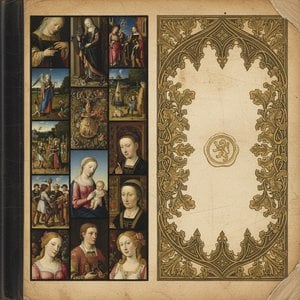
Norberto Onofrio: A Master of Portraiture and Religious Devotion
Born in the vibrant heart of Buenos Aires, Argentina, in 1927, Norberto Onofrio’s artistic journey was one defined by a profound dedication to capturing the human form and exploring themes of faith and spirituality. He emerged as an autodidact, absorbing techniques and influences through tireless observation and disciplined practice, ultimately establishing himself as a significant figure within both Argentinian and Italian art circles. His career spanned nearly six decades, culminating in his peaceful passing in 2014, leaving behind a legacy of exquisitely rendered portraits and deeply moving religious scenes.
Onofrio’s early artistic development was marked by a rigorous apprenticeship in draughtsmanship and engraving – skills he honed diligently before transitioning to painting. This foundational training instilled within him an acute understanding of line, form, and tonal value, qualities that would become hallmarks of his distinctive style. He wasn't merely replicating reality; he was meticulously dissecting it, analyzing its essence, and then rebuilding it on the canvas with a remarkable level of detail and emotional resonance.
The Influence of Rembrandt and Italian Renaissance
Onofrio’s artistic sensibilities were profoundly shaped by two key influences: the masterful portraiture of Rembrandt van Rijn and the idealized beauty of the Italian Renaissance. Rembrandt's ability to capture the psychological depth within his subjects – their vulnerability, strength, and inner turmoil – resonated deeply with Onofrio, inspiring him to imbue his portraits with a similar level of emotional complexity. Simultaneously, he was captivated by the classical ideals of balance, harmony, and proportion that characterized Renaissance art, particularly in the works of artists like Raphael and Titian.
This dual influence is powerfully evident in his “Paternity – Tribute to Rembrandt” (1976), a stunning depiction of Christ as a father holding the infant Jesus. The composition echoes Rembrandt’s use of dramatic lighting and intimate perspective, while simultaneously drawing upon Renaissance ideals of beauty and grace. The painting isn't simply a representation; it’s an exploration of faith, family, and divine love – rendered with breathtaking technical skill.
A Journey to Rome and the Establishment of Sant’Onofrio
In 1960, Onofrio embarked on a transformative journey to Italy, specifically to Rome. This period marked a pivotal shift in his artistic focus, leading him to establish the cloister of Sant'Onofrio – a remarkable testament to his dedication and vision. The cloister, located just outside the city walls, became a haven for artists and intellectuals, fostering a vibrant community centered around art and spirituality. It served as both a studio and a place of contemplation, profoundly influencing his artistic development.
During his time in Rome, Onofrio’s style evolved further, incorporating elements of classical portraiture with a distinctly Italian sensibility. He mastered the techniques of oil painting, achieving an unparalleled level of realism and capturing the nuances of human expression with remarkable precision. The cloister itself became a canvas, adorned with his paintings depicting biblical scenes and portraits of prominent figures – a visual chronicle of his life and artistic pursuits.
Technique and Legacy
Onofrio’s technical mastery extended beyond traditional oil painting techniques. He experimented extensively with etching, engraving, and the innovative technique of “monocopia,” creating intricate monochrome prints that showcased his exceptional draftsmanship. Later in his career, he embraced the use of transparent film to create luminous, ethereal works – a testament to his willingness to push the boundaries of artistic expression.
Norberto Onofrio’s legacy is one of profound artistry and unwavering dedication. His portraits are not merely likenesses; they are windows into the souls of his subjects, capturing their essence with remarkable sensitivity and insight. His religious scenes evoke a sense of reverence and spiritual contemplation, reminding us of the enduring power of faith. Today, his work continues to be celebrated in Argentina and Italy, securing his place as one of the most important artists of the 20th century – a master of portraiture and a devoted interpreter of the human spirit.