A Life Bridging Worlds: The Artistic Journey of Michael Dahl
Michael Dahl, a name synonymous with the elegance and sophistication of 18th-century portraiture, was a Swedish artist whose influence resonated profoundly across Europe, particularly in England. Born in Stockholm around 1659 – precise dates remain subject to slight variations in historical records – his life wasn’t confined by national borders but rather defined by an unwavering ambition for artistic mastery and a remarkable ability to adapt to diverse cultural landscapes. His story is one of familial sacrifice, rigorous training, a strategic religious conversion, and the astute navigation of a complex art world, culminating in his recognition as a leading portraitist in England. The dedication of his mother, Catarina Dahl, played a pivotal role, providing him with the foundational support necessary for his burgeoning talent to flourish.Early Foundations and Swedish Training
Dahl’s artistic education commenced in Stockholm under Martin Hannibal in 1674. Hannibal, an Italian artist brought to Sweden by David Klöcker Ehrenstrahl, established a portrait academy aimed at cultivating young talents. This initial training provided Dahl with the fundamental building blocks of painting – perspective, anatomy, and color theory – laying the groundwork for his future work. However, Dahl’s aspirations extended beyond the confines of Stockholm. In 1682, he embarked on an extensive European journey, equipped with a passport that facilitated travel and fueled his desire to broaden his artistic horizons. This ambitious undertaking was driven by a belief in his own potential and a determination to immerse himself in the diverse artistic traditions of Europe. His arrival in London marked a turning point, introducing him to Robert White, a highly respected engraver and painter who offered invaluable experience in portraiture and engraving techniques. Working alongside White provided Dahl with practical skills and an introduction to the English art market – a crucial step in establishing his career.The Influence of Godfrey Kneller and the London Art Scene
A pivotal encounter occurred when Dahl came under the tutelage of Godfrey Kneller, a prominent portraitist known for his ability to cater to the demands of the royal court. Kneller’s influence extended beyond technical expertise; he imparted a pragmatic understanding of the art market – recognizing the importance of pleasing patrons and delivering works that met their expectations. This contrasted sharply with Ehrenstrahl's more traditional approach, focused primarily on serving the Swedish aristocracy. During his time with Kneller, Dahl gained exposure to a wider range of subjects and developed a keen awareness of the stylistic trends shaping the English art scene. He also befriended Henry Tilson, another artist who had studied under Peter Lely, further enriching his artistic network and exposing him to diverse approaches to portraiture. This period in London solidified Dahl’s commitment to pursuing a career as a professional painter, adapting his skills and sensibilities to meet the demands of the English market.Rome, Patronage, and Artistic Transformation
Dahl's journey continued to Rome, where he experienced a transformative encounter with Queen Christina of Sweden. Recognizing the potential benefits of securing papal patronage and access to influential circles, Dahl converted to Roman Catholicism at her behest. This strategic decision opened doors that would have otherwise remained closed, allowing him to paint portraits of the exiled queen – a significant commission that elevated his status within European artistic circles. The Pope recognized his talent by awarding him a gold medal, a testament to his burgeoning reputation and the value of his work. This conversion highlights Dahl’s adaptability and willingness to navigate complex social and religious landscapes in pursuit of his artistic ambitions. It also demonstrates how strategic alliances could significantly impact an artist's career trajectory.A Master of English Portraiture: Style and Subjects
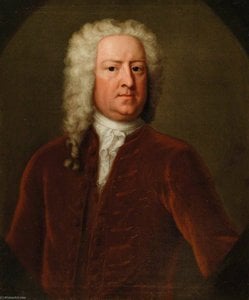
Upon returning to England, Michael Dahl swiftly established himself as a highly sought-after portraitist. His style was characterized by a refined elegance, capturing not merely the likeness but also the status and personality of his aristocratic subjects. He employed rich colors, meticulous attention to detail in textures – particularly fabrics and jewelry – and an overall sense of grandeur that reflected the wealth and power of his sitters. Notable works include striking portraits of Sir William Carew, John Churchill (1st Duke of Marlborough), and Sir Robert Walpole, each revealing a nuanced understanding of character and a masterful command of technique. His ability to capture both physical appearance and inner qualities made his portraits highly valued by the English elite. He was also known for his group portraits, such as the celebrated triple portrait of the 2nd Earl of Burlington, the 1st Duke of Kingston upon Hull, and the 3rd Baron Berkeley of Stratton – a complex composition demonstrating his skill in balancing individual characterization with compositional harmony.Legacy and Historical Significance
Michael Dahl’s artistic legacy extends beyond his individual masterpieces. He represents a fascinating confluence of influences—Swedish technical foundations, Italian Baroque aesthetics, and English market savvy. His portraits offer invaluable insights into the lives and appearances of the English aristocracy during the early 18th century, serving as both historical documents and enduring works of art. His success as a Swedish artist flourishing primarily in England highlights the interconnectedness of European artistic networks during this period. Dahl’s story is a testament to ambition, adaptability, and the transformative power of artistic exchange—a legacy that continues to be celebrated today.Perguntas e Respostas
Onde posso ver todas as obras de Mikael Dahl?
Todas as obras de Mikael Dahl no este site podem ser exploradas na página de Todas as obras do artista.
Em que cidade e país Mikael Dahl nasceu?
Mikael Dahl nasceu em Estocolmo, em Suécia.
Quantas obras de Mikael Dahl estão disponíveis para explorar?
Você pode explorar 180 obras de arte obras de Mikael Dahl na página Todas as obras.