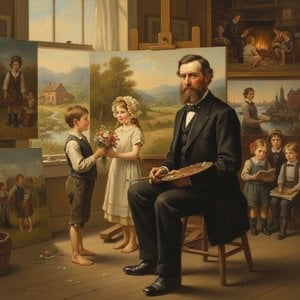
George Washington Thomas Lambert (1873–1930): A Pioneer of Australian Landscape Painting
George Washington Thomas Lambert, commonly known as GW Lambert, stands as a monumental figure in Australian art history—a painter whose evocative depictions of the bush landscape and unflinching portraits cemented his place among the nation’s artistic luminaries. Born September 13, 1873, in St Petersburg, Russia, Lambert's life unfolded against the backdrop of shifting artistic currents and personal triumphs, culminating in a distinguished career marked by unwavering dedication to capturing the spirit of Australia.
- Early Life & Education: Lambert’s formative years were spent in Württemberg, Germany, where he received his education at Kingston College, Yeovil, Somerset. His family's decision to emigrate to Australia in 1887 profoundly shaped his artistic sensibilities and instilled a lifelong appreciation for the rugged beauty of the Australian bush.
- Emergence as an Artist: Lambert’s artistic journey commenced with exhibitions at the Art Society and the Society of Artists, Sydney, showcasing his burgeoning talent from 1894 onwards. He quickly gained recognition for his distinctive style—characterized by meticulous observation and a masterful command of tonal harmony—establishing himself as a prominent artist in Melbourne and Sydney.
- The Influence of Impressionism & Symbolism: Lambert’s artistic vision was deeply influenced by the Impressionist movement, spearheaded by artists like Claude Monet and Pierre-Auguste Renoir. He embraced plein air painting techniques, prioritizing direct observation of nature to convey its fleeting beauty. Simultaneously, he absorbed elements of Symbolism, exploring psychological depth and conveying emotional resonance through evocative imagery.
- War Artist & National Icon: Lambert’s involvement as an official war artist during World War I proved transformative—both personally and professionally. Assigned to the Australian Light Horse Brigade in Palestine from 1917 until 1920, he produced a prolific body of work documenting the hardships and heroism of the ANZAC soldiers. His paintings captured not only the physical realities of combat but also the profound psychological impact on those involved—establishing him as an enduring symbol of Australian resilience and patriotism.
- Legacy & Recognition: Lambert’s artistic legacy extends far beyond his own oeuvre, profoundly impacting subsequent generations of Australian painters. He was awarded the Archibald Prize in 1927 for “Mrs Murdoch,” solidifying his reputation as Australia's foremost portrait artist—a testament to his unwavering commitment to capturing the essence of human character and emotion. His enduring influence can be seen in the works of numerous artists who followed him, ensuring that Lambert’s vision continues to inspire artistic exploration and appreciation.
Lambert died May 29, 1930, at Cobbity, near Camden, NSW—leaving behind a remarkable body of work that remains treasured by collectors and art historians alike. His contribution to Australian art is undeniable—a beacon of Impressionistic landscape painting and portraiture that continues to resonate with audiences today.