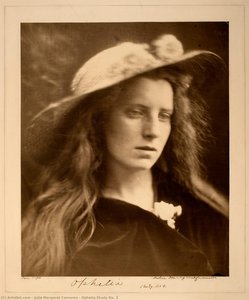
Uma Visão Pioneira: A Vida e a Arte de Julia Margaret Cameron
Julia Margaret Cameron, um nome sinônimo do poder evocativo da fotografia do século XIX, emergiu como uma voz artística significativa de forma notável já em uma idade avançada. Nascida Julia Pattle em 11 de junho de 1815, em Calcutá, na Índia, seus primeiros anos foram imersos na vibrante tapeçaria cultural da sociedade anglo-indiana e moldados por uma linhagem que a conectava tanto à administração colonial britânica quanto à aristocracia francesa. Essa herança única instilou nela uma sensibilidade cosmopolita e um apreço pela beleza que mais tarde permeariam seus empreendimentos artísticos. Sua criação foi ainda mais enriquecida por longos períodos passados na França, fomentando um profundo envolvimento com a arte, a literatura e as correntes intelectuais da época. As irmãs Pattle eram conhecidas por seu espírito não convencional e pela adoção da estética indiana, diferenciando Julia das expectativas vitorianas convencionais mesmo antes de ela empunhar uma câmera.
Foi apenas em 1863, aos 48 anos, que Cameron descobriu sua paixão pela fotografia. Um presente de sua filha e genro — uma câmera de colódio úmido — acendeu um fogo criativo em seu interior. Isso não era meramente um hobby; tornou-se uma busca absoluta que definiria os onze anos seguintes de sua vida. Ela rapidamente se estabeleceu dentro de um círculo de proeminentes intelectuais e artistas vitorianos, atraída pelas possibilidades artísticas deste meio relativamente novo. Sua casa na Ilha de Wight transformou-se em um refúgio para a criatividade, atraindo luminares como Alfred Lord Tennyson, Charles Darwin e George Frederic Watts — todos os quais se tornariam temas de seus retratos icônicos.
Inovação Artística e Maestria Técnica
O estilo fotográfico de Cameron era imediatamente distinto e, muitas vezes, controverso. Rejeitando a ênfase predominante no foco nítido e no detalhe meticuloso favorecido por muitos de seus contemporâneos, ela abraçou deliberadamente uma estética de foco suave. Isso não se devia a limitações técnicas, mas sim a uma escolha artística consciente. Ela acreditava que suavizar a imagem permitia capturar não apenas a semelhança de seus modelos, mas sua essência interior — seu caráter, emoções e profundidade espiritual. Suas composições com enquadramentos fechados intensificaram ainda mais essa intimidade, atraindo os espectadores para um encontro direto e profundamente pessoal com aqueles retratados.
A maestria de Cameron estendia-se além das escolhas estéticas; ela também era uma habilidosa manipuladora do próprio processo de colódio úmido. Esta técnica complexa, que exigia revelação imediata após a exposição, permitia-lhe experimentar vários efeitos, incluindo desfoques, múltiplas exposições e iluminação dramática. Ela tratava a fotografia não como uma reprodução puramente mecânica da realidade, mas como uma forma de arte semelhante à pintura — um meio de expressar sua própria visão artística. Sua disposição em desafiar os limites da técnica fotográfica desafiou as normas convencionais e abriu caminho para futuras gerações de artistas que buscavam explorar o potencial expressivo do meio.
Temas e Influências: Mitologia, Literatura e o Espírito Humano
Embora Cameron seja celebrada por seus retratos penetrantes, sua visão artística ia muito além da captura de semelhanças. Ela era profundamente fascinada pela mitologia, literatura e alegoria religiosa, temas que apareciam frequentemente em seu trabalho. Inspirada pelo interesse do movimento Pré-Rafaelita pelo romance medieval e pelas lendas arturianas, ela encenou elaborados tableaux vivants — quadros vivos — retratando cenas de *Idylls of the King* de Tennyson e outras fontes literárias. Essas imagens alegóricas não eram meras ilustrações; estavam imbuídas de um profundo senso de emoção e anseio espiritual.
Suas influências artísticas eram diversas, variando da pintura renascentista à literatura e ao teatro contemporâneos. Ela admirava a iluminação dramática e a intensidade emocional de mestres italianos como Correggio e buscava emular seus efeitos em sua própria obra. A influência de seu amigo próximo, o poeta Alfred Lord Tennyson, é particularmente evidente em seus inúmeros retratos dele e em suas interpretações de sua poesia. No entanto, no coração da arte de Cameron residia uma profunda fascinação pelo espírito humano — um desejo de capturar a beleza, a complexidade e a vulnerabilidade de indivíduos de todas as esferas da vida.
Legado e Influência Duradoura
Apesar de enfrentar críticas durante sua vida devido ao seu estilo não convencional, a obra de Julia Margaret Cameron perdurou como um testemunho de sua visão artística e habilidade técnica. Seu uso pioneiro do foco suave, composições em close-up e temas alegóricos influenciou profundamente o desenvolvimento da fotografia pictorialista — um movimento que enfatizava a expressão artística sobre o realismo estrito. Seus retratos continuam a cativar os espectadores com sua profundidade psicológica e ressonância emocional.
Hoje, as fotografias de Cameron estão presentes em coleções prestigiadas ao redor do mundo, incluindo o Museum of Modern Art em Nova York, o J. Paul Getty Museum e a Ingram Collection de Arte Britânica Moderna e Contemporânea em Londres. Seu legado estende-se além do reino da fotografia; ela é reconhecida como uma artista pioneira que desafiou as normas sociais e abriu caminho para futuras gerações de mulheres fotógrafas. Sua obra serve como um poderoso lembrete de que a arte pode ser encontrada em lugares inesperados e que a verdadeira beleza não reside na perfeição, mas na expressão do espírito humano.
Exploração Adicional
-
<
- Museus e Coleções: Explore suas obras na The Ingram Collection, Plymouth Museum and Art Gallery e inúmeras outras instituições mundialmente. <
- Recursos Online: Descubra mais sobre a vida e a arte de Julia Margaret Cameron em https://WahooArt.com/@/julia-margaret-cameron. <
- Artistas Relacionados: Considere o trabalho de seu filho, Henry Herschel Hay Cameron, e contemporâneos como David Wilkie Wynfield, que também desafiavam limites no retrato fotográfico.


![[ellen Terry At Age Sixteen] — Julia Margaret Cameron](/media/artworks/images/thumbnails/95/01/9501aa0e695b4c2891f4c3477d6d804b.jpg)