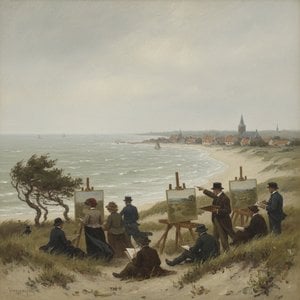
Julius Mordecai Pincas (Jules Pascin): Uma Biografia
Primeiros Anos e Origens
- Nascimento e Família: Julius Mordecai Pincas, mundialmente conhecido como Jules Pascin, nasceu em 31 de março de 1885, em Vidin, Bulgária. Ele era fruto de uma próspera família judaica sefardita, profundamente envolvida no comércio de grãos.
- Influências Iniciais: A família mudou-se para Bucareste em 1892, onde o jovem Julius demonstrou seus primeiros lampejos artísticos, chegando a esboçar até mesmo em um bordel local. Suas inclinações precoces foram, inicialmente, recebidas com desaprovação por seu pai.
- Educação e Pseudônimo: Ele buscou o refinamento artístico em Viena (1902) e Munique (1903), onde estabeleceu conexões com nomes como Paul Klee e Wassily Kandinsky. Para evitar o constrangimento familiar causado por seus desenhos satíricos, adotou o pseudônimo “Pascin” – um anagrama de seu sobrenome.
Anos Parisienses e Desenvolvimento Artístico
- Chegada a Paris: Em 1905, Pascin partiu para Paris, integrando-se rapidamente à vibrante comunidade artística da época. Ele logo se tornou uma figura presente em círculos icônções, como o grupo “Les Dômiers”, no Café le Dome.
- Estilo Inicial e Influências: Suas primeiras obras em solo parisiense foram moldadas pelo Fauvismo e por Cézanne, com um foco marcante em retratos e nus. Ele também estudou na Académie Matisse, buscando inspiração nos mestres do século XVIII, como Greuze e Watteau.
- A Construção de uma Voz Única: O estilo de Pascin evoluiu para algo singularmente seu – caracterizado por cores audaciosas, pinceladas expressivas e a representação de cenas íntimas da vida moderna. Ele demonstrou um talento excepcional em aquarelas, desenhos e pinturas.
Temas e Estilo Artístico
- Temas Recorrentes: As mulheres eram o tema central na obra de Pascin, retratadas em poses casuais, muitas vezes nuas ou parcialmente vestidas. Ele capturava a vulnerabilidade e a sensualidade feminina com uma sensibilidade notável.
- Cores Vibrantes e Composição: Suas pinturas são célebres por suas paletas de cores vibrantes e composições cuidadosamente equilibradas, utilizando o jogo de luz e sombra para criar profundidade e atmosfera.
- Profundidade Psicológica: Para além da mera representação visual, a obra de Pascin frequentemente sugeria complexidades psicológicas subjacentes e os estados emocionais de seus modelos.
Principais Obras e Conquistas
- Nude with a Green Hat (1925): Um exemplo impactante de seus estudos de nu, exibindo seu domínio sobre a cor e a forma. Atualmente reside no Museu de Arte de Cincinnati.
- Little Girl on an Armchair (1925): Demonstra sua habilidade em capturar a inocência e a beleza dentro de um cenário doméstico.
- Loose Women (1911): Uma obra provocativa que reflete as mudanças nas normas sociais do início do século XX.
- Portrait of Hermine David (191abilidade): Um retrato notável preservado no Musée National d'Art Moderne, Centre Pompidou, em Paris.
Significância Histórica e Legado
- Escola de Paris: Pascin foi uma figura proeminente dentro da Escola de Paris – um coletivo de artistas expatriados que moldaram a arte moderna no início do século XX.
- Influência sobre Artistas Posteriores: Seu trabalho influenciou gerações subsequentes de artistas através de seu estilo expressivo e foco na emoção humana.
- Fim Trágico: Apesar do sucesso artístico, Pascin lutou contra a depressão e o alcoolismo ao longo de sua vida. Tragicamente, tirou a própria vida em 1930, aos 45 anos.
- Apreciação Contínua: Hoje, as pinturas de Jules Pascin são celebradas por sua beleza, sensibilidade e importância histórica. Suas obras podem ser encontradas em grandes museus ao redor do mundo e continuam a inspirar amantes da arte através de reproduções oferecidas por plataformas como WahooArt.com.
Perguntas e Respostas
Onde as obras de Jules Pascin estão agrupadas por palavras-chave?
Para encontrar obras de Jules Pascin sobre um tema específico, utilize a página de Por Palavras-chave do artista, que agrupa as obras por palavra-chave.
Posso navegar pelas obras de Jules Pascin por movimento?
Os movimentos em que Jules Pascin trabalhou podem ser vistos na página de Todos os Movimentos do artista, que agrupa as obras por movimento.
Quais obras de Jules Pascin são as mais visualizadas?
As estatísticas sobre as obras de Jules Pascin estão disponíveis na página de Estatísticas do artista.