Jean-Baptiste Debret: Um Pintor Neoclássico e Pioneiro da Educação Artística no Brasil
- Nascimento: Paris, França (18 de abril de 1768)
- Falecimento: Paris, França (1848)
Juventude e Formação Artística
Jean-Baptiste Debret foi um pintor e desenhista francês celebrado por seu estilo neoclássico. Nascido em Paris, em 1768, ele recebeu sua formação artística formal na prestigiada Academia de Belas Artes da França. Uma influência fundamental em seu desenvolvimento foi Jacques-Louis David, um renomado artista neoclássico que também era um parente de Debret. Sob a orientação de David, Debret aperfeiçoioou suas habilidades e absorveu os princípios do Neoclassicismo — um estilo que enfatizava a austeridade clássica, formas idealizadas e uma expressão emocional intensificada.
Destaques da Carreira: O Sucesso no Salão e as Viagens ao Brasil
Debret fez sua estreia no Salon des Beaux-Arts em 1798, conquistando o segundo prêmio. Suas obras iniciais refletiam a estética neoclássica, frequentemente retratando cenas históricas que ressoavam com o clima moral da época. Um ponto de virada significativo na carreira de Debret ocorreu em março de 1816, quando ele integrou a missão artística francesa ao Brasil. Esta jornada provou ser transformadora, tanto pessoal quanto profissionalmente.
- Missão Artística Francesa: A participação de Debret nesta missão ressaltou o compromisso da França com o intercâmbio cultural e a educação artística no exterior.
- Academia Imperial de Belas Artes: Em dezembro de 1822, ele estabeleceu seu atelier na Academia Imperial de Belas Artes, no Rio de Janeiro, tornando-se rapidamente um mestre valorizado.
- Primeira Exposição de Arte Brasileira: Debret liderou a organização da primeira exposição de artes do Brasil, apresentando tanto suas próprias obras quanto as de seus alunos — um evento histórico para a então emergente cena artística brasileira.
Estilo Artístico e Obras Notáveis
As pinturas de Debret são caracterizadas por sua atenção meticulosa aos detalhes e pela adesão aos princípios neoclássicos. Sua temática abrangia frequentemente eventos históricos, retratos e cenas que retratavam a vida e a cultura brasileira. Seu trabalho oferece visões valiosas sobre o Brasil do século XIX.
- Influência Neoclássica: O estilo de Debret está profundamente enraizado na tradição neoclássica, evidente em sua ênfase na clareza, ordem e formas idealizadas.
- Cenas Históricas: Muitas de suas pinturas retratam momentos históricos significativos, refletindo um desejo de educar e inspirar através da arte.
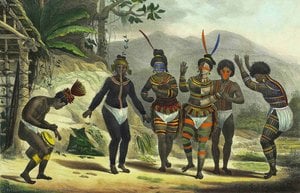
- Temática Brasileira: Seu tempo no Brasil o levou a focar cada vez mais na representação das paisagens brasileiras, dos povos indígenas e da vida colonial.
Obras notáveis de Jean-Baptiste Debret podem ser encontradas no site WahooArt, incluindo:
- Cerimônia Sagrada de D. Pedro I, Imperador do Brasil, no Rio de Janeiro, 1º de dezembro de 1822 – Uma litografia detalhada que captura um momento crucial da história brasileira.
- Napoleão discursando para as tropas bávaras e de Württemberg em Abensberg, 20 de abril de 1809 – Uma representação poderosa de Napoleão dirigindo-se às tropas.
- <Índios atravessando um riacho – Um exemplo de suas descrições detalhadas da vida indígena.
- <População Indígena de Cantagalo, c. 1826 – Uma aquarela que exibe a cultura e as paisagens brasileiras.
Legado e Anos Finais
Debret retornou à França em 1831 e foi eleito membro da Académie des Beaux-Arts. Ele é talvez mais conhecido por sua monumental série de gravuras em três volumes, Voyage pittoresque et historique au Brésil, publicada em 1834. Esta obra serviu como um registro visual da vida brasileira durante seu período no país e contribuiu significativamente para a compreensão europeia sobre o Brasil. Apesar de alcançar reconhecimento, Debret morreu pobre em Paris, em 1848.
- Voyage Pittoresque: Sua publicação permanece como um recurso inestimável tanto para historiadores quanto para entusiastas da arte.
- <Impacto na Educação Artística Brasileira: As contribuições de Debret para o ensino das artes no Brasil deixaram um legado duradouro, ajudando a estabelecer as bases para o desenvolvimento do talento artístico brasileiro.
Para mais informações sobre Jean-Baptiste Debret e sua obra, visite o site WahooArt ou consulte a página da Wikipedia sobre o Museu Nacional de Belas Artes.
Perguntas e Respostas
Onde as obras de Jean-Baptiste Debret estão agrupadas por movimento artístico?
Os movimentos em que Jean-Baptiste Debret atuou podem ser conferidos na página de Todos os Movimentos do artista, que agrupa as obras por movimento.
De onde é Jean-Baptiste Debret?
Jean-Baptiste Debret nasceu em França.
A qual período histórico pertence a obra de Jean-Baptiste Debret?
Jean-Baptiste Debret atuou no período Idade Moderna. Este período situa a atividade do artista na história.