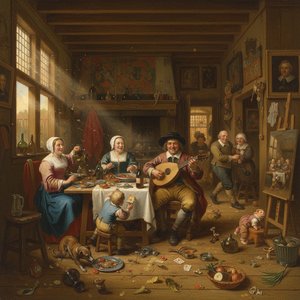
Jan Fyt (Joannes Fijt): The Flemish Animalier of the Dutch Golden Age
Jan Fyt (c. 1611 – 1661) stands as a pivotal figure in the artistic landscape of Antwerp and the broader Dutch Republic during its zenith—the Dutch Golden Age. Born into a family steeped in artistic tradition, Fyt’s career blossomed amidst the burgeoning fascination with scientific observation and meticulous detail that characterized this era, establishing him as one of the foremost animaliers of his time. His canvases offer unparalleled insight into the visual culture of 17th-century Europe, blending Baroque grandeur with an astonishing level of realism.
Early Life and Artistic Training
Little is known definitively about Fyt’s formative years, though he was apprenticed to Ambrosius Bosschaert the Elder, a celebrated flower painter who championed scientific accuracy in botanical depictions. This mentorship instilled in Fyt a profound respect for observation and meticulous rendering—principles that would become hallmarks of his distinctive style. Bosschaert's influence extended beyond mere technique; it fostered an appreciation for capturing not just beauty but also conveying information about the natural world, shaping Fyt’s artistic vision from its inception.
The Style of Jan Fyt: Detail and Dramatic Composition
Fyt’s oeuvre is instantly recognizable by its extraordinary level of detail—a characteristic that distinguishes him from many of his contemporaries. He painstakingly recreated animal subjects with astonishing accuracy, utilizing techniques honed through anatomical studies and dissection. Unlike looser Baroque compositions prioritizing grandeur and emotion, Fyt's paintings often presented animals in dynamic poses, imbued with palpable energy and movement. This dramatic approach was achieved through careful use of chiaroscuro—the interplay of light and shadow—creating depth and highlighting textures with remarkable precision. His canvases are populated by creatures rendered with meticulous attention to musculature, plumage, fur, and skin, transporting viewers into the heart of the animal kingdom.
Notable Works and Artistic Legacy
Fyt produced a prolific output encompassing still lifes featuring animals alongside fruits and vegetables—a genre that exemplifies the humanist spirit of the Dutch Golden Age. Paintings like “Still Life with Game” and “Still life with porcini mushrooms” exemplify his mastery of composition and rendering, showcasing exquisite detail and capturing fleeting moments of natural beauty. Furthermore, "Fox Hunt" stands as a testament to Fyt’s ability to convey movement and excitement within a formal Baroque framework. His works are held in prestigious collections worldwide, including the Rijksmuseum Amsterdam and Kunsthistorisches Museum Wien, cementing his place among the most influential artists of his generation.
Influence and Historical Significance
Jan Fyt's contribution to art history transcends mere stylistic innovation; he embodies the intellectual fervor of a period dedicated to unraveling the mysteries of nature through scientific inquiry. His meticulous depictions served as models for subsequent generations of animaliers, influencing artists across Europe who sought to emulate his unparalleled realism. More broadly, Fyt’s work reflects the broader cultural preoccupation with observation and representation—a legacy that continues to resonate in contemporary art practice. He remains a symbol of artistic excellence and a cornerstone of Dutch Golden Age art history.